post-title

Heart Attack vs Gas Trouble: How to Tell the Difference

Written by - Editorial Team
Medically Reviewed by - Dr Sumit Shejol

Chest pain can be alarming, and often, people are unsure whether it is a heart attack or simply gas trouble. Understanding the difference between heart pain and digestive discomfort is crucial because timely action can save lives. Many people confuse heart attack symptoms with gas pain, which can delay urgent treatment. In this article, we will guide you through the key differences between a heart attack and gas trouble and explain when to seek medical help.

What Is a Heart Attack?

A heart attack occurs when the blood flow to a part of the heart is blocked. This blockage can damage or destroy heart muscle. Heart attacks require immediate medical attention to prevent serious complications or death.

Common Heart Attack Symptoms

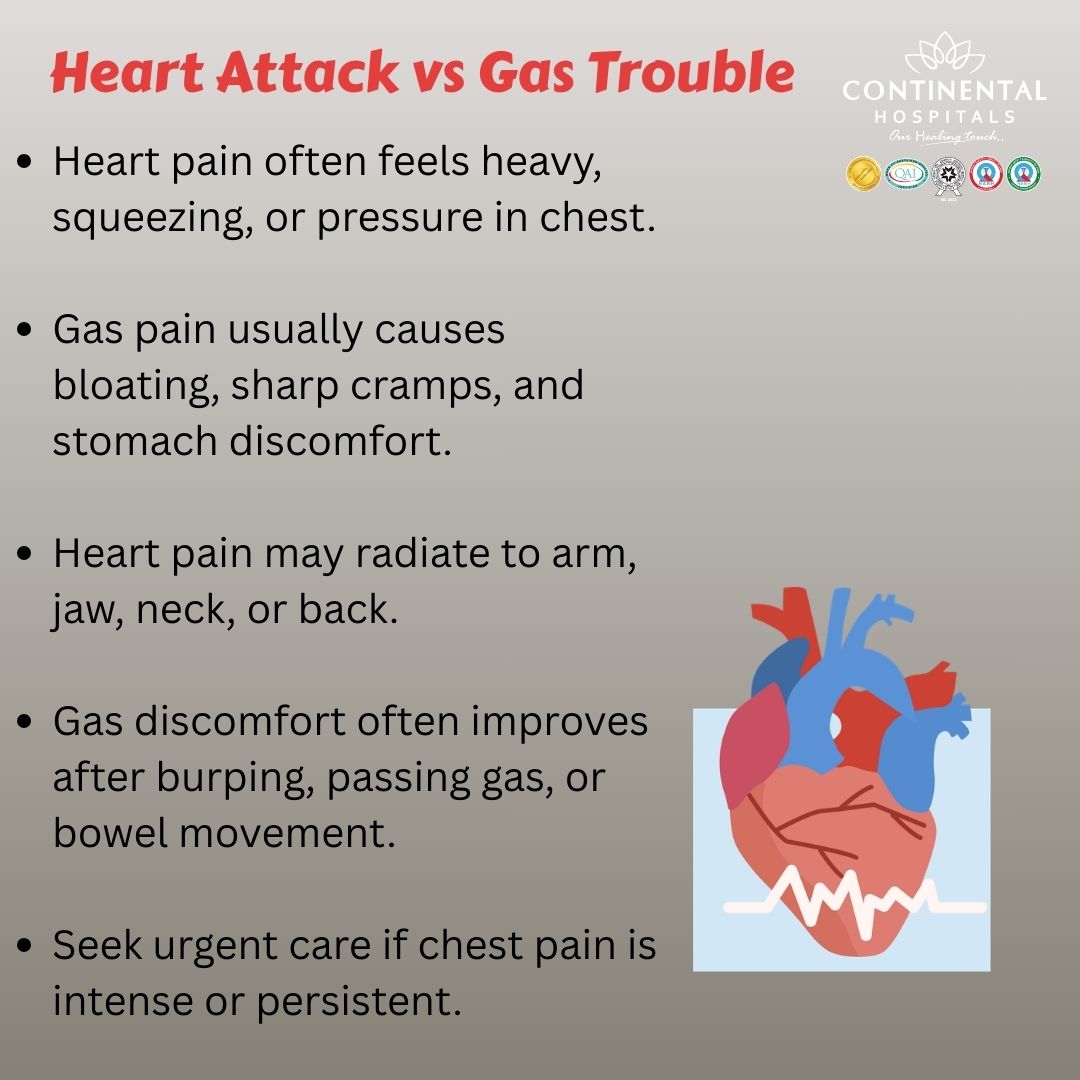
  • Chest pain or discomfort that feels like pressure, squeezing, or fullness
  • Pain radiating to the arm, neck, jaw, or back
  • Shortness of breath
  • Nausea or vomiting
  • Sweating and lightheadedness
  • Rapid or irregular heartbeat

The intensity of heart pain varies from person to person. Some may experience sudden severe pain, while others have mild discomfort that comes and goes. Ignoring even mild heart pain can be dangerous.

Prioritize your heart health! Visit our cardiology department at Continental Hospitals, Hyderabad for safe, advanced, and reliable care today.

What is gas trouble?

Gas pain or bloating occurs when excess air builds up in the stomach or intestines. While uncomfortable, gas pain is rarely life-threatening.

Common Gas Trouble Symptoms

  • Sharp, stabbing, or crampy abdominal pain
  • Feeling bloated or full
  • Burping or passing gas frequently
  • Pain relieved after passing gas or bowel movement
  • Occasional nausea

Gas pain is usually localized in the upper or lower abdomen, whereas heart pain often radiates to other parts of the body.
Second Opinion

How to Tell Heart Attack vs Gas Trouble?

Differentiating between heart attack vs gas pain is challenging but possible if you focus on the symptoms and timing. Here are some key points:

Location of Pain

  • Heart attack pain is typically central or left-sided in the chest and may radiate to the arm, shoulder, neck, jaw, or back.
  • Gas pain is usually in the stomach or upper abdomen and may move around but rarely spreads to the arm or jaw.

Type of Pain

  • Heart attack pain feels heavy, crushing, or tight.
  • Gas pain is more like cramping, sharp, or bloating discomfort.

Timing

  • Heart pain can last several minutes to hours and may appear at rest or during activity.
  • Gas pain usually occurs after meals and may improve after passing gas or a bowel movement.

Associated Symptoms

  • Heart attack may include sweating, nausea, shortness of breath, and dizziness.
  • Gas pain usually comes with burping, bloating, and relief after digestion.
  • Response to Movement or Medication
  • Heart pain does not go away with position changes or antacids.
  • Gas pain often improves after walking, stretching, or taking digestive remedies.
  • Understanding these differences can help you make quick decisions about seeking medical attention.

What are the risk factors for a heart attack?

Knowing your risk factors can help prevent a heart attack. Key risk factors include:

  • High blood pressure
  • High cholesterol
  • Diabetes
  • Smoking
  • Obesity
  • Family history of heart disease
  • Sedentary lifestyle
  • Stress

People with these risk factors should be particularly cautious when experiencing chest pain.

Need an Appointment?

When should you seek emergency help for chest pain?

Heart attacks can be fatal if treatment is delayed. You should call emergency services immediately if you experience:

  • Sudden chest pain lasting more than a few minutes
  • Pain radiating to the arm, neck, jaw, or back
  • Shortness of breath or dizziness
  • Nausea or vomiting with chest discomfort
  • Unexplained sweating

It is always better to be safe and get checked at the hospital. Early intervention can save lives.

How Can You Reduce Your Risk of a Heart Attack?

  • Eat a balanced diet rich in fruits, vegetables, and whole grains
  • Exercise regularly, at least 30 minutes a day
  • Maintain a healthy weight
  • Avoid smoking and excessive alcohol
  • Manage stress through meditation or hobbies
  • Regular health check-ups to monitor blood pressure, cholesterol, and sugar levels

These lifestyle changes not only reduce the risk of heart attack but also improve overall well-being.

Why Choose Continental Hospitals?

Continental Hospitals is recognized as one of the best hospitals in Hyderabad, known for excellence in cardiac care. The hospital holds multiple national and international accreditations, ensuring world-class patient safety and quality standards.

Key Highlights

Advanced Cardiac Care: Equipped with state-of-the-art cath labs and cardiac operation theaters

Expert Cardiologists: Team of highly experienced heart specialists

Emergency Services: 24/7 emergency care for heart attack and chest pain

Patient-Centric Approach: Personalized treatment plans with continuous monitoring

Accreditations: Recognized for quality and safety standards nationally and internationally

At Continental Hospitals, patients receive timely diagnosis, advanced treatment, and compassionate care, making it a trusted choice for anyone experiencing chest discomfort or heart-related issues.

Conclusion

Distinguishing between heart attack vs gas trouble can be challenging, but knowing the key symptoms and risk factors can save lives. If you ever experience chest pain that is severe, persistent, or radiates to other parts of the body, do not ignore it. Immediate medical attention at a trusted facility like Continental Hospitals can make all the difference.

Heart attacks are medical emergencies. Consulting a specialist promptly ensures early diagnosis and effective treatment.

If you suffer from chest discomfort or suspect heart problems, consult our top cardiologists in Hyderabad at Continental Hospitals today. Prioritize your heart health and seek care from the best hospital in Hyderabad for reliable, safe, and advanced treatment.

Related Blog Topics:

  1. How to stop a heart attack in 30 seconds?
  2. What to Do During a Heart Attack
  3. Heart Attack Warning Signs

Frequently Asked Questions

Heart attack pain usually feels like pressure, heaviness, squeezing, or tightness in the center or left side of the chest. It may spread to the left arm, shoulder, neck, jaw, or back and is often accompanied by shortness of breath, sweating, nausea, dizziness, or extreme fatigue. Gas trouble typically causes bloating, burning, or sharp discomfort that may improve after burping, passing gas, or having a bowel movement. Heart attack symptoms usually persist or worsen with activity, while gas pain often changes with body position or eating. Since the symptoms can overlap, never assume chest pain is caused by gas. Seek emergency medical attention immediately if chest pain is severe, persistent, or associated with other warning signs.
A heart attack commonly causes chest pain or pressure that lasts more than a few minutes or comes and goes. The discomfort may spread to the arms, shoulders, neck, jaw, or upper back. Many people also experience shortness of breath, cold sweats, nausea, vomiting, dizziness, lightheadedness, or unusual fatigue. Women, older adults, and people with diabetes may have less typical symptoms such as indigestion-like discomfort, weakness, or unexplained tiredness. Symptoms can vary in intensity from mild to severe. Any unexplained chest discomfort accompanied by these symptoms should be treated as a medical emergency until proven otherwise.
Yes, gas trapped in the stomach or intestines can cause chest discomfort that may feel alarming. The pain is often sharp, burning, or cramp-like and may occur after eating a heavy meal or consuming gas-producing foods. It is commonly associated with bloating, belching, abdominal fullness, or passing gas. Unlike a heart attack, gas pain often improves after burping, walking, or changing position. It usually does not radiate to the jaw or left arm or cause cold sweats and severe breathlessness. However, because chest pain can have many causes, it is safest to seek urgent medical evaluation if you are unsure.
Chest pain should be treated as an emergency if it lasts longer than a few minutes, becomes severe, or keeps returning. Seek immediate medical help if the pain is accompanied by shortness of breath, sweating, nausea, vomiting, dizziness, fainting, or pain spreading to the arm, shoulder, neck, jaw, or back. People with diabetes, high blood pressure, high cholesterol, obesity, or a family history of heart disease should be especially cautious. Never attempt to diagnose yourself at home when experiencing significant chest pain. Early treatment greatly improves survival and reduces heart damage.
People with high blood pressure, diabetes, high cholesterol, obesity, and smoking habits have an increased risk of heart attacks. A family history of heart disease, advancing age, physical inactivity, chronic stress, and unhealthy eating habits also contribute significantly. Men generally develop heart disease earlier than women, although women's risk rises after menopause. Individuals with chronic kidney disease or previous heart problems are also at greater risk. Managing these risk factors through regular checkups, medication, exercise, and a heart-healthy diet can substantially lower the chances of experiencing a heart attack.
Doctors begin by reviewing your symptoms, medical history, and risk factors, followed by a physical examination. An electrocardiogram (ECG) is performed to detect abnormal heart activity, while blood tests measure cardiac enzymes that indicate heart muscle damage. Additional tests such as echocardiography, stress testing, or coronary angiography may be recommended if needed. If heart-related causes are ruled out, doctors may evaluate digestive conditions such as acid reflux, gastritis, or excessive gas. Prompt medical evaluation ensures the correct diagnosis and allows appropriate treatment without delay.
Yes, heart attack symptoms are sometimes mistaken for acidity, heartburn, or indigestion because they can all cause chest discomfort. This is particularly common in women, older adults, and people with diabetes, who may experience less typical symptoms. However, heart attack pain is usually associated with pressure, tightness, sweating, breathlessness, nausea, or pain spreading to the jaw, shoulder, or arm. Symptoms that do not improve with antacids or rest require immediate medical attention. It is always safer to rule out a heart attack than assume the discomfort is caused by digestive problems.
Maintaining a healthy lifestyle can significantly reduce the risk of both heart disease and digestive problems. Eat a balanced diet rich in fruits, vegetables, whole grains, lean proteins, and healthy fats while limiting processed foods and excessive salt. Exercise regularly, maintain a healthy weight, avoid smoking, and limit alcohol consumption. Manage conditions such as diabetes, high blood pressure, and high cholesterol with regular medical care. For digestive health, avoid overeating, eat slowly, stay hydrated, and reduce foods that trigger excessive gas. Regular health checkups help detect problems early and support long-term well-being.
Disclaimer: The information provided in this blog is intended for general knowledge and informational purposes only, and does not constitute medical advice. Always consult with a qualified healthcare professional for any medical concerns or before making any decisions about your health.

Get in Touch With Us

Whether you are from India or abroad, we are here to help you with your medical queries. Please fill out the form below and our team will connect with you shortly.

  • ✔ Quick response from our medical experts
  • ✔ Secure data handling & privacy
  • ✔ Easy upload for reports & documents
banner_image

Chat with our medical experts on WhatsApp for quick assistance and hassle-free appointment booking

Recent Posts