.webp)

Alcohol is a common part of social life for many people, but its impact on health often goes unnoticed. One of the most affected areas is the digestive system. From the moment alcohol enters the mouth to the time it is processed and eliminated, it influences digestion in several ways. Understanding how alcohol affects the digestive system can help you make informed choices and protect long term gut health.
Understanding the Digestive System for Humans
The digestive system for humans is designed to break down food, absorb nutrients, and remove waste. It includes the mouth, food pipe, stomach, intestines, liver, pancreas, and gallbladder. Each organ plays a specific role in digestion.
When alcohol enters the body, it does not follow the same digestion process as food. This difference is why alcohol can disturb digestion and irritate digestive organs.
Visit our Gastroenterology Department at Continental Hospitals. Consult the best gastroenterologists for expert care, accurate diagnosis, and lasting digestive health.
Alcohol Digestion: How the Body Processes Alcohol
Alcohol digestion begins in the mouth and stomach. Unlike food, alcohol does not need to be broken down into smaller parts. It is absorbed directly into the bloodstream.
Key points about digestion of alcohol include
- A small amount is absorbed in the stomach
- Most alcohol is absorbed in the small intestine
- The liver processes the majority of alcohol
- Excess alcohol overloads the liver and digestive system
When alcohol intake is frequent or excessive, the digestive system struggles to keep up, leading to inflammation and damage.
Effects of Alcohol on the Stomach
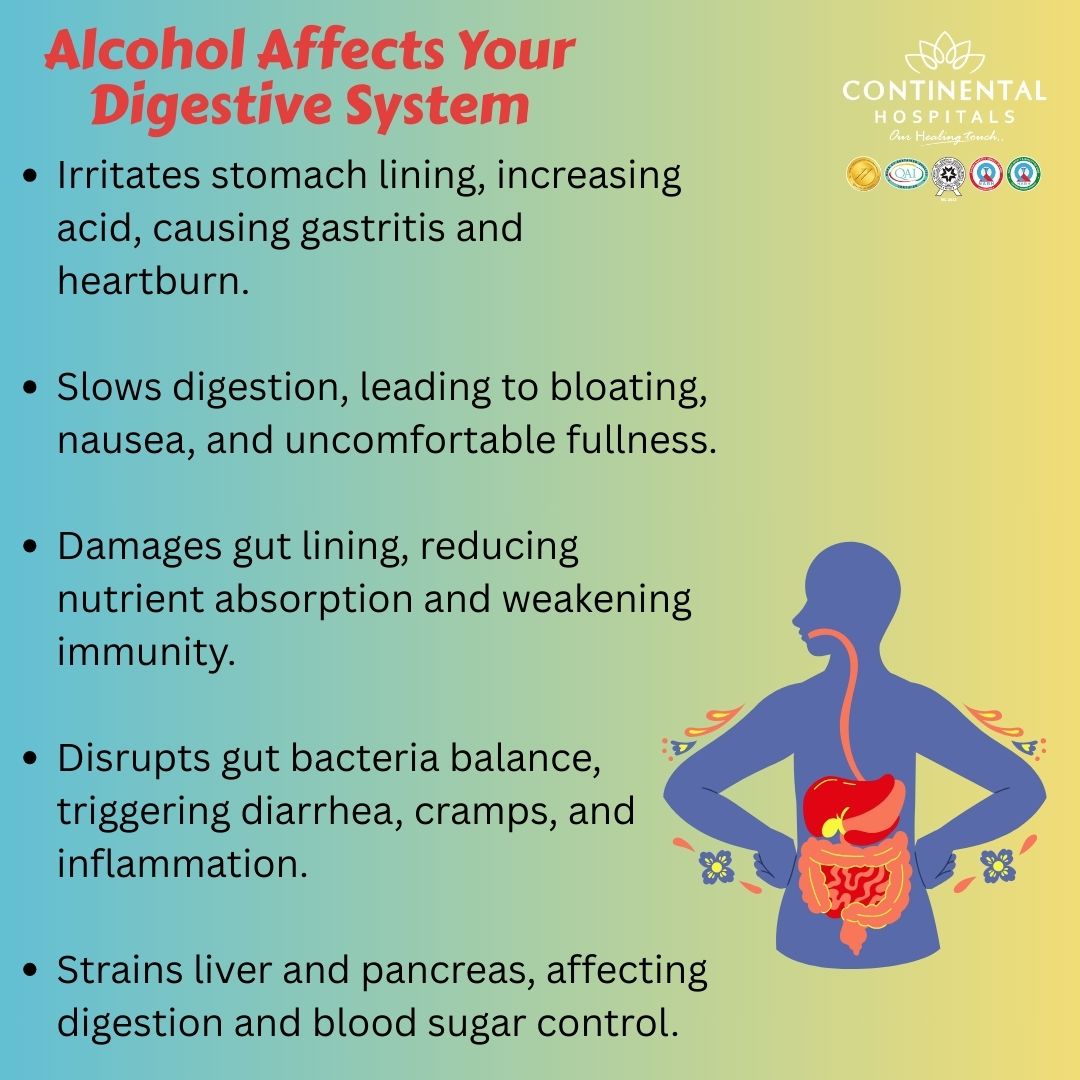
The stomach is one of the first organs affected by alcohol. Alcohol increases acid production and weakens the stomach lining.

Common stomach related effects include
- Irritation of the stomach lining
- Increased acid reflux and heartburn
- Slower digestion of food
- Risk of gastritis and ulcers
Alcohol relaxes the muscle that separates the stomach and food pipe. This allows acid to move upward, causing burning sensations. Over time, repeated irritation can lead to chronic stomach problems.
Alcohol and Intestinal Health
The intestines absorb nutrients and water from food. Alcohol interferes with this process.
How alcohol affects the intestines
- Reduces nutrient absorption
- Damages the protective lining of the gut
- Alters healthy gut bacteria
- Causes bloating, diarrhea, or constipation
Poor nutrient absorption can lead to deficiencies in vitamins and minerals. This directly affects energy levels, immunity, and overall health.
Impact of Alcohol on the Liver
The liver plays a central role in alcohol digestion. It breaks down alcohol into substances that can be removed from the body.
When alcohol intake exceeds the liver’s capacity
- Toxins build up in the body
- Fat accumulates in liver cells
- Inflammation develops
- Long term damage may occur
Liver stress also affects digestion because bile production can be reduced. Bile is essential for digesting fats properly.
Alcohol and the Pancreas
The pancreas releases enzymes that help digest carbohydrates, fats, and proteins. Alcohol disrupts this function.
Effects on the pancreas include
- Reduced enzyme production
- Inflammation of pancreatic tissue
- Impaired digestion of food
- Increased risk of abdominal pain
Poor enzyme release means food is not digested efficiently, leading to discomfort and nutritional problems.
How Alcohol Affects the Body Beyond Digestion?
Although this article focuses on digestion, it is important to understand how alcohol affects the body as a whole.
Alcohol can
- Dehydrate the body
- Weaken the immune system
- Disrupt hormone balance
- Increase inflammation
These effects indirectly worsen digestive health by slowing healing and increasing sensitivity of digestive organs.
Common Digestive Symptoms Linked to Alcohol
People often ignore early signs of digestive distress caused by alcohol. Paying attention to symptoms can prevent serious complications.
Common symptoms include
- Frequent acidity or heartburn
- Nausea or vomiting
- Loss of appetite
- Abdominal pain or bloating
- Irregular bowel movements
Do you experience these symptoms after drinking alcohol? If yes, your digestive system may be under stress.
Can Moderate Alcohol Still Affect Digestion?
Many people believe that moderate alcohol intake is harmless. However, even small amounts can affect sensitive digestive systems.
Factors that influence impact include
- Frequency of alcohol intake
- Type of alcohol consumed
- Existing digestive conditions
- Overall diet and lifestyle
Some individuals experience digestive symptoms even with occasional drinking.
Steps to Protect Your Digestive System
You can support digestion and reduce harm by making mindful choices.
Helpful habits include
- Limiting alcohol intake
- Avoiding alcohol on an empty stomach
- Drinking water between alcoholic drinks
- Eating balanced meals rich in fiber
- Seeking medical advice for persistent symptoms
Listening to your body is essential for long term digestive health.
When Should You See a Doctor?
You should consult a specialist if you notice
- Ongoing stomach pain
- Persistent acidity or reflux
- Unexplained weight loss
- Blood in stools or vomit
- Long lasting digestive discomfort
Early evaluation can prevent complications and support faster recovery.
Why Choose Continental Hospitals in Hyderabad?
Continental Hospitals is recognized as one of the best hospitals in Hyderabad, known for its commitment to clinical excellence and patient safety. The hospital is accredited by national and international healthcare quality organizations, reflecting high standards in medical care, infrastructure, and outcomes.
Key reasons to choose Continental Hospitals include
- Experienced gastroenterologists and hepatologists
- Advanced diagnostic and endoscopy facilities
- Multidisciplinary approach to digestive health
- Evidence based treatment protocols
- Patient focused and ethical medical care
The hospital combines expert doctors with modern technology to deliver accurate diagnosis and personalized treatment plans.
Conclusion
Alcohol has a direct and lasting impact on the digestive system. From the stomach and intestines to the liver and pancreas, alcohol disrupts digestion and nutrient absorption. Ignoring early symptoms can lead to chronic digestive problems and reduced quality of life.
If you suffer from digestive discomfort linked to alcohol or have ongoing symptoms, it is important to seek expert medical care. Consult our Best Gastroenterologist at Continental Hospitals for a thorough evaluation and guidance. Timely care can protect your digestive system and support long term health.
Related Blog Topics: