.webp)

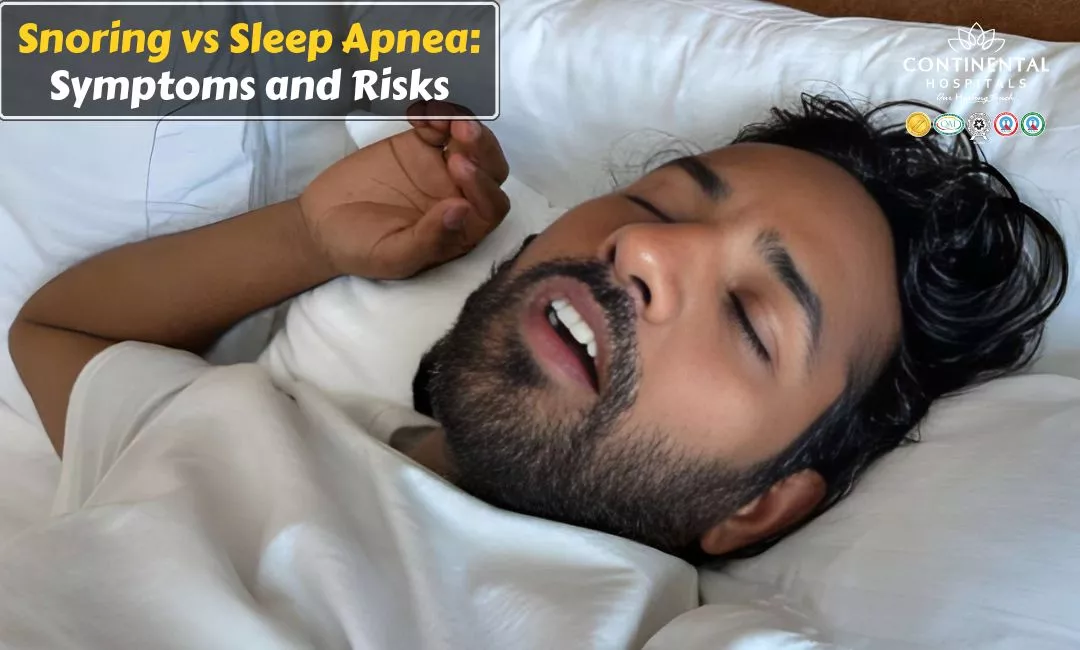
Snoring is common and often ignored. Many people think it is just a nighttime nuisance. But sometimes, loud and frequent snoring can be a warning sign of sleep apnea. Understanding the difference between snoring vs sleep apnea can protect your health and improve your quality of life.
If you or your loved one struggles with disturbed sleep, it is important to know what is sleep apnea, how it differs from simple snoring, and when to seek medical help.
What Is Sleep Apnea?
What is sleep apnea? Sleep apnea is a serious sleep disorder where breathing repeatedly stops and starts during sleep. These pauses in breathing can last for a few seconds to longer periods. When breathing stops, the brain briefly wakes the body to restart it. This cycle can happen many times during the night.
Because of these repeated interruptions, people with sleep apnea often feel tired even after a full night in bed. Over time, untreated sleep apnea can lead to serious health problems.
There are different types of sleep apnea, but the most common one is obstructive sleep apnea. It happens when throat muscles relax too much and block the airway during sleep.
Visit our Pulmonology Department at Continental Hospitals, Hyderabad, for expert sleep apnea care and accurate diagnosis. Breathe better, sleep better.
What Is Snoring?
Snoring happens when air flows through a partially blocked airway, causing the tissues in the throat to vibrate. Snoring can be soft or loud. It may occur occasionally or every night.
Snoring symptoms may include:
• Loud breathing sounds during sleep
• Dry mouth in the morning
• Mild throat irritation
• Disturbed sleep for the partner

Snoring alone does not always mean sleep apnea. However, when snoring is frequent and combined with breathing pauses, it may indicate sleep apnea.
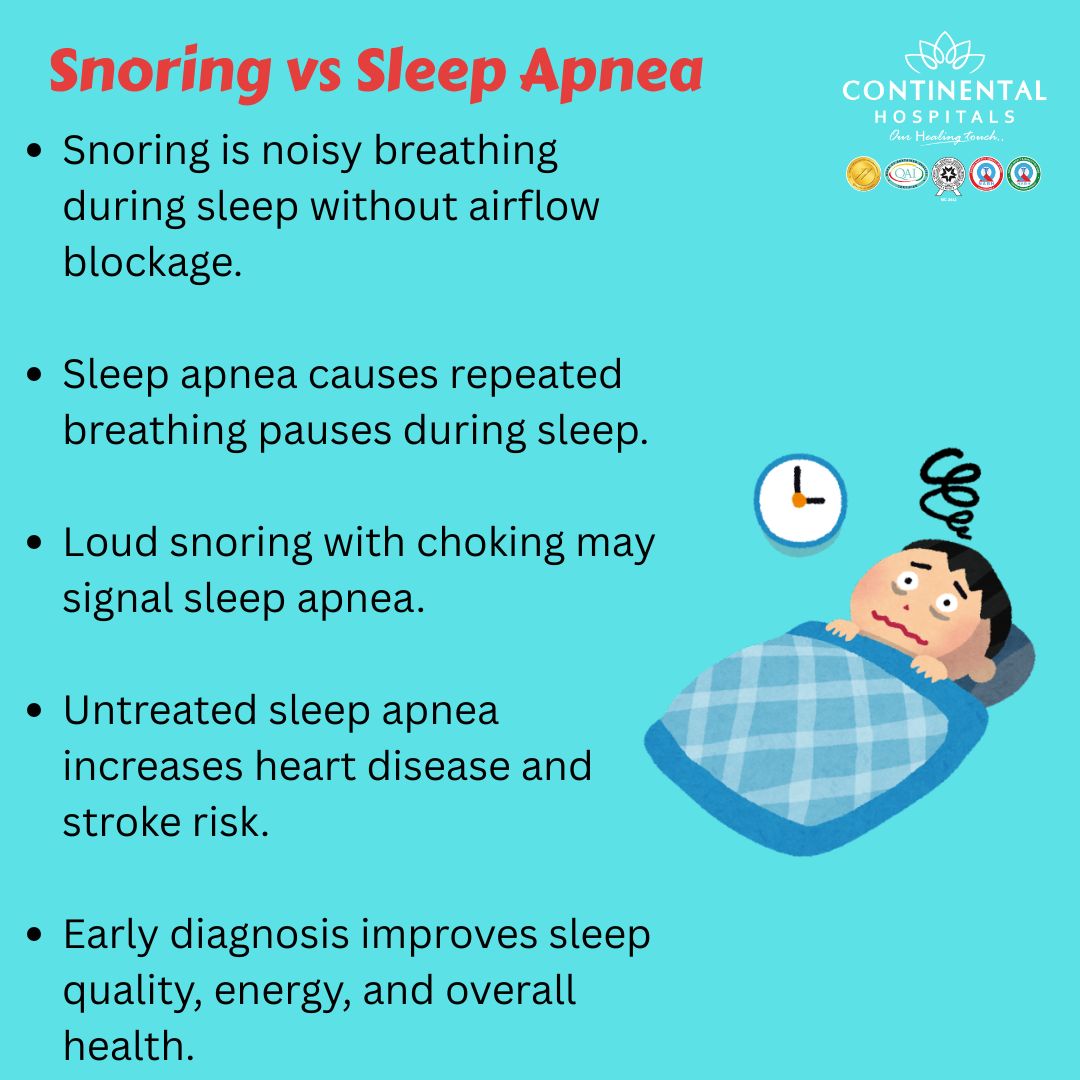
Snoring vs Sleep Apnea
Understanding snoring vs sleep apnea is important because the risks are very different.
Simple snoring
• Caused by blocked nasal passages, obesity, or sleeping position
• No breathing pauses
• No major drop in oxygen levels
• Usually not dangerous
Sleep apnea
• Repeated breathing pauses during sleep
• Loud snoring with choking or gasping
• Drop in blood oxygen levels
• Increased risk of heart disease, stroke, and diabetes
If someone snores loudly and also feels extremely tired during the day, it may not be just snoring. It could be sleep apnea.
Sleep Apnea Symptoms
Sleep apnea symptoms can occur at night and during the day. Many people are unaware of their nighttime symptoms unless a family member notices them.
Common sleep apnea symptoms include:
• Loud and persistent snoring
• Pauses in breathing during sleep
• Gasping or choking sounds at night
• Morning headaches
• Dry mouth on waking
• Excessive daytime sleepiness
• Difficulty concentrating
• Irritability or mood changes
Children can also develop sleep apnea. In them, symptoms may include mouth breathing, bedwetting, or poor school performance.
Recognizing sleep apnea symptoms early can prevent long term complications.
Sleep Apnea Causes
Understanding sleep apnea causes helps in choosing the right sleep apnea treatment.
Common sleep apnea causes include:
• Excess weight
• Enlarged tonsils
• Thick neck circumference
• Nasal congestion
• Smoking
• Alcohol consumption
• Family history
Age also increases the risk. Men are more likely to develop sleep apnea, but women can develop it too, especially after menopause.
Snoring Cause and Risk Factors
The snoring cause may be simple and temporary. Common snoring cause factors include:
• Cold or sinus infection
• Deviated nasal septum
• Sleeping on the back
• Obesity
• Alcohol before bedtime
Occasional snoring is usually harmless. However, chronic and loud snoring should not be ignored.
Health Risks of Untreated Sleep Apnea
Sleep apnea is more than a sleep problem. It can affect your entire body.
If sleep apnea is left untreated, it can lead to:
• High blood pressure
• Heart disease
• Stroke
• Type 2 diabetes
• Memory problems
• Depression
• Poor work performance
• Increased risk of accidents
The repeated drop in oxygen levels puts strain on the heart and brain. That is why early diagnosis and sleep apnea treatment are essential.
How to Stop Snoring?
If you are wondering how to stop snoring, the solution depends on the cause.
Simple steps to reduce snoring include:
• Maintain a healthy weight
• Sleep on your side
• Avoid alcohol before bedtime
• Treat nasal allergies
• Keep regular sleep timings
If these measures do not help, medical evaluation is important. In some cases, treating underlying sleep apnea may stop snoring completely.
Sleep Apnea Treatment Options
Sleep apnea treatment depends on the severity of the condition.
Common sleep apnea treatment methods include:
• Lifestyle changes such as weight loss
• CPAP therapy which keeps the airway open
• Oral appliances to reposition the jaw
• Surgical procedures in selected cases
A sleep study is usually done to confirm sleep apnea. This test monitors breathing, oxygen levels, and sleep patterns.
Early and proper sleep apnea treatment improves sleep quality, reduces health risks, and enhances overall well being.
When Should You See a Doctor?
You should consult a doctor if:
• Snoring is loud and frequent
• You feel tired despite adequate sleep
• Someone notices breathing pauses during your sleep
• You wake up choking or gasping
• You have high blood pressure with poor sleep
Ignoring these warning signs may allow sleep apnea to progress silently.
Why Choose Continental Hospitals?
If you are looking for the best hospital in Hyderabad for sleep-related concerns, Continental Hospitals offers advanced and comprehensive care.
Continental Hospitals is known for:
• International quality standards
• Advanced sleep diagnostic facilities
• Multidisciplinary team of specialists
• Patient focused approach
• State of the art infrastructure
The hospital holds prestigious accreditations including NABH and JCI, which reflect its commitment to global healthcare standards, patient safety, and clinical excellence. These accreditations ensure that every patient receives evidence based and ethical medical care.
At Continental Hospitals, sleep apnea evaluation is handled with precision. From detailed consultation to advanced sleep studies and personalized sleep apnea treatment, the focus is always on long term health outcomes.
The team includes experienced pulmonologists, ENT specialists, and sleep medicine experts who work together to provide complete care under one roof.
Conclusion
Snoring may seem harmless, but it can sometimes signal a deeper issue like sleep apnea. Understanding the difference between snoring vs sleep apnea helps you take the right steps at the right time.
Sleep apnea can silently affect your heart, brain, and daily performance. Recognizing sleep apnea symptoms early and seeking proper sleep apnea treatment can prevent serious complications.
If you or your loved one experiences loud snoring, breathing pauses, or constant daytime fatigue, do not ignore it.
Consult our best pulmonologist at Continental Hospitals, the best hospital in Hyderabad, for accurate diagnosis and advanced sleep apnea treatment. Early care can restore restful sleep, protect your health, and improve your quality of life.
Related Blog Topics: