.webp)


Summer in India can be intense, especially in a city like Hyderabad, where temperatures rise quickly. As the heat increases, the risk of dehydration also becomes higher. Many people ignore early signs of dehydration until the condition becomes serious. Understanding dehydration symptoms, knowing how to stay hydrated, and seeking timely care can protect your health.
What is Dehydration?
Dehydration happens when your body loses more fluids than it takes in. Water is essential for digestion, circulation, temperature control, and organ function. When fluid levels drop, the body cannot perform these tasks properly.
Dehydration in summer is common because people sweat more. Excess sweating, inadequate water intake, vomiting, diarrhea, or prolonged sun exposure can all lead to dehydration.
If untreated, dehydration can affect the kidneys, heart, and brain. Severe dehydration may require hospital care.
Visit our Internal Medicine Specialist Department at Continental Hospitals, Hyderabad, for expert diagnosis and personalized dehydration care.
Why Dehydration is More Common in Summer
During hot weather, your body sweats to cool itself. Sweat contains water and electrolytes such as sodium and potassium. When you do not replace these fluids, dehydration begins.
Common summer risk factors include:
• Outdoor work or exercise in direct sunlight
• Not drinking water regularly
• Excess tea, coffee, or alcohol
• Fever or infections
• Children playing outdoors for long hours
• Elderly individuals with reduced thirst sensation
Recognizing dehydration symptoms early can prevent complications.

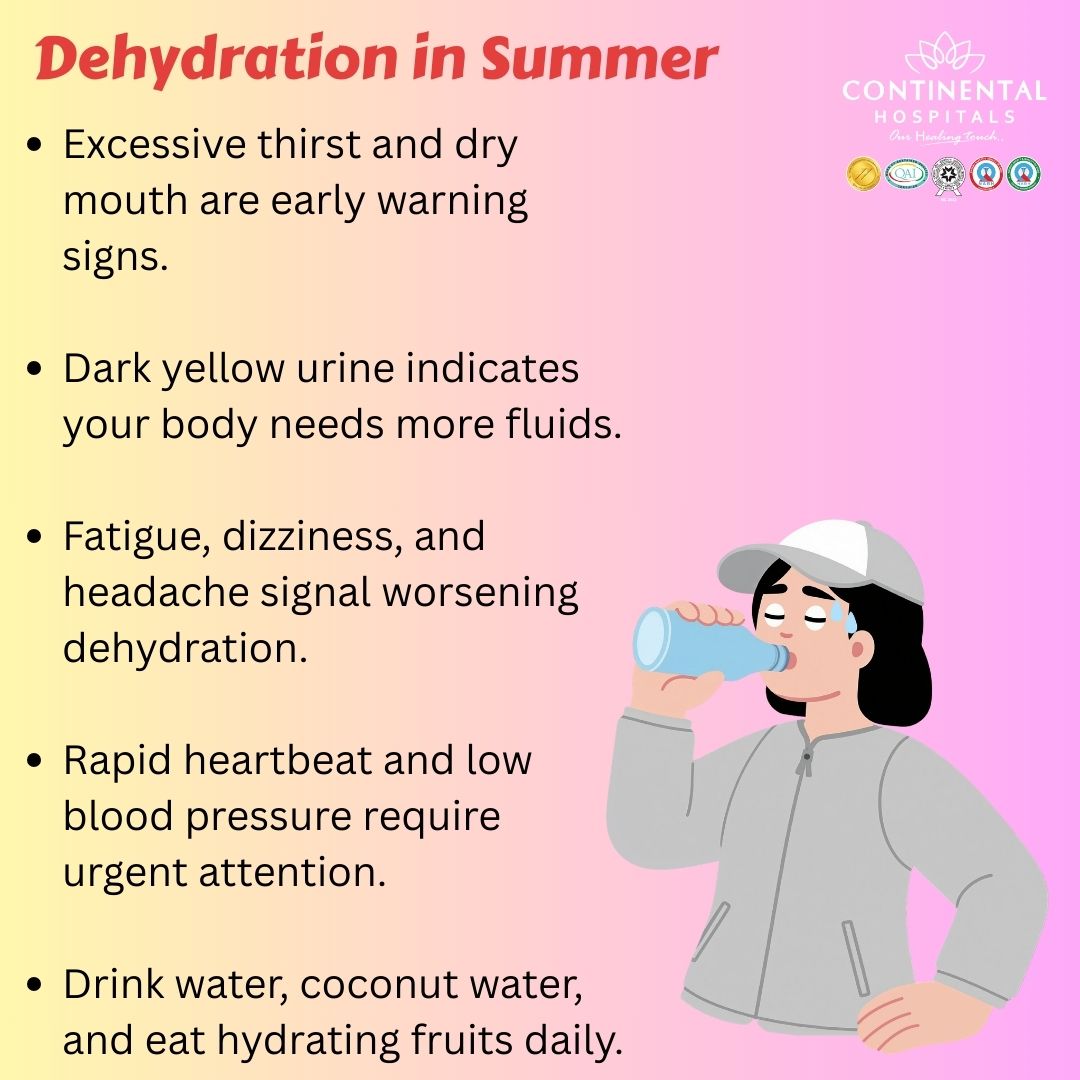
Early Signs of Dehydration You Should Not Ignore
The signs of dehydration can start mildly but may worsen quickly. Watch out for the following signs and symptoms of dehydration:
• Dry mouth and cracked lips
• Increased thirst
• Dark yellow urine
• Reduced urine output
• Fatigue and weakness
• Headache
• Dizziness
• Muscle cramps
These dehydration symptoms indicate that your body needs fluids immediately.
Moderate to Severe Dehydration Symptoms
If dehydration continues without treatment, symptoms can become serious:
• Rapid heartbeat
• Rapid breathing
• Sunken eyes
• Confusion
• Extreme weakness
• Fainting
• Low blood pressure
Severe dehydration is a medical emergency. It requires immediate hospital evaluation and fluid replacement.
At Continental Hospitals, our emergency and internal medicine teams are trained to manage dehydration safely and effectively.
Who is at Higher Risk of Dehydration?
Certain groups are more vulnerable to dehydration in summer:
Children
Children may not recognize thirst. They lose fluids quickly during play or illness.
Elderly
Older adults often have a reduced sense of thirst and may take medications that increase fluid loss.
Pregnant and Breastfeeding Women
They require additional fluids to support body changes.
Patients with Chronic Illness
People with diabetes, kidney disease, or heart conditions are at higher risk of complications from dehydration.
Early recognition of dehydration symptoms in these groups is critical.
How to Stay Hydrated in Summer?
Preventing dehydration is simple if you follow regular hydration tips.
Here are practical summer health tips:
• Drink water at regular intervals, even if you are not thirsty
• Carry a water bottle when stepping outside
• Eat water rich fruits like watermelon, cucumber, and oranges
• Avoid excessive caffeine and sugary drinks
• Wear light and breathable clothing
• Avoid direct sunlight during peak afternoon hours
• Include coconut water or oral rehydration solutions when needed
Knowing how to stay hydrated reduces the chances of dehydration and keeps your energy levels stable.
What Happens if Dehydration is Ignored?
Ignoring signs of dehydration can lead to complications such as:
• Heat exhaustion
• Heat stroke
• Kidney injury
• Urinary infections
• Electrolyte imbalance
• Low blood pressure
Severe dehydration may result in hospitalization. Quick medical care prevents organ damage and restores balance.
When Should You See a Doctor?
You should consult a doctor if:
• Symptoms persist despite drinking fluids
• There is vomiting or diarrhea
• You notice confusion or fainting
• Urine output stops
• A child refuses fluids
• An elderly person appears disoriented
Prompt medical evaluation ensures safe recovery from dehydration.
Diagnosis and Treatment at Continental Hospitals
At Continental Hospitals, dehydration is evaluated through clinical examination and necessary blood tests to check electrolyte balance and kidney function.
Treatment may include:
• Oral rehydration therapy
• Intravenous fluids
• Electrolyte correction
• Monitoring of vital signs
• Treatment of underlying infection if present
Our experienced physicians ensure personalized care for every patient.
Why Choose Continental Hospitals?
Continental Hospitals is widely recognized as the best hospital in Hyderabad for comprehensive healthcare services.
Here is why patients trust us:
• Accredited by National Accreditation Board for Hospitals and Healthcare Providers
• Accredited by Joint Commission International for global standards of quality and safety
• Advanced diagnostic facilities under one roof
• Experienced specialists in Internal Medicine, Emergency Medicine, Nephrology, and Critical Care
• Dedicated emergency services available round the clock
• Patient focused approach with transparent communication
• Modern infrastructure with advanced monitoring systems
Our accreditations reflect our commitment to high standards of patient care and safety. Every patient with dehydration receives timely evaluation and evidence based treatment.
Simple Daily Hydration Checklist
To prevent dehydration in summer, follow this quick checklist:
• Start your day with a glass of water
• Drink small amounts of water every hour
• Do not wait until extreme thirst develops
• Monitor urine color
• Increase fluids during exercise
• Give extra fluids to children during outdoor play
• Keep elderly family members hydrated
Consistency is the key to avoiding dehydration.
Frequently Asked Question
How much water should I drink daily?
Fluid needs vary based on age, climate, and activity level. In hot weather, your body needs more water than usual.
Can dehydration cause headache?
Yes, headache is one of the common dehydration symptoms due to reduced blood flow and electrolyte imbalance.
Is coconut water helpful?
Yes, it helps replace lost electrolytes and supports hydration.
Can dehydration affect kidney health?
Prolonged dehydration can strain the kidneys and may lead to complications if untreated.
Conclusion
Dehydration in summer is common but preventable. Ignoring the signs of dehydration can lead to serious health issues. Early recognition of dehydration symptoms and timely action can protect your body from complications. Simple hydration tips and healthy habits make a significant difference.
If you or your loved one experiences persistent signs and symptoms of dehydration such as dizziness, confusion, fainting, or reduced urination, do not delay medical care.
Consult our best internal medicine specialist at Continental Hospitals, the best hospital in Hyderabad. Our expert team provides comprehensive evaluation, advanced diagnostics, and personalized treatment to manage dehydration safely and effectively.
Your health deserves expert attention. Stay aware, stay hydrated, and trust Continental Hospitals for complete care.
Related Blog Topics: