post-title

Is Hair Serum Good for Hair? What Dermatologists Say

Written by - Editorial Team
Medically Reviewed by - Dr Preethi Sunki

If you are struggling with unruly frizz, sudden hair fall, or dull locks, you have likely looked into adding a hair serum to your vanity. But is hair serum good for hair, or is it just another marketing gimmick?

What Does Hair Serum Do Exactly?

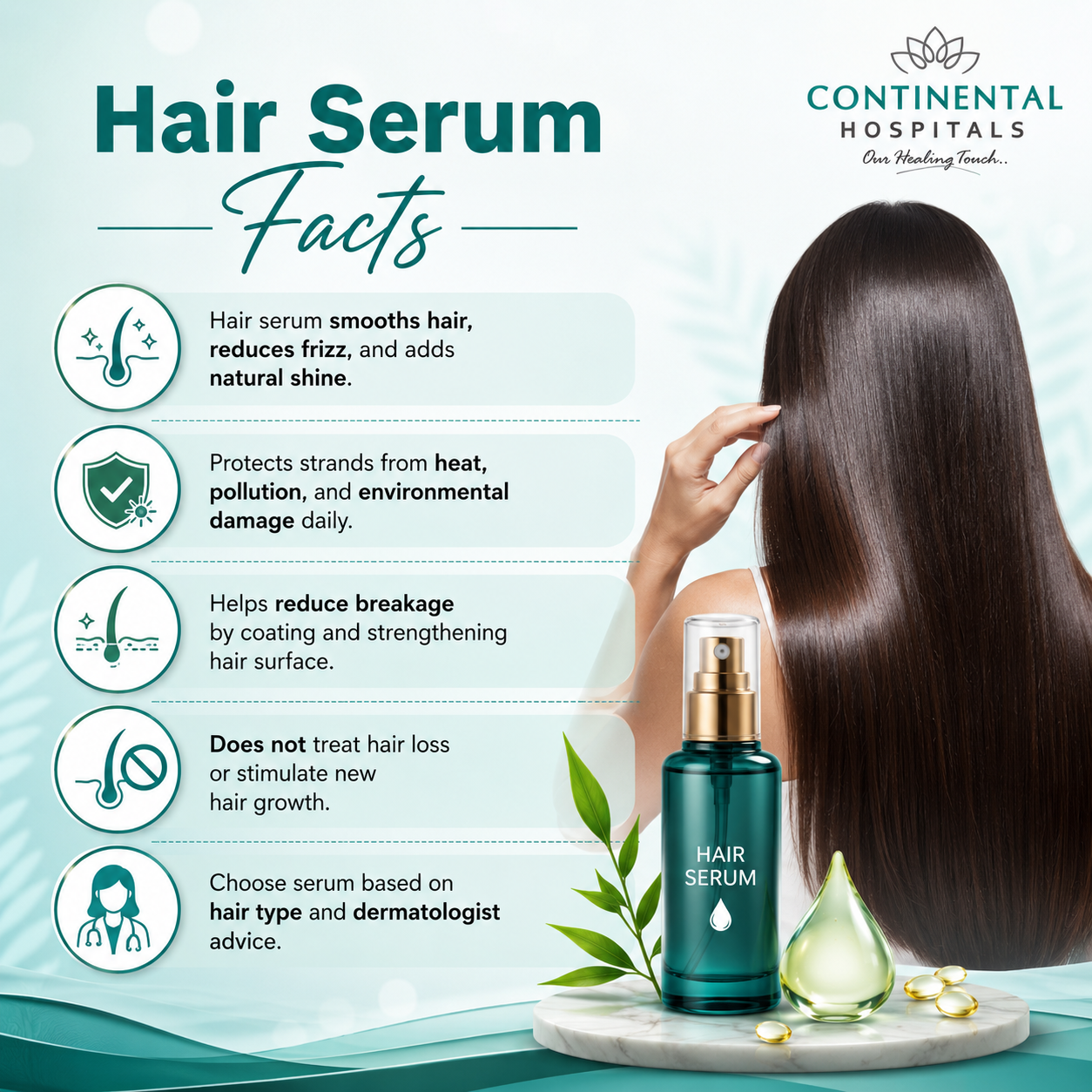
Unlike heavy creams, a hair serum is a lightweight, liquid-based treatment formulated with a high concentration of active ingredients. Dermatologists explain that traditional hair serums act like a protective shield. Instead of absorbing deep into the inner core, they primarily coat the outer hair shaft.

This mechanism serves three major purposes:

Smoothing the Cuticle: It seals down microscopic, frayed scales on the hair strand to eliminate frizz instantly.

Locking in Moisture: It prevents environmental humidity from ruining your style while keeping natural moisture trapped inside.

Reflecting Light: The protective coating creates a smooth surface that reflects light, giving your hair an immediate, healthy-looking shine.

Ready for a Customized Hair Care Plan?
Don’t rely on trial-and-error with over-the-counter serums. Get a precise medical evaluation of your scalp and hair health from the top Dermo specialists at Continental Hospital.
Hair Serum vs Hair Oil: What is the Difference?

Many people confuse hair serums with hair oils, but they serve completely different functions in a dermatologist-recommended hair care routine.

Second Opinion

Hair Serums are primarily styling and shielding agents. They sit on the surface to protect against heat styling, UV rays, and pollution.

Hair Oils (like pure coconut, argan, or jojoba oil) are deeper conditioning treatments. They possess smaller molecular structures designed to penetrate the hair cuticle to nourish and lubricate the inner layers of the strand.

If your goal is immediate frizz control and heat protection, reach for a serum. If you want a deep, overnight nourishing treatment, a hair oil is your best bet.

Do Hair Growth Serums Actually Work?

Yes, but the success of a clinical hair growth serum completely depends on its active ingredients. While standard hair serums only target the hair strand, a dermatologist-recommended hair growth serum is formulated specifically for the scalp.

According to clinical trichologists, top-tier scalp serums stimulate blood circulation to dormant hair follicles, effectively extending the hair's natural growth cycle. For visible results, look for science-backed formulations containing peptides, biotin, caffeine, or rosemary oil. For medical-grade hair thinning, dermatologists frequently prescribe formulas featuring Minoxidil.

Is It Safe to Use Hair Serum Daily?

A very common question is: Is hair serum safe to use daily? The short answer from dermatologists is no, unless it is a specialized, water-based scalp serum.

Most standard styling serums contain silicones to give you that silky finish. While silicones are excellent for heat protection and smoothing, applying them every single day without washing your hair causes severe product buildup. Over time, this buildup weighs the hair down, makes it look greasy, and can even clog hair follicles on the scalp. Dermatologists recommend using styling serums 2 to 3 times a week, ideally on damp, freshly washed hair.

Need an Appointment?

How to Choose the Best Serum for Your Hair Type?

To get the maximum hair serum benefits, you must match the product to your specific hair or scalp concern:

For Frizzy Hair: Look for silicone-infused or argan-oil-based serums that lock out external humidity.

For Thinning & Hair Fall Control: Choose a scalp serum packed with growth peptides, caffeine, and biotin to fortify the roots.

For Dry, Itchy Scalp: Seek out serums containing hydrating hyaluronic acid or soothing aloe vera.

For Dandruff & Excess Oil: Look for a clarifying scalp serum formulated with salicylic acid to gently exfoliate dead skin cells.

Why Choose Continental Hospital?

When it comes to advanced hair restoration, scalp health, and hair fall control, generic over-the-counter products often fall short. True hair health starts beneath the surface, requiring a scientific approach tailored to your body's unique chemistry. At Continental Hospital, we offer specialized, world-class dermatological and trichology care to address the root causes of hair thinning, alopecia, and chronic scalp disorders.

Our features state-of-the-art diagnostic tools to evaluate hair density, scalp inflammation, and follicular health. Rather than offering one-size-fits-all remedies, our expert dermatologists design comprehensive, clinical-grade treatment plans. From custom-compounded topical serums to advanced therapies like PRP (Platelet-Rich Plasma) and specialized medical scalp care, we integrate cutting-edge science with personalized patient attention. At Continental Hospital, we prioritize your long-term confidence and health, ensuring your hair receives the precise medical care it needs to thrive.

Conclusion

Ultimately, hair serums are excellent tools for enhancing shine, taming unruly frizz, and protecting against thermal styling damage. However, if you are utilizing a serum for hair fall control or treating a thinning scalp, over-the-counter styling serums won't cut it, you need clinical, ingredient-focused formulas. For chronic hair loss or persistent scalp issues, consulting a qualified professional is always the safest and most effective path to lasting hair health.

Book Our Best Dermatologist Consultation Today
Don't guess what your hair needs. Get a personalized, medical evaluation from the leading specialists at Continental Hospital.

Frequently Asked Questions

Yes, hair serum can be beneficial for your hair when it is used correctly and chosen based on your hair type. Dermatologists explain that hair serums coat the outer layer of the hair, helping reduce frizz, improve shine, and protect against environmental damage. They also minimize tangles, making hair easier to manage. However, hair serum does not repair damaged hair from within or stimulate new hair growth. It works mainly as a protective and smoothing product. Regular use can help reduce breakage caused by friction and heat styling. Applying only a small amount to the mid-lengths and ends prevents greasiness. Using too much serum or applying it to the scalp may clog pores or make the hair appear oily. For the best results, combine hair serum with a healthy hair care routine that includes gentle cleansing, conditioning, and a balanced diet.
Hair serum itself does not directly stop hair fall because it does not treat the root causes of hair loss. Dermatologists state that most hair fall occurs due to genetics, hormonal changes, nutritional deficiencies, stress, or medical conditions. Hair serum helps reduce hair breakage by coating the hair strands and protecting them from friction, heat, and pollution. This means your hair may appear healthier and fuller because fewer strands break during combing or styling. If you experience excessive hair shedding, it is important to identify the underlying cause rather than relying only on cosmetic products. A dermatologist can recommend appropriate treatments if needed. Hair serum should be viewed as a supportive product rather than a treatment for hair loss. Maintaining scalp health, eating a balanced diet, and following medical advice remain essential for reducing hair fall.
Most dermatologists recommend applying hair serum only to the mid-lengths and ends of the hair rather than directly onto the scalp. Traditional hair serums are designed to smooth the hair cuticle and protect the strands, not the scalp. Applying too much serum on the scalp may lead to oiliness, product buildup, or clogged hair follicles in some individuals. A small amount is usually enough to cover the hair evenly. If you are using a scalp serum specifically formulated for scalp health or hair growth, follow the instructions provided by your dermatologist or the product manufacturer. Always apply serum to clean or slightly damp hair for the best results. Choosing the right product based on your hair type also helps maximize its benefits without causing unwanted buildup.
Hair serum can improve the appearance of damaged hair, but it cannot permanently repair damaged hair fibers. Dermatologists explain that once hair is damaged, it cannot heal because the hair shaft is made of dead protein cells. Hair serum works by creating a protective layer over the hair, making it smoother, shinier, and less prone to tangling. It can temporarily hide split ends and reduce roughness while protecting against additional damage from heat styling and pollution. Regular trimming of split ends and using nourishing conditioners are equally important. Limiting excessive heat styling and chemical treatments also helps maintain healthier hair. Hair serum should be considered a cosmetic product that enhances hair appearance rather than a permanent repair solution.
The frequency of hair serum use depends on your hair type, lifestyle, and styling habits. Dermatologists generally recommend using hair serum after every hair wash or whenever additional protection from heat styling is needed. People with dry, frizzy, or chemically treated hair may benefit from more frequent use, while those with naturally oily hair should apply only a small amount when necessary. Overusing hair serum can make hair feel heavy or greasy. Applying a few drops evenly through damp or dry hair is usually sufficient. The goal is to protect the hair without creating product buildup. Washing your hair regularly with a suitable shampoo helps remove excess residue. Following the manufacturer's instructions also ensures the best results.
The best hair serum depends on your individual hair type and concerns. Dermatologists recommend lightweight silicone-based or hydrating serums for fine hair because they reduce frizz without weighing the hair down. Thick, curly, or dry hair often benefits from richer serums containing nourishing oils such as argan oil or coconut-derived ingredients. Color-treated hair may require serums with UV protection to reduce fading. Individuals with heat-styled hair should choose serums that offer heat protection. Reading ingredient labels and selecting products designed for your hair needs can improve results. If you have sensitive skin or scalp conditions, consult a dermatologist before trying new products. Personalized recommendations help prevent irritation while achieving healthier-looking hair.
Hair serums are generally safe when used as directed, but they may cause minor issues if applied incorrectly or excessively. Some people may notice greasy-looking hair if too much product is used. Applying serum directly to the scalp can sometimes contribute to buildup or irritation, especially in people with sensitive skin. Certain fragrance ingredients may trigger allergic reactions in susceptible individuals. Choosing products suitable for your hair type reduces the risk of unwanted effects. Performing a patch test before using a new product is a good precaution if you have sensitive skin. Washing your hair regularly also helps prevent residue accumulation. If you experience itching, redness, or persistent irritation, discontinue use and consult a dermatologist.
Hair serum can improve the appearance of your hair, but it cannot diagnose or treat medical conditions affecting the scalp or hair follicles. You should consult a dermatologist if you experience excessive hair fall, sudden thinning, bald patches, persistent dandruff, severe itching, scalp pain, or redness. These symptoms may indicate underlying conditions such as alopecia, fungal infections, nutritional deficiencies, hormonal imbalances, or autoimmune disorders. Early diagnosis often leads to more effective treatment and better outcomes. A dermatologist can perform a detailed evaluation, identify the underlying cause, and recommend evidence-based therapies. Hair serum may still be included as part of your overall hair care routine, but it should not replace proper medical evaluation when hair problems persist or worsen.
Disclaimer: The information provided in this blog is intended for general knowledge and informational purposes only, and does not constitute medical advice. Always consult with a qualified healthcare professional for any medical concerns or before making any decisions about your health.

Get in Touch With Us

Whether you are from India or abroad, we are here to help you with your medical queries. Please fill out the form below and our team will connect with you shortly.

  • ✔ Quick response from our medical experts
  • ✔ Secure data handling & privacy
  • ✔ Easy upload for reports & documents
banner_image

Chat with our medical experts on WhatsApp for quick assistance and hassle-free appointment booking

Recent Posts