.webp)


Finding a lump behind the ear can be worrying. Many people notice it while washing their hair, wearing glasses, or touching the area due to pain or discomfort. In most cases, a lump behind the ear is harmless, but sometimes it may indicate an underlying medical condition that needs attention. Understanding the causes, symptoms, and treatment options can help you decide when to seek medical care.
What Is a Lump Behind the Ear?
A lump behind the ear is a swelling or raised area that appears near the ear or on the bone behind it. It can feel soft or hard, painful or painless, and may develop suddenly or slowly over time. A lump behind ear on bone often feels firm and may not move when touched, while soft lumps are usually related to infections or cysts.
Lumps can affect people of all ages. A lump behind ear adult cases are often linked to infections or skin conditions, while a lump behind ear kids is commonly due to swollen lymph nodes caused by minor illnesses.
Visit our ENT Department at Continental Hospitals Hyderabad for expert diagnosis, advanced treatment, and compassionate care. Book your consultation today for better ear health.
Common Causes of Lump Behind the Ear
Understanding the cause is the first step toward proper treatment. Below are the most common reasons for a lump behind the ear.
Swollen Lymph Nodes
Lymph nodes are part of the immune system and help fight infections. When the body is dealing with an infection, these nodes can swell.
Common triggers include
• Ear infections
• Throat infections
• Scalp infections
• Viral illnesses like cold or flu
A pea sized lump behind ear is often a swollen lymph node and usually reduces in size once the infection clears.
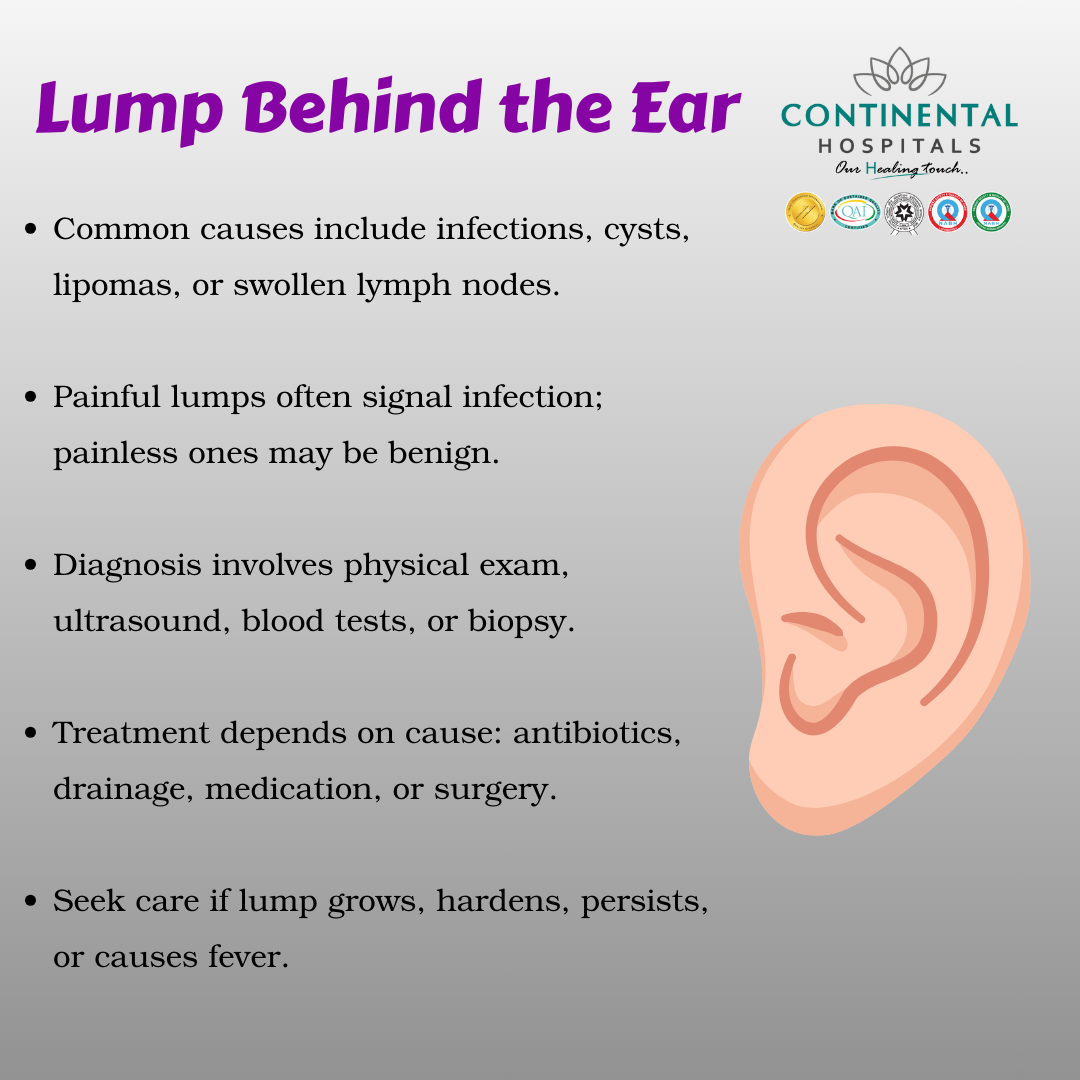

Ear Infection Lump
An ear infection lump may appear behind the ear due to inflammation spreading to nearby tissues. This type of lump behind ear pain is often accompanied by earache, fever, or discharge from the ear.
Sebaceous Cysts
Sebaceous cysts are non cancerous lumps caused by blocked skin glands. They usually feel soft, round, and painless. These lumps grow slowly and may become infected if not treated.
Mastoid Bone Infection
The mastoid bone is located behind the ear. Infection of this bone can lead to a hard lump behind ear on bone, often associated with severe pain, fever, and ear discharge. This condition requires immediate medical care.
Skin Conditions
Boils, abscesses, or acne can also cause a lump behind the ear. These lumps are often red, tender, and filled with pus.
Benign Tumors
Non cancerous growths like lipomas can appear as painless lumps behind the ear. These usually grow slowly and do not cause discomfort.
Rare but Serious Causes
In rare cases, a persistent lump may be linked to serious conditions such as tumors. Any lump that grows rapidly, becomes hard, or does not improve over time should be evaluated by a doctor.
Symptoms to Watch For
A lump behind the ear may come with other symptoms that help identify the cause.
Common symptoms include
• Lump behind ear pain or tenderness
• Redness or warmth around the area
• Fever or general illness
• Ear pain or hearing changes
• Discharge from the ear
• Headache or swelling around the ear
If the lump is painless, small, and mobile, it is usually less concerning. Painful or rapidly growing lumps need medical attention.
Lump Behind the Ear in Adults and Children
Lump Behind Ear Adult
Adults may develop lumps due to infections, cysts, or chronic skin conditions. Lifestyle factors like stress, weak immunity, and untreated infections can contribute to the problem.
Lump Behind Ear Kids
Children commonly experience lumps due to frequent infections. Their immune system reacts quickly, causing lymph nodes to swell. Most lumps in children resolve on their own, but medical advice is needed if the swelling persists.
When Should You See a Doctor?
You should consult a doctor if
• The lump lasts longer than two weeks
• The lump increases in size
• There is severe pain or fever
• The skin becomes red or warm
• There is hearing loss or ear discharge
• The lump feels hard and fixed
Early evaluation helps prevent complications and ensures peace of mind.
How Is a Lump Behind the Ear Diagnosed?
Doctors use a step by step approach to identify the cause.
Medical History and Physical Examination
The doctor checks the size, texture, and tenderness of the lump and asks about symptoms like pain, fever, or recent infections.
Imaging Tests
Ultrasound or CT scans may be advised to understand the structure of the lump, especially for a lump behind ear on bone.
Blood Tests
Blood tests help identify infections or inflammation in the body.
Biopsy
In rare cases, a small tissue sample may be taken to rule out serious conditions.
Treatment Options for Lump Behind the Ear
Treatment depends on the underlying cause.
Infection Related Lumps
Bacterial infections are treated with antibiotics. Viral infections usually improve with rest and supportive care.
Pain Relief
Pain relievers and warm compresses can reduce discomfort and swelling.
Cyst Treatment
Sebaceous cysts may not need treatment unless they are painful or infected. In such cases, minor procedures can remove them safely.
Surgical Treatment
Surgery may be required for abscesses, mastoid infections, or tumors. Early intervention leads to better outcomes.
Can a Lump Behind the Ear Be Prevented?
While not all lumps can be prevented, you can reduce risk by
• Treating ear and throat infections early
• Maintaining good scalp and ear hygiene
• Avoiding picking or squeezing lumps
• Strengthening immunity with a healthy lifestyle
Why Choose Continental Hospitals Hyderabad?
Continental Hospitals is known as the best hospital in Hyderabad for comprehensive and advanced medical care. The hospital offers world class infrastructure, advanced diagnostic facilities, and a patient centered approach.
Key highlights include:
• Internationally accredited hospital with NABH and JCI standards
• Highly experienced doctors across multiple specialties
• Advanced imaging and laboratory services
• Multidisciplinary team approach for accurate diagnosis
• Safe, ethical, and evidence based treatment protocols
• Excellent infection control and patient safety measures
At Continental Hospitals, every patient receives personalized care with a focus on comfort, safety, and recovery.
Conclusion
A lump behind the ear is often harmless, but it should never be ignored. Understanding the causes, symptoms, and treatment options helps you act at the right time. Whether it is a pea sized lump behind ear due to infection or a painful swelling that needs urgent care, early diagnosis makes a big difference.
consult our Best ENT Specialists at Continental Hospitals Hyderabad. Our experts provide accurate diagnosis, advanced treatment, and compassionate care to help you recover with confidence. Book your consultation today and take the first step toward better ear health.
Related Blog Topics: