.webp)

.webp)
The nipah virus is a serious viral infection that has drawn attention in India and other parts of the world due to its high risk and rapid spread. Understanding what is nipah virus, recognizing the early nipah virus symptoms, and knowing how to respond is crucial for keeping yourself and your loved ones safe. Hospitals like Continental Hospitals, one of the best hospitals in Hyderabad, are fully equipped to handle such infections with advanced care and internationally accredited facilities.
What is Nipah Virus?
Nipah virus is a zoonotic virus, meaning it spreads from animals to humans. It is primarily found in fruit bats, which are natural hosts of the virus. The virus can also spread from person to person through direct contact with bodily fluids, contaminated food, or close interactions with an infected person. Outbreaks have been reported in India, including Kerala, and awareness about the virus is crucial for prevention.
The virus can cause severe illness, including respiratory and neurological complications, making early detection essential.
Visit our General Physician department at Continental Hospitals for timely evaluation, tests, and treatment of fever, cough, or fatigue.
Signs and Symptoms of Nipah Virus
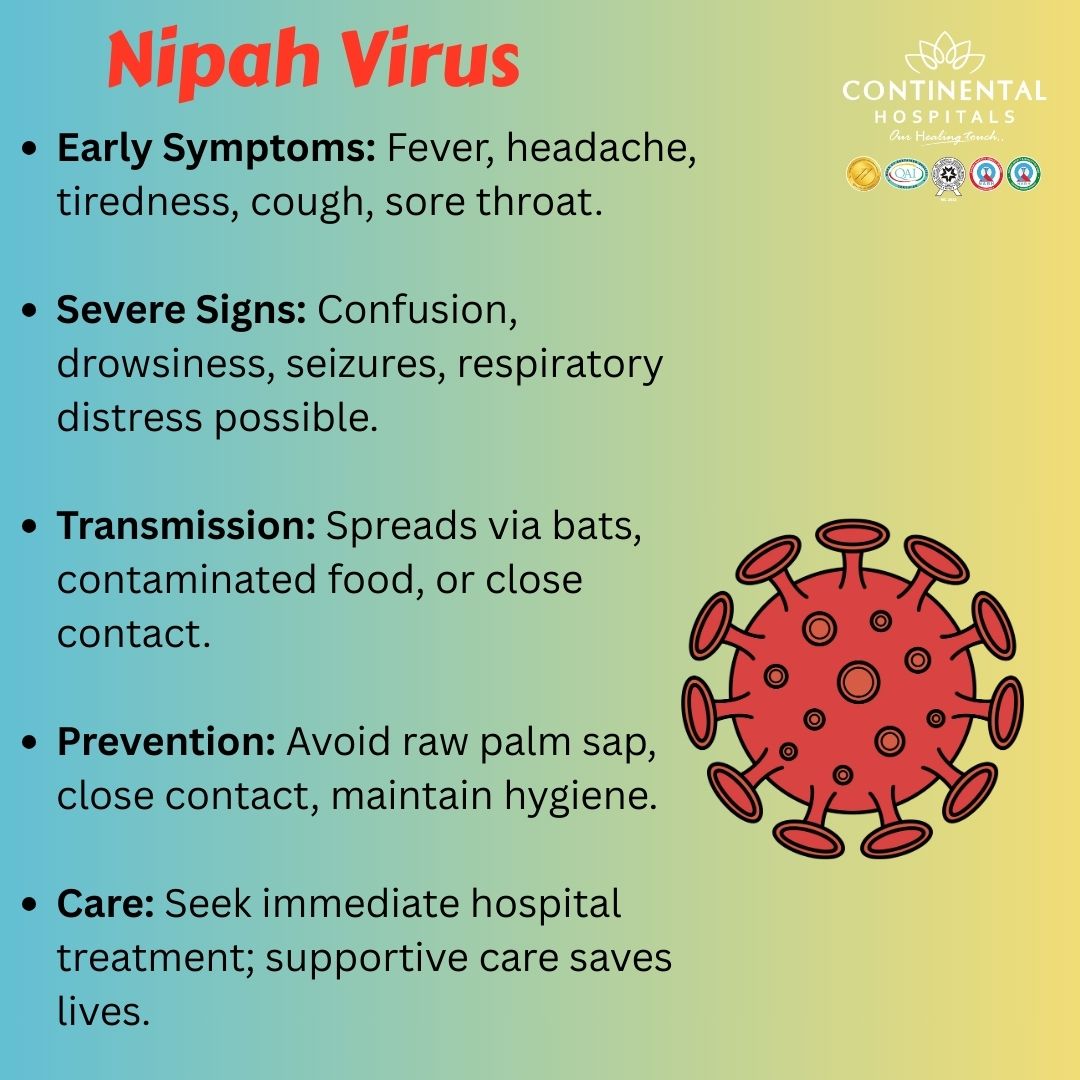
Recognizing the nipah virus symptoms early can help prevent complications. Common signs include:
- Fever and headache lasting a few days
- Drowsiness or unusual fatigue
- Cough and difficulty breathing
- Muscle pain and body weakness
- Vomiting or nausea
- Confusion, disorientation, or altered consciousness
- Seizures in severe cases
The incubation period of the virus is typically between 4 and 14 days. Symptoms can progress rapidly in severe cases, affecting the brain and causing encephalitis.
How Nipah Virus Spreads
The spread of nipah virus in India and other regions has shown several patterns:
- Direct contact with infected bats, their urine, saliva, or partially eaten fruits
- Consumption of contaminated food products such as raw date palm sap
- Close contact with an infected person, especially in healthcare settings
- Exposure to infected animals in areas where the virus is present
Because the virus spreads through both animals and humans, early detection and preventive measures are critical.

Nipah Virus Outbreaks in India
India has experienced nipah virus outbreaks primarily in southern states, including Kerala and West Bengal. The outbreaks have prompted national health alerts and increased surveillance. Understanding local nipah virus alerts and following government guidelines can help prevent further spread.
Prevention of Nipah Virus
Preventive measures play a vital role in controlling the spread of nipah virus infection. Key steps include:
- Avoid consuming raw date palm sap or fruits that may be contaminated by bats
- Maintain good hygiene and wash hands frequently
- Avoid close contact with individuals showing symptoms of infection
- Use protective equipment when caring for infected patients
- Report unusual illnesses or fever clusters to local health authorities promptly
These steps are essential to reduce the risk of infection at both community and personal levels.
When to Seek Medical Care
If you notice nipah virus symptoms or have been exposed to someone suspected of infection, seek immediate medical care. Early diagnosis can improve outcomes and prevent severe complications. Hospitals like Continental Hospitals provide dedicated infection control units, advanced diagnostic facilities, and expert care for infectious diseases.
Why Choose Continental Hospitals for Nipah Virus Care?
Continental Hospitals is recognized as one of the best hospitals in Hyderabad, with a strong focus on patient safety and high-quality care. Here are some reasons to trust Continental Hospitals for nipah virus infection management:
- Fully equipped isolation and intensive care units for infectious diseases
- Experienced infectious disease specialists and internal medicine experts
- Internationally accredited facilities ensuring strict adherence to safety protocols
- Advanced laboratory and diagnostic services for early detection
- Patient-centric approach with round-the-clock monitoring and personalized treatment plans
The hospital is committed to providing fast, accurate, and comprehensive care to patients with nipah virus in India or those seeking preventive guidance during outbreaks.
Key Points About Nipah Virus
- Zoonotic origin: The virus spreads from bats to humans and also person-to-person
- Early symptoms: Fever, headache, cough, and fatigue are common
- Severe cases: May lead to encephalitis, seizures, and respiratory distress
- Transmission: Direct contact, contaminated food, or contact with infected patients
- Prevention: Hand hygiene, avoiding risky foods, and protective measures
- Medical care: Early treatment in specialized hospitals improves outcomes
Preparing for Nipah Virus Alerts
Communities and individuals should stay informed about nipah virus alerts issued by health authorities. Hospitals like Continental Hospitals provide guidance on preventive care, travel safety, and early warning signs, ensuring both public and patient safety.
Conclusion
The nipah virus is a serious infection that requires awareness, preventive measures, and timely medical care. Recognizing nipah virus symptoms and knowing how it spreads can save lives. Hospitals like Continental Hospitals, with internationally accredited facilities and expert care, offer the highest standard of treatment for infectious diseases.
If you or a loved one experiences symptoms of nipah virus infection or have concerns about exposure, seek medical attention immediately. Early intervention can make a significant difference in recovery and safety.
Consult our best general physician at Continental Hospitals for proper evaluation, testing, and treatment. If you experience fever, cough, or unusual fatigue following potential exposure to the virus, do not delay seeking medical care.
Related Blog Topics: