.webp)

The recent Seychelles chikungunya outbreak has raised concerns among travelers planning a holiday to this beautiful island nation. Known for its beaches and tropical climate, Seychelles attracts visitors from around the world. However, the rise in chikungunya cases has made many people ask an important question. Is it safe to travel to Seychelles right now?
What Is Chikungunya?
Chikungunya is a viral fever caused by the chikungunya virus. It spreads through the bite of infected Aedes mosquitoes. These mosquitoes are most active during the daytime.
Chikungunya is not spread directly from person to person. The infection happens when a mosquito bites someone who is already infected and then bites another person.
Chikungunya has been reported in several tropical countries, including India. Outbreaks usually occur during or after the rainy season when mosquito breeding increases.
Understanding the Seychelles Chikungunya Outbreak
The Seychelles chikungunya outbreak refers to a recent rise in chikungunya cases reported in Seychelles. Health authorities have been monitoring the situation and advising travelers to take precautions.
Chikungunya in Seychelles is linked to mosquito exposure. Tropical weather conditions make it easier for mosquitoes to multiply. This increases the chikungunya travel risk, especially for visitors who spend time outdoors.
Before traveling, it is important to check the latest travel advisory Seychelles updates from official sources. These advisories provide guidance on preventive measures and current risk levels.
Visit our Infectious Disease Specialist Department at Continental Hospitals, Hyderabad, for expert diagnosis, advanced care, and complete recovery support.
Is It Safe to Travel to Seychelles?
Many travelers are asking, is it safe to travel to Seychelles during a chikungunya outbreak?

The answer depends on several factors:
• The current number of reported cases
• Your health condition
• Preventive measures taken during travel
• Duration of stay
Chikungunya rarely causes death, but it can lead to severe joint pain and weakness. For most healthy adults, the illness is self limiting. However, elderly individuals, pregnant women, and people with weak immunity should be extra cautious.
If you plan to travel, follow mosquito protection measures strictly. Staying informed through official travel advisory Seychelles notifications is essential.
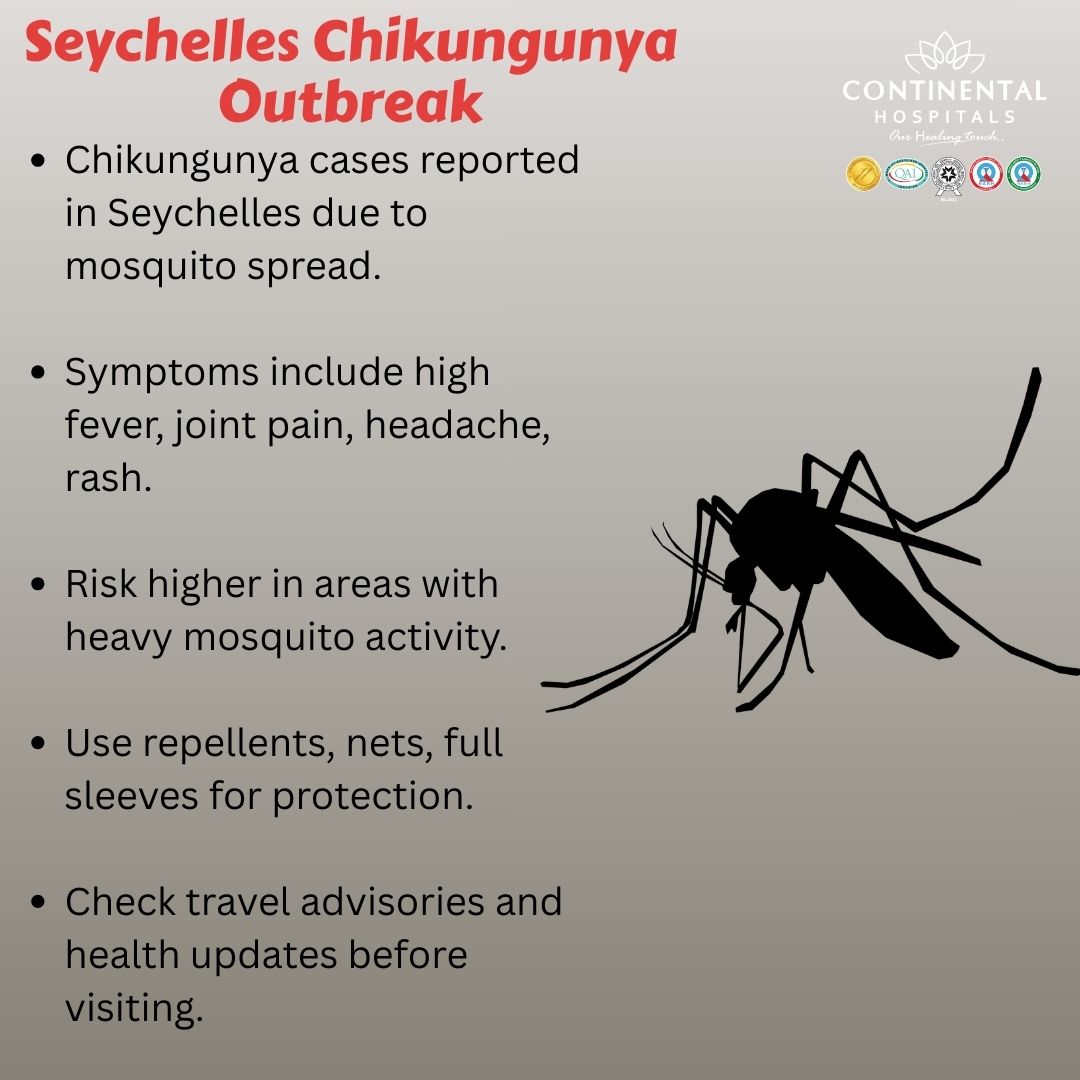
Chikungunya Symptoms You Should Know
Recognizing chikungunya symptoms early can help you seek timely medical care.
Common symptoms include:
• Sudden high fever
• Severe joint pain
• Muscle pain
• Headache
• Skin rash
• Fatigue
• Swelling in joints
Joint pain is the most noticeable symptom of chikungunya. In some cases, it can last for weeks or even months.
Symptoms usually appear within a few days after being bitten by an infected mosquito. If you develop fever and joint pain after travel, consult a doctor immediately.
Who Is at Higher Risk?
Certain groups are more vulnerable to complications from chikungunya:
• Elderly individuals
• Infants
• Pregnant women
• People with chronic illnesses
• Patients with weak immune systems
If you belong to any of these groups, consult a physician before planning international travel.
How to Reduce Chikungunya Travel Risk
You can significantly lower your chikungunya travel risk by taking simple precautions.
Personal Protection Measures
• Use mosquito repellent regularly
• Wear full sleeve clothing
• Stay in air conditioned or well screened rooms
• Use mosquito nets when needed
• Avoid stagnant water areas
During Outdoor Activities
• Avoid early morning and late afternoon mosquito exposure
• Apply repellent on exposed skin
• Reapply repellent as instructed
These measures are important in regions reporting chikungunya in Seychelles.
What to Do If You Develop Symptoms After Travel?
If you return from Seychelles and experience chikungunya symptoms such as fever and joint pain, seek medical care immediately.
Early diagnosis helps in:
• Confirming the infection
• Managing fever safely
• Reducing joint pain
• Preventing dehydration
• Avoiding complications
There is no specific antiviral treatment for chikungunya. Treatment focuses on relieving symptoms and supporting recovery.
Do not ignore persistent joint pain. In some cases, long term arthritis like symptoms can develop.
Difference Between Chikungunya and Other Viral Fevers
Chikungunya may look similar to dengue or other viral fever travel infections. However, severe joint pain is more common in chikungunya.
Doctors usually perform blood tests to confirm the diagnosis. Accurate identification ensures the right management plan.
If you have recently traveled and experience fever, do not self medicate. Proper evaluation is important.
When Should You Postpone Travel?
You may consider postponing travel if:
• There is a major outbreak with high transmission
• You have underlying health conditions
• You are pregnant
• You are traveling with infants
• You cannot follow mosquito precautions strictly
Always review the latest travel advisory Seychelles updates before finalizing travel plans.
Why Choose Continental Hospitals for Chikungunya Care?
If you experience symptoms after travel, getting expert medical care is essential.
Continental Hospitals is recognized as the best hospital in Hyderabad for comprehensive infectious disease care. Our hospital is internationally accredited and follows global safety standards. We combine advanced diagnostic technology with experienced specialists to deliver accurate diagnosis and effective treatment.
Our Strengths
• NABH accredited hospital ensuring quality care
• Experienced Infectious Disease Specialists
• Advanced laboratory diagnostics
• 24 by 7 emergency services
• Patient centered approach
• International standards in infection control
We provide complete evaluation and supportive care for chikungunya and other viral infections. Our team ensures careful monitoring to prevent complications.
At Continental Hospitals, patient safety and clinical excellence are our priorities.
Frequently Asked Questions
Can chikungunya be prevented?
Yes. Prevention mainly involves avoiding mosquito bites and controlling mosquito breeding.
Is chikungunya life threatening?
In most cases, it is not life threatening. However, complications can occur in high risk individuals.
How long does recovery take?
Most people recover within one to two weeks. Joint pain may last longer in some patients.
Should I cancel my trip to Seychelles?
It depends on the current outbreak status and your health condition. Check official travel advisory Seychelles updates before making a decision.
Conclusion
The Seychelles chikungunya outbreak has understandably raised concerns among travelers. Chikungunya is a mosquito-borne viral fever that can cause intense joint pain and fever. While it is usually not fatal, it can cause significant discomfort.
Is it safe to travel to Seychelles right now? The answer depends on your risk factors and preventive measures. By staying informed, following mosquito precautions, and seeking timely medical advice, you can reduce your chikungunya travel risk.
If you develop chikungunya symptoms after travel, do not ignore them. Early medical care can make a big difference.
If you are suffering from fever, joint pain, or symptoms after international travel, consult our best infectious disease specialist at Continental Hospitals, the best hospital in Hyderabad. Our expert team is ready to provide comprehensive care and support your recovery.
Related Blog Topics: