.webp)


Polycystic Ovarian Disease is one of the most common hormonal conditions affecting women today. Many women focus on diet, medication, and lifestyle changes to manage symptoms, but one factor is often overlooked. Stress. The connection between stress and PCOD is stronger than many people realize.
Hormones in the body function through a delicate balance. When emotional or physical stress increases, it can disrupt this balance and trigger several health issues. For women with PCOD, stress can worsen symptoms, affect the menstrual cycle, and make hormonal regulation more difficult.
Understanding the hidden link between stress and PCOD can help women take better control of their reproductive health and overall wellbeing.
Understanding PCOD and Hormonal Imbalance
PCOD hormonal imbalance occurs when the ovaries produce higher levels of androgens, also known as male hormones. This imbalance can interfere with ovulation and cause irregular menstrual cycles.
Common symptoms of PCOD include
• Irregular periods
• Acne or oily skin
• Excess facial or body hair
• Weight gain
• Difficulty in ovulation
• Fertility challenges
Hormones such as insulin, estrogen, progesterone, and androgens must work together in balance. When this harmony is disrupted, female hormonal imbalance can occur. One of the strongest external factors affecting this balance is stress.
Visit our Gynecology Department at Continental Hospitals for expert care in PCOD, hormonal imbalance, irregular periods, and fertility issues with personalized treatment.
How Stress Affects Hormones in the Body
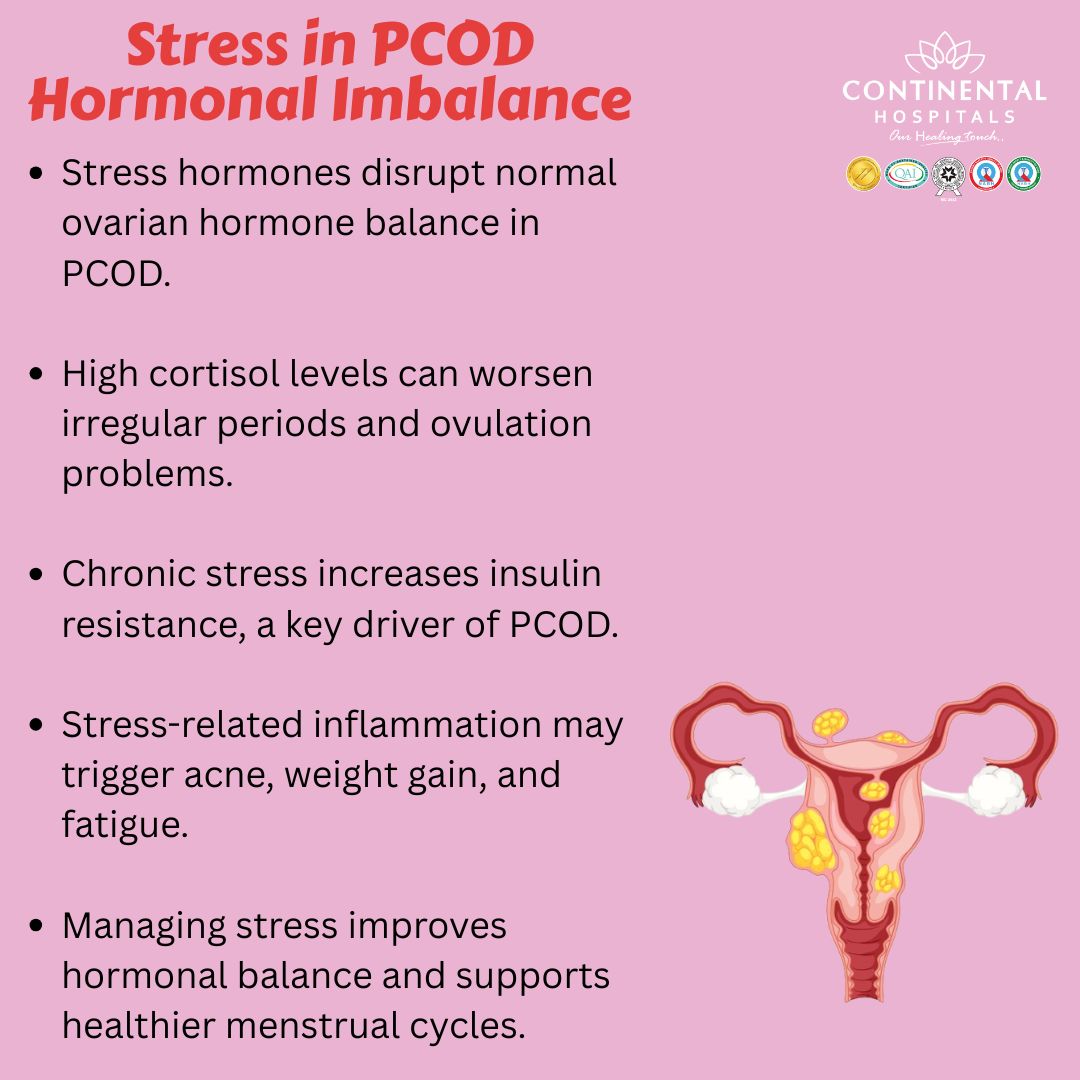
Stress triggers the release of cortisol, often referred to as the stress hormone. Cortisol is produced by the adrenal glands and plays a role in the body's response to pressure or challenges.

When stress becomes chronic, cortisol levels remain elevated. High cortisol can disrupt several hormonal pathways in the body.
This is where the connection between stress and hormonal imbalance becomes important. Elevated cortisol can interfere with reproductive hormones, leading to irregular ovulation and worsening PCOD symptoms.
In women who already have PCOD hormonal imbalance, prolonged stress can intensify the problem and make treatment more difficult.
The Link Between Stress and PCOD
Research shows that the relationship between stress and PCOD is complex and interconnected. Stress affects both metabolic and reproductive functions.
Here are key ways stress influences PCOD.
Increased Cortisol Levels
Higher cortisol levels affect insulin sensitivity. Many women with PCOD already struggle with insulin resistance. When stress increases cortisol, insulin resistance may worsen, which can increase androgen production.
This can aggravate PCOD hormonal imbalance and make symptoms more noticeable.
Disruption of Ovulation
The stress effect on menstrual cycle is significant. Stress can suppress signals between the brain and ovaries, especially through the hypothalamus and pituitary glands.
When this communication is disrupted, ovulation may not occur regularly. This leads to irregular periods, a common symptom in women dealing with stress and PCOD.
Increased Inflammation
Chronic stress can increase inflammation in the body. Inflammation may further disturb hormone regulation and contribute to metabolic problems often associated with PCOD.
Emotional and Mental Impact
Living with PCOD symptoms can itself become stressful. Concerns about irregular periods, weight changes, acne, or fertility can increase emotional pressure.
This creates a cycle where stress worsens PCOD symptoms, and worsening symptoms increase stress.
Causes of PCOD in Women
PCOD develops due to multiple factors rather than a single cause. Some women may have a genetic tendency, while others develop symptoms due to lifestyle or metabolic changes.
Important causes of PCOD in women include
• Hormonal imbalance involving androgens and insulin
• Family history of PCOD
• Insulin resistance
• Unhealthy dietary habits
• Lack of physical activity
• Excess weight gain
• Chronic stress and emotional pressure
Among these, stress is increasingly being recognized as a contributing factor that can worsen existing hormonal disturbances.
Stress Impact on PCOS Symptoms
The stress impact on PCOS can be seen in several physical and hormonal changes.
Women experiencing high levels of stress may notice
• More irregular menstrual cycles
• Increased acne breakouts
• Difficulty managing weight
• Higher fatigue levels
• Increased cravings for unhealthy foods
• Worsening insulin resistance
Stress may also make it harder for women to maintain healthy lifestyle routines, which are essential in managing PCOD hormonal imbalance.
Stress Effect on Menstrual Cycle
The stress effect on menstrual cycle is widely documented in medical research. Stress influences the hypothalamus, which controls hormone signals to the ovaries.
When stress signals dominate, the body may temporarily delay ovulation. This leads to delayed or missed periods.
In women with stress and PCOD, this disruption becomes more frequent. The result can be long gaps between cycles, unpredictable periods, or even temporary absence of menstruation.
Addressing stress is therefore an important step in restoring menstrual regularity.
Signs That Stress May Be Affecting Your PCOD
Some warning signs may indicate that stress is worsening hormonal imbalance.
Watch for these symptoms
• Sudden changes in menstrual cycle patterns
• Difficulty sleeping or poor sleep quality
• Increased anxiety or mood swings
• Frequent headaches or fatigue
• Emotional exhaustion
• Increased sugar cravings
Recognizing these signs early can help women seek timely support and manage stress effectively.
Managing Stress to Improve Hormonal Balance
Reducing stress can play a major role in improving hormonal health. Lifestyle changes can help regulate cortisol levels and support better reproductive health.
Effective ways to manage stress include
Prioritizing Sleep
Quality sleep helps regulate hormones and reduce cortisol levels. Maintaining a consistent sleep schedule supports hormonal recovery.
Regular Physical Activity
Exercise helps the body release endorphins, which improve mood and reduce stress. Physical activity also supports insulin sensitivity in women with PCOD.
Mindfulness and Relaxation
Practices such as meditation, breathing exercises, and yoga can help calm the nervous system and reduce stress impact on PCOS.
Balanced Nutrition
Healthy eating supports hormonal stability. A balanced diet rich in fiber, protein, and essential nutrients can help control insulin levels.
Professional Medical Guidance
Medical evaluation is important for identifying the underlying causes of PCOD hormonal imbalance and developing a personalized treatment plan.
Why Choose Continental Hospitals for PCOD Care?
Continental Hospitals is recognized as one of the best hospitals in Hyderabad for comprehensive women's healthcare. The hospital combines advanced medical expertise with patient focused care to support women dealing with hormonal disorders such as PCOD.
Key strengths of Continental Hospitals include
• Highly experienced gynecologists and endocrinologists
• Advanced diagnostic technology for accurate hormone evaluation
• Multidisciplinary care approach for PCOD management
• Personalized treatment plans for hormonal balance and fertility support
• International quality standards and patient safety protocols
Continental Hospitals is accredited by the Joint Commission International which reflects adherence to global healthcare quality standards. The hospital is also accredited by the National Accreditation Board for Hospitals and Healthcare Providers ensuring high standards of patient safety and clinical excellence.
These accreditations demonstrate the hospital’s commitment to delivering trusted and reliable medical care.
When Should You Consult a Doctor?
Women experiencing persistent symptoms related to stress and PCOD should seek medical guidance.
Consult a specialist if you experience
• Irregular or absent menstrual cycles
• Persistent acne or excess hair growth
• Difficulty conceiving
• Unexplained weight gain
• Severe hormonal imbalance symptoms
Early evaluation helps identify the underlying causes and allows doctors to recommend the right treatment plan.
Conclusion
The connection between stress and PCOD is an important but often underestimated factor in women's hormonal health. Chronic stress can disturb hormone regulation, worsen PCOD symptoms, and affect the menstrual cycle.
Recognizing the stress impact on PCOS allows women to take proactive steps toward better hormonal balance. Managing stress, maintaining healthy habits, and seeking expert medical guidance can significantly improve quality of life.
If you are experiencing symptoms related to stress and PCOD, consulting a specialist can help identify the root cause and guide you toward effective treatment.
At Continental Hospitals, consult our best gynecologists, who provide advanced diagnosis and personalized treatment for PCOD hormonal imbalance and female hormonal disorders. If you suffer from irregular periods, hormonal imbalance, or fertility concerns, visit Continental Hospitals, the best hospital in Hyderabad, for expert care and comprehensive women's health support.
Related Blog Topics: