.webp)

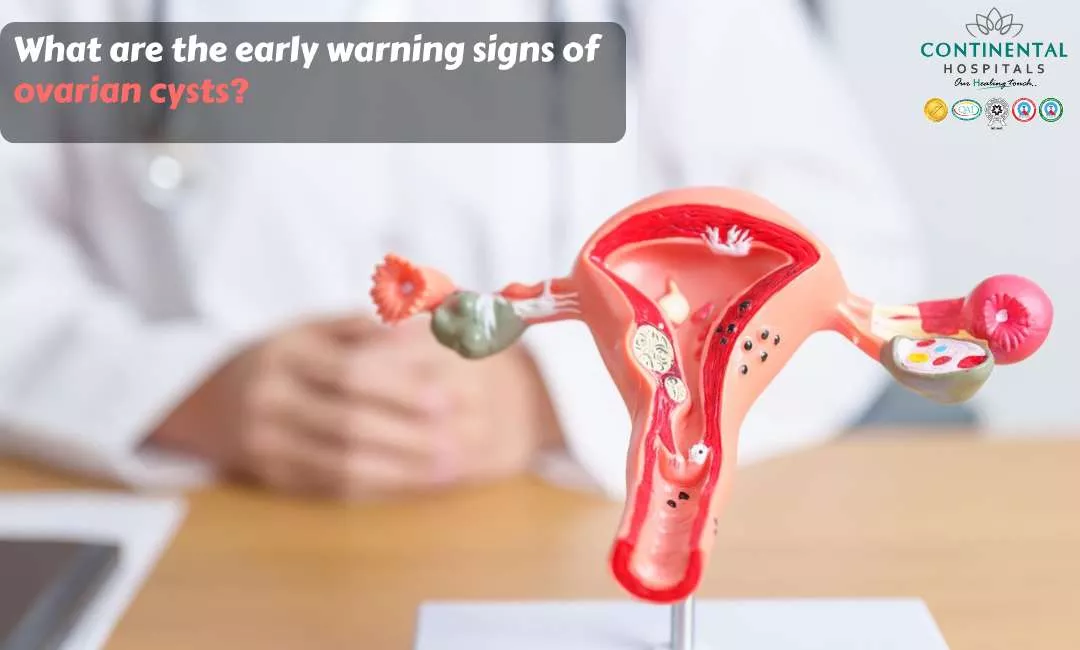
Ovarian cysts are common in women of reproductive age and are often harmless. Many cysts develop and disappear on their own without causing symptoms. However, some ovarian cysts can grow, rupture, or cause complications if not identified early. Understanding the early warning signs of ovarian cysts helps women seek timely medical care and prevent serious problems.
What Is an Ovarian Cyst?
An ovarian cyst is a fluid-filled sac that forms on or inside an ovary. Most ovarian cysts are functional, meaning they are related to the menstrual cycle. While many are harmless, some cysts may cause discomfort, pain, or complications.
Regular health checkups play an important role in early detection.
If you have pelvic pain, irregular periods, or ovarian cyst symptoms, Visit our Gynecology Specality at Continental Hospitals for early diagnosis and trusted care.
Early Warning Signs of Ovarian Cysts
Many women ask, what symptoms does ovarian cyst cause? Early symptoms may be mild and often ignored.
Common early warning signs include:
- Dull or sharp pain in the lower abdomen
- Pelvic discomfort on one side
- Bloating or fullness in the abdomen
- Irregular menstrual cycles
- Pain during physical activity
These symptoms may come and go, making diagnosis challenging without medical evaluation.
Common Ovarian Cyst Symptoms
As cysts grow or persist, symptoms may become more noticeable.

Ovarian cyst symptoms include:
- Persistent pelvic or abdominal pain
- Pain during periods or ovulation
- Pain during intercourse
- Frequent urination due to bladder pressure
- Nausea or digestive discomfort
If symptoms interfere with daily life, medical attention is important.
Ovarian Cyst Pain Explained
Ovarian cyst pain varies depending on size, type, and complications.
Pain may be:
- Mild and dull for small cysts
- Sharp and sudden for ruptured cysts
- Severe if torsion or internal bleeding occurs
Pain usually occurs on the side where the cyst is present.
What Causes Ovarian Cysts?
Understanding what causes ovarian cysts helps in prevention and management.
Common causes include:
- Hormonal imbalance
- Ovulation related changes
- Polycystic ovary syndrome
- Pregnancy related cysts
- Endometriosis
- Pelvic infections
Hormonal factors play a major role in cyst formation.
What Size of Ovarian Cyst Is Dangerous?
Not all cyst sizes are harmful, but size matters in determining risk.
General guidance:
- Small cysts often resolve naturally
- Larger cysts are monitored closely
- Very large cysts increase risk of rupture or torsion
Doctors assess size along with symptoms, type, and growth pattern to decide treatment.
Signs of Cyst on Ovaries Bursting
A cyst in the ovary rupture can cause sudden symptoms that need urgent care.
Warning signs of rupture include:
- Sudden severe pelvic pain
- Pain with fever or vomiting
- Dizziness or weakness
- Rapid breathing
- Signs of internal bleeding
A ruptured cyst can be a medical emergency and should not be ignored.
Ovarian Cyst Treatments
Treatment depends on cyst size, type, symptoms, and age.
Common ovarian cyst treatments include:
- Watchful waiting for small, symptom-free cysts
- Pain management medications
- Hormonal therapy to regulate cycles
- Surgical removal if complications arise
Early diagnosis helps avoid invasive procedures.
Birth Control Pills for Ovarian Cysts
Many women wonder about ovarian cysts and the pill.
Birth control pills for ovarian cysts:
- Help prevent formation of new cysts
- Regulate menstrual cycles
- Reduce hormonal fluctuations
While pills may not shrink existing cysts, they are useful in prevention and symptom control.
When Is Ovarian Cyst Surgery Needed?
Ovarian cyst surgery is considered when:
- Cyst is large or growing
- Severe or persistent pain occurs
- Rupture or torsion is suspected
- Malignancy cannot be ruled out
Surgical approach depends on cyst type and patient health.
Who Is at Higher Risk of Ovarian Cysts?
Certain factors increase the risk:
- Irregular periods
- Hormonal disorders
- Family history of ovarian cysts
- Previous cyst history
Regular gynecological checkups are advised for high risk women.
How Are Ovarian Cysts Diagnosed?
Diagnosis typically includes:
- Pelvic examination
- Ultrasound imaging
- Blood tests when needed
Early diagnosis allows conservative treatment in most cases.
When Should You See a Doctor?
Seek medical care if you experience:
- Persistent pelvic pain
- Sudden severe abdominal pain
- Pain with fever or vomiting
- Irregular bleeding
Timely consultation reduces complications.
Why Choose Continental Hospitals for Ovarian Cyst Care?
Continental Hospitals is recognized as one of the best hospitals in Hyderabad for comprehensive women’s health care.
Reasons to choose Continental Hospitals:
- Experienced Gynecologists and Women’s Health Specialists
- NABH and JCI accreditations ensuring international quality standards
- Advanced diagnostic and imaging facilities
- Evidence based ovarian cyst treatment protocols
- Multidisciplinary care with patient focused approach
The hospital follows strict safety guidelines and ethical medical practices.
Expert Gynecological Care at Continental Hospitals
Specialists at Continental Hospitals focus on accurate diagnosis, conservative management, and personalized treatment plans. From hormonal therapy to surgical care, every patient receives individualized attention.
Women benefit from:
- Early detection of ovarian cysts
- Safe monitoring and treatment
- Counseling on hormonal balance and prevention
Conclusion
Ovarian cysts are common but should never be ignored when symptoms appear. Early warning signs like pelvic pain, bloating, and menstrual changes help identify problems before complications arise. Understanding ovarian cyst symptoms, rupture signs, treatment options, and prevention ensures better reproductive health.
If you suffer from persistent pelvic pain, irregular periods, or symptoms suggestive of ovarian cysts, consult our best Gynecologist at Continental Hospitals. Early diagnosis, expert treatment, and compassionate care can help protect your reproductive health and overall wellbeing.