post-title

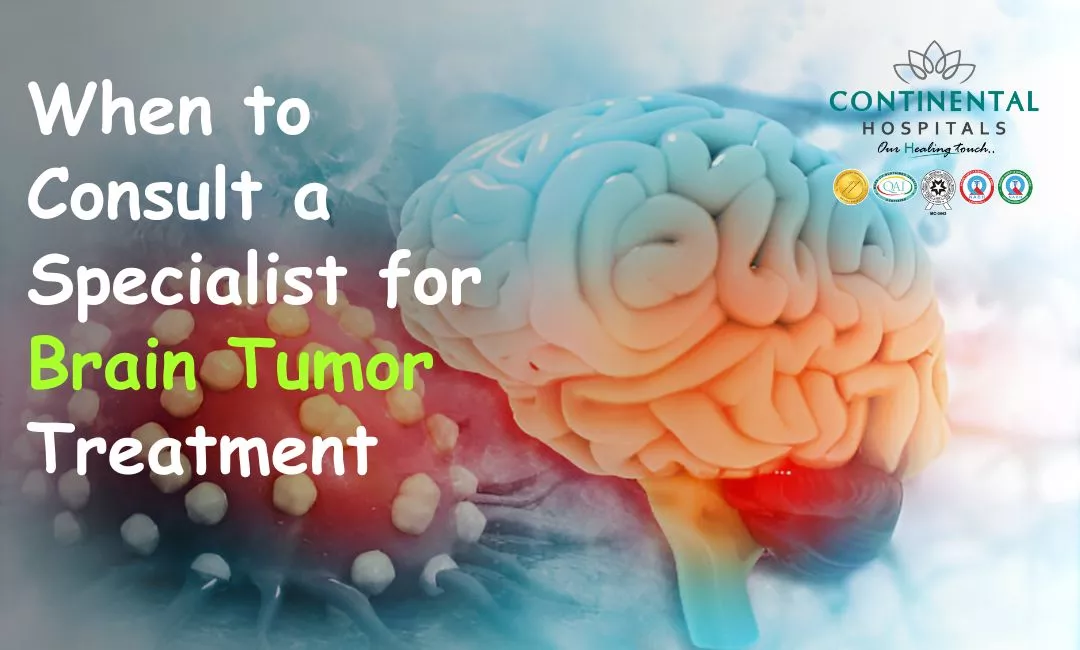
When to Consult a Specialist for Brain Tumor Treatment

Written by - Editorial Team
Medically Reviewed by - Dr K V Shivanand Reddy

Brain tumors are a serious health concern, but early consultation with a specialist can make a big difference in diagnosis, treatment, and recovery. Many people ignore symptoms until it’s too late. This blog helps you understand when to see a doctor, what signs to watch for, and how a hospital like Continental can support you with expert care and advanced facilities.

What is a brain tumor?

Your brain controls everything—thoughts, movements, memory, and even your heartbeat. A brain tumor is an abnormal growth of cells in or around the brain. Some tumors grow slowly and may be non-cancerous (benign), while others grow quickly and are cancerous (malignant).

You don’t have to understand everything about medical terms. But knowing the warning signs and when to take action can protect your health and even save your life.

If you or a loved one is experiencing persistent neurological symptoms, don't delay seeking expert care. Visit our best neuro doctor hyderabad for advanced diagnosis, personalized treatment, and compassionate support.

What are the warning signs of a brain tumor?

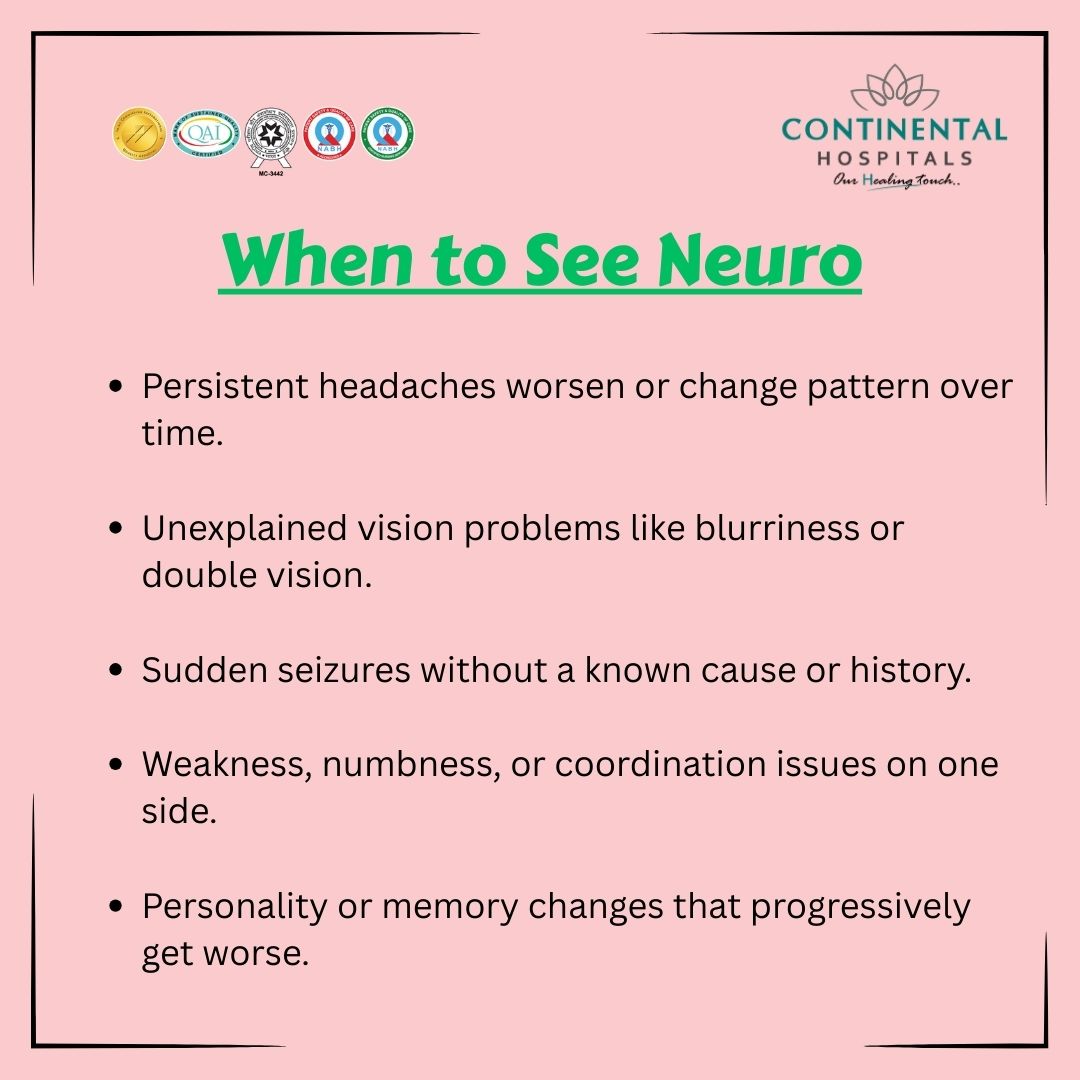
Brain tumors don’t always show up with dramatic symptoms. Sometimes, the signs are subtle and get worse over time. Here are some of the most common signs that may mean it’s time to consult a specialist:

Persistent Headaches: If headaches are frequent, worsen over time, or are different from usual, it’s time to check.

Vision Problems: Blurred vision, double vision, or loss of vision may be due to pressure on parts of the brain.

Seizures: Having a seizure without a history of epilepsy can be a red flag.

Balance and Coordination Issues: Feeling unsteady or clumsy may point to a tumor affecting movement centers in the brain.

Second Opinion

Personality or Memory Changes: Sudden changes in behaviour, mood, or memory can also be symptoms.

Speech Difficulties: Trouble speaking or understanding language should never be ignored.

Nausea and Vomiting: Especially when it happens in the morning and is not linked to food or stomach issues.

These symptoms may not always mean you have a brain tumor. But if they persist or worsen, it’s time to speak with a specialist.
When Should You See a Brain Tumor Specialist?

Here’s a simple rule: if symptoms are frequent, unusual, or affecting your daily life, consult a neurologist or neuro-oncologist immediately.

You should not wait for pain to become unbearable or for symptoms to worsen. The earlier a brain tumor is detected, the better the chances of successful treatment.

Need an Appointment?

Also, if you have a family history of brain tumors or have been exposed to radiation, you should be extra cautious and schedule regular check-ups.

What Happens During a Brain Tumor Consultation?

When you visit a specialist at Continental Hospitals, here’s what you can expect:

  • A complete medical history and symptom check
  • Neurological examination
  • Advanced imaging tests like an MRI or a CT scan
  • If needed, further tests like a biopsy or a PET scan

Based on the results, doctors will create a treatment plan tailored to your condition, which may include surgery, radiation, chemotherapy, or observation.

Why Choose Continental Hospitals for Brain Tumor Treatment?

Continental Hospitals in Hyderabad is one of the leading centers for brain tumor diagnosis and treatment. Here’s what makes us different:

Expert Team: Our neurologists, neurosurgeons, and oncologists work together to provide holistic care.

Advanced Imaging & Diagnostics: We use cutting-edge technology for accurate and early detection.

Minimally Invasive Surgery: Wherever possible, we use advanced techniques that reduce pain, scarring, and recovery time.

24/7 Emergency Support: Brain symptoms can appear suddenly. We’re always ready.

Personalized Care: Every patient is unique. We create custom treatment plans suited to individual needs.

Rehabilitation at Vitanova: After brain tumor treatment, recovery doesn’t stop. Our Vitanova Rehab Centre provides expert neuro-rehabilitation services, helping patients regain strength, mobility, and confidence.

Vitanova Rehab Centre – Your Partner in Recovery

Vitanova, the in-house rehabilitation center at Continental Hospitals, is specially designed for patients recovering from neurological conditions, including brain tumor surgery.

Here’s what you can expect:

Skilled Therapists: Physiotherapists, occupational therapists, and speech therapists work together to support your recovery.

Patient-Centred Programs: Each program is tailored to improve your daily function and independence.

Supportive Environment: Recovery can be emotional and physical. Vitanova provides a calm, healing space where patients feel safe and supported.

Our goal is not just treatment—it’s healing and returning to life.

Don’t Delay—Your Brain Health Matters

Brain tumors can be life-threatening, but they are treatable, especially when caught early. If you or someone you know is experiencing symptoms like unexplained headaches, changes in behaviour, or vision issues, don’t wait. Reach out to a brain tumor specialist today.

Conclusion

Brain tumor treatment requires timely intervention from specialists who are equipped with the expertise and resources to offer the best possible care.


Frequently Asked Questions

You should consult a brain tumor specialist as soon as you experience persistent or unexplained neurological symptoms. Frequent headaches that become more severe, especially in the morning, should not be ignored. Recurrent seizures, even if they occur only once, require immediate medical attention. Vision changes, hearing problems, balance issues, or unexplained weakness on one side of the body may indicate a neurological condition. Memory problems, personality changes, or difficulty speaking also deserve prompt evaluation. While these symptoms are not always caused by a brain tumor, they should never be overlooked. Early diagnosis allows doctors to identify the underlying cause and begin appropriate treatment quickly. A neurologist or neurosurgeon can recommend advanced imaging such as MRI or CT scans to confirm the diagnosis. Timely consultation improves treatment options and may lead to better outcomes.
Early symptoms of a brain tumor vary depending on its size and location in the brain. Persistent headaches that worsen over time are among the most common warning signs. Seizures occurring without a previous history should always be investigated. Blurred vision, double vision, hearing loss, or difficulty maintaining balance can also occur. Some people experience weakness, numbness, or tingling in the arms or legs. Speech difficulties, confusion, memory loss, or sudden personality changes may develop gradually. Nausea and vomiting, particularly in the morning, can sometimes accompany increased pressure inside the skull. Although these symptoms may have other causes, persistent or worsening neurological symptoms require evaluation by a specialist. Early assessment helps determine the exact cause and enables timely treatment if needed.
If you suspect a brain tumor, you can begin by consulting a neurologist, who specializes in disorders affecting the brain and nervous system. The neurologist will review your symptoms, perform a neurological examination, and recommend appropriate imaging tests such as MRI or CT scans. If a brain tumor is detected, you may be referred to a neurosurgeon for surgical evaluation. Depending on the diagnosis, other specialists such as neuro-oncologists, radiation oncologists, and rehabilitation experts may become part of your treatment team. Working with a multidisciplinary team ensures comprehensive care throughout diagnosis and treatment. Early consultation with the right specialist helps avoid delays and allows faster access to advanced treatment options. Prompt evaluation is especially important if symptoms are worsening rapidly or new neurological deficits appear.
Most headaches are not caused by brain tumors and are usually related to common conditions such as migraines, tension headaches, or sinus problems. However, headaches that are persistent, progressively worsening, or different from your usual pattern should be evaluated. Morning headaches accompanied by nausea or vomiting deserve special attention. Headaches associated with seizures, vision changes, weakness, confusion, or difficulty speaking should never be ignored. A specialist can determine whether the symptoms are related to a neurological condition through clinical evaluation and imaging tests. MRI scans provide detailed images of the brain and help identify abnormalities. Seeking medical advice early offers reassurance if no serious condition exists and enables timely treatment if a brain tumor or another neurological disorder is diagnosed.
Brain tumor diagnosis begins with a detailed review of your symptoms and medical history. A neurologist performs a neurological examination to assess vision, hearing, coordination, strength, sensation, and reflexes. If a brain tumor is suspected, MRI with contrast is usually the preferred imaging test because it provides detailed brain images. CT scans may also be used, especially in emergency situations. Additional tests such as functional MRI, PET scans, or advanced imaging may be recommended in certain cases. If imaging confirms a brain tumor, a biopsy or surgical removal may be performed to determine the exact tumor type. Laboratory analysis helps classify the tumor and guides treatment decisions. Accurate diagnosis is essential for developing the most effective personalized treatment plan.
Early diagnosis plays a critical role in improving brain tumor treatment outcomes. Detecting a tumor before it grows larger may increase the range of available treatment options. Smaller tumors are often easier to remove surgically and may require less extensive treatment. Early intervention can help prevent permanent neurological damage caused by pressure on healthy brain tissue. Patients diagnosed early may experience better preservation of speech, movement, memory, and overall quality of life. Prompt diagnosis also allows doctors to identify whether the tumor is benign or malignant and begin appropriate therapy without unnecessary delays. Advances in neurosurgery, radiation therapy, and targeted treatments have significantly improved survival rates for many patients. Seeking medical evaluation as soon as symptoms appear offers the best opportunity for successful treatment and recovery.
Brain tumor treatment depends on the tumor type, size, location, and the patient's overall health. Surgery is often the first treatment when the tumor can be safely removed. Radiation therapy may be recommended after surgery or when surgery is not possible. Chemotherapy, targeted therapy, and immunotherapy may be used for certain types of brain tumors. Some patients benefit from stereotactic radiosurgery, which delivers highly focused radiation without traditional surgery. Rehabilitation services, including physical therapy, occupational therapy, and speech therapy, help patients recover neurological function after treatment. Regular follow-up MRI scans monitor treatment response and detect any recurrence. A multidisciplinary team develops an individualized treatment plan designed to achieve the best possible outcomes while preserving quality of life.
Many brain tumors can be treated successfully, particularly when diagnosed at an early stage. Treatment success depends on factors such as the tumor type, location, grade, size, and the patient's overall health. Some benign brain tumors can be completely removed with surgery and may not return. Even malignant brain tumors can often be managed effectively using a combination of surgery, radiation therapy, chemotherapy, and advanced targeted treatments. Early diagnosis allows treatment before the tumor causes significant damage to surrounding brain tissue. Continuous follow-up helps monitor recovery and identify recurrence at an early stage if it occurs. Advances in neuro-oncology continue to improve survival rates and quality of life for many patients. Consulting an experienced specialist promptly offers the best chance for effective treatment and long-term outcomes.
Disclaimer: The information provided in this blog is intended for general knowledge and informational purposes only, and does not constitute medical advice. Always consult with a qualified healthcare professional for any medical concerns or before making any decisions about your health.

Get in Touch With Us

Whether you are from India or abroad, we are here to help you with your medical queries. Please fill out the form below and our team will connect with you shortly.

  • ✔ Quick response from our medical experts
  • ✔ Secure data handling & privacy
  • ✔ Easy upload for reports & documents
banner_image

Chat with our medical experts on WhatsApp for quick assistance and hassle-free appointment booking

Recent Posts