post-title

Advancements in Brain Cancer Treatment

Written by - Editorial Team
Medically Reviewed by - Dr. Sumathi Jarugu

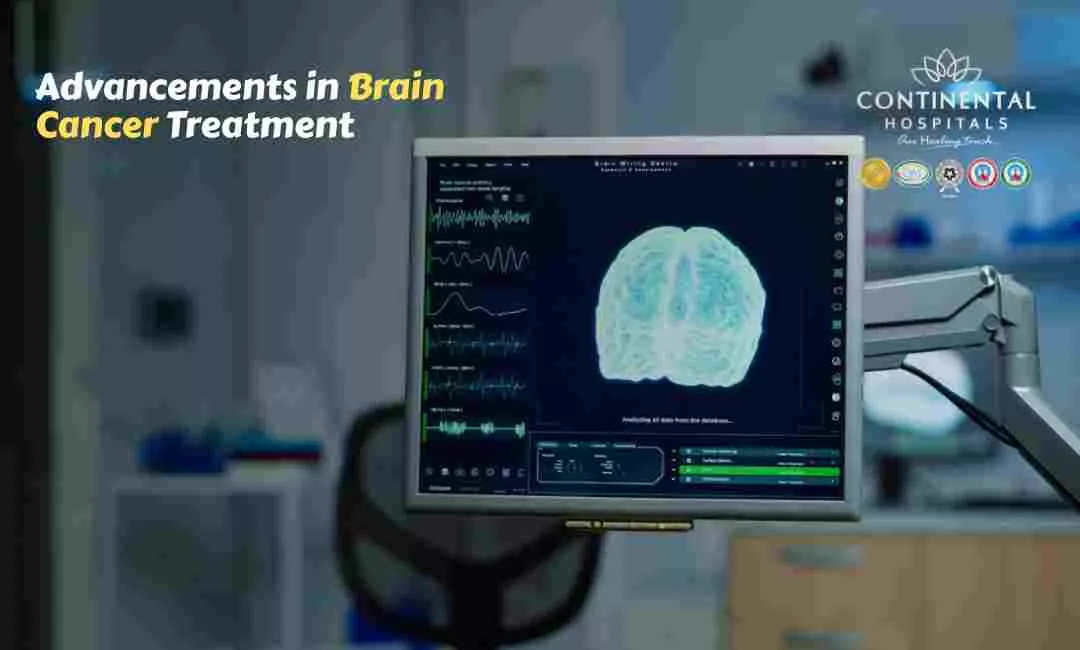
Brain cancer is one of the most challenging conditions in modern medicine, affecting thousands of people worldwide. Over the years, research and technology have transformed how doctors diagnose, plan, and treat brain tumors. Today, brain cancer treatment is far more advanced, precise, and effective, offering hope and improved outcomes for patients.

At Continental Hospitals, Hyderabad, our team of expert neurosurgeons, oncologists, and rehabilitation specialists use advanced medical technologies and global treatment protocols to ensure the best possible care for every patient.

What is brain cancer?

Brain cancer occurs when abnormal cells grow uncontrollably in the brain or nearby structures. These cells can form primary tumors that start in the brain or secondary (metastatic) tumors that spread from other parts of the body. Depending on their location, size, and type, brain tumors can affect vital functions like movement, speech, memory, and balance.

Common symptoms include persistent headaches, nausea, blurred vision, seizures, or personality changes. Early diagnosis plays a vital role in improving outcomes, which is why specialized screening and imaging are essential.

Expert care for brain, spine, and nervous system disorders begins here. Visit our best neuro doctor hyderabad to consult experienced specialists and receive personalized treatment for a healthier future.
How Is Brain Cancer Diagnosed?

Diagnosis is the first and most crucial step in managing brain cancer. With advanced neuroimaging and molecular diagnostics, doctors can now identify the exact type, stage, and genetic makeup of a tumor with remarkable accuracy.

Key diagnostic advancements include the following:

MRI and Functional MRI (fMRI): These scans help visualize the tumor and assess its impact on surrounding brain tissue.

Second Opinion

PET-CT Scans: These tests detect even the smallest cancerous cells, helping doctors plan treatment precisely.

Molecular Profiling: This technique identifies gene mutations or markers that drive tumor growth, allowing for personalized therapies.

Neuro Navigation and Intraoperative Imaging: These help surgeons perform safe and targeted procedures by guiding them in real time during surgery.

These innovations make it possible to create customized treatment plans that minimize side effects and maximize recovery.

What are the advanced surgical options for brain cancer treatment?

Brain cancer surgery aims to remove as much of the tumor as possible without damaging healthy tissue. With the help of technology, modern neurosurgery has become safer and more precise.

Some of the latest surgical advancements include:

Microsurgery: Using high-powered microscopes, surgeons can target small tumors with exceptional precision.

Need an Appointment?

Awake Brain Surgery: This allows doctors to monitor a patient’s brain function while operating, reducing risks of speech or movement loss.

Image-Guided Surgery: Real-time scans during surgery help surgeons accurately locate and remove the tumor.

Minimally Invasive Endoscopic Surgery: A small camera and instruments are used through tiny openings, reducing recovery time and hospital stay.

These procedures are available at Continental Hospitals, where state-of-the-art operation theaters and advanced navigation systems ensure optimal surgical outcomes.

What Is Revolutionary Radiation Therapy and How Does It Treat Brain Cancer?

Radiation therapy has evolved significantly in recent years. Instead of exposing large areas of the brain to radiation, advanced systems now deliver targeted doses directly to the tumor site.

Types of modern radiation treatments include:

Stereotactic Radiosurgery (SRS): A non-invasive technique that uses focused radiation beams to destroy cancer cells.

Image-Guided Radiation Therapy (IGRT): Ensures precision by using real-time imaging during treatment.

Proton Beam Therapy: Delivers higher radiation doses to the tumor with minimal exposure to surrounding healthy tissues.

At Continental Hospitals, radiation therapy is performed under expert supervision using globally approved technologies and protocols.

What is chemotherapy and targeted therapy for brain cancer?

Chemotherapy remains a key part of brain cancer treatment. However, it has evolved with the introduction of targeted therapies that attack cancer cells at the molecular level.

Key advancements include:

Targeted Therapy: These drugs focus on specific genetic changes within cancer cells, reducing harm to healthy tissues.

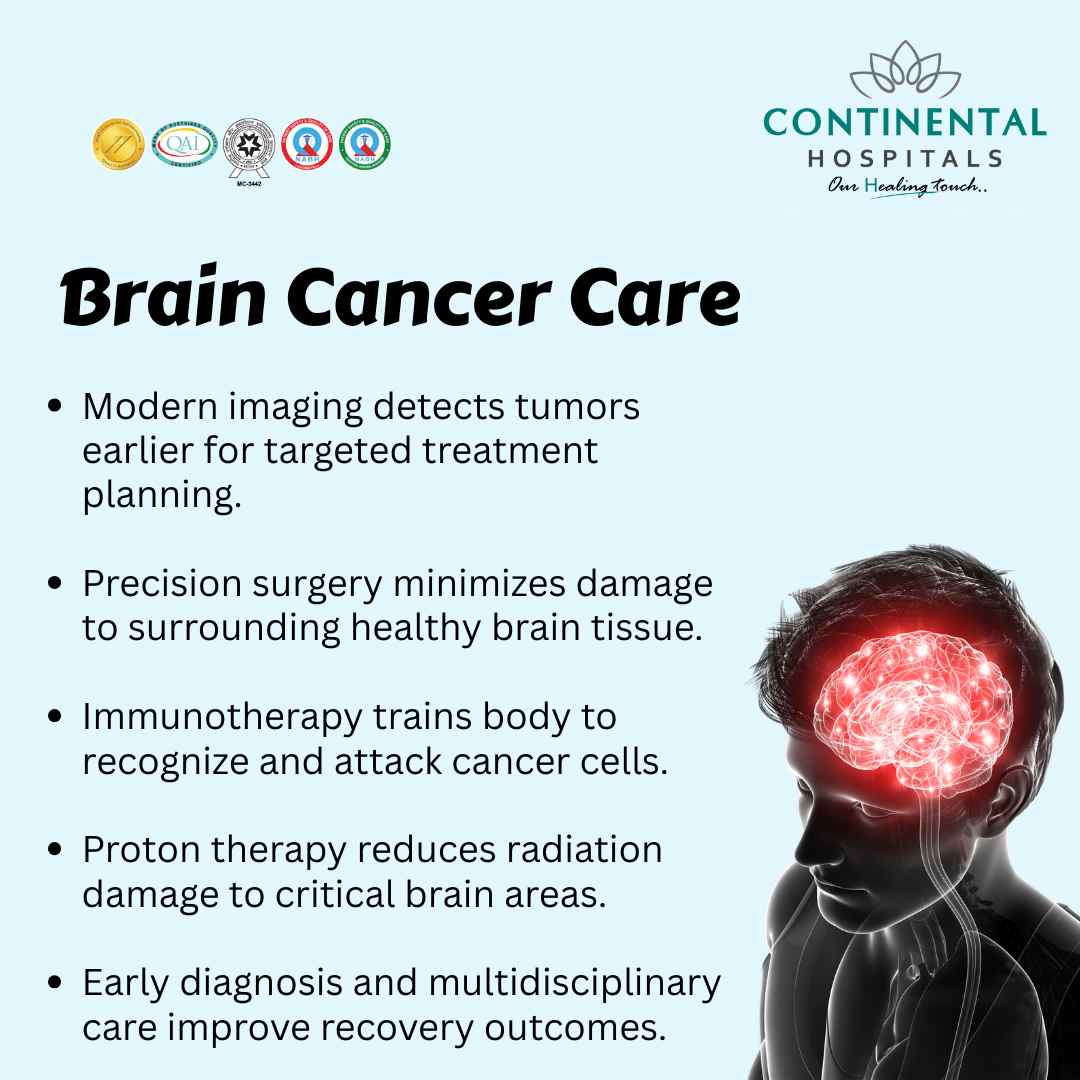
Immunotherapy: Strengthens the patient’s immune system to recognize and fight cancer cells more effectively.

Intrathecal Chemotherapy: Directly delivers drugs into the cerebrospinal fluid to improve efficiency.

At Continental Hospitals, oncologists personalize these treatments based on genetic profiling and tumor biology to ensure the most effective approach.

How Are AI and Robotics Transforming Brain Cancer Treatment?

Artificial Intelligence (AI) and robotics are revolutionizing how doctors diagnose and treat brain cancer. AI-assisted imaging helps in early detection, while robotic systems aid surgeons in performing complex procedures with unmatched precision.

Robotic surgery also allows for minimally invasive approaches, faster recovery, and greater accuracy. These innovations represent the future of neuro-oncology and are being integrated into leading hospitals like Continental.

How Does Rehabilitation Help After Brain Cancer Treatment?

Brain cancer treatment extends beyond surgery and medication. Rehabilitation plays a key role in helping patients regain their quality of life.

Continental Hospitals offers comprehensive post-treatment care, including:

  • Physical therapy for motor coordination and balance.
  • Speech therapy for communication and language recovery.
  • Cognitive therapy to improve memory and focus.
  • Psychological support for emotional well-being.

This holistic approach ensures patients recover physically, mentally, and emotionally.

Why Choose Continental Hospitals for Brain Cancer Treatment?

Continental Hospitals in Hyderabad is among India’s leading centers for advanced neuro-oncology care. The hospital is accredited by the Joint Commission International (JCI), which reflects its adherence to global standards of patient safety and quality.

Here’s why patients trust Continental Hospitals:

Multidisciplinary Expertise: A team of neurosurgeons, neuro-oncologists, radiation specialists, and rehabilitation experts work together to provide coordinated care.

Cutting-Edge Technology: The hospital is equipped with MRI, PET-CT, intraoperative neuro-navigation, and robotic systems for precision-based treatment.

Personalized Treatment Plans: Each patient’s care plan is designed based on tumor type, stage, and genetic profile.

Comprehensive Support: From diagnosis to rehabilitation, patients receive continuous guidance and emotional support.

World-Class Infrastructure: Internationally accredited facilities, advanced ICUs, and 24/7 emergency care ensure the highest level of safety.

What is the future of brain cancer treatment?

Research continues to open new doors in brain cancer care. Scientists are studying gene therapy, nanotechnology, and advanced immunotherapies that could further improve survival and recovery rates. These breakthroughs aim to make treatments less invasive and more effective, offering renewed hope to patients and families.

Conclusion

Advancements in brain cancer treatment have changed what once seemed impossible into achievable outcomes. Today, patients have access to precise diagnostic tools, minimally invasive surgeries, targeted drugs, and advanced rehabilitation techniques that significantly improve quality of life.

If you or a loved one is experiencing symptoms like frequent headaches, vision problems, or seizures, do not ignore them. Early consultation can make a crucial difference in diagnosis and treatment success.

At Continental Hospitals, Hyderabad, our team of Best Neurologist in Hyderabad and oncologists are dedicated to providing advanced brain cancer treatment with compassion, precision, and excellence. Book a consultation with our specialists today and take the first step toward recovery and hope.


Frequently Asked Questions

Brain cancer treatment has advanced significantly in recent years with the introduction of precision medicine, advanced imaging, minimally invasive surgery, targeted therapy, immunotherapy, and improved radiation techniques. These innovations help doctors identify tumor characteristics more accurately and create personalized treatment plans. Modern neuronavigation systems allow surgeons to remove tumors with greater precision while protecting healthy brain tissue. Technologies such as intraoperative MRI and fluorescence-guided surgery improve surgical outcomes. Stereotactic radiosurgery delivers highly focused radiation to tumors with minimal impact on surrounding tissues. Targeted therapies attack specific genetic mutations found in certain brain tumors. Immunotherapy is being explored to help the body's immune system recognize and destroy cancer cells. Molecular profiling enables specialists to select treatments based on the tumor's biology. Rehabilitation services further support recovery after treatment. Together, these advancements have improved survival rates, reduced treatment-related complications, and enhanced the quality of life for many patients.
Precision medicine uses genetic and molecular information from a patient's tumor to develop individualized treatment strategies. Instead of using a one-size-fits-all approach, specialists analyze biomarkers and DNA mutations that influence tumor behavior. This allows doctors to identify therapies that are more likely to be effective while avoiding unnecessary treatments. Precision medicine can improve treatment accuracy, reduce side effects, and enhance outcomes for selected patients. It is particularly useful for aggressive or recurrent brain tumors where standard therapies may have limited success. Molecular testing helps determine eligibility for targeted therapies or clinical trials. Personalized treatment plans often combine surgery, radiation, chemotherapy, and targeted medications. Ongoing monitoring also helps doctors adjust therapy as the tumor changes over time. This approach continues to reshape modern neuro-oncology by making treatment more individualized and evidence based.
Minimally invasive brain surgery allows surgeons to access and remove certain brain tumors through smaller openings using advanced surgical tools and imaging guidance. Compared with traditional open surgery, this approach may reduce damage to surrounding healthy brain tissue. Patients often experience less pain, reduced blood loss, shorter hospital stays, and faster recovery. High-definition microscopes, endoscopes, neuronavigation systems, and intraoperative imaging improve surgical precision. Some tumors located deep within the brain can also be reached more safely using minimally invasive techniques. The approach depends on the tumor's size, location, and type. Surgeons carefully evaluate each patient before recommending surgery. While not suitable for every brain tumor, minimally invasive procedures have expanded treatment options and improved surgical safety for many patients.
Targeted therapy is an advanced treatment that focuses on specific genetic mutations or proteins that help brain cancer cells grow. Unlike traditional chemotherapy, targeted drugs aim to attack cancer cells while limiting damage to healthy tissues. Patients usually undergo molecular testing to determine whether their tumors carry treatable genetic changes. When suitable targets are identified, targeted therapy may improve treatment effectiveness and reduce certain side effects. These therapies are often combined with surgery, radiation, or chemotherapy as part of a comprehensive treatment plan. Research continues to identify new molecular targets for brain tumors. Not every patient is eligible for targeted therapy, but ongoing advancements are expanding its use. Specialists carefully monitor treatment response and adjust therapy when needed to achieve the best possible outcomes.
Immunotherapy is an emerging treatment that aims to strengthen the body's immune system so it can recognize and destroy brain cancer cells. While immunotherapy has shown remarkable success in several other cancers, its role in brain cancer is still being actively researched. Certain patients may benefit from immune checkpoint inhibitors, cancer vaccines, or experimental cellular therapies through clinical trials. Researchers are working to overcome the brain's unique protective environment, which can limit immune responses. Immunotherapy is often considered alongside surgery, radiation, and chemotherapy rather than replacing them. Patient eligibility depends on tumor type, molecular characteristics, and overall health. Ongoing clinical studies continue to improve understanding of which patients benefit the most. As research advances, immunotherapy is expected to become an increasingly important option in selected cases.
Modern radiation therapy has become more precise and effective through technologies such as stereotactic radiosurgery, intensity-modulated radiation therapy, and image-guided radiation therapy. These techniques deliver high doses of radiation directly to tumors while minimizing exposure to nearby healthy brain tissue. Greater precision reduces treatment-related side effects and protects important brain functions whenever possible. Radiation therapy may be used after surgery to destroy remaining cancer cells or as the primary treatment for tumors that cannot be safely removed. Treatment planning uses detailed MRI and CT imaging to accurately map the tumor. Each patient's radiation schedule is customized according to tumor type and location. Advances in radiation delivery have improved tumor control, treatment safety, and overall patient outcomes while enhancing quality of life during recovery.
The most appropriate brain cancer treatment depends on several important factors including the tumor's type, grade, size, location, and genetic profile. Doctors also consider the patient's age, overall health, neurological symptoms, and treatment goals. Advanced MRI scans, biopsy results, and molecular testing help specialists understand the tumor in greater detail. A multidisciplinary team that includes neurosurgeons, medical oncologists, radiation oncologists, neuroradiologists, neuropathologists, and rehabilitation specialists collaborates to create an individualized treatment plan. Some patients may require surgery followed by radiation and chemotherapy, while others may benefit from targeted therapy or clinical trials. Regular follow-up imaging helps monitor treatment response and detect recurrence early. Personalized care improves treatment effectiveness and supports better long-term outcomes.
Early diagnosis increases the chances of successful brain cancer treatment by allowing specialists to begin therapy before the tumor grows larger or spreads further within the brain. Detecting brain tumors at an earlier stage may make surgical removal easier and improve the effectiveness of radiation or chemotherapy. Patients should seek medical evaluation if they experience persistent headaches, unexplained seizures, vision changes, weakness, balance problems, memory issues, or personality changes. Modern imaging techniques such as MRI and CT scans help identify abnormalities quickly and accurately. Early diagnosis also allows time for molecular testing and personalized treatment planning. Prompt treatment may reduce neurological complications, preserve brain function, and improve quality of life. Regular follow-up after treatment helps detect recurrence early and supports long-term disease management.
Disclaimer: The information provided in this blog is intended for general knowledge and informational purposes only, and does not constitute medical advice. Always consult with a qualified healthcare professional for any medical concerns or before making any decisions about your health.

Get in Touch With Us

Whether you are from India or abroad, we are here to help you with your medical queries. Please fill out the form below and our team will connect with you shortly.

  • ✔ Quick response from our medical experts
  • ✔ Secure data handling & privacy
  • ✔ Easy upload for reports & documents
banner_image

Chat with our medical experts on WhatsApp for quick assistance and hassle-free appointment booking

Recent Posts