post-title

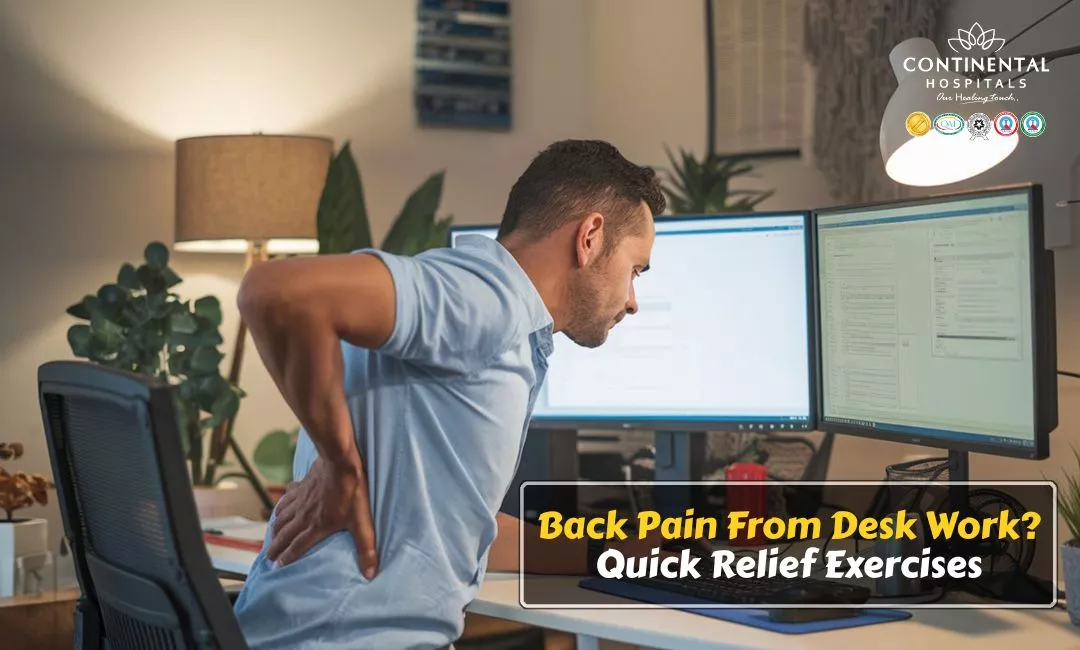
Back Pain From Desk Work? Quick Relief Exercises

Written by - Editorial Team
Medically Reviewed by - Dr S Kiran Reddy

The modern workplace has shifted significantly toward digital environments. While this transition has increased efficiency, it has also introduced a common health challenge: back pain. For many professionals in Hyderabad, spending eight to ten hours seated at a desk is a daily reality. This sedentary lifestyle often leads to physical discomfort that can diminish productivity and quality of life. Understanding why this happens and how to manage it through simple exercises is essential for long-term spinal health.

Why do desk jobs cause back pain?

The human spine is designed for movement. When you sit for extended periods, the pressure on your spinal discs increases significantly compared to standing or walking. Poor ergonomics, such as slouching or improperly adjusted chairs, exacerbate this pressure. Over time, the muscles in your core and back can become weak, while your hip flexors and chest muscles tighten. This imbalance is a leading cause of back pain from desk work.

Persistent sitting can lead to several physiological issues:

Muscle Strain: Keeping the body in a static position tires the muscles that support the spine.

Disc Compression: Prolonged sitting puts uneven pressure on the vertebrae.

Poor Circulation: Limited movement reduces blood flow to the muscles, slowing down the natural recovery process.

Visit our Best Orthopedic Specialists in Hyderabad at Continental Hospitals, Hyderabad. Book your appointment today to regain mobility and live a pain-free life.

What are the best quick relief exercises for office workers?

Integrating movement into your workday does not require a gym membership or hours of free time. Small, consistent movements can provide significant desk job back pain relief. Here are several exercises for back pain that can be performed right at your workstation.

1. Seated Spinal Twist
This movement helps improve the flexibility of your spine and relieves tension in the lower back. While sitting, place your right hand on the outside of your left knee. Slowly rotate your torso to the left, using the chair's armrest for support. Hold the position for fifteen seconds and repeat on the other side.

Second Opinion

2. The Cat-Cow Stretch (Modified)
Usually performed on the floor, this can be adapted for a chair. Place your hands on your knees. As you inhale, arch your back and look toward the ceiling. As you exhale, round your spine and tuck your chin toward your chest. This rhythmic movement helps lubricate the spinal discs.

3. Neck and Shoulder Rolls
Lower back pain office workers experience often starts with tension in the upper body. Roll your shoulders backward in a circular motion ten times, then forward ten times. Follow this by slowly tilting your head from side to side to release the trapezius muscles.

4. Standing Hip Flexor Stretch
Sitting long hours back pain is frequently caused by tight hip flexors. Stand up and take a step back with one foot, keeping your back leg straight. Sink your hips forward slightly until you feel a stretch in the front of your hip. This relieves the pull on your lower spine.
How Can I Prevent Back Pain During the Workday?

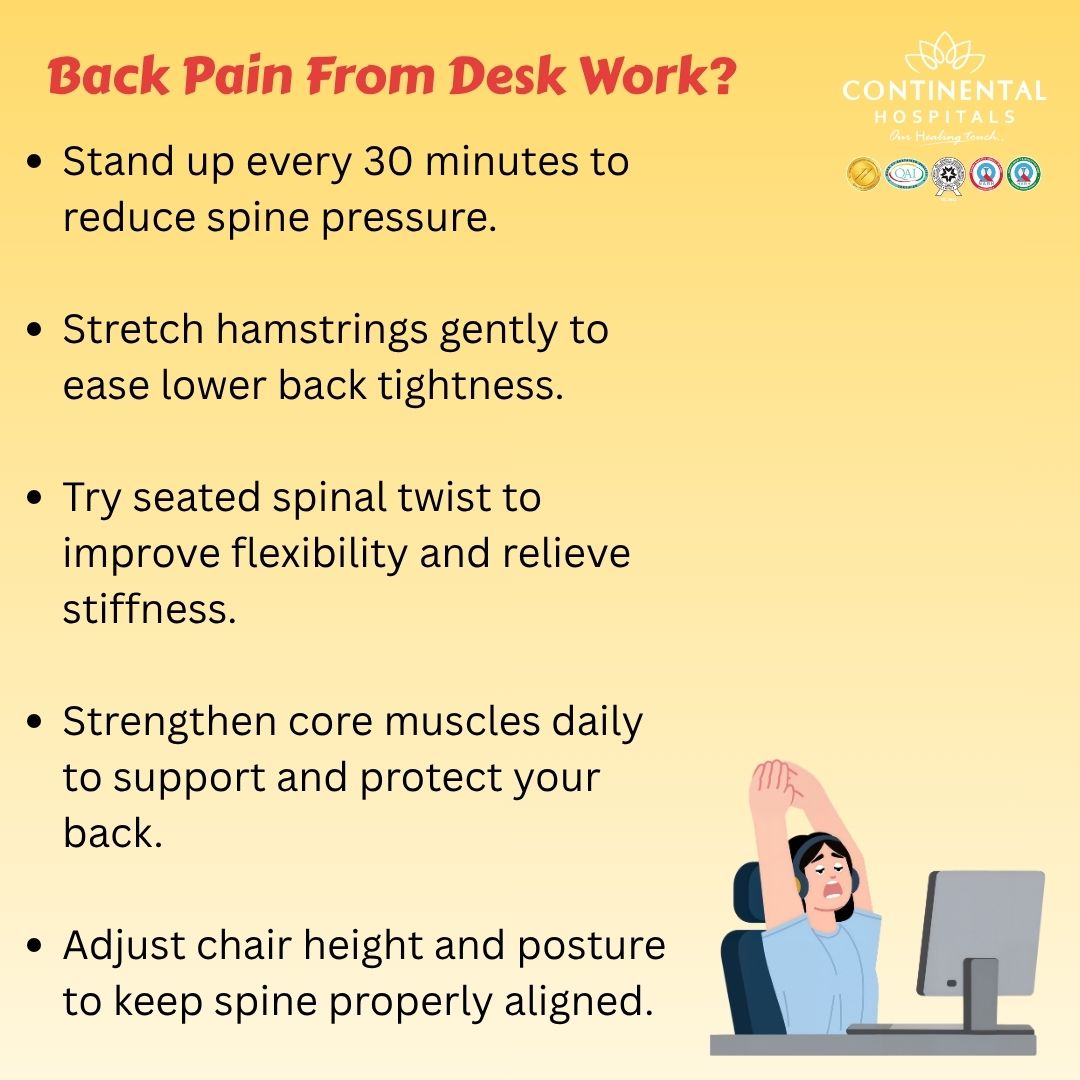
Beyond exercises, your desk setup plays a vital role in preventing back pain. Consider the following adjustments to create a more ergonomic environment:

  • Adjust your chair height so your feet are flat on the floor and your knees are at a 90-degree angle.
  • Position your computer monitor at eye level to avoid straining your neck.
  • Use a small pillow or a rolled-up towel to support the natural curve of your lower back.
  • Take a five-minute walking break for every sixty minutes of sitting.

What is comprehensive spinal health care?

While stretching and ergonomics provide temporary relief, chronic pain requires professional evaluation. Persistent discomfort may indicate underlying issues that need specialized medical attention. Seeking help early can prevent minor strains from developing into chronic conditions.

Why Choose Continental Hospitals for Spine Care?

When searching for the best hospital in Hyderabad, Continental Hospitals stands out as a leader in orthopedics and neurosciences. We provide a holistic approach to treating back pain, ensuring that patients receive a diagnosis that addresses the root cause of their discomfort rather than just the symptoms.

Need an Appointment?

Advanced Medical Accreditations
Quality and safety are the cornerstones of our healthcare delivery. Continental Hospitals is proud to hold prestigious accreditations that reflect our commitment to global standards:

JCI Accreditation: We are recognized by the Joint Commission International, which is the gold standard for healthcare providers worldwide?

NABH Accreditation: Our facility adheres to the rigorous standards set by the National Accreditation Board for Hospitals & Healthcare Providers?

NABL Accreditation: Our laboratory services are certified for accuracy and excellence?

These certifications ensure that every patient receives care that is safe, effective, and monitored by international benchmarks.

Specialized Treatment Facilities
Our hospital features state-of-the-art diagnostic tools, including high-resolution MRI and CT imaging, to pinpoint spinal issues with precision. Whether you require physical therapy, minimally invasive interventions, or advanced surgical care, our multidisciplinary team works together to create a personalized recovery plan.

Patient-Centric Approach
At Continental Hospitals, we understand that every patient’s journey is unique. Our team focuses on "Movement is Life," prioritizing non-surgical treatments and rehabilitation whenever possible. Our facility is designed to provide a comfortable environment where patients can focus entirely on their recovery.

Conclusion

Managing back pain is a combination of daily habits, ergonomic awareness, and professional guidance. By incorporating simple exercises into your routine and taking regular breaks, you can significantly reduce the physical toll of a desk-bound career. Remember that your spine is the pillar of your health? treat it with the care it deserves.

If you are struggling with persistent pain that does not improve with rest or stretching, it is time to consult an expert. Addressing spinal health today ensures a more active and pain-free tomorrow.

If you suffer from chronic back pain or discomfort that radiates down your legs, do not ignore the signals your body is sending. Consult our experts today for a comprehensive evaluation.

Book an appointment with our best orthopedic doctor in Hyderabad at Continental Hospitals to regain your mobility and live pain-free.

Related Blog Topics:

  1. Back Pain From Sitting All Day? Try These Relief Stretches
  2. Back Pain After Sitting Too Long? Here’s What to Do
  3. Preventing Back Pain: Tips for a Healthy Spine

Frequently Asked Questions

Desk work often causes back pain because sitting for long hours places continuous pressure on the spine, lower back muscles, and discs. Poor posture, slouching, and inadequate lumbar support further increase strain. Tight hip flexors and weak core muscles develop over time, reducing spinal stability. Looking down at a laptop or monitor also creates stress on the neck and upper back. Limited movement decreases blood circulation, making muscles stiff and fatigued. Repetitive work without stretching can worsen discomfort throughout the day. Stress may also cause muscle tension in the shoulders and back. Regular posture correction, ergonomic adjustments, and short movement breaks every 30 to 60 minutes help reduce the risk. Strengthening exercises and flexibility training further support spinal health and improve long-term comfort.
Simple exercises can quickly relieve stiffness caused by prolonged sitting. Try seated spinal twists, shoulder rolls, neck stretches, standing back extensions, cat-cow stretches, hamstring stretches, hip flexor stretches, and pelvic tilts. Gentle walking for two to five minutes also improves blood circulation and relaxes tight muscles. These movements reduce muscle tension and improve flexibility without requiring special equipment. Perform each stretch slowly and avoid bouncing or forcing painful movements. Repeat every hour during work for the best results. Consistency is more effective than occasional long exercise sessions. If pain increases during exercise, stop immediately and consult a healthcare professional for proper evaluation.
Experts recommend taking a short movement break every 30 to 60 minutes during desk work. Stand up, stretch, walk around the room, or perform light mobility exercises for two to five minutes. Frequent movement helps reduce pressure on the spinal discs, improves circulation, and prevents muscle stiffness. Following the 30-30 rule or setting reminders can make breaks easier to remember. Even changing your sitting position regularly can reduce strain. Walking during phone calls or standing while reading documents also helps. Small but frequent movement breaks are far more beneficial than remaining seated for several hours continuously. Regular activity supports both spinal health and overall productivity.
Yes, poor posture is one of the leading causes of desk-related back pain. Slouching increases pressure on the lower back, neck, shoulders, and spinal discs. Leaning forward toward a screen strains muscles and ligaments over time. Sitting with unsupported lower back or crossed legs may also contribute to discomfort. Maintaining a neutral spine, keeping shoulders relaxed, and positioning the monitor at eye level reduce unnecessary stress. Your feet should remain flat on the floor with knees at approximately ninety degrees. Proper ergonomic seating and posture awareness significantly reduce daily pain. Developing healthy sitting habits can also help prevent future spinal problems.
Most mild back pain improves with exercise, posture correction, and rest. However, medical evaluation is recommended if pain lasts longer than two to four weeks, becomes severe, or interferes with daily activities. Seek immediate medical attention if back pain follows an injury or is accompanied by numbness, tingling, leg weakness, loss of bladder or bowel control, fever, or unexplained weight loss. Persistent pain may indicate conditions such as disc problems, arthritis, nerve compression, or spinal disorders. Early diagnosis helps prevent complications and allows timely treatment. A specialist can recommend physical therapy, imaging, medications, or advanced treatments when necessary.
Yes, an ergonomic workstation plays a major role in preventing desk-related back pain. Your chair should support the natural curve of your lower back while allowing your feet to rest flat on the floor. The monitor should be positioned at eye level and about an arm's length away. Keep your keyboard and mouse close enough to avoid reaching. Elbows should remain near ninety degrees with relaxed shoulders. Adequate lighting also reduces forward leaning and neck strain. Combining ergonomic adjustments with regular stretching provides the greatest benefit. Proper workstation design improves comfort, productivity, and long-term spinal health.
Yes, strengthening exercises improve the muscles that support the spine and reduce recurring back pain. Core strengthening exercises such as bridges, planks, bird-dog exercises, and pelvic tilts improve stability and posture. Strong back and abdominal muscles distribute spinal loads more effectively during daily activities. Strengthening should be combined with flexibility exercises for the hips, hamstrings, and lower back. Start gradually using proper technique to avoid injury. Performing these exercises several times each week provides long-term benefits. Consistent strengthening reduces the likelihood of repeated pain episodes and supports healthier movement throughout the day.
Yes, walking is one of the simplest and most effective ways to reduce desk-related back pain. Even a five to ten-minute walk increases blood flow to muscles, reduces stiffness, and gently mobilizes the spine. Walking activates the core, improves posture, and helps loosen tight hip flexors caused by prolonged sitting. It also reduces muscle fatigue and improves overall flexibility. Regular walking breaks throughout the workday lower spinal pressure and promote healthy movement patterns. Combining walking with stretching and ergonomic sitting habits offers the best results. If walking causes severe pain or worsening symptoms, seek medical advice for further evaluation.
Disclaimer: The information provided in this blog is intended for general knowledge and informational purposes only, and does not constitute medical advice. Always consult with a qualified healthcare professional for any medical concerns or before making any decisions about your health.

Get in Touch With Us

Whether you are from India or abroad, we are here to help you with your medical queries. Please fill out the form below and our team will connect with you shortly.

  • ✔ Quick response from our medical experts
  • ✔ Secure data handling & privacy
  • ✔ Easy upload for reports & documents
banner_image

Chat with our medical experts on WhatsApp for quick assistance and hassle-free appointment booking

Recent Posts