post-title

Before Brain Surgery, Talk to Another Expert

Written by - Editorial Team
Medically Reviewed by - Dr. Sumathi Jarugu

Facing brain surgery is a daunting prospect. It’s one of the most serious medical decisions anyone can make. When your doctor recommends brain surgery, it’s natural to feel overwhelmed and uncertain. But here’s the thing: before you say yes to a brain operation, it’s crucial to get a second opinion from another neurosurgeon. This simple step can bring clarity, confidence, and sometimes even new treatment options.

Why do I need a second opinion before brain surgery?

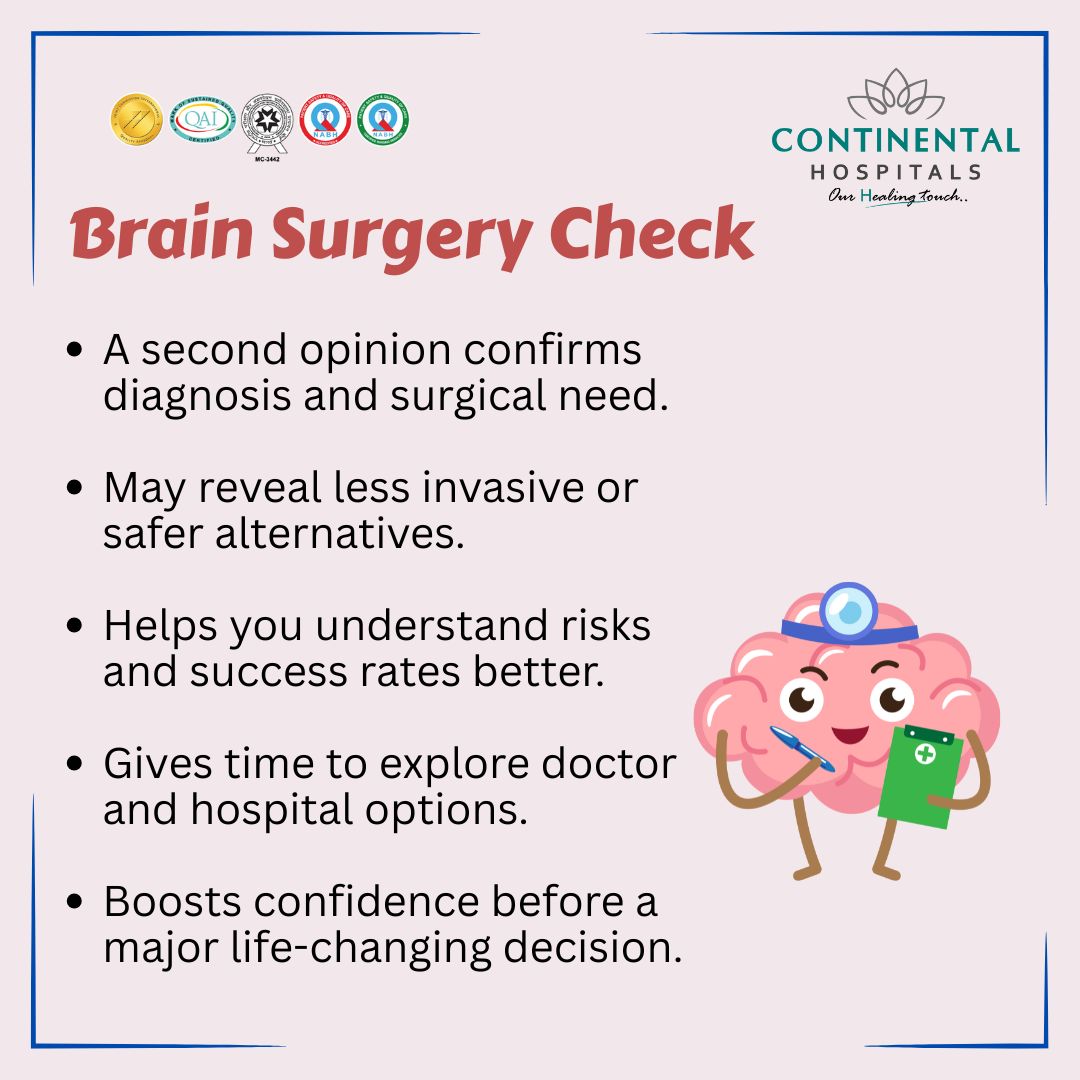
Brain surgery is complex and carries risks, no matter how skilled the surgeon. Each case is unique, and sometimes different doctors may suggest different approaches. Consulting another expert helps you:

  • Understand your diagnosis better.
  • Explore all possible treatment options.
  • Confirm if surgery is the best choice.
  • Learn about the risks and benefits in detail.
  • Feel more confident about your decision.

Getting a second opinion doesn’t mean you doubt your first doctor. It means you are taking charge of your health by making an informed decision.

If you're experiencing neurological symptoms, don't wait. Visit our best neuro doctor hyderabad at Continental Hospitals for expert diagnosis, advanced care, and personalized treatment.
What are the risks of brain surgery?

Brain surgery can be life-saving, but it’s not without risks. Complications might include infection, bleeding, or neurological damage. Some risks depend on the type of surgery and your overall health. A second neurosurgeon can help explain these risks from a fresh perspective and may suggest less invasive alternatives or different surgical techniques.

For example, some brain tumors can be managed with medication or radiation therapy, avoiding surgery altogether. Others might require surgery, but with different approaches that reduce risk and improve recovery. Another expert’s view can uncover options you didn’t know existed.

How to Get a Second Opinion Before Brain Surgery?

Start by asking your current neurosurgeon for a referral or recommendation. Most doctors welcome a second opinion and want their patients to feel secure about their treatment plan. You can also seek out specialists who focus on your particular condition, such as brain tumors or epilepsy surgery.

When consulting the second neurosurgeon, bring your medical reports, scans, and test results. Prepare questions like the following:

Second Opinion

  • Is surgery necessary right now?
  • Are there non-surgical options?
  • What are the expected outcomes?
  • What risks should I be prepared for?
  • How experienced are you with this procedure?

This discussion will help you compare opinions and understand the best path forward.

Why is a neurosurgeon consultation important before brain surgery in India?

India has highly skilled neurosurgeons trained in advanced brain surgery techniques. Many hospitals offer cutting-edge technology for accurate diagnosis and safer operations. But not all neurosurgeons have the same experience with every condition. That’s why consulting more than one expert is important.

A neurosurgeon consultation in India gives you access to specialists who can review your case thoroughly and provide personalized advice. It also helps ensure you are aware of all the latest treatments available in the country.

What happens during a brain tumor second opinion consultation?

If your diagnosis involves a brain tumor, a second opinion becomes even more critical. Brain tumors vary widely in type, location, and behavior. Treatment can range from observation to surgery, chemotherapy, or radiation.

A second neurosurgeon can:

  • Confirm the tumor type and grade.
  • Recommend the best treatment approach.
  • Discuss surgery timing and goals.
  • Explain how treatment will affect your brain function.

Choosing the right treatment depends on accurate diagnosis and expert advice. Getting a second opinion ensures you are on the best possible path.

hat should I do before undergoing brain surgery?

Taking the time to get a second opinion before brain surgery is about control. It puts you in the driver’s seat of your healthcare journey. You get a chance to hear different perspectives, ask questions, and make a choice that feels right.

Need an Appointment?

It’s a way to reduce anxiety by knowing you’ve done your homework. It’s also an opportunity to confirm that surgery is necessary and to choose the best neurosurgeon for your specific needs.

Why Choose Continental Hospitals for Your Neurosurgery Needs?

Continental Hospitals stands out as a top choice when it comes to brain health and neurosurgery. Here’s why:

Expert Team: Our neurosurgeons have vast experience in treating complex brain conditions. They stay updated with the latest advances in neurosurgery.

Advanced Technology: We use state-of-the-art imaging and surgical tools to ensure precision and safety.

Comprehensive Care: From diagnosis to post-surgery rehabilitation, we provide a full spectrum of care to support your recovery.

Patient-Centered Approach: We believe every patient deserves personalized treatment and time to discuss options thoroughly.

Second Opinion Support: At Continental, we encourage patients to seek second opinions. We welcome collaboration with other experts to ensure you get the best advice.

Our goal is not just to perform surgery but to improve your overall brain health and quality of life.

How to Take the Next Step

If you or a loved one has been advised to undergo brain surgery, don’t rush. Talk to another neurosurgeon to explore your options fully. Getting a second opinion can be the difference between uncertainty and confidence in your care.

At Continental Hospitals, our neurology and neurosurgery experts are ready to help. If you suffer from brain tumors, neurological symptoms, or other conditions requiring expert review, schedule a consultation with our team. We will review your case carefully and guide you through the decision-making process.

Conclusion

Brain surgery is serious and life-changing. Before you commit to it, talking to another expert can give you peace of mind and better insight. It’s about making the best decision for your health with all the facts in hand.

If you're experiencing symptoms, don't wait. Contact our healthcare team at Continental Hospitals today. Visit our Best Neurologist in Hyderabad

Related Blogs:

Brain Surgery Today: Safer Than Most People Think?

Frequently Asked Questions

Getting a second opinion before brain surgery helps confirm the diagnosis and ensures that surgery is truly the best treatment option. Another neurosurgeon may recommend additional imaging tests, alternative surgical techniques, or even non-surgical treatments depending on your condition. A second opinion can provide greater confidence in your treatment plan and help you understand the risks, benefits, expected outcomes, and recovery process. It also gives you an opportunity to ask questions you may have forgotten during your first consultation. Complex brain conditions often require multidisciplinary evaluation involving neurologists, neuroradiologists, and neurosurgeons. This collaborative approach improves decision-making and personalized care. Seeking another expert's opinion is a common medical practice and should never be viewed as distrust toward your doctor. Instead, it empowers patients to make informed healthcare decisions. In many cases, both specialists may agree on the treatment plan, giving you additional reassurance before surgery.
In most situations, obtaining a second opinion does not significantly delay treatment. Many hospitals can review your MRI scans, CT scans, and medical records quickly, allowing another neurosurgeon to provide recommendations within a few days. If your condition is an emergency, doctors will advise immediate surgery without unnecessary delays. For planned or elective brain surgeries, taking a short amount of time to seek another opinion can help ensure that the chosen treatment is appropriate. The additional consultation may reveal less invasive options or confirm that surgery is indeed necessary. A well-informed decision often leads to greater confidence and reduced anxiety. Patients should discuss timing with their treating physician to balance urgency with careful evaluation. The goal is always to provide the safest and most effective care without compromising outcomes.
A second opinion is commonly recommended for conditions such as brain tumors, aneurysms, epilepsy, arteriovenous malformations (AVMs), hydrocephalus, pituitary tumors, trigeminal neuralgia, Chiari malformation, and complex spinal disorders involving the brain and nervous system. It is also valuable when imaging findings are unclear or when multiple treatment options are available. Patients diagnosed with rare neurological disorders often benefit from evaluation at specialized neuroscience centers. Another expert may recommend advanced imaging, functional brain mapping, or minimally invasive procedures. Second opinions are especially useful when surgery carries significant risks or may affect speech, movement, memory, or vision. Every patient's condition is unique, and personalized treatment planning is essential. Consulting another experienced neurosurgeon helps ensure that all available treatment options have been carefully considered before proceeding.
To receive an accurate second opinion, bring all relevant medical records including MRI scans, CT scans, PET scans if available, imaging CDs, radiology reports, blood test results, biopsy reports, pathology reports, hospital discharge summaries, and details of current medications. Carry previous consultation notes and any treatment recommendations already provided. Make a list of your symptoms, when they started, and how they have changed over time. Prepare questions about the diagnosis, surgical options, possible risks, recovery timeline, and expected outcomes. If you have allergies or other medical conditions, share those details as well. Bringing complete documentation allows the specialist to make an informed assessment without repeating unnecessary tests. Organized records also help speed up the consultation process and improve decision-making.
Yes. In some cases, a second opinion may result in a different treatment recommendation. Another neurosurgeon may suggest a minimally invasive procedure, stereotactic radiosurgery, medication, observation with regular imaging, or a different surgical approach depending on the location and type of brain condition. They may also recommend additional diagnostic tests before proceeding. However, many second opinions confirm the original recommendation, which provides reassurance that surgery is appropriate. Differences in recommendations often reflect evolving technologies, specialized expertise, and individual patient factors. The goal is not to contradict another doctor but to ensure the safest and most effective treatment plan. Understanding all available options helps patients make confident decisions about their neurological care.
Most experienced doctors understand and support a patient's decision to seek a second opinion, particularly for major procedures like brain surgery. Healthcare professionals recognize that patients want complete confidence before undergoing a complex operation. A second opinion is considered a standard part of patient-centered care and is encouraged by many medical organizations. It promotes transparency, informed decision-making, and better communication between doctors and patients. Your treating physician can often help by sharing medical records and imaging with the consulting specialist. Seeking another expert's advice should never affect the quality of your ongoing care. Open communication helps maintain trust while ensuring that every treatment decision is made with the patient's best interests in mind.
Choose a board-certified neurosurgeon with extensive experience in treating your specific brain condition. Look for specialists practicing at advanced neuroscience centers equipped with modern imaging technology, neuronavigation systems, intraoperative monitoring, and multidisciplinary teams. Consider the surgeon's expertise in complex brain surgeries, patient outcomes, and experience with minimally invasive techniques when appropriate. Reading patient reviews and understanding the hospital's facilities can also help. During the consultation, evaluate whether the specialist explains your diagnosis clearly, answers your questions patiently, and discusses all available treatment options. A good neurosurgeon focuses on personalized care and shared decision-making. Selecting the right expert can provide valuable insights and greater confidence before proceeding with surgery.
Yes. Many leading hospitals now offer online second opinion services for patients who cannot travel immediately. You can securely share MRI scans, CT scans, medical reports, pathology results, and previous consultation records for expert review. Virtual consultations allow experienced neurosurgeons to assess your condition, explain treatment options, and recommend whether surgery is necessary. While some cases may eventually require an in-person examination, an online second opinion is often an excellent first step. It saves time, reduces travel, and helps patients access specialist expertise regardless of their location. Digital consultations are particularly valuable for patients seeking advice from tertiary neuroscience centers. Always choose a reputable hospital that follows secure medical data and patient privacy practices.
Disclaimer: The information provided in this blog is intended for general knowledge and informational purposes only, and does not constitute medical advice. Always consult with a qualified healthcare professional for any medical concerns or before making any decisions about your health.

Get in Touch With Us

Whether you are from India or abroad, we are here to help you with your medical queries. Please fill out the form below and our team will connect with you shortly.

  • ✔ Quick response from our medical experts
  • ✔ Secure data handling & privacy
  • ✔ Easy upload for reports & documents
banner_image

Chat with our medical experts on WhatsApp for quick assistance and hassle-free appointment booking

Recent Posts