post-title

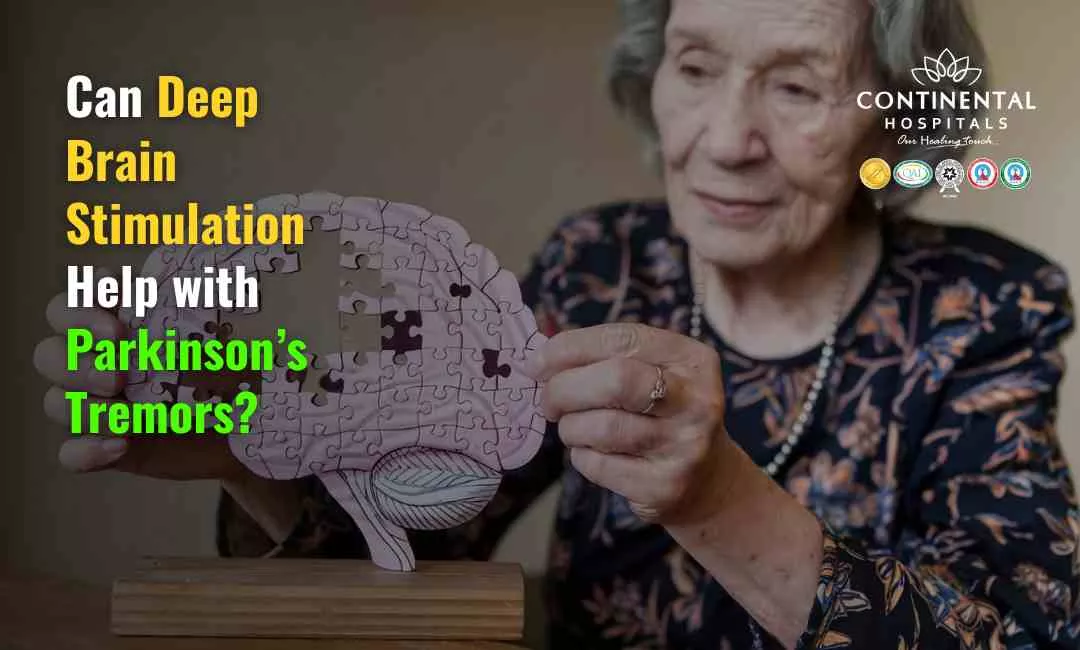
Can Deep Brain Stimulation Help with Parkinson’s Tremors?

Written by - Editorial Team
Medically Reviewed by - Dr Chakradhar Reddy N

Living with Parkinson’s disease can be challenging, especially when tremors affect simple daily activities like writing, eating, or dressing. For many people, medications may initially help control these symptoms. However, as the disease progresses, tremors may become resistant to medication. This is where an advanced treatment called Deep Brain Stimulation (DBS) can make a remarkable difference.

What is Deep Brain Stimulation?

Deep Brain Stimulation is a highly specialized neurosurgical procedure used to manage movement disorders such as Parkinson’s disease, dystonia, and essential tremor. It involves implanting a small device known as a neurostimulator or brain pacemaker that sends mild electrical impulses to specific areas of the brain responsible for motor control.

These electrical signals help regulate abnormal brain activity and improve movement, stiffness, and tremors without damaging brain tissue. DBS is a reversible and adjustable treatment, making it safer compared to traditional brain surgeries.

If you're experiencing Parkinson's disease symptoms such as tremors, stiffness, or difficulty with movement, visit our best neuro doctor hyderabad at Continental Hospitals, Hyderabad, for expert evaluation and advanced treatment options.
How Does Deep Brain Stimulation Work?

The brain contains several regions that control movement. In Parkinson’s disease, nerve cells in these regions don’t function properly due to reduced dopamine levels. This imbalance leads to tremors, stiffness, and slow movement.

DBS helps by:

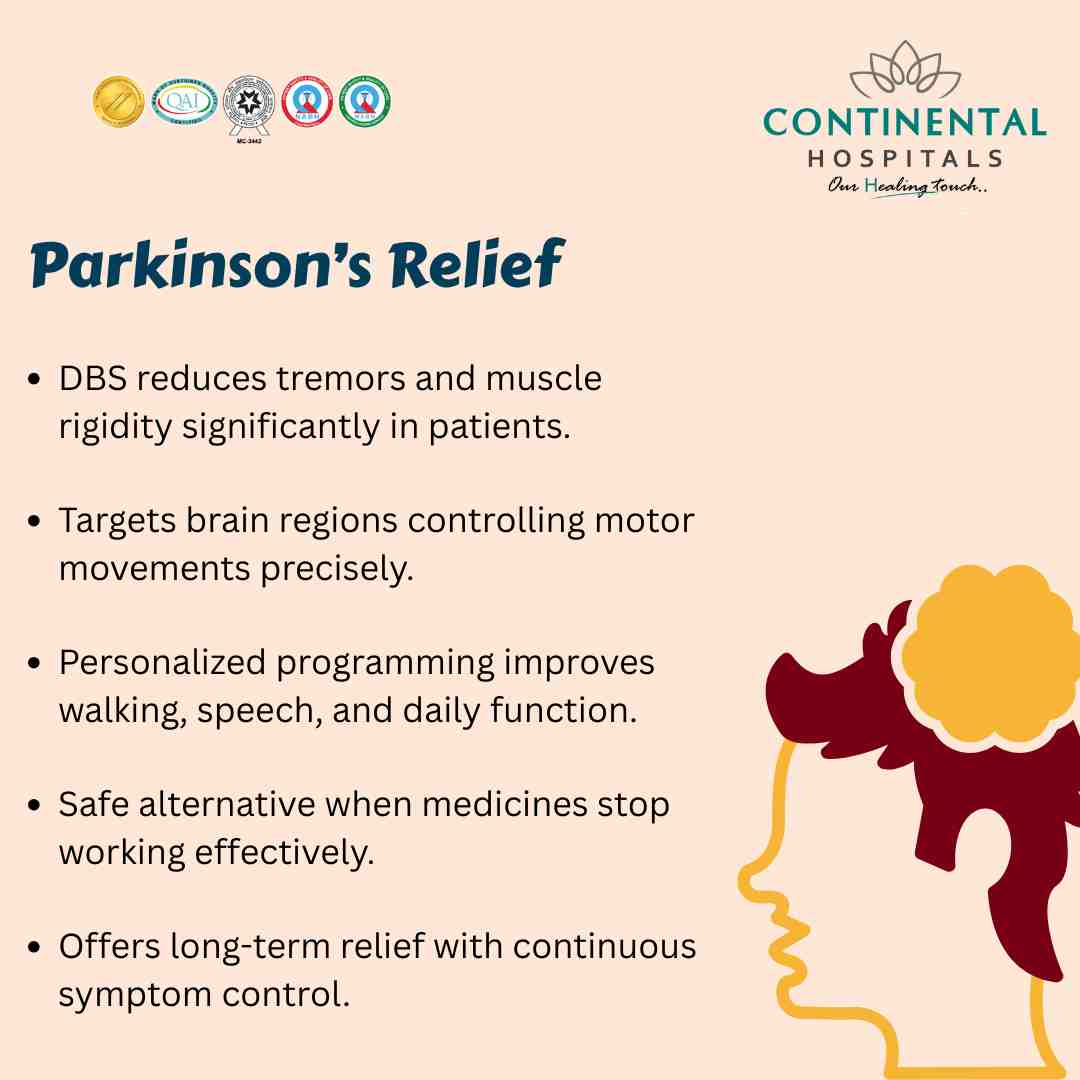
  • Delivering continuous electrical impulses to targeted brain areas like the subthalamic nucleus or globus pallidus internus
  • Modifying abnormal signals that cause tremors and rigidity
  • Allowing doctors to adjust stimulation settings to match each patient’s needs

Unlike medications that circulate throughout the body, DBS works directly on brain circuits, providing precise control over symptoms.

Who Can Benefit from Deep Brain Stimulation?

DBS is not suitable for every person with Parkinson’s disease. It is usually recommended for patients who:

Second Opinion

  • Have had Parkinson’s disease for at least five years
  • Experience tremors, stiffness, or movement fluctuations despite taking medications
  • Responded well to levodopa earlier but now face side effects or reduced effectiveness
  • Do not have severe memory, speech, or balance issues

A multidisciplinary team of neurologists, neurosurgeons, and rehabilitation specialists carefully evaluates each patient before recommending DBS.

What are the benefits of deep brain stimulation?

Many patients experience significant improvement in their symptoms and quality of life after undergoing DBS. Key benefits include the following:

Reduced tremors: DBS effectively controls tremors that do not respond to medications.

Improved motor function: It enhances movement, balance, and coordination.

Lower medication dependence: Many patients can reduce their Parkinson’s medication doses after DBS.

Better daily functioning: Activities like writing, walking, and eating become easier.

Improved mood and confidence: As tremors decrease, patients regain independence and emotional stability.

Need an Appointment?

What to Expect During Deep Brain Stimulation Surgery?

DBS surgery is performed in two stages under highly controlled and sterile conditions:

Electrode Placement:
Tiny electrodes are implanted into specific brain regions using advanced imaging and computer-guided technology.

Neurostimulator Implantation:
A small battery-powered device is placed under the skin near the chest, connected to the brain electrodes through thin wires.

After surgery, doctors program the neurostimulator to deliver precise electrical impulses. The device settings can be adjusted externally to suit the patient’s symptoms.

What Can You Expect After Deep Brain Stimulation?

After recovery, patients may notice gradual improvement in tremors and stiffness. Follow-up visits are essential to fine-tune the stimulation and medication balance. With regular monitoring, DBS can provide long-term symptom relief for several years.

To maintain results, patients should continue physiotherapy, regular exercise, and medical checkups.

Why Choose Continental Hospitals for Deep Brain Stimulation?

At Continental Hospitals, Hyderabad, patients receive world-class care through a comprehensive and patient-focused approach. The hospital is known for its excellence in neurosciences and movement disorder management, offering cutting-edge surgical technology and international standards of care.

Key reasons to choose Continental Hospitals:

Expert team of specialists: Highly experienced neurologists and neurosurgeons trained in advanced DBS techniques.

State-of-the-art facilities: Equipped with the latest intraoperative MRI, neuro-navigation systems, and hybrid operation theatres.

Multidisciplinary care: Collaboration among neurology, neurosurgery, rehabilitation, and psychology teams for holistic recovery.

Personalized treatment plans: Every patient’s DBS settings and rehabilitation programs are customized for optimal results.

International accreditations: Continental Hospitals is JCI (Joint Commission International) and NABH (National Accreditation Board for Hospitals) accredited, ensuring the highest standards of safety and quality in patient care.

Comprehensive support system: From pre-surgical evaluation to long-term follow-up, patients receive continuous support from dedicated care coordinators.

Does Deep Brain Stimulation Cure Parkinson’s Disease?

DBS does not cure Parkinson’s disease, but it significantly helps control its symptoms. It can reduce tremors, stiffness, and movement problems, allowing patients to live a more active and fulfilling life. With early intervention and proper management, DBS can slow disease progression and improve independence.

What are the risks of deep brain stimulation for Parkinson's disease?

Like any surgical procedure, DBS carries some risks such as infection, bleeding, or temporary speech or balance issues. However, these are rare and can be effectively managed by experienced neurosurgeons. The team at Continental Hospitals follows strict safety protocols to minimize complications and ensure a smooth recovery.

What Is the Future of Deep Brain Stimulation?

DBS technology continues to evolve. Today’s systems allow wireless programming and rechargeable batteries that last longer. Researchers are developing adaptive DBS, where stimulation automatically adjusts based on real-time brain activity, offering even greater precision and comfort.

At Continental Hospitals, such innovations are regularly adopted to provide patients with the latest and most effective neurological treatments.

Do You Suffer from Parkinson's Tremors?

If you or a loved one is struggling with Parkinson’s tremors that medications can no longer control, Deep Brain Stimulation could be the next step toward a better quality of life. The team at Continental Hospitals, Hyderabad, combines expertise, advanced technology, and compassionate care to help you regain control and confidence.

Conclusion

Deep Brain Stimulation offers new hope for patients living with Parkinson’s disease. By targeting the brain’s movement centers, it can greatly reduce tremors and improve mobility. At Continental Hospitals, patients receive internationally accredited, patient-centered care from some of the best neurosurgeons and neurologists in India.

If you suffer from Parkinson’s tremors and wish to explore advanced treatment options, consult our Best Neurologist in Hyderabad at Continental Hospitals, Hyderabad.

Related Blog Topics;

  1. What Is Deep Brain Stimulation and How Does It Work?

Frequently Asked Questions

Deep Brain Stimulation (DBS) is an advanced surgical treatment used to manage the symptoms of Parkinson's disease, particularly tremors that do not respond well to medications. The procedure involves placing thin electrodes into specific areas of the brain responsible for controlling movement. These electrodes are connected to a small battery-powered device implanted under the skin near the chest. The device delivers controlled electrical impulses that help regulate abnormal brain signals causing tremors. DBS does not cure Parkinson's disease or stop its progression, but it can significantly reduce tremors, stiffness, slowness of movement, and involuntary movements. Many patients experience better control over their daily activities and improved quality of life after the procedure. The settings of the stimulator can be adjusted over time based on individual needs. Neurologists and neurosurgeons work together to optimize treatment. Careful patient selection and follow-up are essential for achieving the best outcomes.
Deep Brain Stimulation is generally recommended for people with Parkinson's disease whose symptoms are no longer adequately controlled with medications. Candidates usually experience disabling tremors, motor fluctuations, or involuntary movements despite optimized medical therapy. Patients should have a confirmed diagnosis of Parkinson's disease and should respond to levodopa, even if the benefit is inconsistent. Good overall physical health is important for undergoing surgery safely. Individuals with severe dementia or uncontrolled psychiatric disorders may not be suitable candidates. A detailed neurological evaluation, brain imaging, and neuropsychological testing are typically performed before surgery. The decision is made by a multidisciplinary team that includes neurologists, neurosurgeons, psychologists, and rehabilitation specialists. Personalized assessment helps determine whether DBS is the most appropriate treatment option. Early consultation with a movement disorder specialist can help identify suitable candidates.
Deep Brain Stimulation is considered one of the most effective treatments for medication-resistant Parkinson's tremors. Many patients experience a significant reduction in tremor severity, allowing them to perform everyday tasks with greater ease. In addition to tremor control, DBS often improves stiffness, slowness of movement, and motor fluctuations. Some individuals are also able to reduce their Parkinson's medication dosage under medical supervision, which may lessen medication-related side effects. The degree of improvement varies from person to person depending on disease stage, overall health, and appropriate patient selection. DBS provides long-term symptom management but does not reverse nerve cell damage or cure Parkinson's disease. Regular programming sessions help optimize stimulation settings over time. Continuous follow-up ensures the therapy remains effective as symptoms change. Most patients report meaningful improvements in independence and quality of life.
Deep Brain Stimulation surgery is usually performed in stages by an experienced neurosurgical team. Thin electrodes are carefully implanted into specific brain regions responsible for movement control using advanced imaging and navigation technology. These electrodes are connected through extension wires to a pulse generator implanted beneath the skin near the collarbone or chest. The procedure may be performed under local or general anesthesia depending on the patient's condition and the surgical approach. After surgery, the device is activated and programmed several weeks later once healing has occurred. The stimulation settings are adjusted gradually to achieve maximum symptom control while minimizing side effects. Multiple follow-up visits are often required during the initial programming period. Patients continue taking medications as advised by their neurologist. Long-term monitoring ensures the therapy remains effective and individualized.
Like any surgical procedure, Deep Brain Stimulation carries certain risks, although serious complications are uncommon when performed by experienced specialists. Potential surgical risks include bleeding, infection, stroke, or complications related to anesthesia. Device-related issues such as lead movement, hardware malfunction, or battery replacement may occur over time. Some patients may temporarily experience speech changes, balance problems, tingling sensations, or mood changes after stimulation begins. These side effects are often manageable by adjusting the stimulation settings. Regular follow-up appointments help identify and address any concerns early. Careful preoperative evaluation significantly reduces the likelihood of complications. Patients should discuss the potential benefits and risks thoroughly with their healthcare team before making a decision. Overall, DBS has a well-established safety profile in appropriately selected individuals.
Deep Brain Stimulation is not intended to replace Parkinson's medications entirely. Most patients continue taking medications after the procedure, although the dosage may often be reduced based on symptom improvement. DBS and medications work together to provide better overall symptom control than either treatment alone. Reducing medication doses may also decrease side effects such as dyskinesias and motor fluctuations. Medication adjustments should always be made under the guidance of a neurologist experienced in movement disorders. Every patient's treatment plan is individualized according to disease severity and response to therapy. Regular follow-up visits allow doctors to fine-tune both medication schedules and stimulation settings. Combining these treatments often provides the best balance between symptom relief and quality of life. Ongoing care remains essential for long-term management of Parkinson's disease.
Deep Brain Stimulation can provide long-lasting improvement in Parkinson's symptoms for many years, especially tremors and movement-related difficulties. The therapy continues to deliver electrical stimulation as long as the implanted device functions properly and is appropriately programmed. Battery life varies depending on the type of device and stimulation settings, with rechargeable systems lasting longer than traditional batteries. Although Parkinson's disease continues to progress over time, DBS often maintains meaningful control of motor symptoms throughout different stages of the disease. Periodic programming sessions help optimize the therapy as symptoms evolve. Some patients may eventually require adjustments in medications alongside DBS. Long-term success depends on regular follow-up, healthy lifestyle habits, and adherence to medical recommendations. Many individuals enjoy sustained improvements in mobility, independence, and daily functioning for several years after surgery.
Continental Hospitals in Hyderabad offers comprehensive care for Parkinson's disease through a multidisciplinary team of experienced neurologists, neurosurgeons, neuroanesthetists, and rehabilitation specialists. Patients undergo detailed evaluation to determine whether Deep Brain Stimulation is the right treatment option for their condition. The hospital utilizes advanced imaging, modern surgical technology, and evidence-based treatment protocols to ensure precision and safety. Personalized treatment planning helps optimize outcomes for every patient. Post-surgical programming, rehabilitation, and long-term follow-up are provided to maximize symptom control and quality of life. The team works closely with patients and families throughout the treatment journey. With a patient-centered approach, advanced infrastructure, and comprehensive neurological care, Continental Hospitals strives to deliver excellent outcomes for individuals living with Parkinson's disease. Early consultation can help determine the most appropriate treatment strategy.
Disclaimer: The information provided in this blog is intended for general knowledge and informational purposes only, and does not constitute medical advice. Always consult with a qualified healthcare professional for any medical concerns or before making any decisions about your health.

Get in Touch With Us

Whether you are from India or abroad, we are here to help you with your medical queries. Please fill out the form below and our team will connect with you shortly.

  • ✔ Quick response from our medical experts
  • ✔ Secure data handling & privacy
  • ✔ Easy upload for reports & documents
banner_image

Chat with our medical experts on WhatsApp for quick assistance and hassle-free appointment booking

Recent Posts