.webp)

Children often experience emotional, physical, and mental stress as they grow. While stress itself does not usually cause epilepsy, many parents wonder, can stress trigger seizures or seizure-like episodes in children? It is an important question because some children may develop unusual movements, staring spells, shaking, or fainting episodes during stressful situations. Understanding the difference between true seizures and stress-related episodes can help parents seek the right medical care without delay.
Many families search for answers when they notice sudden changes in their child's behavior. Learning how stress triggers seizures is connected to neurological health helps parents respond calmly and make informed decisions. Early diagnosis by a pediatric neurologist is essential to determine whether the child has epilepsy, seizure-like episodes in children, or another medical condition that requires treatment.
What Are Seizure-Like Episodes in Children?
Seizure-like episodes in children are sudden events that may look similar to epileptic seizures but are not always caused by abnormal electrical activity in the brain.
These episodes may include:
- Sudden staring spells
- Body shaking
- Temporary loss of awareness
- Muscle stiffness
- Sudden falls
- Brief confusion
- Unusual body movements
- Emotional outbursts followed by unresponsiveness
Some episodes are caused by epilepsy, while others may result from stress, anxiety, fainting, sleep disorders, migraines, or metabolic conditions. This is why proper evaluation is extremely important.
Can Stress Trigger Seizures?
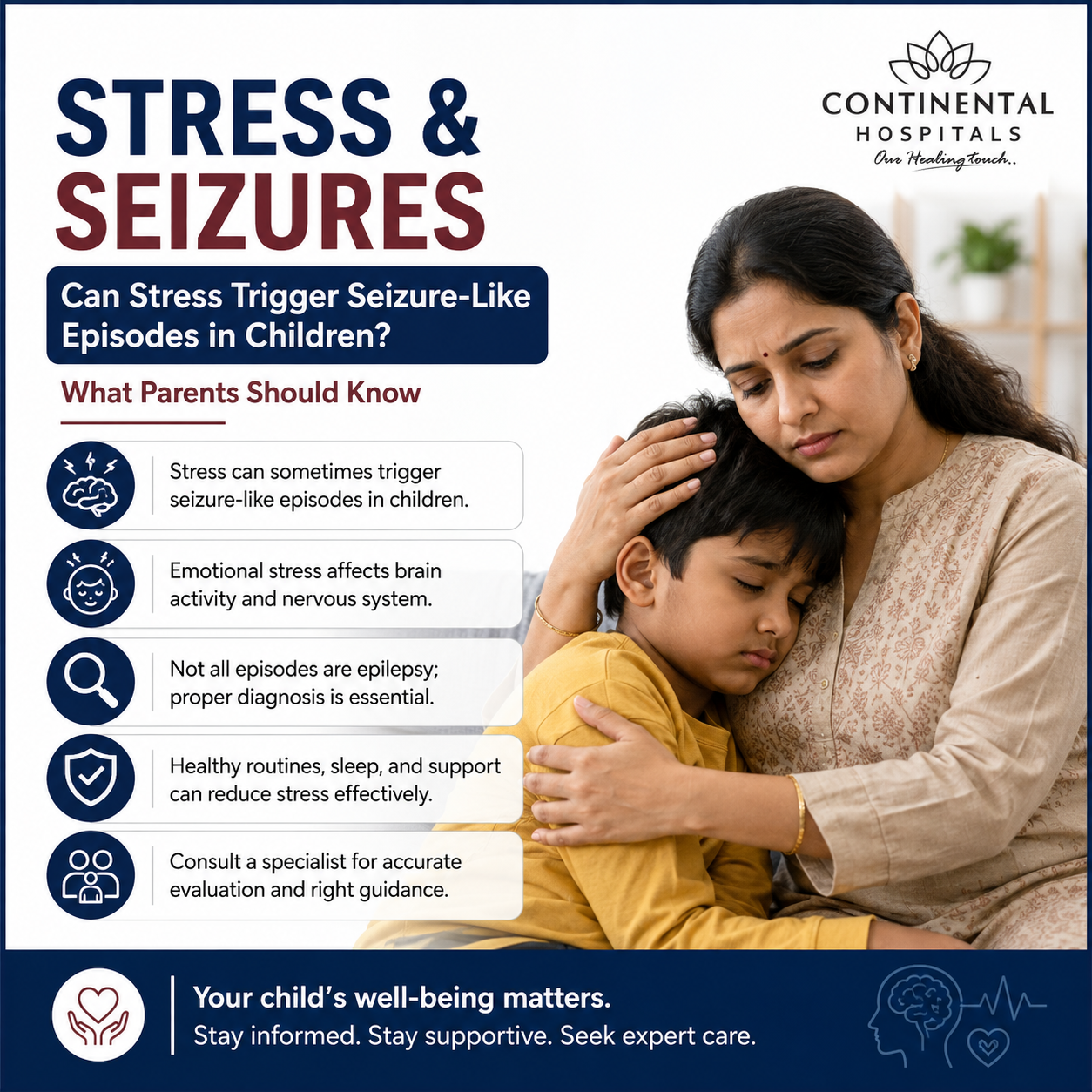
Yes, stress triggering seizures is a well-recognized concern in children who already have epilepsy. Stress does not directly create epilepsy, but emotional or physical stress may increase the likelihood of seizures in children who are already vulnerable.
Stress can affect the brain by:
- Disturbing normal sleep patterns
- Increasing stress hormone levels
- Reducing concentration
- Causing anxiety
- Triggering emotional overload
These changes may lower the seizure threshold in some children. However, many stress-related episodes are not true epileptic seizures and require different treatment approaches.

How Does Stress Affect the Brain?
The brain constantly responds to emotions and external situations. During stressful moments, the body releases hormones such as cortisol and adrenaline.
These hormones may:
- Increase brain activity
- Affect nerve cell communication
- Disturb normal sleep
- Increase emotional sensitivity
- Reduce the body's ability to recover from fatigue
In children with epilepsy, these changes may sometimes contribute to stress-triggered seizures. This is why doctors encourage stress management as part of comprehensive epilepsy care.
What Symptoms Should Parents Watch For?
Parents should never ignore unusual episodes, especially if they occur repeatedly.
Common warning signs include:
- Repeated staring without responding
- Sudden body jerking
- Eye rolling
- Loss of consciousness
- Lip-smacking or chewing movements
- Sudden confusion after an episode
- Difficulty speaking afterward
- Unexpected falls
- Muscle stiffness
- Repeated shaking movements
If any of these symptoms occur, medical evaluation is recommended immediately.
Are All Stress-Related Episodes True Seizures?
No. Many children experience events that resemble seizures but have different causes.
Possible conditions include:
- Anxiety attacks
- Breath-holding spells
- Fainting
- Sleep disorders
- Panic attacks
- Functional neurological disorders
- Migraine-related episodes
Only detailed neurological evaluation, brain imaging when needed, and an EEG can determine whether the child has pediatric seizures or another condition.
How Are Pediatric Seizures Diagnosed?
Doctors carefully evaluate every child before confirming epilepsy.
Diagnosis may include:
- Complete medical history
- Physical examination
- Neurological assessment
- Electroencephalogram or EEG
- MRI brain scan if required
- Blood investigations
- Video recording of episodes provided by parents
Accurate diagnosis helps doctors identify whether stress triggers seizures in children or another neurological condition is responsible for the symptoms.
Can Stress Trigger Seizures in Children With Epilepsy?
Yes. Children already diagnosed with epilepsy may notice more frequent seizures during stressful situations.
Possible stress triggers include:
- School examinations
- Family conflicts
- Lack of sleep
- Illness
- Emotional trauma
- Excessive screen time
- Sudden routine changes
Managing these triggers may reduce seizure frequency while continuing prescribed medications.
How Can Parents Help Their Child?
Parents play a vital role in reducing stress and supporting their child's neurological health.
Helpful steps include:
- Maintain a regular sleep schedule.
- Ensure medicines are taken on time.
- Encourage open communication.
- Reduce unnecessary pressure.
- Promote healthy physical activity.
- Limit excessive screen exposure.
- Follow regular neurologist appointments.
- Keep a seizure diary.
- Learn basic seizure first aid.
- Stay calm during episodes.
These simple habits can improve overall well-being and support seizure management.
When Should You See a Pediatric Neurologist?
Seek immediate medical attention if your child:
- Experiences a first seizure.
- Has repeated seizure-like episodes in children.
- Loses consciousness.
- Has seizures lasting longer than a few minutes.
- Develops breathing difficulty.
- Suffers an injury during an episode.
- Has frequent unexplained staring spells.
- Shows developmental delays along with seizures.
Early intervention improves diagnosis, treatment, and long-term outcomes.
Why Choose Continental Hospitals?
Continental Hospitals is recognized as one of the best hospitals in Hyderabad, providing advanced care for neurological conditions in children and adults. The hospital offers comprehensive evaluation and treatment for childhood seizures, pediatric seizures, epilepsy, and seizure-like episodes in children through experienced pediatric neurologists and multidisciplinary specialists.
Continental Hospitals is accredited by JCI, NABH, and QAI, reflecting its commitment to international standards of patient safety, quality healthcare, and clinical excellence. The hospital is equipped with advanced diagnostic technology, modern neuroimaging facilities, EEG services, emergency care, pediatric intensive care support, and personalized treatment plans to ensure every child receives an accurate diagnosis and compassionate care.
Conclusion
Understanding whether stress triggers seizures is an important step for every parent. While stress may increase seizure risk in some children with epilepsy, many seizure-like episodes in children are caused by other medical or psychological conditions. Accurate diagnosis is essential because treatment depends on identifying the actual cause. Never ignore repeated episodes or unusual behavior. Early consultation with a pediatric neurologist can make a significant difference in your child's health, safety, and quality of life.
If your child experiences stress-trigger seizures, seizure-like episodes in children, unexplained shaking, staring spells, or recurrent childhood seizures, do not delay medical evaluation. Consult our best pediatric neurologist in Hyderabad at Continental Hospitals for comprehensive diagnosis, advanced neurological testing, personalized treatment, and compassionate care. Early intervention can help protect your child's brain health and support a healthier future.
Related Blogs: