.webp)


Could constant fatigue be more than just a result of poor sleep or a busy routine? Feeling tired after a long day is common, but persistent or unexplained tiredness may sometimes indicate an underlying health problem. Diabetes is one possible cause, especially when fatigue occurs along with increased thirst, frequent urination, or unexplained weight changes.
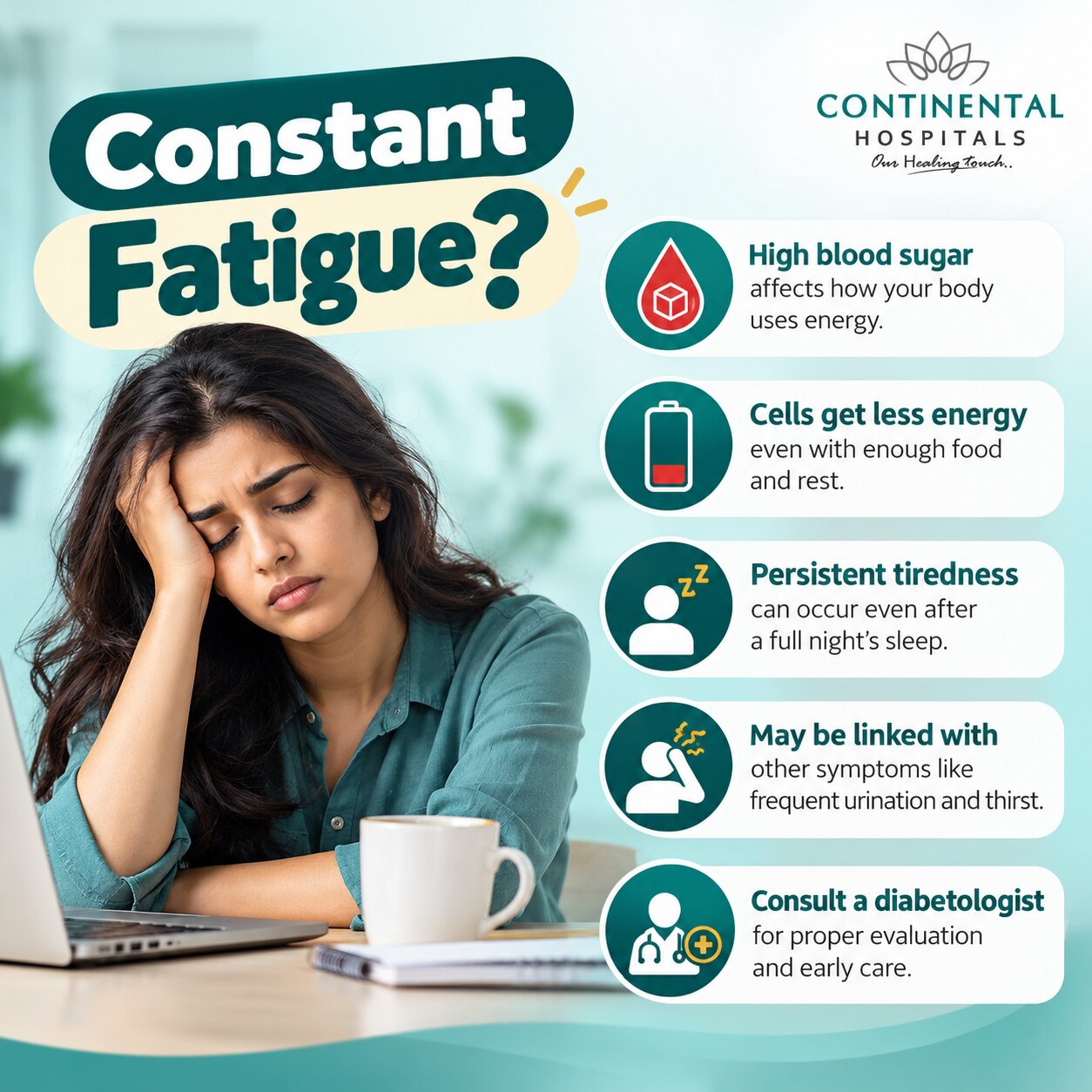
Constant fatigue can occur when the body cannot use blood glucose properly for energy. When blood sugar levels remain high, glucose may not enter the cells efficiently, leaving the body feeling low on energy. Understanding the connection between fatigue and diabetes can help you recognize possible warning signs and seek medical advice at the right time.
How Can Diabetes Cause Constant Fatigue?
In diabetes, blood glucose levels may become higher than normal because the body does not produce enough insulin or cannot use insulin effectively. Glucose is an important source of energy for the body's cells. When glucose cannot be used properly, the body may struggle to produce the energy it needs.
High blood sugar can also cause increased urination, which may contribute to dehydration. Dehydration can make tiredness and weakness more noticeable.
This is why diabetes and fatigue can sometimes occur together, particularly when blood sugar levels remain uncontrolled.
Visit the Diabetology and Endocrinology Department at Continental Hospitals, Hyderabad, for expert diabetes and hormone-related care.
What Does Diabetes-Related Fatigue Feel Like?
Diabetes-related fatigue may feel different from ordinary tiredness. You may notice:
• Feeling exhausted even after adequate sleep
• Low energy throughout the day
• Difficulty concentrating or feeling mentally tired
• Reduced ability to complete normal activities
• Weakness or lack of motivation
• Feeling tired repeatedly without an obvious reason
• Needing frequent breaks during the day
Constant fatigue does not automatically mean you have diabetes. However, unexplained tiredness that continues for several weeks deserves medical attention.

What Other Diabetes Symptoms Can Occur With Fatigue?
Yes. Constant fatigue may occur with several other diabetes symptoms. Recognizing a combination of symptoms can be more useful than focusing on tiredness alone.
Common diabetes warning signs include:
• Increased thirst
• Frequent urination, especially at night
• Increased hunger
• Unexplained weight loss
• Blurred vision
• Slow healing of cuts and wounds
• Recurrent infections
• Dry or itchy skin
• Tingling or numbness in the hands or feet
• Constant fatigue or unexplained tiredness
Some people may have diabetes without noticeable symptoms, which is why appropriate screening can be important for people at increased risk.
Why Does High Blood Sugar Make You Feel Tired?
How does high blood sugar contribute to tiredness?
When blood glucose remains elevated, the body may not use glucose efficiently for energy. The kidneys may also work harder to remove excess glucose through urine. This can increase urination and fluid loss.
As a result, a person may experience dehydration, weakness, difficulty concentrating, and reduced energy.
High blood sugar can also affect overall metabolic balance. If these changes continue for a long time, fatigue may become a persistent concern.
Can Constant Fatigue Have Other Causes?
No. Constant fatigue can have many possible causes. These may include:
• Poor sleep or sleep disorders
• Iron deficiency or anemia
• Thyroid problems
• Stress and emotional strain
• Certain infections
• Nutritional deficiencies
• Dehydration
• Medication-related effects
• Other medical conditions
Because fatigue has many possible causes, it is not possible to diagnose diabetes based on tiredness alone. A doctor can evaluate your symptoms and recommend appropriate tests.
When Should You Get Tested for Diabetes?
Consider speaking with a doctor if constant fatigue continues without a clear explanation, particularly when it occurs with other early diabetes symptoms.
A doctor may recommend blood glucose testing based on your symptoms and risk factors. Tests may include fasting blood glucose, HbA1c, or other investigations when clinically appropriate.
Finding high blood sugar early can help you take appropriate steps to manage your health and reduce the risk of diabetes-related complications.
How Can You Reduce Diabetes-Related Fatigue?
If diabetes or prediabetes is contributing to tiredness, managing blood glucose can be an important part of improving overall energy. Depending on individual needs, a healthcare professional may recommend:
• Eating balanced meals with appropriate portions
• Staying adequately hydrated
• Regular physical activity
• Maintaining a healthy weight
• Getting sufficient quality sleep
• Taking prescribed medicines correctly
• Monitoring blood glucose when advised
• Attending regular medical checkups
Lifestyle changes should be personalized according to your health condition and medical advice.
Why Choose Continental Hospitals for Diabetes Care?
Continental Hospitals, Hyderabad, provides comprehensive care for diabetes and related health concerns through experienced specialists, advanced diagnostic facilities, and a multidisciplinary approach. The hospital focuses on patient safety, clinical quality, and personalized treatment planning.
Continental Hospitals is accredited by JCI and NABH, reflecting its commitment to recognized healthcare quality and patient safety standards. Its integrated medical services allow patients to receive evaluation and specialist care for diabetes and other conditions that may contribute to persistent fatigue.
For people looking for the best hospital in Hyderabad for comprehensive diabetes care, appropriate evaluation and individualized medical guidance can help support better long term health.
What Should You Remember About Constant Fatigue and Diabetes?
It can be, particularly when tiredness occurs alongside other signs of high blood sugar. However, fatigue has many possible causes, so proper medical evaluation is important.
Key points to remember include:
• Constant fatigue can sometimes occur with diabetes.
• High blood sugar can affect how the body uses glucose for energy.
• Increased thirst and frequent urination may occur alongside tiredness.
• Unexplained tiredness should not automatically be assumed to be diabetes.
• Blood glucose testing can help identify abnormal blood sugar levels.
• Early evaluation can support timely diabetes management.
• Healthy eating, physical activity, sleep, and prescribed treatment can help support better energy levels.
Conclusion
Could your constant fatigue be trying to tell you something about your health? Occasional tiredness is common, but persistent or unexplained fatigue should not always be ignored. When tiredness occurs with increased thirst, frequent urination, blurred vision, unexplained weight changes, or other Diabetes Symptoms, it is worth discussing these concerns with a healthcare professional.
If you suffer from constant fatigue, unexplained tiredness, or other possible signs of high blood sugar, consult our best diabetologist or endocrinologist in Hyderabad at Continental Hospitals, Hyderabad, for appropriate evaluation, diabetes testing, and personalized medical care.
Related Blogs: