post-title

DBS for Dystonia: A Promising Treatment Option

Written by - Editorial Team
Medically Reviewed by - Dr Chakradhar Reddy N

Deep Brain Stimulation, known as DBS, has emerged as one of the most effective treatment options for people living with dystonia. Dystonia is a movement disorder that causes involuntary muscle contractions, twisting movements, and abnormal postures. These symptoms can affect daily activities, confidence, and overall quality of life. While medications and physiotherapy help many individuals, 
some people continue to struggle with persistent symptoms. For such patients, DBS for dystonia offers a promising and long-term treatment approach.

This detailed guide explains how DBS works, who benefits from it, what the procedure involves, recovery expectations, and why Continental Hospitals is a trusted centre for advanced dystonia management in Hyderabad. The goal is to give you clear, simple, and engaging information with SEO-friendly keywords to help you make informed healthcare decisions.

What is dystonia?

Dystonia affects the brain circuits responsible for controlling muscle movements. When these circuits misfire, muscles contract involuntarily. This results in twisting, tremors, eye blinking, neck pulling, or abnormal limb postures.
Common signs of dystonia include

  • Uncontrolled muscle contractions
  • Difficulty in holding normal posture
  • Pain or discomfort due to constant muscle tension
  • Challenges with writing, speaking, or walking
  • Worsening symptoms with stress or fatigue

If you experience any of these symptoms? early consultation with a neurologist is important. Early diagnosis ensures better dystonia management and helps prevent complications.

Visit our best neuro doctor hyderabad at Continental Hospitals for comprehensive diagnosis and advanced treatment of brain, spine, nerve, and movement disorders. Book your appointment today for expert neurological care.
What Is Deep Brain Stimulation (DBS) for Dystonia?

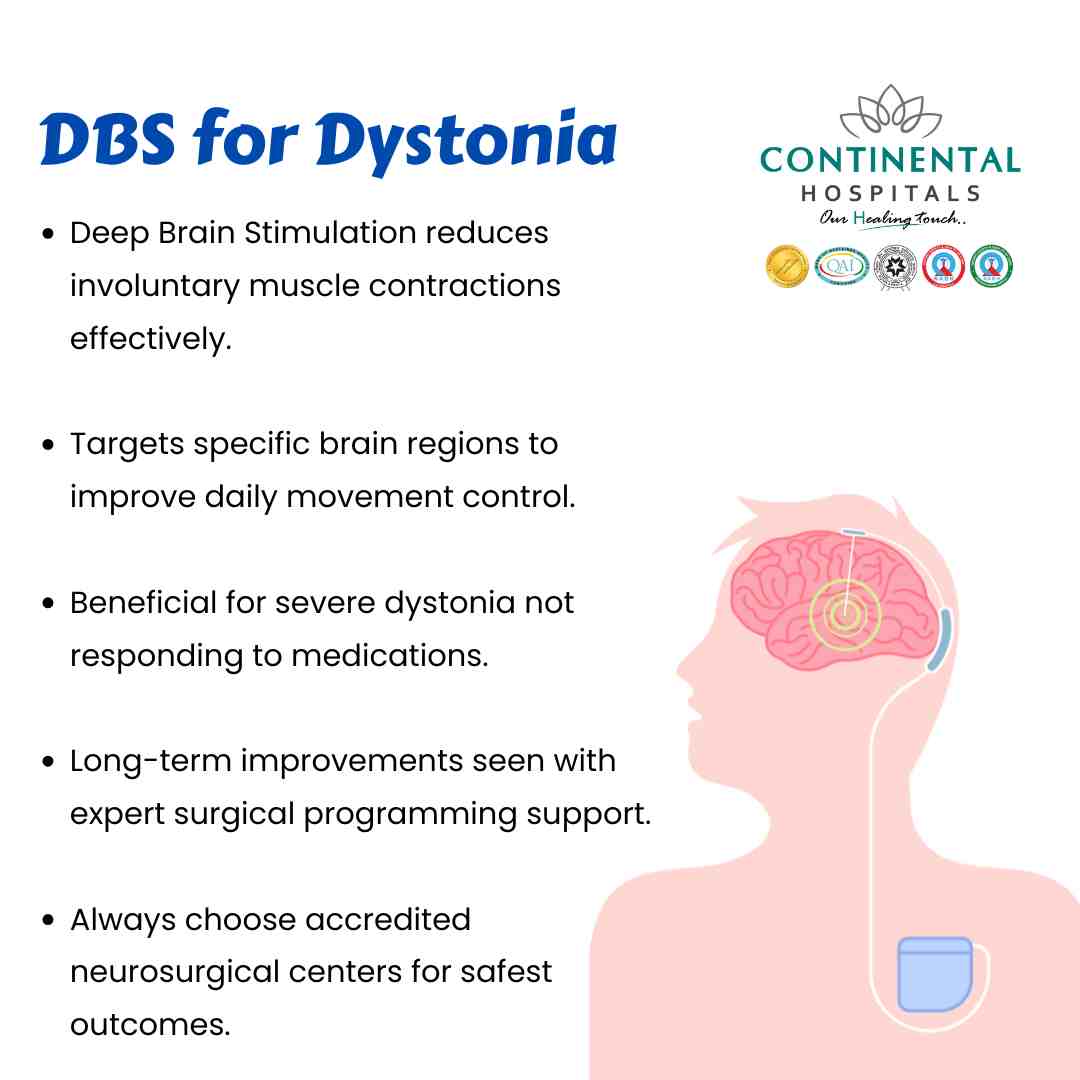
DBS for dystonia is a specialised neurology dystonia therapy that uses a small implanted device to provide electrical stimulation to targeted brain areas. This stimulation helps regulate abnormal brain signals and improves muscle control.

DBS does not damage brain tissue. It modulates the faulty brain pathways responsible for movement problems. This is why DBS is often recommended when medications and botulinum injections do not provide enough symptom relief.

Key benefits of DBS include

Second Opinion

  • Reduction in involuntary movements
  • Improvement in posture and coordination
  • Better control over daily activities
  • Long-term symptom stability
  • Reversible and adjustable treatment
  • Suitable for various forms of dystonia

These benefits make DBS one of the most effective movement disorder treatments available today.

Who Is a Suitable Candidate for DBS?

A neurologist or movement disorder specialist evaluates if DBS surgery is the right choice. You may be a suitable candidate if

  • You have moderate-to-severe dystonia
  • Symptoms affect daily functioning
  • Medications have limited benefit
  • You have primary dystonia or genetic dystonia
  • You do not have severe cognitive or psychiatric concerns

If you want to know whether DBS is right for your condition? a specialised evaluation is essential.

How Does DBS Surgery Work for Dystonia?

DBS surgery involves placing thin electrodes in specific brain regions that control movement. These electrodes are connected to a small device called a pulse generator, similar to a pacemaker, implanted beneath the skin in the chest.
The procedure is completed in the following steps:

  • Pre-surgical assessment including MRI, neurological exams, and planning
  • Implantation of electrodes into targeted brain areas
  • Placement of the pulse generator in the upper chest
  • Programming and adjusting stimulation settings
  • Follow-up visits for fine-tuning

The entire DBS procedure Hyderabad facilities offer is performed by trained neurosurgeons and neurologists working together. The goal is to provide safe and precise brain implants for dystonia.

What Can You Expect After DBS Surgery for Dystonia?

Recovery after DBS is usually smooth and well supported by the care team. Patients often return home within a few days. The pulse generator is activated after a short healing period.

What to expect after surgery

Need an Appointment?

  • Gradual improvement in symptoms over weeks to months
  • Better muscle control and reduced spasms
  • Periodic follow-up visits for setting adjustments
  • Lifestyle improvements with consistent treatment

The results vary from person to person, but many patients achieve significant dystonia symptom relief and improved daily functioning.

What Are the Other Treatment Options for Dystonia?

While DBS is highly effective, treatment usually begins with non-surgical approaches. These may include

  • Oral medications to reduce muscle spasms
  • Botulinum toxin injections for targeted muscle relief
  • Physiotherapy and stretching exercises
  • Stress management techniques
  • Speech therapy for voice or jaw dystonia

If these options do not control symptoms? DBS becomes a strong and dependable solution.

Why choose Continental Hospitals for DBS and dystonia treatment?

Continental Hospitals in Hyderabad is a trusted centre for advanced brain and movement disorder treatments. Patients choose Continental Hospitals for DBS for several important reasons

  • Team of highly experienced neurologists, neurosurgeons, and movement disorder specialists
  • Advanced neuroimaging and surgical navigation systems
  • Comprehensive evaluation and personalised treatment planning
  • State of the art operating theatres designed for precision neurosurgery
  • Skilled nursing and rehabilitation teams for post procedure support
  • NABH accredited and JCI accredited hospital ensuring international quality and safety standards
  • Multidisciplinary approach for complex neurological conditions

These strengths make Continental Hospitals one of the preferred centres for deep brain stimulation surgery and dystonia management in India.

Can You Live a Normal Life With Dystonia?

Managing dystonia can be challenging, but with the right treatment and support, most people can lead active, independent lives. Understanding your symptoms, following medical advice, and choosing the right treatment plan are essential steps in improving long term outcomes.

If you are struggling with involuntary movements, muscle stiffness, or abnormal postures? it may be the right time to explore advanced dystonia treatment options like DBS.

Conclusion

DBS for dystonia is a powerful and scientifically proven solution for individuals who do not get relief through medications or other therapies. It helps regulate abnormal brain activity, reduces involuntary movements, and restores better control over daily activities. With proper guidance and expert care, many patients experience meaningful improvements in their quality of life.

If you suffer from dystonia and want expert evaluation or advanced treatment options? Continental Hospitals offers comprehensive care with experienced specialists, cutting edge technology, and world class standards.

To consult our Best Neurologist in Hyderabad or movement disorder expert at Continental Hospitals, book your appointment today.

Frequently Asked Questions

Deep Brain Stimulation (DBS) is an advanced surgical treatment used for people with dystonia whose symptoms cannot be adequately controlled with medications or botulinum toxin injections. The procedure involves implanting thin electrodes into specific areas of the brain that control movement, most commonly the globus pallidus internus (GPi). These electrodes are connected to a small pulse generator placed under the skin near the chest. The device sends controlled electrical impulses that help regulate abnormal brain activity responsible for involuntary muscle contractions. DBS does not destroy brain tissue, making it a reversible and adjustable treatment. Neurologists can fine-tune the stimulation settings based on the patient's symptoms and response. While DBS is not a cure for dystonia, it can significantly improve movement, reduce muscle spasms, lessen pain, and enhance overall quality of life. Many patients also experience greater independence in their daily activities following successful treatment.
DBS is generally recommended for individuals with moderate to severe dystonia that significantly affects daily life despite receiving appropriate medical treatment. Candidates often include patients with generalized dystonia, segmental dystonia, or certain forms of focal dystonia that have not responded well to medications or botulinum toxin therapy. A thorough evaluation by a movement disorder neurologist and a neurosurgeon is essential before surgery. The assessment typically includes neurological examinations, imaging studies such as MRI, psychological evaluation, and review of overall health. Patients should have realistic expectations regarding the benefits and limitations of DBS. Those with severe uncontrolled medical conditions or certain psychiatric disorders may not be suitable candidates. The decision is individualized, ensuring that the expected benefits outweigh the potential risks associated with surgery.
Deep Brain Stimulation has shown excellent outcomes for many patients with dystonia, particularly those with generalized or inherited forms of the condition. Clinical studies have demonstrated significant reductions in involuntary muscle contractions, abnormal postures, and pain after DBS surgery. Improvement often develops gradually over several weeks or months, unlike Parkinson's disease where benefits may appear sooner. Many patients report better mobility, improved speech, easier performance of daily activities, and enhanced quality of life. The degree of improvement depends on factors such as the type of dystonia, duration of symptoms, age, and overall health. Regular programming sessions help optimize stimulation settings for the best results. Although DBS may not completely eliminate symptoms, it often provides long-term functional improvement and reduces disability for appropriately selected patients.
The DBS procedure is performed by an experienced neurosurgical team using advanced imaging and precision-guided techniques. During surgery, thin electrodes are carefully implanted into the targeted brain region responsible for abnormal movement control. These electrodes are connected through extension wires to a small battery-powered neurostimulator placed beneath the skin, usually below the collarbone. Depending on the patient's condition and surgical approach, parts of the procedure may be performed while the patient is awake or under general anesthesia. After implantation, the device is programmed several weeks later once the surgical site has healed. Neurologists gradually adjust the stimulation settings during follow-up visits to achieve the best symptom control while minimizing side effects. Continuous monitoring ensures that the therapy remains effective over time.
Like any surgical procedure, DBS carries certain risks, although serious complications are relatively uncommon when performed by experienced specialists. Potential surgical risks include infection, bleeding in the brain, stroke, or complications related to anesthesia. Device-related issues such as lead movement, hardware malfunction, or battery depletion may occasionally require additional procedures. Some patients may experience temporary side effects from brain stimulation, including speech difficulties, balance problems, tingling sensations, or muscle tightness. These effects can often be managed by adjusting the stimulation settings. Regular follow-up appointments are important to monitor the device and optimize therapy. Careful patient selection, detailed preoperative planning, and experienced surgical teams significantly reduce the likelihood of complications while improving treatment outcomes.
Recovery following DBS surgery varies from one patient to another, but most individuals are discharged within a few days after the procedure. Mild discomfort, swelling, or soreness around the incision sites usually improves over the first couple of weeks. Patients are generally advised to avoid strenuous physical activities until the surgical wounds have healed completely. The DBS device is typically activated and programmed two to four weeks after surgery. Symptom improvement may occur gradually over several weeks or even months as stimulation settings are adjusted during follow-up visits. Physical therapy, occupational therapy, or speech therapy may be recommended to maximize functional recovery. Regular appointments with the movement disorder team ensure optimal long-term outcomes and effective symptom management.
Many patients continue taking medications after DBS surgery, although the dosage or number of medications may often be reduced depending on symptom improvement. The primary goal of DBS is to improve movement, decrease muscle spasms, reduce pain, and enhance daily functioning rather than completely replace medications. Neurologists carefully evaluate each patient's response before making changes to their treatment plan. Medication adjustments are usually gradual and based on clinical progress during follow-up visits. Some patients may still require botulinum toxin injections or supportive therapies in addition to DBS. Combining DBS with rehabilitation and regular neurological care often provides the best long-term results. Patients should never stop medications without consulting their treating neurologist.
The lifespan of a DBS device depends on the type of battery and the stimulation settings used for treatment. Non-rechargeable batteries typically last between three and five years, while rechargeable systems can function for up to fifteen years or longer with proper maintenance. During routine follow-up visits, doctors regularly check battery status and device performance using specialized programming equipment. When the battery becomes depleted, the pulse generator can usually be replaced through a relatively minor surgical procedure without changing the implanted brain electrodes. Rechargeable systems require patients to recharge the battery at regular intervals as instructed by their healthcare team. Ongoing monitoring helps ensure uninterrupted therapy and continued symptom control. Your neurologist will recommend the most suitable DBS system based on your individual treatment needs and lifestyle.
Disclaimer: The information provided in this blog is intended for general knowledge and informational purposes only, and does not constitute medical advice. Always consult with a qualified healthcare professional for any medical concerns or before making any decisions about your health.

Get in Touch With Us

Whether you are from India or abroad, we are here to help you with your medical queries. Please fill out the form below and our team will connect with you shortly.

  • ✔ Quick response from our medical experts
  • ✔ Secure data handling & privacy
  • ✔ Easy upload for reports & documents
banner_image

Chat with our medical experts on WhatsApp for quick assistance and hassle-free appointment booking

Recent Posts