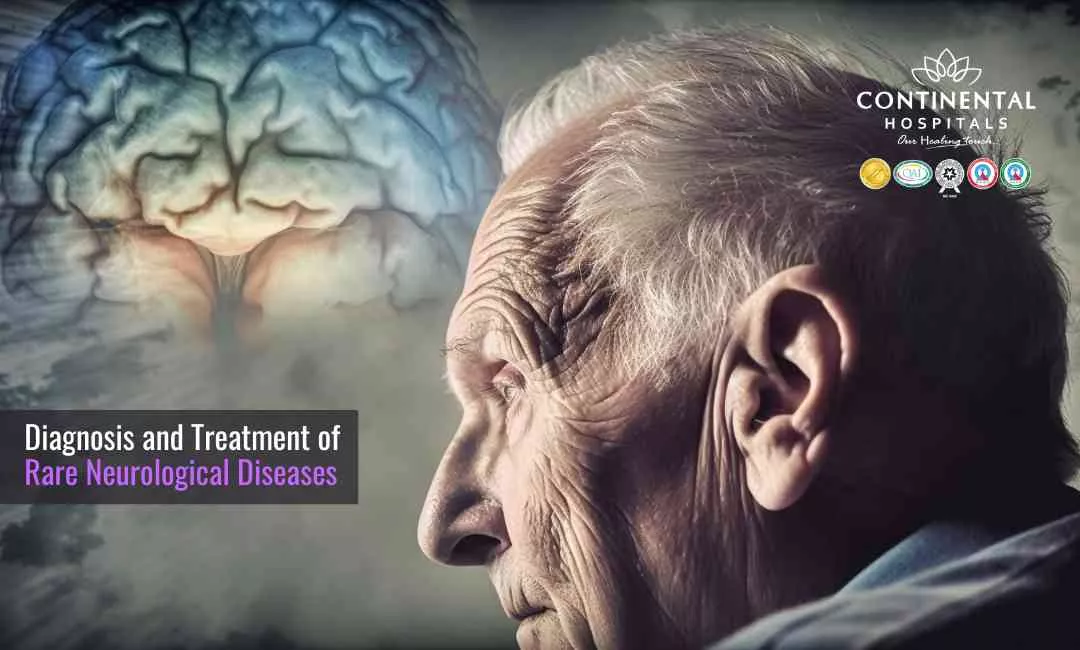
post-title

Diagnosis and Treatment of Rare Neurological Diseases

Written by - Editorial Team
Medically Reviewed by - Dr M K Singh

The human brain is one of the most complex organs in the body, controlling every thought, movement, and sensation. When a rare neurological disease affects the brain, spinal cord, or nerves, the consequences can be serious and life-changing. Understanding these conditions and getting the right diagnosis and treatment at the right time can make a significant difference in improving quality of life.

At Continental Hospitals, Hyderabad, our team of expert neurologists, neurosurgeons, and rehabilitation specialists are dedicated to identifying and managing even the rarest neurological disorders with precision, compassion, and advanced technology.

What Are Rare Neurological Diseases?

Rare neurological diseases are conditions that affect the brain, spinal cord, or peripheral nerves and occur in a very small percentage of the population. Though uncommon, they can lead to major neurological challenges. These diseases often have complex symptoms that may mimic more common neurological conditions, making diagnosis difficult.

Some of the rare neurological disorders include:

Amyotrophic Lateral Sclerosis (ALS): A progressive disease affecting nerve cells that control voluntary muscles.

Wilson’s Disease: A genetic condition causing copper accumulation in the liver and brain, leading to neurological symptoms.

Guillain-Barré Syndrome (GBS): A condition where the immune system attacks the peripheral nerves.

Myasthenia Gravis: Causes weakness in voluntary muscles due to problems in nerve-to-muscle communication.

Multiple System Atrophy (MSA): A progressive disorder that affects movement, balance, and automatic body functions.

Second Opinion

Huntington’s Disease: A genetic disorder leading to uncontrolled movements, emotional problems, and cognitive decline.

These diseases are not just physically challenging but also emotionally overwhelming for patients and their families. Early recognition and proper management can slow disease progression and improve overall well-being.

Experiencing persistent headaches, dizziness, numbness, or other neurological symptoms? Visit the best neuro doctor hyderabad at Continental Hospitals, Hyderabad, for expert evaluation and advanced neurological care.

What are the common symptoms of rare neurological diseases that should never be ignored?

Recognizing the early signs of a rare neurological disorder is crucial. Symptoms may vary, but some of the warning signs include:

  • Sudden muscle weakness or stiffness
  • Loss of coordination or balance
  • Tremors or involuntary movements
  • Numbness or tingling in the limbs
  • Difficulty speaking or swallowing
  • Memory loss or confusion
  • Changes in mood, behavior, or personality

If you experience any of these symptoms, it is important to consult a neurologist immediately. Delayed diagnosis can lead to complications and irreversible nerve damage.

How Are Rare Neurological Diseases Diagnosed?

Accurate diagnosis is the first and most critical step. At Continental Hospitals, we use state-of-the-art diagnostic facilities and a multidisciplinary approach to identify neurological conditions precisely.

Diagnostic methods include the following:

Need an Appointment?

  • Neurological Examination: To assess reflexes, strength, balance, and coordination.
  • MRI and CT Scans: Advanced imaging to detect abnormalities in the brain and spinal cord.
  • EEG (Electroencephalogram): To monitor electrical activity in the brain.
  • EMG and Nerve Conduction Tests: To evaluate muscle and nerve function.
  • Genetic and Biochemical Tests: To identify inherited neurological disorders.
  • Lumbar Puncture (Spinal Tap): To check cerebrospinal fluid for infections or inflammation.

With these diagnostic tools, our specialists can detect even subtle neurological changes and create a personalized treatment plan.

What are the treatment options for rare neurological diseases?

While some rare neurological conditions cannot be completely cured, timely treatment can help manage symptoms, slow disease progression, and improve quality of life. Treatment plans at Continental Hospitals are tailored to each patient’s condition, severity, and needs.

Treatment approaches include the following:

Medications: To control symptoms like muscle spasms, seizures, and nerve pain.

Immunotherapy: Helps regulate immune system activity in autoimmune-related neurological diseases.

Surgical Interventions: For conditions that require decompression, tumor removal, or deep brain stimulation.

Physical and Occupational Therapy: Improves muscle strength, coordination, and daily functioning.

Speech and Swallow Therapy: For patients with speech or swallowing difficulties.

Psychological Support: Managing emotional and mental health challenges associated with chronic neurological disorders.

At Continental Hospitals, every treatment plan is designed using evidence-based medicine, supported by the latest advancements in neuroscience and technology.

Why Choose Continental Hospitals for Neurological Care?

Continental Hospitals is one of the most trusted healthcare institutions in Hyderabad, recognized for its excellence in neurology and neurosurgery.

Key reasons to choose Continental Hospitals include:

Accreditations and Standards: Continental Hospitals is accredited by JCI (Joint Commission International) and NABH, ensuring the highest standards of patient safety and medical care.

Expert Multidisciplinary Team: Our specialists include neurologists, neurosurgeons, rehabilitation experts, and neurophysiologists who work together to provide holistic care.

Advanced Technology: Equipped with world-class diagnostic tools like 3T MRI, high-resolution CT scanners, and neuro-navigation systems.

Personalized Care: Every patient receives a customized treatment plan focusing on medical, physical, and emotional well-being.

Comprehensive Rehabilitation: Our neuro-rehabilitation programs help patients regain mobility, speech, and independence.

International Patient Services: We provide seamless care for patients visiting from across India and abroad.

Continental Hospitals continues to lead in neurological excellence by combining clinical expertise with compassion, helping patients achieve the best possible outcomes.

How Can You Manage Life with a Rare Neurological Disease?

Living with a rare neurological disorder can be difficult, but support from experienced neurologists and therapists can make a remarkable difference. Managing the condition involves consistent follow-ups, lifestyle adjustments, medication adherence, and rehabilitation therapy.

Family and caregiver support also plays an important role in ensuring the patient’s emotional and physical stability. At Continental Hospitals, we not only focus on treatment but also on long-term care, counseling, and patient education to improve quality of life.

Conclusion

Rare neurological diseases may be uncommon, but they require expert evaluation and a multidisciplinary approach for effective management. With cutting-edge technology, expert doctors, and a patient-centric approach, Continental Hospitals, Hyderabad, offers comprehensive neurological care from diagnosis to recovery.

If you or someone you know is struggling with symptoms of a neurological disorder, book a consultation with our Best Neurologist in Hyderabad at Continental Hospitals, Hyderabad, and take the first step towards better brain and nerve health.


Frequently Asked Questions

Rare neurological diseases are uncommon disorders that affect the brain, spinal cord, peripheral nerves, or muscles. Although each condition is rare, there are thousands of different neurological disorders that collectively impact millions of people worldwide. These diseases may be genetic, autoimmune, infectious, metabolic, or degenerative in origin. Symptoms vary widely and may include seizures, muscle weakness, movement disorders, memory problems, speech difficulties, numbness, or loss of coordination. Because symptoms often resemble common neurological conditions, diagnosis can be delayed. Early recognition by a neurologist is essential for timely intervention. Advanced diagnostic technologies, specialized laboratory tests, and neuroimaging play a key role in identifying these disorders. While some rare neurological diseases cannot be cured, many can be effectively managed with medications, rehabilitation, supportive care, and personalized treatment plans to improve quality of life.
The symptoms of rare neurological diseases depend on the specific condition and the part of the nervous system involved. Common warning signs include unexplained muscle weakness, persistent numbness or tingling, balance problems, tremors, involuntary movements, seizures, frequent headaches, memory loss, difficulty speaking, vision changes, swallowing problems, and chronic fatigue. Some patients experience progressive loss of coordination or muscle wasting over time. In children, developmental delays or regression of milestones may indicate an underlying neurological disorder. Symptoms can appear suddenly or develop gradually over months or years. Since many rare neurological diseases share symptoms with common disorders, comprehensive neurological evaluation is essential. Seeking medical attention early helps identify the cause and allows appropriate treatment before permanent nerve damage occurs.
Diagnosing rare neurological diseases involves a detailed medical history, neurological examination, and advanced diagnostic testing. A neurologist evaluates symptoms, family history, disease progression, and previous medical conditions. Brain and spinal MRI scans help identify structural abnormalities, while CT scans may be used in selected cases. Electroencephalography (EEG) detects abnormal brain activity, and electromyography (EMG) along with nerve conduction studies assess nerve and muscle function. Blood tests, cerebrospinal fluid analysis, autoimmune panels, metabolic screening, and genetic testing are often required to confirm the diagnosis. In certain cases, muscle or nerve biopsies may be recommended. Early referral to a specialized neurology center improves diagnostic accuracy and helps patients receive appropriate treatment sooner.
Many rare neurological diseases can be effectively treated or managed, although the treatment depends on the specific diagnosis. Some conditions respond well to medications that reduce inflammation, suppress abnormal immune responses, control seizures, or improve movement disorders. Genetic conditions may benefit from enzyme replacement therapy, gene-targeted treatments, or disease-modifying medications where available. Rehabilitation through physiotherapy, occupational therapy, and speech therapy plays a major role in maintaining independence and improving daily function. Nutritional support and psychological counseling may also be necessary. In selected patients, surgical interventions or advanced therapies such as deep brain stimulation may be recommended. Early diagnosis allows treatment to begin before significant neurological damage develops, improving long-term outcomes and quality of life.
Many rare neurological diseases have a genetic basis and can run in families, although not all are inherited. Certain disorders result from mutations passed from parents to children, while others occur due to new genetic changes that develop spontaneously. The inheritance pattern may be autosomal dominant, autosomal recessive, or X-linked depending on the condition. Genetic counseling helps families understand their risk of passing the disease to future generations. Modern genetic testing can identify disease-causing mutations, confirm diagnoses, and guide treatment decisions. Family members who may be at risk can also undergo screening when appropriate. Identifying hereditary conditions early enables better disease monitoring, informed family planning, and access to emerging targeted therapies.
You should consult a neurologist if you experience persistent neurological symptoms that remain unexplained despite routine medical evaluation. Progressive muscle weakness, repeated seizures, unusual movement disorders, frequent falls, persistent numbness, memory decline, vision disturbances, speech difficulties, or unexplained coordination problems should never be ignored. Individuals with a family history of neurological disorders should seek evaluation if they develop similar symptoms. Children with developmental delays, muscle weakness, or regression of milestones should also be assessed promptly. A neurologist can perform specialized examinations and recommend advanced diagnostic tests to determine the underlying cause. Early consultation improves the chances of timely diagnosis, personalized treatment, and better long-term neurological health.
Early diagnosis is crucial because many rare neurological diseases progressively damage the nervous system if left untreated. Identifying the condition before irreversible injury occurs allows doctors to start appropriate therapies sooner. Early intervention may slow disease progression, reduce complications, preserve mobility, improve cognitive function, and enhance quality of life. Timely diagnosis also prevents unnecessary investigations and inappropriate treatments. Patients can access rehabilitation services, genetic counseling, nutritional support, and disease-specific medications earlier in the course of illness. Families receive better guidance regarding prognosis and future planning. Advances in precision medicine and targeted therapies have made early diagnosis increasingly valuable for improving long-term outcomes in several rare neurological disorders.
Treatment options depend on the underlying neurological condition and the patient's overall health. Management may include medications to control symptoms, immunotherapy for autoimmune disorders, anticonvulsants for seizures, muscle relaxants, pain management, and disease-modifying therapies where available. Some patients benefit from enzyme replacement therapy, targeted biological medications, or gene-based treatments. Comprehensive rehabilitation with physiotherapy, occupational therapy, speech therapy, and neuropsychological support helps maximize functional independence. Nutritional care, assistive devices, and lifestyle modifications are often recommended to improve daily living. Regular follow-up with neurologists allows treatment adjustments based on disease progression. A multidisciplinary care approach provides the best opportunity for symptom control, improved quality of life, and long-term neurological support.
Disclaimer: The information provided in this blog is intended for general knowledge and informational purposes only, and does not constitute medical advice. Always consult with a qualified healthcare professional for any medical concerns or before making any decisions about your health.

Get in Touch With Us

Whether you are from India or abroad, we are here to help you with your medical queries. Please fill out the form below and our team will connect with you shortly.

  • ✔ Quick response from our medical experts
  • ✔ Secure data handling & privacy
  • ✔ Easy upload for reports & documents
banner_image

Chat with our medical experts on WhatsApp for quick assistance and hassle-free appointment booking

Recent Posts