.webp)

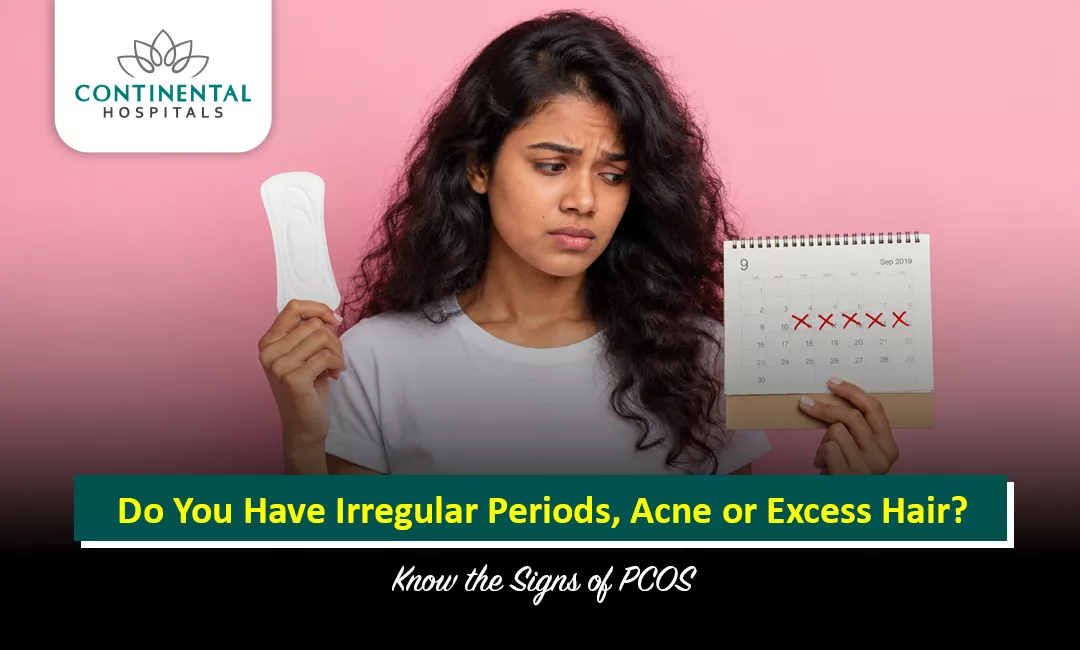
PCOS, known as Polycystic Ovary Syndrome, is a widespread endocrine disorder that can affect individuals during their reproductive years. It can impact menstruation, hormone levels, skin, hair, metabolism, and fertility. While each woman may have a different set of symptoms, early detection can help with diagnosis and treatment.
Are erratic menstrual cycles, constant acne problems, or excessive hair growth troubling you? There might be multiple causes behind these issues, one of which can be polycystic ovary syndrome. Learning how to recognize the symptoms of PCOS in women can help you understand when it's time to see a gynecologist or other medical practitioner.
How to Identify Common Symptoms of PCOS?
How does it manifest itself on a daily basis? Women experience various combinations of symptoms, and not all of them are present in every woman.
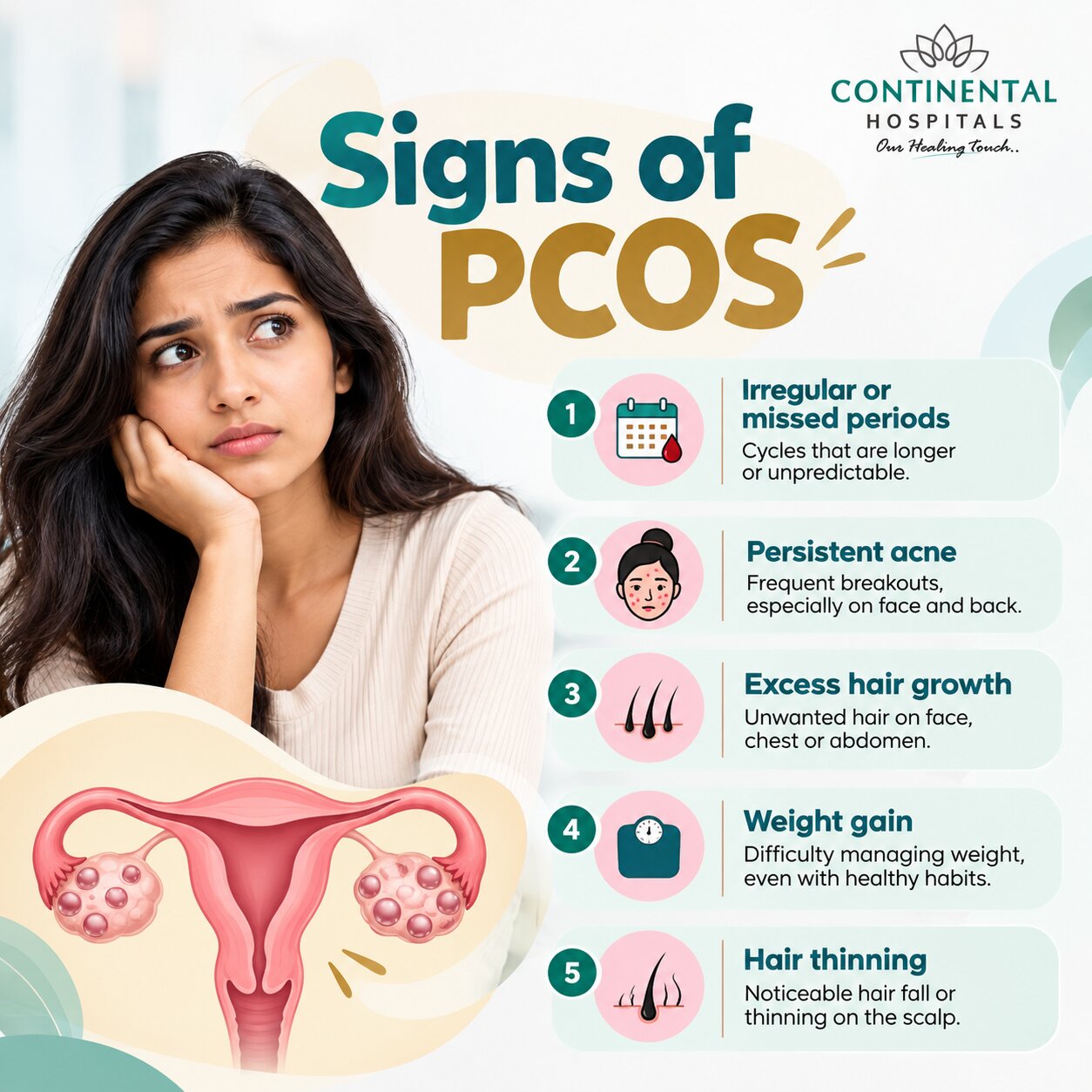
The symptoms of PCOS include:
- Irregular or unpredictable menstruation
- Less frequent periods
- Acne that extends beyond adolescence
- More body or facial hair than usual
- Thinning hair or losing hair from the scalp
- Difficulty with conceiving
- Unexplained weight gain or inability to lose weight
- Darker skin, especially around the neck and other skin folds
- More skin tags in some people
The presence of one symptom does not automatically indicate the presence of PCOS. A complete evaluation and diagnosis should be carried out by a qualified healthcare provider.
Visit the Gynecology Department at Continental Hospitals, Hyderabad, for expert women’s healthcare and personalized treatment.
What is the connection between PCOS and irregular periods?
Irregular periods are one of the common indicators of PCOS. It can disturb the normal process of ovulation and in turn lead to disorganized periods as well.
PCOS and irregular periods occur together because hormonal changes affect the functioning of the ovary. Some women experience a difference of weeks between their cycles, while others go through unpredictable bleeding.
Any persistent changes in the cycle need to be assessed with a gynecologist, particularly in the presence of other symptoms of PCOS.

Can acne be a symptom of PCOS?
Could adult acne be linked to hormonal changes? Yes. The hormonal changes that happen due to PCOS can lead to higher levels of androgen activity, which can increase the secretion of oil in the skin, leading to acne.
Some of the symptoms include:
- Acne that continues to be present
- Acne around the chin/jawline
- Having oily skin
- Frequent breakouts even with a proper skin regime
- Acne that continues into adulthood
However, having acne does not mean that one has PCOS; other symptoms should also be evaluated.
What Is the Connection Between PCOS and Excess Hair Growth?
Could excess hair on the face be one of the symptoms of PCOS? It is known that increased androgen levels may lead to excessive coarse hair growth on some parts of the body, such as the face, sideburns, abdomen, chest, and the back.
This phenomenon is known as hirsutism. Women may even notice thinning of hair on the head or more hair falling out from the scalp.
If unwanted hair growth occurred alongside irregular menstruation or acne, it may be advisable to consult a doctor.
How Is PCOS Caused?
What is the cause of polycystic ovarian syndrome? The reason is unknown. There may be numerous factors causing this disease, including hormonal changes, insulin resistance, heredity, and metabolic factors.
In some cases, PCOS may be inherited, but insulin resistance and the fact that insulin may become abundant may also play an important role in increased production of female hormones.
Due to the complexity of the disorder, treatment is based on specific symptoms, reproductive goals, metabolic condition, and health.
How Is PCOS Diagnosed?
How can one determine if one has PCOS? Diagnosis requires looking beyond a single symptom.
The physician may take into consideration:
- A history of menstruation and menstrual cycle patterns
- Symptoms such as acne and hair growth
- The patient is physically examined
- An examination of the patient’s blood for hormone and other levels
- An ultrasound
- Medical history and that of the family
Other conditions causing similar symptoms may need to be ruled out.
Is it possible to take control of PCOS?
Yes, with the help of lifestyle modifications and personalized plans, the symptoms of PCOS can be reduced. Possible management methods include:
- Regular physical activities
- Balanced nutrition
- Keeping the weight in the normal range if necessary
- Medication for symptom management
- Treatment of acne or hair excess
- Adjustment of menstrual cycle if needed
- Interventions to achieve pregnancy.
The exact method of control is determined individually for each case.
When is it necessary to seek medical attention for PCOS symptoms?
When is it appropriate to speak to your doctor about PCOS symptoms? You should visit a doctor if you notice any of the following signs:
- Cycle that is irregular or absent.
- Long-lasting acne after reaching adulthood.
- New and/or increased hair on the face and/or body.
- Unexplained loss of hair on the scalp.
- Trouble getting pregnant.
- Unusual weight gain in conjunction with changes in menstruation.
Consultation at an early stage can clarify the cause and help manage the condition in the future more effectively.
Why Choose Continental Hospitals for PCOS Care?
Why is it essential to get treatment from a specialist for PCOS conditions? Since PCOS impacts menstrual health, hormones, fertility, skin, hair, and the metabolic system, comprehensive assessment can be of great help in such a case.
Continental Hospitals in Hyderabad offers multidisciplinary healthcare backed with experienced specialists, state-of-the-art diagnostic facilities, modern infrastructure, and streamlined medical services. The hospital has received accreditations from JCI and NABH for its adherence to high-quality healthcare standards and patient safety.
Patients here receive evaluation and treatment based on their personal symptoms and medical concerns as well as in correspondence to their reproductive goals.
What’s Important to Know About PCOS?
Are you experiencing any potential early signs of PCOS? Symptoms such as irregular periods, acne, excessive hair growth, thinning hair on your scalp, and infertility may indicate a likelihood of PCOS.
Several important points to remember include:
- PCOS may alter the menstrual cycle and ovulation.
- Symptoms of PCOS can vary from woman to woman.
- Irregular periods may be seen together with PCOS.
- Hormones are believed to affect acne and hair growth.
- A single symptom does not necessarily signify PCOS.
- Diagnosis requires careful medical examination.
- Lifestyle changes and other treatments can help women cope with PCOS.
Conclusion
Do you have irregular periods, persistent acne, or unwanted facial and body hair? These changes should not automatically be attributed to PCOS, but they can be important Signs of PCOS when they occur together. Understanding PCOS symptoms and seeking timely medical evaluation can help identify the underlying cause and support appropriate management.
If you suffer from irregular periods, persistent acne, excess hair growth, fertility concerns, or other possible PCOS symptoms, consult our best gynecologist in Hyderabad at Continental Hospitals, Hyderabad, for comprehensive evaluation and personalized care.
Related Blogs: