
post-title

Early Signs of Alzheimer’s You Shouldn’t Ignore

Written by - Editorial Team
Medically Reviewed by - Dr Chakradhar Reddy N

Alzheimer’s disease is a condition that slowly affects memory, thinking, and behavior. It is the most common form of dementia, and while it mostly affects older adults, the symptoms can appear earlier than expected. Recognizing the early signs can make a big difference. The sooner a person seeks help, the more options they may have to slow down the condition and maintain quality of life.

More than 55 million people across the world are currently living with Alzheimer’s or another form of dementia. This makes it even more important to spread awareness, understand the symptoms, and take timely action.

Let’s take a closer look at the early signs of Alzheimer’s that you should not ignore.

1. Memory Loss That Disrupts Daily Life
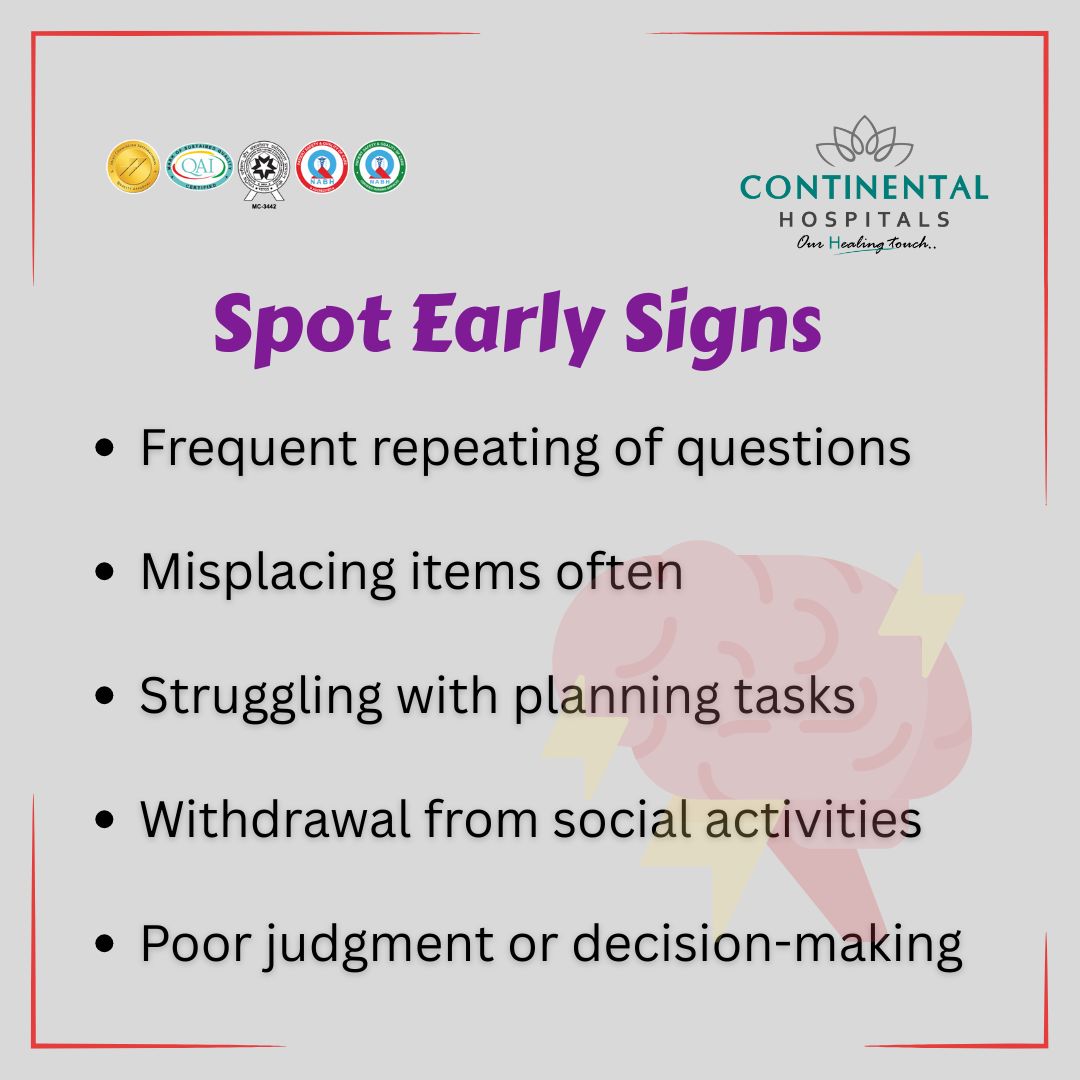
Occasionally forgetting names or appointments is common, but forgetting recently learned information, repeating the same questions, or relying heavily on memory aids can be an early sign of Alzheimer’s. You may notice the person struggling to recall things they just learned or important dates and events.
2. Difficulty Planning or Solving Problems
People in the early stages may have trouble working with numbers, following a familiar recipe, or keeping track of bills. They may also struggle with concentration and take much longer to do things they once did quickly.

3. Trouble Completing Familiar Tasks
One of the key early signs is difficulty in completing everyday tasks. This could be forgetting how to drive to a familiar location, how to use the settings on a microwave, or how to follow a favorite game’s rules.

4. Confusion with Time or Place
Losing track of dates, seasons, and the passage of time is another sign. People may forget where they are or how they got there. They may also become disoriented and unsure about the current day, even when reminded.

5. Difficulty Understanding Visual Images and Spatial Relationships
For some, vision problems are an early indicator. This can include difficulty reading, judging distance, or identifying color contrasts. These problems can affect driving and navigating familiar surroundings.

Second Opinion

6. New Problems with Speaking or Writing
Joining a conversation becomes challenging. A person may stop in the middle of a sentence and not know how to continue or repeat themselves. They may struggle with vocabulary, have trouble naming familiar objects, or use the wrong words.

7. Misplacing Things and Losing the Ability to Retrace Steps
It’s not unusual to misplace things, but someone with Alzheimer’s may put things in unusual places and forget where they’ve placed them. They may also accuse others of stealing when they cannot find something.

8. Decreased or Poor Judgment
People may make poor decisions with money, such as giving large sums to telemarketers or neglecting personal grooming. This kind of judgment loss is often more noticeable in financial or personal care choices.

9. Withdrawal from Work or Social Activities
Alzheimer’s can make a person feel confused, tired, or even embarrassed. This may lead them to avoid hobbies, social activities, or work projects they once enjoyed. You may notice them becoming less interested in talking with friends or attending events.

10. Changes in Mood and Personality
Mood changes are common. A person may become confused, suspicious, depressed, fearful, or anxious. They may get easily upset when out of their comfort zone, even in mildly unfamiliar situations.

Notice memory problems or frequent confusion? Visit our best neuro doctor hyderabad at Continental Hospitals for a comprehensive brain health evaluation and expert care.

Why is early detection of Alzheimer's important?

Identifying these symptoms early can give you or your loved one a chance to plan, start treatment, and access support services. While there is no cure yet, there are ways to manage symptoms, improve brain health, and delay the progression of the disease.

Need an Appointment?

What are the risk factors for Alzheimer's disease?

Two-thirds of people have at least one major risk factor for dementia — such as high blood pressure, diabetes, lack of physical activity, smoking, or family history. Understanding your risk and acting early can help delay or prevent the onset of Alzheimer’s.

Raise Awareness This June: Wear Purple

June is Alzheimer’s and Brain Awareness Month. Purple is the official color of the Alzheimer’s movement. Wear purple to support the cause and help spread the word.

You can also use #ENDALZ to share your support online and encourage others to learn more. Every effort, every voice, and every step counts in the fight to end Alzheimer’s.

Why Choose Continental Hospitals for Alzheimer’s Care?

At Continental Hospitals, Hyderabad, we are committed to offering expert, compassionate care for patients with memory-related disorders like Alzheimer’s. Our multidisciplinary team of neurologists, psychologists, geriatricians, and counselors works together to provide:

  • Early diagnosis and screening tests
  • Personalized treatment and memory care plans
  • Support for families and caregivers
  • Advanced imaging and cognitive assessment tools
  • Therapies to support memory, thinking, and emotional well-being

Our goal is to support not just the individual, but also their family through every stage of the disease with guidance, dignity, and understanding.

The Global Fight Against Alzheimer’s

Worldwide, more than 55 million people live with Alzheimer’s or other dementias. Many individuals and families are affected, making awareness and education critical.

In India and around the world, communities are coming together to raise awareness and fund research for better treatments. Purple is the official color of the Alzheimer’s movement. Sharing purple throughout the month helps spread awareness and invites others to join the fight to end Alzheimer’s.

Conclusion

Early signs of Alzheimer’s should never be ignored. If you or a family member experience memory issues, confusion, or changes in behavior, consult a healthcare professional promptly. Early action can make a significant difference in managing the disease and maintaining quality of life.

Notice memory issues or confusion? Consult our Best Neurologist in Hyderabad at Continental Hospitals for early Alzheimer’s evaluation.

Related Blogs:

  1. Can Homeopathy Help Manage Alzheimer’s Disease?
  2. Alzheimer’s vs. Dementia: What’s the Difference?

Frequently Asked Questions

The earliest signs of Alzheimer’s disease often begin with mild memory problems that gradually become more noticeable. A person may frequently forget recently learned information, important dates, appointments, or conversations. They may ask the same questions repeatedly or rely heavily on notes and reminders. Difficulty finding the right words during conversations is also common. Some people struggle to complete familiar daily tasks such as cooking or managing finances. They may become confused about time, dates, or locations. Changes in judgment, decision-making, or problem-solving can also appear early. Mood and personality changes, including increased anxiety, irritability, or withdrawal from social activities, may develop. These symptoms are usually persistent and gradually worsen over time. Early recognition allows timely medical evaluation, accurate diagnosis, and better management of the condition.
Occasional forgetfulness is a normal part of aging and does not necessarily indicate Alzheimer’s disease. Healthy older adults may forget names or appointments but usually remember them later. In Alzheimer’s disease, memory problems become frequent, progressive, and begin to interfere with everyday life. Individuals may repeatedly forget recently learned information, struggle with familiar tasks, and have difficulty following conversations. They may become disoriented even in familiar places or lose track of time. Judgment and decision-making may also decline. Unlike normal aging, these symptoms gradually worsen and affect independence. Family members often notice significant behavioral or personality changes. If memory loss disrupts daily functioning or continues to progress, it is important to seek medical evaluation from a neurologist for an accurate diagnosis.
The risk of Alzheimer’s disease increases with advancing age, especially after the age of 65. People with a family history of Alzheimer’s or certain genetic factors may have a higher risk. Individuals with high blood pressure, diabetes, obesity, high cholesterol, or heart disease are also more likely to develop cognitive decline. Smoking, excessive alcohol consumption, physical inactivity, poor sleep, and an unhealthy diet may further increase the risk. Previous head injuries can also contribute to long-term brain health problems. Women appear to have a slightly higher risk, partly because they tend to live longer. Although these factors increase the likelihood of developing Alzheimer’s, they do not guarantee it. Adopting a healthy lifestyle and managing medical conditions may help reduce overall risk.
A medical evaluation is recommended whenever memory problems become frequent, worsen over time, or interfere with daily life. Warning signs include repeatedly forgetting important information, becoming confused in familiar places, struggling to perform routine tasks, or experiencing noticeable changes in thinking or behavior. Family members often recognize these changes before the affected individual does. Early assessment helps identify whether symptoms are caused by Alzheimer’s disease, another form of dementia, medication side effects, vitamin deficiencies, thyroid disorders, depression, or other treatable conditions. A neurologist may perform cognitive assessments, physical examinations, blood tests, and brain imaging if necessary. Seeking medical advice early improves access to treatment options, planning, and supportive care while helping maintain independence for as long as possible.
There is currently no guaranteed way to prevent Alzheimer’s disease, but several healthy lifestyle habits may help lower the risk. Regular physical activity supports healthy blood flow to the brain and overall cognitive function. Eating a balanced diet rich in fruits, vegetables, whole grains, fish, and healthy fats may protect brain health. Managing conditions such as diabetes, high blood pressure, and high cholesterol is equally important. Getting enough quality sleep, avoiding smoking, limiting alcohol consumption, and maintaining a healthy weight may also reduce risk. Staying socially active and engaging in mentally stimulating activities like reading, puzzles, or learning new skills can help maintain cognitive function. While these measures cannot completely prevent Alzheimer’s, they contribute to healthier brain aging.
Diagnosing Alzheimer’s disease involves a detailed medical evaluation rather than a single test. A neurologist begins by reviewing the patient's medical history, symptoms, and family history. Cognitive and memory assessments help evaluate thinking, language, attention, and problem-solving abilities. Physical and neurological examinations identify any related health concerns. Blood tests may be performed to rule out conditions such as vitamin deficiencies or thyroid disorders that can mimic dementia symptoms. Brain imaging studies like MRI or CT scans help identify structural brain changes and exclude other causes. In selected cases, advanced tests such as PET scans or cerebrospinal fluid analysis may be recommended. Combining these findings allows doctors to make an accurate diagnosis and develop an appropriate treatment plan.
Although there is currently no cure for Alzheimer’s disease, several treatments can help manage symptoms and improve quality of life. Certain medications may temporarily improve memory, thinking, or communication in some individuals. Doctors may also prescribe medications to manage behavioral symptoms such as anxiety, depression, agitation, or sleep disturbances. Cognitive stimulation, physical activity, healthy nutrition, and structured daily routines play an important role in comprehensive care. Support from family members, caregivers, and healthcare professionals is essential for maintaining independence and safety. Occupational therapy and memory support programs may also benefit patients. Treatment plans are individualized based on the stage of the disease, overall health, and specific patient needs, with regular follow-up to monitor progression.
Early diagnosis of Alzheimer’s disease offers several important benefits for patients and their families. Identifying the condition in its early stages allows treatment to begin sooner, which may help manage symptoms more effectively. It also provides an opportunity to identify and treat other reversible causes of memory loss. Patients can actively participate in healthcare decisions, future planning, and lifestyle modifications while cognitive function is still relatively preserved. Families gain time to understand the condition, arrange appropriate support, and prepare for future care needs. Early intervention may also improve safety, reduce complications, and enhance overall quality of life. Regular follow-up with a neurologist ensures timely adjustments to treatment and access to supportive resources as the condition progresses.
Disclaimer: The information provided in this blog is intended for general knowledge and informational purposes only, and does not constitute medical advice. Always consult with a qualified healthcare professional for any medical concerns or before making any decisions about your health.

Get in Touch With Us

Whether you are from India or abroad, we are here to help you with your medical queries. Please fill out the form below and our team will connect with you shortly.

  • ✔ Quick response from our medical experts
  • ✔ Secure data handling & privacy
  • ✔ Easy upload for reports & documents
banner_image

Chat with our medical experts on WhatsApp for quick assistance and hassle-free appointment booking

Recent Posts