post-title

How Is ROSA Brain Robot Changing Neurosurgery Today?

Written by - Editorial Team
Medically Reviewed by - Dr M K Singh

Brain surgery has always been one of the most delicate procedures in medicine. Even a tiny movement can make a big difference in the outcome. That is why technology like the ROSA Brain Robot is a breakthrough for patients and neurosurgeons alike. It is not science fiction. It is real, and it is helping doctors perform safer, more precise brain surgeries with better recovery times.

What Is ROSA Brain Robot?

ROSA (Robotic Surgical Assistant) is an advanced robotic platform designed specifically for brain and spinal procedures. Think of it as a GPS for the brain. It allows neurosurgeons to plan the surgery virtually and then execute that plan with robotic precision.

ROSA helps with procedures like:

  • Epilepsy surgery
  • Deep brain stimulation (for Parkinson’s disease and movement disorders)
  • Brain biopsies
  • Placement of electrodes for seizure monitoring
  • Minimally invasive brain tumor surgeries

By combining robotics with real-time imaging, ROSA gives surgeons better accuracy and control.

Visit the best neuro doctor hyderabad at Continental Hospitals for expert diagnosis and advanced treatment for brain, spine, and nerve disorders. Our experienced neurologists provide personalized care using the latest medical technology.
How Does ROSA Work?

Here’s what happens when a patient undergoes a ROSA-assisted surgery:

Pre-Surgical Planning – The surgeon uses advanced imaging like MRI or CT scans to create a 3D map of the brain. This helps decide the exact path to reach the target area without damaging healthy tissue.

Robotic Guidance – During the surgery, ROSA guides the surgeon’s instruments along the planned path with sub-millimeter precision.

Second Opinion

Real-Time Adjustments – If there is any shift in brain position during surgery, ROSA can adjust instantly, ensuring accuracy is maintained.

Minimally Invasive Approach – Instead of large incisions, ROSA allows smaller openings, reducing blood loss and pain.

This precision reduces surgery time, improves outcomes, and helps patients recover faster.

Why is ROSA a game-changer in neurosurgery?

Traditional brain surgery relies heavily on manual techniques and surgeon experience. While experienced neurosurgeons are highly skilled, even the steadiest hands can face challenges when operating in sensitive areas.

ROSA changes this by offering:

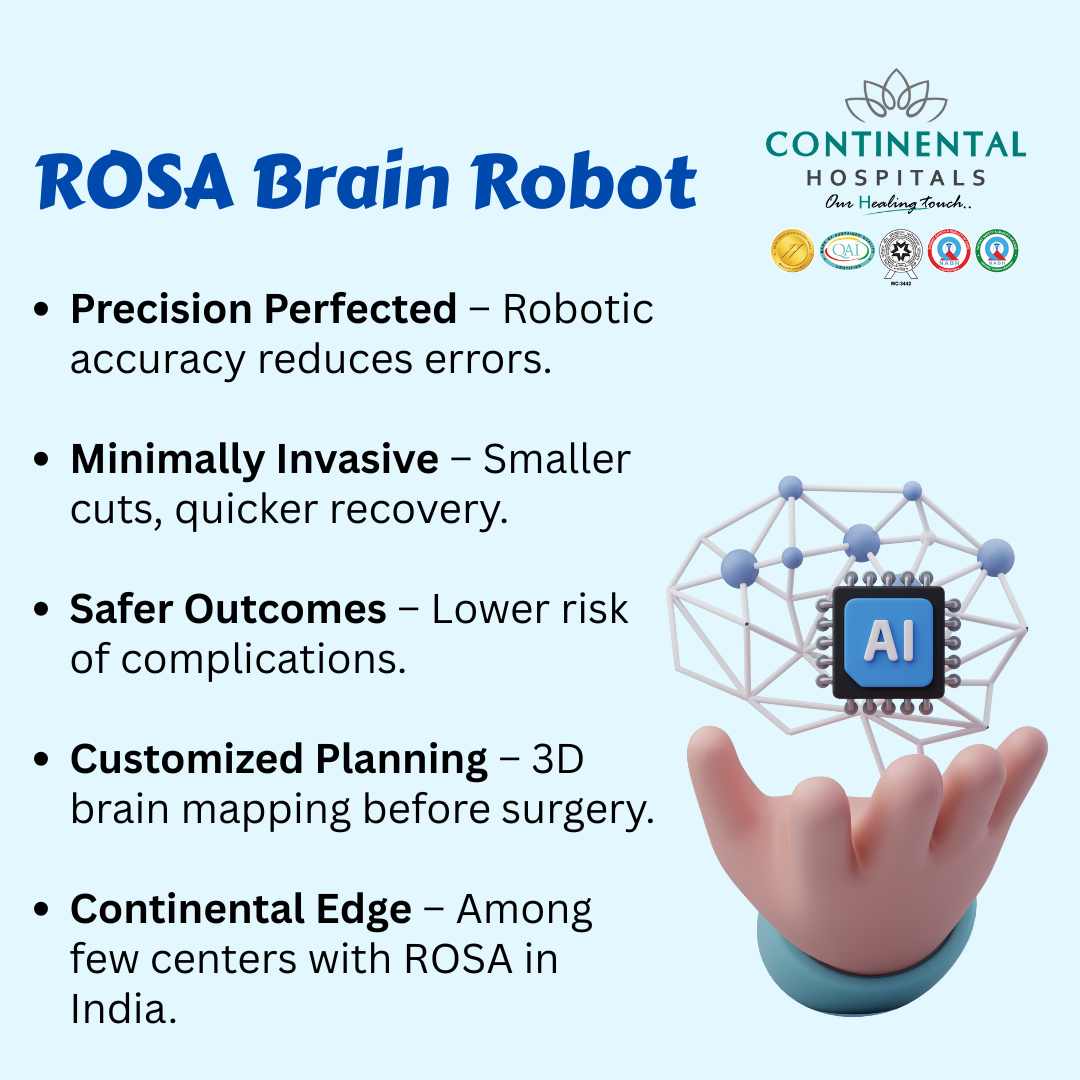
Greater Accuracy – The robotic arm follows the pre-planned trajectory exactly, reducing the risk of human error.

Better Safety – Precise targeting lowers the risk of damaging critical brain areas that control speech, movement, or memory.

Need an Appointment?

Shorter Surgery Time – Less time under anesthesia means less stress for the body and a faster recovery.

Minimally Invasive Techniques – Smaller incisions lead to less pain, fewer complications, and shorter hospital stays.

Consistent Outcomes – ROSA helps maintain consistency across multiple cases, which improves overall patient safety.

For conditions like epilepsy, where accurate placement of electrodes is crucial, ROSA’s precision can be life-changing.

What Are the Benefits of ROSA Brain Robot Surgery for Patients?

When you hear about robotic brain surgery, it is natural to wonder: is it safe? The answer is yes. ROSA is designed to assist, not replace, the surgeon. The neurosurgeon is still in full control of every step.

  • Here is what patients can expect:
  • Less invasive surgery
  • Lower risk of complications
  • Reduced hospital stay
  • Faster return to daily activities
  • Better long-term outcomes for seizure control or movement disorder treatment

These benefits make ROSA-assisted neurosurgery an excellent option for people who have been told they need brain surgery but are worried about risks and recovery.

Why is Continental Hospitals a leader in advanced neurosurgery?

Not every hospital is equipped with ROSA technology. Choosing a hospital that invests in advanced robotics shows commitment to patient care. Continental Hospitals is one of the top hospitals in Hyderabad offering ROSA Brain Robot for neurosurgery.

Why Choose Continental Hospitals?

Accreditations and Quality Standards – Continental Hospitals is NABH and JCI accredited, which means it meets international standards of patient safety and care.

Experienced Neurosurgeons – Our team includes highly trained neurosurgeons with experience in robotic and minimally invasive brain surgery.

Comprehensive Care – From diagnosis to recovery, patients receive complete support with advanced imaging, intensive care, and rehabilitation services under one roof.

State-of-the-Art Technology – Apart from ROSA, Continental is equipped with modern operating rooms, neuro-navigation systems, and advanced imaging facilities.

Patient-Centric Approach – Every treatment plan is tailored to the patient’s unique needs, ensuring the best possible outcome.

When you combine advanced technology with skilled specialists, you get safer surgeries and faster recovery. That is what makes Continental Hospitals a preferred choice for neurosurgery in Hyderabad.

What Is the Future of Brain Surgery with ROSA Brain Robot?

ROSA is just the beginning. Robotics and AI are transforming neurosurgery into a more precise, predictable, and patient-friendly specialty. Future advancements will make procedures even less invasive and improve outcomes further. For patients, this means hope and confidence even in complex brain conditions.

Conclusion

Brain surgery no longer has to be intimidating. With technologies like ROSA Brain Robot, neurosurgeons can perform complex procedures with unmatched accuracy and safety. Patients experience less pain, faster recovery, and better long-term results.

If you suffer from epilepsy, brain tumours, Parkinson’s disease, or need any brain surgery, consult the Best Neurologist in Hyderabad at Continental Hospitals today. Our specialists are ready to guide you with the safest and most effective treatment options.


Frequently Asked Questions

ROSA Brain Robot is an advanced robotic platform that assists neurosurgeons in planning and performing highly precise brain procedures. It combines robotic guidance, real-time navigation, and detailed imaging to improve surgical accuracy. The system helps surgeons identify the safest pathway to reach deep areas of the brain while avoiding critical structures. It is commonly used for brain tumor biopsies, epilepsy surgery, deep brain stimulation, and minimally invasive neurosurgical procedures. ROSA does not perform surgery independently. Instead, it supports the surgeon by enhancing precision and consistency. This technology can reduce the risk of targeting errors and improve confidence during complex operations. It also helps shorten planning time and enhances workflow in the operating room. Patients may benefit from smaller incisions, reduced trauma, and potentially faster recovery depending on the procedure performed.
ROSA Brain Robot is transforming modern neurosurgery by bringing greater precision, safety, and efficiency to complex brain procedures. It allows surgeons to create personalized surgical plans using high-resolution MRI and CT images before entering the operating room. During surgery, the robotic arm guides instruments according to the planned trajectory with exceptional accuracy. This reduces the likelihood of human error and improves access to difficult-to-reach brain regions. The technology supports minimally invasive approaches, which may lead to less tissue damage and shorter hospital stays. ROSA is particularly valuable in functional neurosurgery, epilepsy treatment, and stereotactic procedures. It also enhances reproducibility across different cases. As robotic-assisted neurosurgery continues to evolve, ROSA is helping redefine the standards of precision and patient care.
The ROSA Brain Robot is used in the treatment of several neurological conditions that require high surgical precision. It is widely used for epilepsy surgery, especially when placing depth electrodes for seizure mapping. It also assists in deep brain stimulation procedures for Parkinson's disease, essential tremor, and dystonia. Brain tumor biopsies and selected tumor surgeries benefit from its accurate targeting capabilities. The system supports minimally invasive stereotactic procedures and laser interstitial thermal therapy in suitable cases. It can also be used for ventricular access and certain neurosurgical interventions involving deep brain structures. The choice of using ROSA depends on the patient's condition, imaging findings, and the neurosurgeon's evaluation. Not every brain surgery requires robotic assistance. Your specialist will determine whether ROSA is appropriate for your treatment.
The ROSA Brain Robot is designed to improve surgical accuracy and support safer neurosurgical procedures when used by experienced specialists. Its advanced navigation system helps surgeons reach the planned target with remarkable precision while minimizing injury to surrounding healthy brain tissue. By following pre-planned trajectories based on detailed imaging, the system reduces variability during surgery. Many procedures performed with robotic assistance involve smaller incisions and less disruption of normal tissues. This may reduce complications, improve recovery, and shorten hospital stays in selected patients. However, every brain surgery carries some level of risk depending on the underlying condition and overall health of the patient. The surgeon's expertise remains the most important factor in achieving successful outcomes. ROSA serves as an advanced surgical assistant rather than replacing the neurosurgeon.
Robotic-assisted brain surgery with ROSA offers several important advantages for both surgeons and patients. The technology provides highly accurate targeting using advanced imaging and computer-guided navigation. It supports minimally invasive approaches that may reduce tissue damage and postoperative discomfort. Smaller incisions can contribute to faster healing and lower infection risk in suitable cases. The robotic platform helps improve consistency during complex procedures and enhances surgical planning before the operation begins. It is particularly useful for surgeries involving deep or delicate brain structures. ROSA can also reduce operating time for selected procedures by improving workflow and efficiency. Patients may experience shorter hospital stays and quicker recovery depending on the type of surgery performed. Individual outcomes vary based on the medical condition and treatment plan.
No, the ROSA Brain Robot does not perform surgery on its own. Every procedure is fully controlled and carried out by a qualified neurosurgeon who uses the robotic system as an advanced guidance tool. Before surgery, the surgeon develops a customized surgical plan based on the patient's brain scans. During the operation, ROSA assists by positioning instruments accurately according to the planned pathway. The surgeon remains responsible for every surgical decision, movement, and clinical judgment throughout the procedure. The robotic platform simply enhances precision, stability, and navigation. It cannot think independently or replace the expertise of an experienced neurosurgeon. Patients can be reassured that robotic-assisted neurosurgery combines advanced technology with skilled human decision-making for optimal care.
Patients with neurological conditions requiring highly precise brain surgery may be suitable candidates for ROSA Brain Robot-assisted procedures. These include individuals with epilepsy requiring electrode placement, movement disorders needing deep brain stimulation, and selected brain tumors requiring stereotactic biopsy or minimally invasive treatment. The decision depends on the patient's diagnosis, brain imaging, overall health, and surgical goals. A comprehensive neurological evaluation is performed before recommending robotic-assisted surgery. Some patients may benefit more from conventional neurosurgical techniques depending on their condition. The neurosurgeon discusses all available treatment options, expected outcomes, and potential risks before planning surgery. Every treatment plan is personalized to ensure the safest and most effective approach. Consultation with an experienced neurosurgical team is essential.
Before ROSA Brain Robot-assisted surgery, patients undergo detailed imaging studies such as MRI or CT scans to create an accurate surgical plan. The neurosurgical team explains the procedure, expected benefits, possible risks, and recovery process in detail. On the day of surgery, the robotic system assists the surgeon in following the planned trajectory with exceptional precision. After surgery, patients are closely monitored for neurological recovery and overall health. Recovery time depends on the specific procedure and the patient's condition. Many minimally invasive procedures may allow earlier mobilization and shorter hospital stays compared with traditional approaches when appropriate. Follow-up visits help monitor healing and assess treatment outcomes. Patients should follow all postoperative instructions and promptly report any unusual symptoms to their healthcare team.
Disclaimer: The information provided in this blog is intended for general knowledge and informational purposes only, and does not constitute medical advice. Always consult with a qualified healthcare professional for any medical concerns or before making any decisions about your health.

Get in Touch With Us

Whether you are from India or abroad, we are here to help you with your medical queries. Please fill out the form below and our team will connect with you shortly.

  • ✔ Quick response from our medical experts
  • ✔ Secure data handling & privacy
  • ✔ Easy upload for reports & documents
banner_image

Chat with our medical experts on WhatsApp for quick assistance and hassle-free appointment booking

Recent Posts