.webp)


Many people assume that memory loss and confusion are natural parts of growing older. But is dementia really an unavoidable consequence of aging? The truth is more hopeful than most believe. While dementia risk increases with age, it is not inevitable. Understanding how it develops and what can be done to prevent or delay it can make a huge difference in maintaining a healthy, active mind throughout life.
What Is Dementia?
Dementia is a broad term for conditions that cause a decline in brain function, affecting memory, thinking, reasoning, and daily activities. Alzheimer’s disease is the most common type of dementia, followed by vascular dementia, Lewy body dementia, and frontotemporal dementia.
Dementia is not a single disease but a group of symptoms caused by damage to brain cells. This damage can come from various factors such as genetics, poor circulation, head injury, or unhealthy lifestyle habits.
Visit the best neuro doctor hyderabad at Continental Hospitals, Gachibowli, Hyderabad, where our experienced neurologists provide advanced diagnosis, treatment, and compassionate care for brain and nervous system disorders.
Age and Dementia: What’s the Connection?
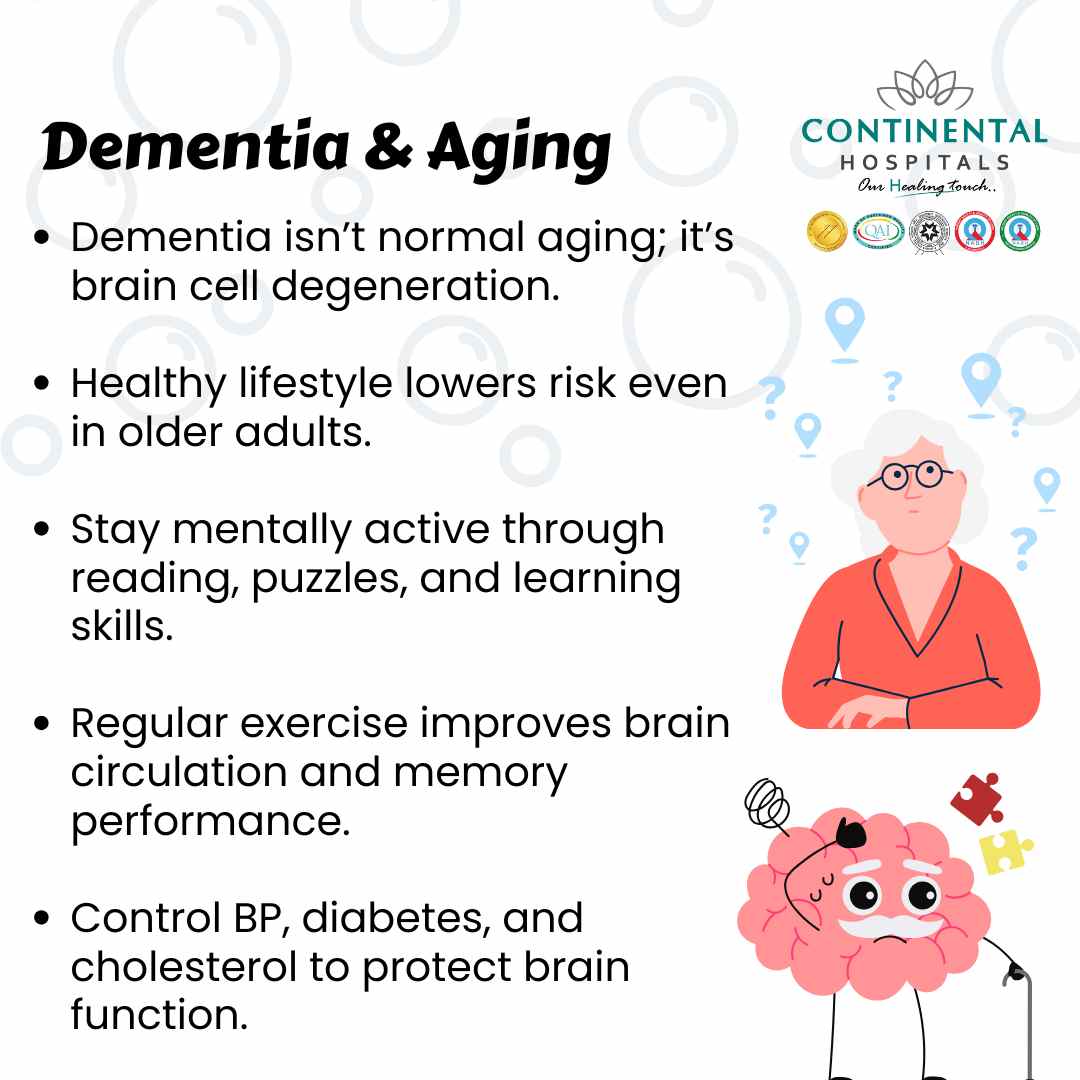
It is true that age is the biggest risk factor for dementia. After 65, the likelihood of developing it doubles every five years. However, many people live well into their 80s or 90s without any signs of dementia. This means that while aging makes you more vulnerable, it does not guarantee you will develop dementia.
The difference lies in how you care for your brain and body. Lifestyle choices, chronic diseases, stress, and mental engagement all influence brain health. So, dementia is not an unavoidable part of aging but a condition that can often be prevented or delayed.
What are the common early signs of dementia?
Recognizing the early signs can help in early diagnosis and better management. Some of the common warning signs include:
- Frequent memory loss that disrupts daily life
- Difficulty planning or solving problems
- Confusion with time or place
- Misplacing things and losing track of them
- Trouble understanding visual images or spatial relationships
- Withdrawal from social or work activities
- Changes in mood, behavior, or personality
If you or someone you know is experiencing these symptoms, it is important to consult a doctor for evaluation. Early detection can slow the progression and improve quality of life.
Can Dementia Be Prevented?
While there is no guaranteed way to prevent dementia, research shows that several lifestyle habits can significantly lower your risk. These habits not only protect your heart and body but also your brain.
Stay Physically Active – Regular exercise improves blood flow to the brain and helps new brain cells grow. Even simple activities like walking or yoga can make a difference.

Eat a Balanced Diet – Diets rich in fruits, vegetables, whole grains, lean proteins, and omega-3 fats are linked to better brain function. The Mediterranean diet is often recommended for brain health.
Control Blood Pressure and Diabetes – Heart health and brain health are closely connected. Keeping chronic conditions under control prevents damage to brain vessels.
Keep Your Mind Engaged – Reading, puzzles, learning new skills, and social interaction strengthen brain connections.
Sleep Well – Poor sleep increases the buildup of harmful proteins in the brain associated with Alzheimer’s disease.
Avoid Smoking and Limit Alcohol – Both can harm brain cells and reduce oxygen supply to the brain.
Manage Stress – Chronic stress can shrink brain areas involved in memory and emotional control. Practicing mindfulness or meditation can help.
These steps may seem simple, but their long-term impact on brain health is powerful.
How Is Dementia Diagnosed?
Doctors use a combination of medical history, physical examination, brain imaging, and cognitive tests to diagnose dementia. Sometimes, reversible conditions such as vitamin deficiency, thyroid imbalance, or depression may mimic dementia symptoms.
That is why it is essential not to assume memory loss automatically means dementia. Only a specialist can confirm the cause and recommend suitable management.
What Are the Treatment Options for Dementia?
There is currently no complete cure for dementia, but treatment can help slow its progression and improve daily living. The treatment plan depends on the type of dementia and its stage. It usually includes:
- Medications to manage symptoms or control underlying conditions
- Cognitive therapy to improve memory and problem-solving skills
- Occupational therapy to help with daily tasks
- Lifestyle changes to maintain physical and mental well-being
- Family and caregiver support programs to guide loved ones
Timely medical attention can help patients lead fulfilling lives and stay independent for longer.
Why Choose Continental Hospitals for Dementia Care?
At Continental Hospitals, Gachibowli, Hyderabad, we provide comprehensive neurological and geriatric care for patients with dementia and memory-related disorders. Our multidisciplinary team includes neurologists, psychiatrists, psychologists, and rehabilitation experts who specialize in early diagnosis and personalized treatment.
Continental Hospitals is a JCI-accredited and NABH-certified multispecialty hospital, ensuring the highest standards of quality and patient safety. We combine advanced neuroimaging, cognitive assessments, and rehabilitation programs to deliver evidence-based care.
Our focus is not only on treating dementia but also on enhancing the patient’s quality of life through compassionate care, family counseling, and support for caregivers. The hospital’s state-of-the-art infrastructure and experienced specialists make it one of the leading centers for neurological disorders in Hyderabad.
How Can You Support a Loved One with Dementia?
Caring for someone with dementia can be challenging. Patience, understanding, and emotional support are key. Encourage them to stay engaged in simple activities, maintain routines, and keep communication open. Joining a caregiver support group can also help you manage stress and share experiences.
At Continental Hospitals, we offer counseling and therapy sessions to guide families through every stage of the journey, ensuring compassionate care and dignity for every patient.
Are memory loss and confusion signs of dementia?
If you suffer from persistent forgetfulness, confusion, or difficulty focusing, don’t ignore these warning signs. Seeking medical advice early can make a big difference in how the condition progresses. The specialists at Continental Hospitals, Hyderabad, provide accurate evaluation, diagnosis, and advanced care for memory disorders.
Conclusion
Dementia is not an inevitable part of aging. It is a condition that can often be prevented, delayed, or effectively managed with the right lifestyle and medical support. Growing older does not mean losing your memories or independence. With awareness, timely care, and a healthy routine, it is possible to stay mentally active and live life to the fullest.
If you or your loved one are experiencing signs of memory loss or cognitive decline, book an appointment with our Best Neurologist in Hyderabad at Continental Hospitals, Gachibowli, Hyderabad, for expert evaluation and treatment. Early diagnosis is the first step toward protecting your brain health and quality of life.
Related Blogs: