
post-title

Is Your Memory Declining? One Vitamin Helps

Written by - Editorial Team
Medically Reviewed by - Dr M K Singh

Memory lapses can be frustrating and even worrying. Forgetting where you kept your keys or missing an appointment may seem harmless, but when it starts to happen frequently, it can impact your daily life and confidence. Many people believe memory problems are just part of aging, but research shows that nutrition plays a major role in brain health. In fact, one important vitamin can make a real difference in supporting memory and cognitive function.

What Causes Memory Decline?

Memory decline can happen due to several reasons. Lack of sleep, stress, unhealthy eating habits, certain medications, and medical conditions such as thyroid disorders or vitamin deficiencies may contribute to forgetfulness. Deficiency of certain nutrients can interfere with the brain’s ability to function properly. This is why a balanced diet and regular health checkups are key to keeping your brain active and sharp.

What is the role of vitamin B12 in memory?

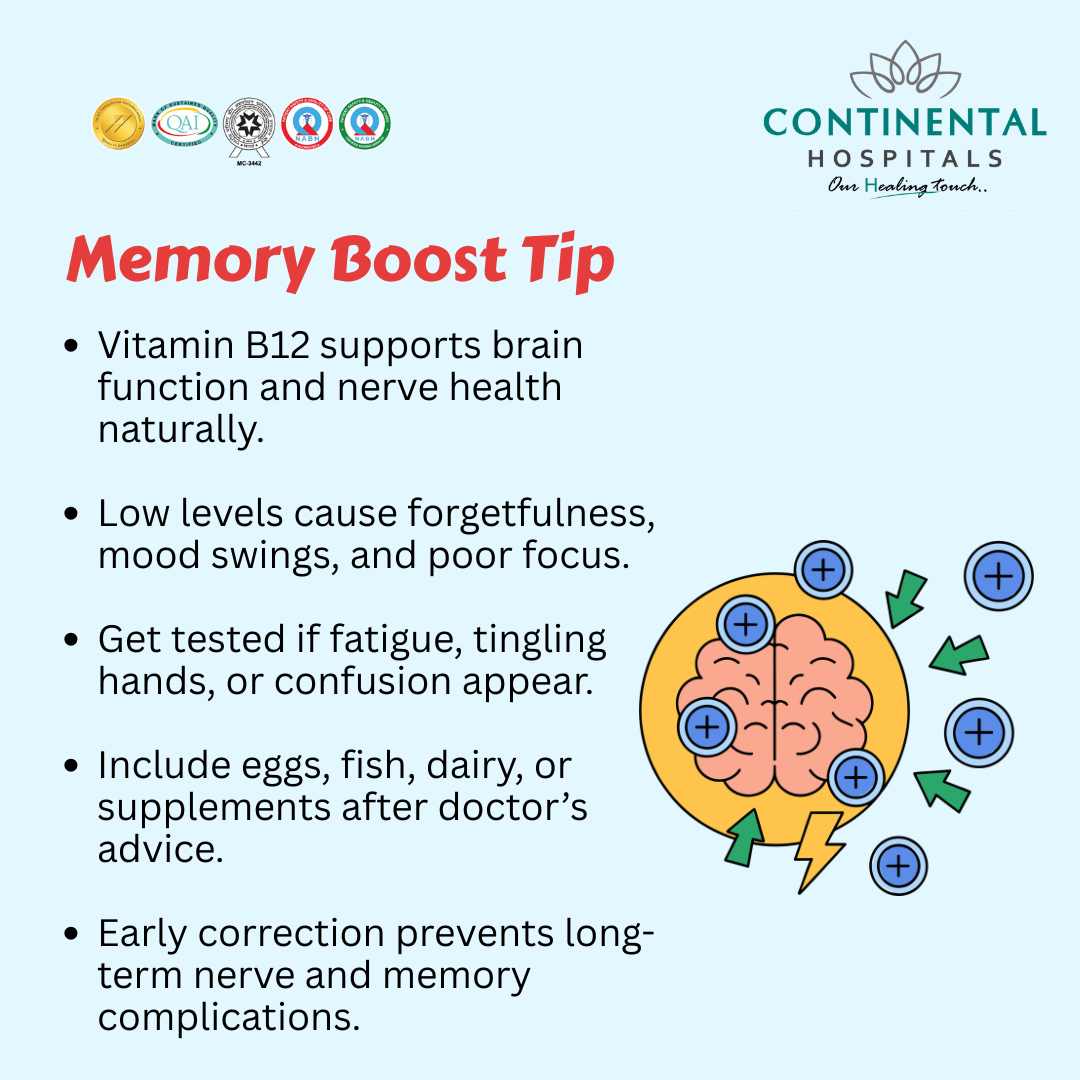
One of the most studied vitamins for brain health is Vitamin B12. It plays a crucial role in forming red blood cells and maintaining healthy nerve function. Without enough Vitamin B12, your brain may struggle to send signals efficiently, leading to memory issues, confusion, and even mood changes.

Vitamin B12 helps produce myelin, a protective layer that covers nerve fibers. When myelin is damaged due to low B12 levels, nerve communication slows down, and this can cause forgetfulness. People with chronic low B12 levels may notice symptoms such as brain fog, difficulty focusing, and mental fatigue.

Experiencing frequent forgetfulness or mental fatigue? Visit the best neuro doctor hyderabad at Continental Hospitals, Gachibowli, Hyderabad, for expert evaluation and comprehensive brain health care.
What are the best sources of vitamin B12?

Vitamin B12 is naturally found in foods such as dairy products, eggs, poultry, fish, and meat. For those who follow a vegetarian or vegan diet, fortified cereals, nutritional yeast, and supplements may be necessary to maintain healthy levels. If you suspect you are deficient, a simple blood test can confirm it, and your doctor can recommend the right treatment.

What are the benefits of maintaining healthy vitamin B12 levels?

When your body has enough Vitamin B12, you may experience improved concentration, better mood regulation, and enhanced memory. Studies suggest that maintaining healthy levels of this vitamin can also help slow down cognitive decline in older adults.

What are other ways to boost memory naturally?

While Vitamin B12 is important, there are other ways to support brain health:

Second Opinion

Eat a balanced diet: Include vegetables, fruits, whole grains, and healthy fats.

Stay physically active: Exercise improves blood flow to the brain and promotes new cell growth.

Get quality sleep: Aim for 7-8 hours each night to allow your brain to process information.

Stay mentally engaged: Activities like reading, puzzles, and learning new skills keep the brain active.

Manage stress: Meditation and deep breathing can improve focus and reduce mental fatigue.

Why Choose Continental Hospitals for Memory Concerns?

Continental Hospitals is one of the most trusted names for comprehensive healthcare. The hospital is JCI-accredited, which means it meets the highest international standards for quality and patient safety. Our team of neurologists and internal medicine specialists is experienced in diagnosing and treating memory-related concerns.

At Continental Hospitals, patients benefit from advanced diagnostic technology, accurate testing, and personalized treatment plans. The hospital’s multidisciplinary approach ensures that nutritionists, neurologists, and psychologists work together to address every aspect of cognitive health.

Need an Appointment?

Accreditation and Quality Standards

Accreditations such as JCI (Joint Commission International) and NABH (National Accreditation Board for Hospitals) reflect our commitment to world-class care. These certifications guarantee strict infection control practices, accurate diagnostic services, and continuous quality improvement. When it comes to brain health and memory care, this means you are in safe hands.

When Should You See a Doctor?

Are you noticing frequent forgetfulness, trouble focusing, or mood changes? Do you feel mentally tired even after resting? These could be signs of a Vitamin B12 deficiency or other medical conditions affecting memory. Timely consultation with a doctor can help prevent further decline and restore brain health.

Conclusion

Memory problems can be more than just a part of aging. The good news is that something as simple as maintaining healthy Vitamin B12 levels can make a significant difference. A nutritious diet, active lifestyle, and regular medical checkups can help keep your brain sharp for years to come.

If you suffer from frequent forgetfulness or mental fatigue, book a consultation with our Best Neurologist in Hyderabad at Continental Hospitals, Gachibowli, Hyderabad.

Related Blogs:

  1. Memory Problems? Simple Brain Exercises That Help
  2. What’s the Link Between Deep Sleep and Memory Formation?

Frequently Asked Questions

Yes. Certain vitamins play an important role in maintaining healthy brain cells, nerve function, and communication between neurons. Among them, Vitamin B12 is one of the most important for memory and cognitive health. A deficiency can lead to forgetfulness, difficulty concentrating, confusion, and slower thinking. It may also affect mood and energy levels. Since the brain depends on a healthy nervous system, low vitamin levels can interfere with normal mental performance. However, not every case of memory loss is caused by vitamin deficiency. Aging, stress, poor sleep, thyroid disorders, depression, and neurological diseases can also contribute. If you notice persistent memory problems, consult a neurologist for a complete evaluation, blood tests, and appropriate treatment rather than self-diagnosing.
Vitamin B12 is the vitamin most commonly associated with memory decline and cognitive impairment. It helps produce healthy red blood cells, supports nerve function, and maintains the protective covering around nerves called myelin. When Vitamin B12 levels become too low, nerve cells may not function properly, resulting in forgetfulness, mental fog, poor concentration, and even mood changes. Older adults, vegetarians, vegans, and people with digestive disorders are more likely to develop Vitamin B12 deficiency. Early detection is important because prolonged deficiency may lead to permanent nerve damage. Blood tests can confirm the diagnosis, and treatment usually includes dietary changes, oral supplements, or Vitamin B12 injections depending on the severity of the deficiency.
Vitamin B12 deficiency can cause several symptoms beyond memory decline. Many people experience fatigue, weakness, dizziness, numbness or tingling in the hands and feet, poor balance, difficulty walking, and muscle weakness. Some individuals develop depression, irritability, mood swings, or confusion. Others may notice difficulty concentrating, reduced attention span, and slower mental processing. In severe cases, vision changes and nerve damage may occur. Because these symptoms often develop gradually, they are sometimes mistaken for normal aging. Recognizing these warning signs early allows timely diagnosis and treatment, helping prevent long-term neurological complications and improving overall health and quality of life.
Several groups have a higher risk of Vitamin B12 deficiency. Older adults often absorb less Vitamin B12 because stomach acid production decreases with age. Vegetarians and vegans may not consume enough B12 since it is primarily found in animal-based foods. People with gastrointestinal disorders such as Crohn's disease, celiac disease, or those who have undergone stomach or intestinal surgery may have difficulty absorbing the vitamin. Long-term use of medications like metformin or acid-reducing drugs can also lower Vitamin B12 levels. Individuals with chronic alcoholism and certain autoimmune conditions are at increased risk as well. Regular screening may be recommended for people in these high-risk groups.
Vitamin B12 supplements can improve memory and cognitive function if the symptoms are caused by a confirmed Vitamin B12 deficiency. Restoring normal vitamin levels helps improve nerve function, reduces mental fog, and may enhance concentration and energy over time. However, supplements are unlikely to improve memory in people who already have adequate Vitamin B12 levels. Memory decline caused by Alzheimer's disease, stroke, depression, or other neurological disorders requires different treatment approaches. Therefore, it is important to undergo proper medical evaluation before starting supplements. A healthcare professional can determine whether Vitamin B12 deficiency is present and recommend the correct dosage and treatment plan.
Vitamin B12 is naturally present in animal-based foods. Excellent dietary sources include fish such as salmon and tuna, eggs, milk, yogurt, cheese, chicken, turkey, lean meat, and liver. Shellfish like clams are particularly rich in Vitamin B12. People following vegetarian or vegan diets should look for fortified breakfast cereals, fortified plant-based milk, and nutritional yeast enriched with Vitamin B12. In some cases, dietary intake alone may not be enough, especially if absorption problems exist. A balanced diet combined with regular medical checkups can help maintain healthy Vitamin B12 levels and support long-term brain function.
You should seek medical attention if memory problems become frequent, interfere with daily activities, worsen over time, or are accompanied by confusion, personality changes, difficulty speaking, poor judgment, balance problems, or numbness. Sudden memory loss requires immediate emergency evaluation because it may indicate a stroke or another serious neurological condition. Even mild but persistent forgetfulness should not be ignored, especially in older adults. A neurologist can assess cognitive function, review medical history, perform neurological examinations, and order blood tests or brain imaging if necessary. Early diagnosis improves the chances of identifying treatable causes and slowing progression of underlying conditions.
Maintaining brain health requires a combination of healthy lifestyle habits. Eat a balanced diet rich in fruits, vegetables, whole grains, healthy fats, lean proteins, and Vitamin B12-containing foods. Exercise regularly to improve blood flow to the brain. Get seven to nine hours of quality sleep each night and manage stress through relaxation techniques. Stay mentally active by reading, solving puzzles, learning new skills, or engaging in social activities. Control medical conditions such as diabetes, hypertension, and high cholesterol, as they can affect brain health. Avoid smoking, limit alcohol intake, and attend regular health checkups to detect nutritional deficiencies or neurological conditions early.
Disclaimer: The information provided in this blog is intended for general knowledge and informational purposes only, and does not constitute medical advice. Always consult with a qualified healthcare professional for any medical concerns or before making any decisions about your health.

Get in Touch With Us

Whether you are from India or abroad, we are here to help you with your medical queries. Please fill out the form below and our team will connect with you shortly.

  • ✔ Quick response from our medical experts
  • ✔ Secure data handling & privacy
  • ✔ Easy upload for reports & documents
banner_image

Chat with our medical experts on WhatsApp for quick assistance and hassle-free appointment booking

Recent Posts