post-title

Knee Pain After Climbing Stairs? Causes and Easy Relief

Written by - Editorial Team
Medically Reviewed by - Dr Arun Reddy Mallu

Knee pain is a common concern that affects people of all ages. Many individuals notice a sharp or dull ache specifically when navigating steps. Whether you are moving up or down a staircase, this discomfort can signal various underlying issues ranging from simple strain to chronic conditions. Understanding why your knees hurt and how to find relief is the first step toward regaining your mobility and comfort.

Why Does Knee Pain Occur When Climbing Stairs?

The knee is a complex hinge joint that bears a significant amount of your body weight. When you climb stairs, the pressure on your kneecap, or patella, increases significantly. This action requires the coordinated effort of muscles, ligaments, and cartilage. If any of these components are stressed or damaged, pain is the immediate result.

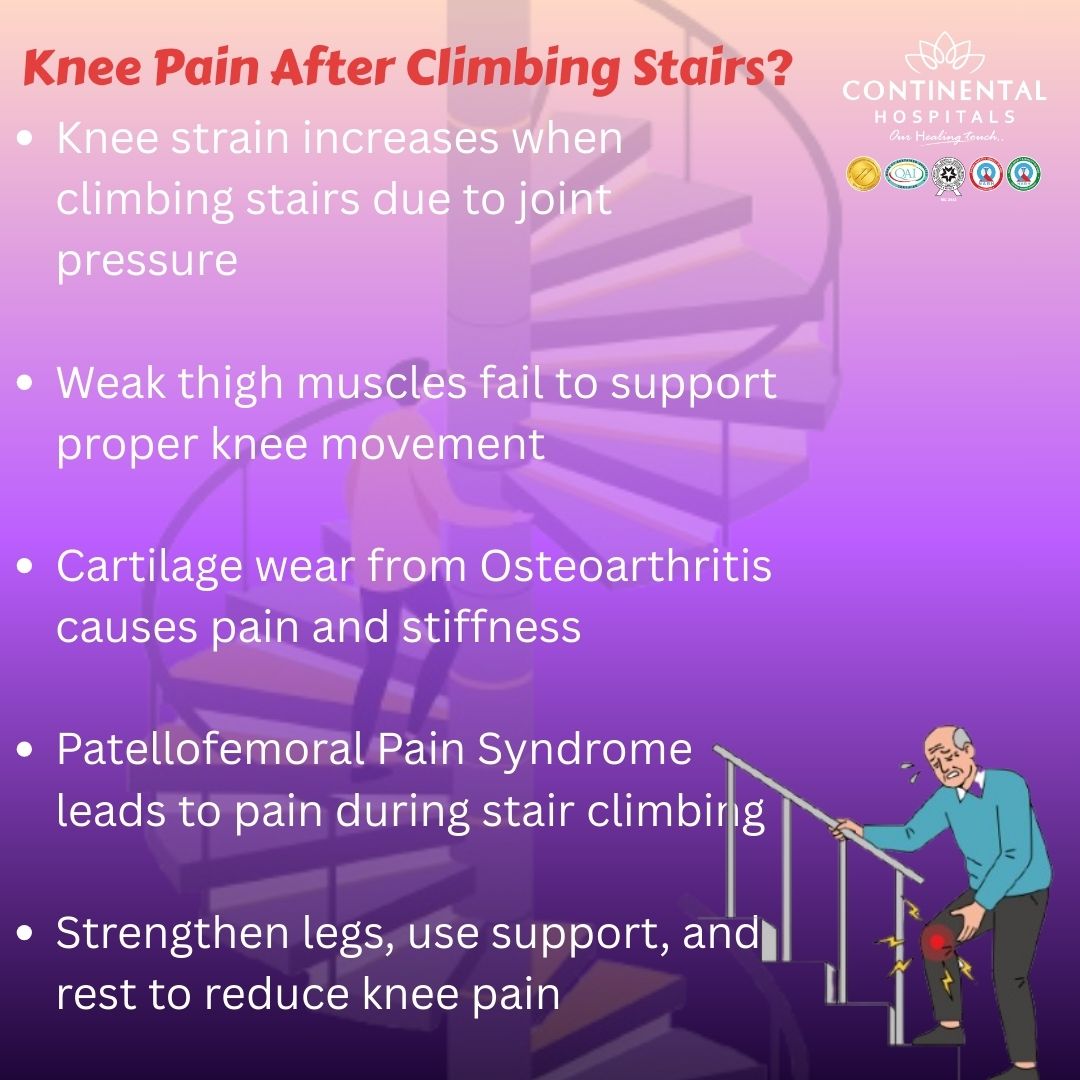
1. Patellofemoral Pain Syndrome (Runner's Knee)
This is one of the most frequent causes of knee pain when climbing stairs. It occurs when the cartilage under the kneecap becomes irritated. Instead of gliding smoothly over the thigh bone, the kneecap rubs against it. This typically causes a dull ache in the front of the knee.

2. Osteoarthritis
As we age, the protective cartilage that cushions the ends of the bones can wear down. This condition, known as osteoarthritis, often leads to knee pain when walking or using stairs. You might feel stiffness in the morning or a grinding sensation when moving the joint.

3. Tendonitis
The tendons around the knee connect muscles to bones. Overuse or repetitive strain can lead to inflammation, known as tendonitis. Patellar tendonitis specifically affects the tendon connecting the kneecap to the shinbone, making stair climbing particularly painful.

4. Meniscus Tears
The meniscus is a C-shaped piece of cartilage that acts as a shock absorber. A sudden twist or gradual wear can cause a tear. This often results in knee pain stairs users describe as a catching or locking sensation.

Suffering from persistent knee pain? Visit our Best Orthopedic Specialists in Hyderabad at Continental Hospitals, Hyderabad, for expert diagnosis and lasting relief today.

What are simple ways to reduce knee pain?

Managing knee pain climbing stairs does not always require intensive intervention. Many people find relief through consistent home care and lifestyle adjustments.

The RICE Method

Second Opinion

For acute knee pain, the RICE method remains a gold standard:

  • Rest: Avoid activities that aggravate the pain.
  • Ice: Apply cold packs for 15 to 20 minutes several times a day.
  • Compression: Use an elastic bandage to reduce swelling.
  • Elevation: Keep the knee raised above the level of your heart.

Strengthening Exercises
Weak thigh muscles (quadriceps) often contribute to knee pain. Strengthening these muscles helps take the pressure off the joint. Low-impact exercises like swimming, cycling, or straight-leg raises can improve joint stability without causing further damage.

Weight Management
Carrying excess weight puts additional stress on the knees. Even a modest reduction in weight can significantly decrease the load on your joints during daily activities like climbing stairs or walking.
When to See a Specialist?

While minor aches might resolve with rest, certain symptoms indicate a need for professional evaluation:

  • Persistent swelling or redness around the joint?
  • Inability to bear weight on the leg?
  • A visible deformity in the knee area?
  • Pain that keeps you awake at night?
  • Frequent "giving way" or buckling of the knee?

If you experience these symptoms, consulting an orthopedic expert is essential to prevent long-term joint damage.

Why Choose Continental Hospitals for Knee Care?

When searching for the best hospital in Hyderabad for orthopedic concerns, Continental Hospitals stands out as a leader in bone and joint health. We provide comprehensive care for patients suffering from chronic knee pain and mobility issues.

Need an Appointment?

Global Standards and Accreditations
Continental Hospitals is committed to maintaining the highest levels of patient safety and clinical excellence. Our facility holds prestigious accreditations, including Joint Commission International (JCI) and National Accreditation Board for Hospitals & Healthcare Providers (NABH). These certifications ensure that our treatment protocols meet international benchmarks for quality and safety.

Advanced Orthopedic Infrastructure
Our department is equipped with state-of-the-art diagnostic tools and surgical technology. From high-resolution imaging to robotic-assisted joint replacement surgeries, we utilize the latest innovations to ensure precise diagnoses and faster recovery times.

Multidisciplinary Approach
Knee pain relief requires more than just medication. Our team includes orthopedic surgeons, physiotherapists, and pain management specialists who work together to create a personalized recovery plan for every patient.

What are the key takeaways for managing knee discomfort?

To maintain healthy knees, consider these quick tips:

  • Wear supportive footwear with good arch support.
  • Warm up properly before engaging in any physical activity.
  • Use the handrail when climbing stairs to distribute weight.
  • Avoid sitting in one position for too long; keep the joints moving.
  • Incorporate flexibility training into your routine to prevent stiffness.

Conclusion

Knee pain after climbing stairs is a clear signal from your body that the joint needs attention. Whether the cause is minor inflammation or the early stages of arthritis, early intervention is the key to maintaining an active lifestyle. By combining home care with professional guidance, you can overcome discomfort and return to your daily routines with confidence.

Continental Hospitals remains dedicated to helping you move without pain. Our expertise in orthopedics, backed by global accreditations, makes us the preferred choice for those seeking the best hospital in Hyderabad for joint care. Do not let knee pain limit your freedom.

If you suffer from persistent knee pain, it is time to seek expert advice. Consult our best orthopedic doctor in Hyderabad at Continental Hospitals. Our specialists are here to provide the diagnosis and treatment you need for long-term relief and improved quality of life.

Related Blog Topics:

  1. Knee Pain Without Injury: Why It Starts
  2. Can Cabbage Leaves Really Reduce Knee Pain?

Frequently Asked Questions

Knee pain after climbing stairs is commonly caused by increased pressure on the knee joint, especially the kneecap. When you climb stairs, your knees support several times your body weight, placing extra stress on the cartilage, ligaments, and surrounding muscles. Conditions such as patellofemoral pain syndrome, early osteoarthritis, tendonitis, or muscle weakness can contribute to discomfort. Poor posture while climbing, excess weight, previous injuries, or improper footwear may also increase strain. In some people, pain develops because the kneecap does not move smoothly within its groove. The discomfort may be mild initially but can gradually worsen if ignored. Rest, strengthening exercises, and proper evaluation can help identify the exact cause. If pain persists, consult an orthopedic specialist for a thorough diagnosis and personalized treatment plan.
Knee pain while climbing stairs can sometimes be an early sign of osteoarthritis, but it is not always caused by arthritis. Osteoarthritis develops when the protective cartilage covering the bones gradually wears away, leading to pain, stiffness, and swelling. However, similar symptoms can also result from cartilage injuries, ligament problems, patellar tracking disorders, or tendon inflammation. Younger individuals may experience stair-related knee pain without having arthritis. Other symptoms such as morning stiffness, joint swelling, grinding sensations, or reduced flexibility may point toward osteoarthritis. Imaging tests and a clinical examination help confirm the diagnosis. Early treatment, lifestyle changes, weight management, and strengthening exercises can slow disease progression and improve daily mobility.
Mild knee pain after climbing stairs can often be managed with simple home care measures. Resting the knee and avoiding activities that worsen pain allows irritated tissues to recover. Applying an ice pack for 15 to 20 minutes several times a day helps reduce inflammation and swelling. Gentle stretching and strengthening exercises for the quadriceps, hamstrings, and hip muscles improve knee stability over time. Wearing supportive footwear and maintaining a healthy body weight reduce stress on the joint. Over-the-counter pain relievers may provide temporary relief if recommended by your healthcare provider. Avoid deep squats or excessive stair climbing until symptoms improve. If pain lasts more than a few days, becomes severe, or limits daily activities, seek medical evaluation for proper diagnosis and treatment.
Many people notice that knee pain feels worse while going downstairs because this movement places greater force on the kneecap and surrounding cartilage. Descending stairs requires controlled muscle contraction to slow the body's movement, increasing pressure across the front of the knee. Conditions such as patellofemoral pain syndrome, cartilage damage, or arthritis commonly cause discomfort during this activity. Weak thigh muscles or poor kneecap alignment can further increase joint stress. Pain may also occur with swelling, clicking, or a feeling that the knee is unstable. Strengthening exercises, physical therapy, and correcting movement patterns often help reduce symptoms. Persistent pain should be assessed by an orthopedic specialist to identify the underlying condition and recommend the most effective treatment.
You should consult a doctor if knee pain continues for more than a few days despite rest or if it keeps returning during routine activities. Immediate medical attention is recommended if the knee becomes swollen, severely painful, unstable, or you are unable to bear weight. A popping sound during injury, visible deformity, redness, warmth, or fever may indicate a more serious problem requiring urgent evaluation. Persistent pain could be caused by ligament injuries, meniscus tears, cartilage damage, arthritis, or fractures. An orthopedic specialist will perform a physical examination and may recommend X-rays, MRI, or other imaging tests. Early diagnosis helps prevent complications and allows timely treatment to restore knee function and mobility.
Yes, appropriate exercises are one of the most effective ways to reduce knee pain caused by climbing stairs. Strengthening the quadriceps, hamstrings, gluteal muscles, and core improves knee alignment and reduces stress on the joint. Low-impact activities such as cycling, swimming, and walking are often recommended because they strengthen muscles without placing excessive pressure on the knees. Stretching tight muscles also improves flexibility and joint movement. Exercises should be performed gradually under the guidance of a physiotherapist or orthopedic specialist, especially if pain is significant. Avoid high-impact activities until symptoms improve. A personalized rehabilitation program helps restore strength, improve balance, and reduce the likelihood of recurring knee pain.
Yes, excess body weight significantly increases the pressure placed on the knees, particularly during activities such as climbing stairs. Every additional kilogram of body weight increases the force transmitted through the knee joint with each step. Over time, this added stress can accelerate cartilage wear, increase inflammation, and worsen existing conditions such as osteoarthritis. People who are overweight may also experience reduced muscle strength and altered walking patterns, which further strain the knees. Losing even a small amount of weight can noticeably reduce knee pain and improve joint function. Combining healthy eating, regular low-impact exercise, and medical guidance provides the best long-term results for maintaining healthy knees and preventing future problems.
Treatment depends on the underlying cause of the knee pain. Mild cases often improve with rest, activity modification, ice therapy, physical therapy, strengthening exercises, and anti-inflammatory medications prescribed by a healthcare provider. Knee braces or supportive footwear may improve joint stability in some individuals. If arthritis or cartilage damage is present, treatments may include injections such as corticosteroids or hyaluronic acid. Advanced imaging helps identify ligament injuries, meniscus tears, or other structural problems requiring specialized care. When conservative treatment does not provide relief, minimally invasive arthroscopic surgery or knee replacement may be recommended for severe joint damage. Consulting an experienced orthopedic specialist ensures an accurate diagnosis and a personalized treatment plan for lasting pain relief.
Disclaimer: The information provided in this blog is intended for general knowledge and informational purposes only, and does not constitute medical advice. Always consult with a qualified healthcare professional for any medical concerns or before making any decisions about your health.

Get in Touch With Us

Whether you are from India or abroad, we are here to help you with your medical queries. Please fill out the form below and our team will connect with you shortly.

  • ✔ Quick response from our medical experts
  • ✔ Secure data handling & privacy
  • ✔ Easy upload for reports & documents
banner_image

Chat with our medical experts on WhatsApp for quick assistance and hassle-free appointment booking

Recent Posts