.webp)


Knee pain is one of the most common health complaints seen across all age groups. Many people assume knee pain happens only after a fall, sports trauma, or accident. However, a large number of patients experience knee pain without injury. This type of discomfort can begin gradually, worsen over time, and affect daily activities like walking, climbing stairs, or sitting for long periods.
Understanding why knee pain starts without an obvious knee injury is the first step toward proper knee pain diagnosis and long lasting relief.
What Is Knee Pain Without Injury?
Knee pain without injury refers to pain, stiffness, or swelling in the knee joint that develops without a clear traumatic event. There is no recent fall, accident, or sports injury, yet the pain persists or keeps returning.
This type of knee pain often results from wear and tear, inflammation, muscle imbalance, or underlying medical conditions. If ignored, it may gradually limit movement and reduce quality of life.
Visit our top orthopedic doctors in Hyderabad at Continental Hospitals for expert knee pain care, advanced diagnostics, and personalized treatment to help you move freely again.
What causes knee pain without injury?
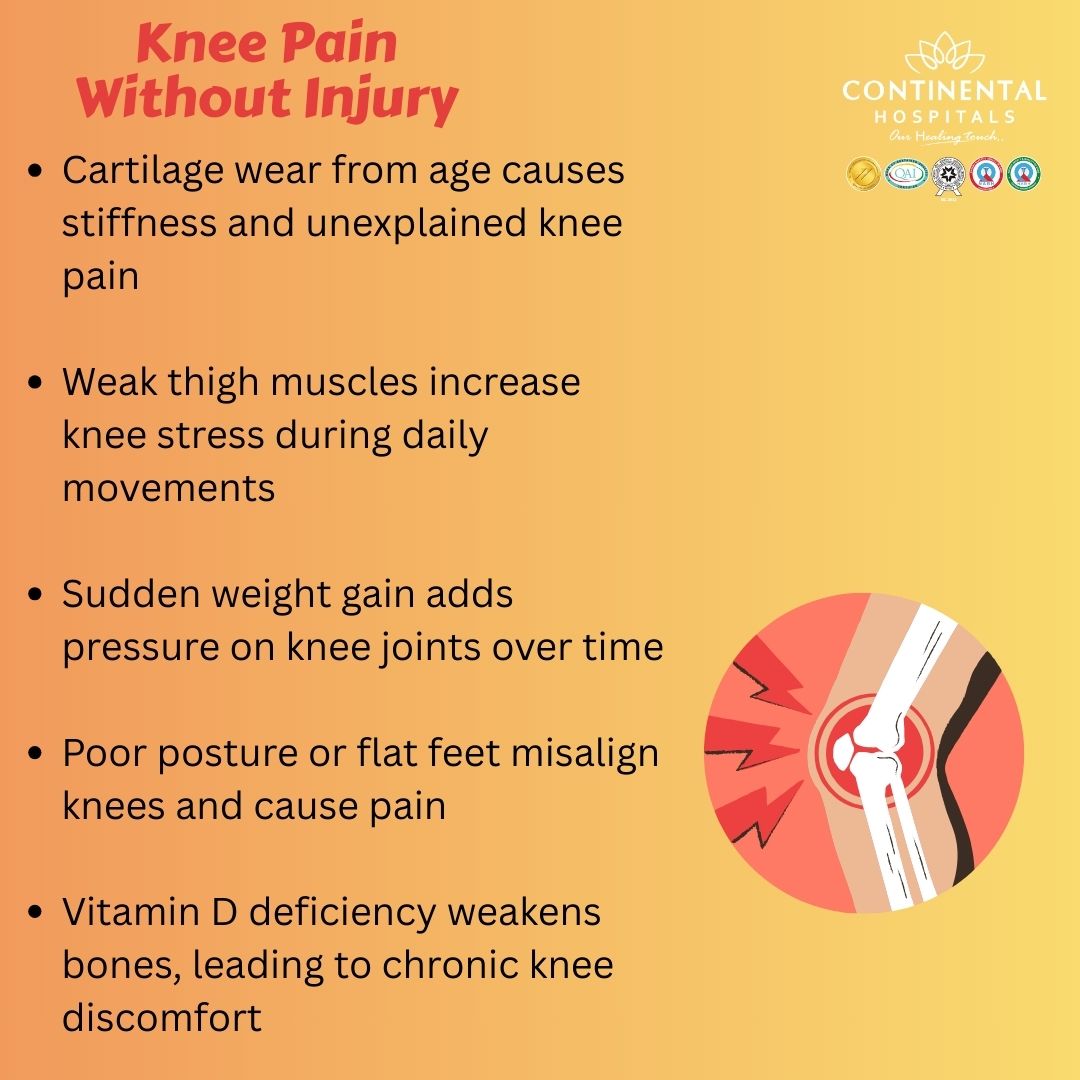
Several factors can trigger knee pain even when there is no visible injury. Some causes develop slowly, while others are linked to lifestyle or age-related changes.
1. Knee Arthritis
Knee arthritis is one of the leading causes of chronic knee pain. It occurs when the cartilage that cushions the knee joint wears down.
Common signs include:

- Pain during walking or standing
- Morning stiffness
- Swelling around the knee
- Reduced flexibility
Osteoarthritis is more common with increasing age, but it can also affect younger adults with repetitive knee stress.
2. Overuse and Repetitive Stress
Repeated activities like climbing stairs, squatting, running, or prolonged standing can strain the knee joint. Even daily habits such as sitting cross legged or improper posture can contribute to knee pain.
Over time, this stress leads to inflammation of tendons and soft tissues around the knee.
3. Muscle Weakness or Imbalance
Weak thigh, hip, or calf muscles can place extra pressure on the knee joint. When muscles do not support the knee properly, the joint absorbs more load, resulting in pain.
Poor flexibility also increases the risk of knee pain without injury.
4. Inflammation of Soft Tissues
Conditions such as bursitis or tendonitis can cause pain around the knee. These occur when fluid filled sacs or tendons become inflamed due to repeated motion or pressure.
Pain may worsen during movement and improve with rest.
5. Weight Related Stress
Excess body weight increases the load on the knee joints. Even a small increase in weight can significantly raise stress on the knees, leading to pain and early joint degeneration.
6. Medical Conditions
Certain health conditions can cause knee pain without injury, including:
- Rheumatoid arthritis
- Gout
- Infections
- Nerve related problems
These conditions require timely knee pain diagnosis to prevent complications.
What Are the Symptoms of Knee Pain You Should Not Ignore?
Knee pain can present in different ways. Seek medical attention if you notice:
- Persistent knee pain lasting more than a few weeks
- Swelling or warmth around the knee
- Difficulty bending or straightening the knee
- A grinding or clicking sensation
- Pain that worsens with activity or at rest
Early evaluation helps identify the root cause and avoids long term damage.
How Is Knee Pain Diagnosed?
Accurate knee pain diagnosis is essential for effective treatment. At Continental Hospitals, specialists follow a structured approach that includes:
- Detailed medical history
- Physical examination of knee movement and alignment
- Imaging tests such as X rays or MRI when needed
- Blood tests if inflammatory conditions are suspected
This comprehensive evaluation ensures that treatment is targeted and effective.
What are the best knee pain relief options?
Treatment for knee pain without injury depends on the cause and severity. Most patients respond well to non surgical care.
Conservative Treatments Include:
- Activity modification and rest
- Pain relieving and anti inflammatory medications
- Physiotherapy for muscle strengthening and flexibility
- Supportive knee braces if needed
What Are the Best Exercises for Knee Pain?
Guided knee pain exercises play a vital role in recovery. These exercises help:
- Strengthen supporting muscles
- Improve joint stability
- Reduce stiffness
- Prevent future pain
Exercises should always be performed under professional guidance to avoid strain.
Can Knee Pain Without Injury Be Prevented?
Yes, many cases can be prevented or controlled with simple measures:
- Maintain a healthy body weight
- Stay physically active with low impact exercises
- Warm up before physical activity
- Avoid sudden increases in activity levels
- Practice correct posture and movement techniques
Regular check ups are also helpful, especially for people with a family history of joint problems.
Why Choose Continental Hospitals for Knee Pain Care?
Continental Hospitals is widely recognized as the best hospital in Hyderabad for comprehensive orthopaedic care. Patients benefit from a combination of clinical excellence, advanced technology, and patient focused treatment.
Key reasons to choose Continental Hospitals include:
- Experienced orthopaedic doctors and joint specialists
- Advanced diagnostic and imaging facilities
- Evidence based treatment protocols
- Multidisciplinary care including physiotherapy and rehabilitation
- Internationally accredited hospital standards ensuring safety and quality care
The hospital follows globally accepted clinical practices and maintains strict quality benchmarks, giving patients confidence in their treatment journey.
When Should You See a Doctor?
If knee pain is affecting your daily routine, mobility, or sleep, do not delay medical consultation. Early treatment helps control pain, improves joint function, and prevents progression of underlying conditions like knee arthritis.
Conclusion
Knee pain without injury is common and should never be ignored. It often signals underlying joint stress, inflammation, or early degenerative changes. With the right knee pain diagnosis, timely care, and guided knee pain exercises, most people can return to an active and comfortable life.
If you suffer from persistent knee pain, consult our Best Orthopedic Specialists in Hyderabad at Continental Hospitals. Expert care, advanced diagnostics, and personalized treatment plans are available to help you move freely and confidently again.
Related Blog Topics: