post-title

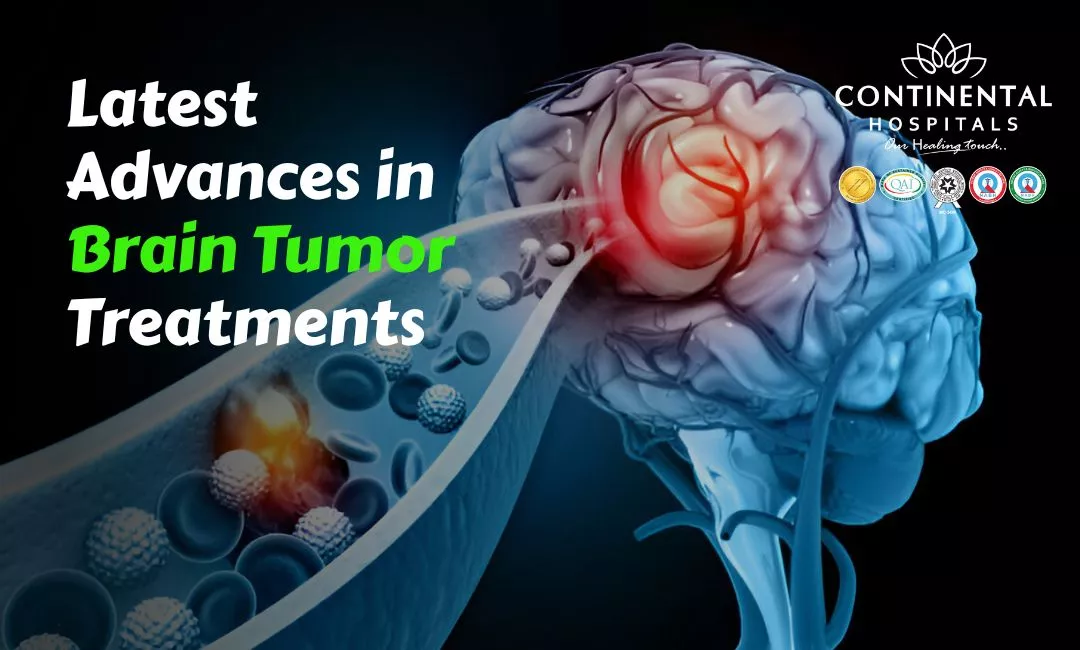
Latest Advances in Brain Tumor Treatments

Written by - Editorial Team
Medically Reviewed by - Dr K V Shivanand Reddy

Brain tumors can be one of the most serious health conditions affecting people of all ages. They can disrupt how the brain works, cause severe symptoms, and lead to emotional and physical stress. But with rapid medical progress, treatment for brain tumors has become more advanced, effective, and personalized than ever before. This blog will guide you through the latest innovations in brain tumor treatments and why Continental Hospitals is a trusted choice for patients seeking expert care.

What Is a Brain Tumor?

A brain tumor is an abnormal growth of cells in the brain. Some are non-cancerous (benign), while others are cancerous (malignant). Tumors can originate in the brain (primary tumors) or spread from other parts of the body (secondary or metastatic tumors).

The symptoms vary depending on the tumor's size, location, and type, but common signs include:

  • Headaches (especially in the morning)
  • Seizures
  • Memory issues
  • Personality changes
  • Trouble with speech or vision
  • Difficulty walking or balancing

Early diagnosis and the right treatment plan are crucial for better outcomes.

Experiencing symptoms that could indicate a brain tumor? Visit our best neuro doctor hyderabad at Continental Hospitals for expert evaluation, advanced diagnosis, and personalized care.

1. Precision Medicine and Targeted Therapy

Traditional treatments like chemotherapy used to affect both healthy and cancerous cells. But now, targeted therapies work differently. These drugs focus on specific mutations or markers in tumor cells, leaving healthy cells untouched.

Benefits include:

  • Fewer side effects
  • Better tumor control
  • Higher quality of life during treatment

Some targeted therapies block the growth signals in tumor cells, while others help the immune system attack them more efficiently.

2. Immunotherapy

Immunotherapy uses the body’s immune system to fight cancer. This approach is showing promising results in certain brain tumor types like glioblastoma.

Second Opinion

New immunotherapy strategies include the following:

Checkpoint inhibitors – Help immune cells recognize and destroy tumor cells.

CAR-T cell therapy – Engineers a patient’s T-cells to target and kill brain tumor cells.

Cancer vaccines – Boost the body’s response to tumor cells.

Although research is ongoing, these therapies offer hope for longer survival and better control over aggressive brain tumors.

3. Advanced Neurosurgery with Navigation and Robotics

Surgery remains the first step in treating many brain tumors. But newer techniques have made brain surgery safer and more precise.

Key developments include:

Need an Appointment?

Neuronavigation systems – Like a GPS for the brain, helping surgeons locate and remove tumors with millimeter accuracy.

Intraoperative MRI and CT – Allow real-time imaging during surgery for better results.

Minimally invasive approaches – Smaller incisions, less pain, faster recovery.

Robotic-assisted surgery – Enhances the surgeon’s precision and access to deep-seated tumors.

These technologies reduce complications and improve long-term recovery.

4. Stereotactic Radiosurgery (SRS)

SRS is not traditional surgery. It is a highly focused radiation treatment that targets brain tumors with sub-millimeter precision. Using advanced equipment like Gamma Knife or CyberKnife, doctors can destroy tumor cells while sparing healthy brain tissue.

This is ideal for:

  • Small or hard-to-reach tumors
  • Patients who cannot undergo surgery
  • Tumor recurrences

SRS is usually painless, done in one or few sessions, and does not require hospitalization.

5. Proton Beam Therapy

Unlike standard radiation, proton therapy uses charged particles to deliver energy directly to the tumor. This reduces radiation exposure to healthy brain tissue, especially important for children and patients with tumors near sensitive areas.

Benefits:

  • Fewer side effects
  • Lower risk of long-term complications
  • Better outcomes in certain tumor types

This is one of the most precise radiation tools available today.

6. Tumor Treating Fields (TTF)

TTF is a relatively new, non-invasive treatment that uses low-intensity electrical fields to disrupt cancer cell growth. It is delivered through a wearable device worn on the scalp and is mainly used for glioblastoma, one of the most aggressive brain cancers.

Studies have shown that when used with chemotherapy, TTF can extend survival and improve quality of life.

7. Liquid Biopsies and Biomarker Testing

Earlier, a biopsy required surgery. Now, doctors can detect tumor markers using blood or spinal fluid samples. These liquid biopsies help in:

  • Diagnosing brain tumors
  • Monitoring treatment response
  • Detecting recurrence early

They are quick, less painful, and provide valuable information for personalized treatment.

Why Choose Continental Hospitals for Brain Tumor Treatment?

At Continental Hospitals, patients receive world-class care backed by state-of-the-art technology and a multi-disciplinary team of specialists. Here’s what sets us apart:

  • Highly skilled neurosurgeons trained in advanced techniques
  • Modern imaging tools for accurate diagnosis and planning
  • Access to the latest therapies including immunotherapy, targeted therapy, and stereotactic radiosurgery
  • Personalized treatment plans based on genetic and molecular tumor analysis
  • Supportive care teams to help with recovery, rehabilitation, and emotional support
  • Infection-free, safe, and patient-friendly environment

We focus not just on treating the tumor but on restoring your health, hope, and quality of life.

Final Thoughts

Brain tumor treatment has seen remarkable progress in recent years. Today, patients have access to more effective, safer, and more personalized options than ever before. From precision medicine to advanced surgery and radiation therapies, the goal is to treat the tumor while preserving brain function and overall well-being.

Experiencing brain tumor symptoms? Consult our Best Neurologist in Hyderabad at Continental Hospitals for expert care and support today.

Related Blogs:

  1. When to Consult a Specialist for Brain Tumor Treatment
  2. What to Expect During Brain Tumor Surgery

Frequently Asked Questions

Brain tumor treatment has improved significantly with the introduction of advanced imaging, precision surgery, targeted therapies, and immunotherapy. Modern MRI and neuronavigation systems help surgeons remove tumors with greater accuracy while protecting healthy brain tissue. Awake brain surgery allows doctors to monitor important functions during the procedure. Laser Interstitial Thermal Therapy (LITT) offers a minimally invasive option for selected tumors. Targeted drugs work on specific genetic mutations found in certain brain tumors. Immunotherapy is being explored to help the body's immune system recognize and fight cancer cells. Advanced radiation techniques such as stereotactic radiosurgery deliver highly focused radiation while reducing damage to nearby healthy tissue. Molecular profiling helps doctors create personalized treatment plans. Clinical trials continue to introduce promising therapies for difficult-to-treat brain tumors. Rehabilitation services further improve recovery and quality of life after treatment.
Precision brain surgery uses advanced technologies to accurately identify and remove brain tumors while preserving healthy brain tissue. Surgeons use neuronavigation systems, intraoperative MRI, and high-powered surgical microscopes for better visualization. Fluorescence-guided surgery helps distinguish tumor tissue from normal brain tissue. Awake craniotomy allows continuous monitoring of speech, movement, and other critical brain functions during surgery. This approach reduces the risk of neurological complications. More complete tumor removal may improve survival and reduce recurrence in suitable patients. Smaller surgical incisions and minimally invasive techniques often shorten recovery time. Patients usually experience improved functional outcomes and faster rehabilitation. Precision surgery also supports better planning for additional treatments such as radiation or chemotherapy. Every surgical plan is customized according to the tumor's size, location, and type.
Immunotherapy is an emerging treatment that aims to strengthen the body's immune system to recognize and attack brain tumor cells. Researchers are studying immune checkpoint inhibitors, cancer vaccines, CAR T-cell therapy, and other innovative approaches. While immunotherapy has transformed treatment for several cancers, its role in brain tumors is still evolving. Some patients with specific tumor characteristics may benefit from these therapies, particularly through clinical trials. Scientists continue to investigate ways to overcome the brain's protective barriers that can limit immune responses. Combination treatments involving immunotherapy, surgery, radiation, and chemotherapy are also under evaluation. Ongoing research is improving understanding of which patients respond best. Although not suitable for every brain tumor, immunotherapy offers hope for future treatment advancements. Careful evaluation by neuro-oncology specialists helps determine whether immunotherapy is an appropriate option.
Targeted therapy focuses on specific genetic mutations or molecular changes that drive brain tumor growth. Unlike traditional chemotherapy, targeted drugs attack cancer cells more precisely while reducing damage to healthy tissues. Molecular testing of the tumor helps identify whether a patient may benefit from these treatments. Some targeted therapies are effective against tumors with BRAF mutations, IDH mutations, or other identifiable genetic changes. Personalized medicine allows treatment decisions to be based on the unique biology of each tumor. Targeted therapy may be used alone or combined with surgery, radiation, or chemotherapy. It can improve disease control in selected patients and may reduce certain treatment-related side effects. Ongoing research continues to discover new drug targets and treatment options. Regular monitoring helps doctors assess treatment effectiveness and make adjustments when necessary.
Stereotactic radiosurgery (SRS) is a highly precise radiation treatment that delivers concentrated radiation beams directly to brain tumors without making a surgical incision. Despite its name, it is not a traditional surgical procedure. SRS is commonly used for small brain tumors, metastatic brain lesions, and certain benign tumors. Advanced imaging allows doctors to accurately target the tumor while protecting surrounding healthy brain tissue. Most patients complete treatment in one or a few sessions. Recovery is usually quick, allowing patients to return to daily activities sooner. SRS may be recommended when surgery is not possible or as an additional treatment after surgery. It provides excellent local tumor control in carefully selected patients. Follow-up imaging helps monitor treatment response over time.
Yes, genetic and molecular testing has become an important part of modern brain tumor care. After surgery or biopsy, specialists analyze the tumor for specific genetic mutations and molecular markers. These findings help classify the tumor more accurately than traditional methods alone. Molecular profiling can guide the selection of targeted therapies and determine eligibility for clinical trials. It also provides valuable information about the tumor's expected behavior and prognosis. Some genetic markers help predict how well a patient may respond to chemotherapy or radiation therapy. Personalized treatment plans based on molecular results improve decision-making and optimize patient care. As research advances, additional biomarkers continue to expand treatment possibilities. Genetic testing is now considered a key component of precision neuro-oncology.
Yes, minimally invasive techniques are becoming increasingly important in brain tumor treatment. Depending on the tumor's location and characteristics, surgeons may use small openings, endoscopic approaches, or Laser Interstitial Thermal Therapy (LITT). These techniques reduce surgical trauma while effectively treating selected tumors. Patients often experience less pain, shorter hospital stays, and faster recovery compared to traditional surgery. Advanced imaging and neuronavigation improve surgical accuracy throughout the procedure. Minimally invasive treatments may also reduce the risk of complications in appropriate cases. However, not every brain tumor can be treated using these methods. The choice depends on factors such as tumor size, location, and overall patient health. A multidisciplinary neuro-oncology team determines the most suitable treatment approach for each individual.
Brain tumor treatment is most effective when managed by a multidisciplinary team of specialists. This team typically includes neurosurgeons, neuro-oncologists, radiation oncologists, neurologists, neuroradiologists, neuropathologists, rehabilitation experts, and specialized nursing staff. Each specialist contributes valuable expertise throughout diagnosis, treatment, and recovery. Regular team discussions ensure personalized treatment planning based on the patient's tumor type, overall health, and treatment goals. Coordinated care improves communication between specialists and reduces treatment delays. Patients also benefit from rehabilitation, nutritional support, psychological counseling, and long-term follow-up. Access to clinical trials may provide additional treatment opportunities when appropriate. Comprehensive multidisciplinary care enhances treatment outcomes, supports better quality of life, and helps patients navigate every stage of their brain tumor journey.
Disclaimer: The information provided in this blog is intended for general knowledge and informational purposes only, and does not constitute medical advice. Always consult with a qualified healthcare professional for any medical concerns or before making any decisions about your health.

Get in Touch With Us

Whether you are from India or abroad, we are here to help you with your medical queries. Please fill out the form below and our team will connect with you shortly.

  • ✔ Quick response from our medical experts
  • ✔ Secure data handling & privacy
  • ✔ Easy upload for reports & documents
banner_image

Chat with our medical experts on WhatsApp for quick assistance and hassle-free appointment booking

Recent Posts