post-title

Recognizing Signs of Stroke in Cold Weather: What You Need to Know

Written by - Editorial Team
Medically Reviewed by - Dr Rahul Konduri

As temperatures drop and the cold weather sets in, it's crucial to be mindful of the potential health risks that accompany the chilly season. Among these concerns, the occurrence of strokes remains a critical issue that requires attention. Cold weather can pose specific challenges and exacerbate certain health conditions, including stroke risk factors. 

A stroke is a medical emergency that occurs when blood flow to the brain is interrupted or reduced, depriving brain tissue of oxygen and nutrients. This interruption can be due to a blockage (ischemic stroke) or the bursting of a blood vessel (hemorrhagic stroke). The brain cells begin to die within minutes of a stroke occurrence, emphasizing the urgency of immediate medical attention.

How Does Cold Weather Increase the Risk of Stroke?

Blood Pressure: Cold temperatures can cause blood vessels to constrict, leading to an increase in blood pressure. Higher blood pressure is a significant risk factor for stroke.

Physical Activity: During colder weather, people may be less inclined to engage in physical activity. Reduced exercise and outdoor movement can contribute to weight gain, increased cholesterol levels, and higher blood pressure, all of which elevate stroke risk.

Dehydration: Cold weather can lead to dehydration as people might not feel as thirsty in colder temperatures. Dehydration can make blood thicker, which increases the risk of blood clots—a potential cause of stroke.

Respiratory Issues: Cold weather can exacerbate respiratory conditions like asthma. Severe asthma attacks can potentially increase the risk of stroke due to decreased oxygen levels and increased strain on the cardiovascular system.

Increased Blood Clotting: Cold weather may promote increased blood clotting, which can block blood flow to the brain, leading to a stroke.

Seasonal Variation in Diet: People might change their eating habits during colder months, consuming more high-calorie and high-fat foods. This shift in diet can lead to weight gain and higher cholesterol levels, contributing to stroke risk.

Book an appointment with a best neurologist in gachibowli

Second Opinion

How Can You Recognize the Signs of a Stroke in Cold Weather?

Recognizing signs of a stroke in cold weather is just as important as recognizing them in any other situation. Cold weather can sometimes increase the risk of stroke due to factors such as increased blood pressure and constriction of blood vessels. Being aware of the signs and symptoms of a stroke is crucial for prompt medical attention, which can significantly improve the outcome. The common signs of a stroke can be remembered using the acronym FAST:

Face drooping: One side of the face droops or feels numb. Ask the person to smile; if one side of their smile appears uneven or droops, it might be a sign of a stroke.

Arm weakness: One arm may become weak or numb. Ask the person to raise both arms; if one arm drifts downward or feels weak, this could indicate a stroke.

Speech difficulty: Speech may become slurred or difficult to understand. Ask the person to repeat a simple sentence; if their speech is slurred or strange or they cannot repeat the sentence correctly, it may indicate a stroke.

Time to call emergency services: If you notice any of these signs, it's crucial to act quickly. Call emergency services or seek medical attention immediately.

Additional symptoms that can accompany a stroke and might be more noticeable in cold weather due to its effects on the body include:

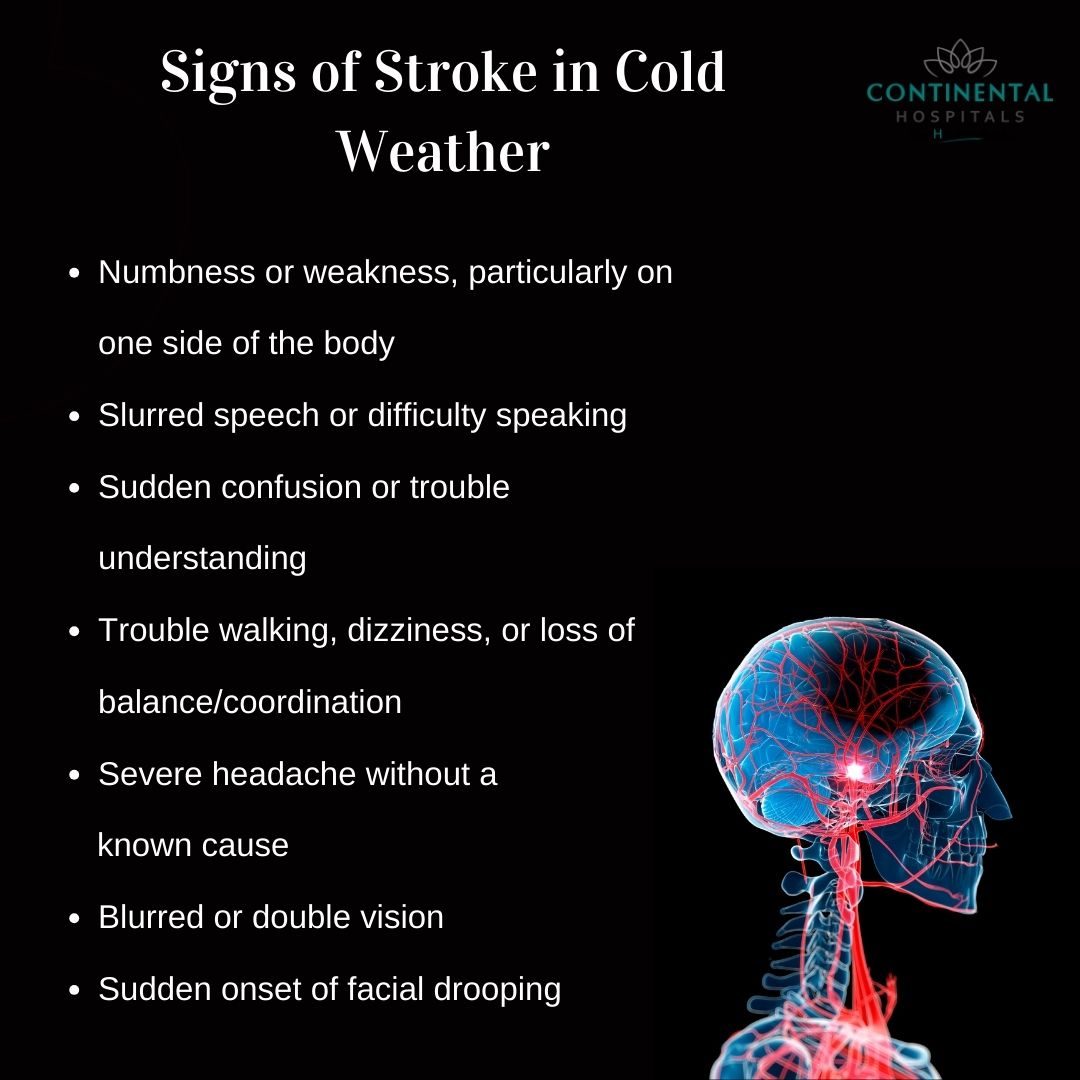
  • Sudden severe headache
  • Trouble walking or maintaining balance
  • Blurred or decreased vision in one or both eyes
  • Confusion or difficulty understanding speech
Signs of Stroke

Need an Appointment?

How Can You Prevent a Stroke During Cold Weather?

Stay Warm: Dress in layers, wear hats, gloves, and scarves to keep yourself warm, especially in extremely cold temperatures. Prolonged exposure to cold can increase blood pressure and strain the heart.

Stay Hydrated: Even in cold weather, it's essential to stay hydrated. Dehydration can contribute to increased blood viscosity, making it more prone to clotting, which could lead to stroke. Drink plenty of fluids, including water and herbal teas.

Maintain Physical Activity: Engage in regular physical activity to keep your blood circulating and maintain a healthy weight. Indoor exercises or activities like yoga, tai chi, or even home workouts can help keep you active during colder weather.

Healthy Diet: Consume a balanced diet rich in fruits, vegetables, whole grains, and lean proteins. Limit intake of processed foods, salt, and saturated fats to keep your blood pressure and cholesterol levels in check.

Monitor Blood Pressure and Cholesterol Levels: Regularly check your blood pressure and cholesterol levels. High blood pressure and high cholesterol are major risk factors for stroke. Consult a healthcare professional if levels are not within healthy ranges.

Avoid Excessive Alcohol Consumption: Alcohol can increase blood pressure. If you drink, do so in moderation and be mindful of its effects on your health.

Quit Smoking: Smoking damages blood vessels and increases the risk of blood clots. Quitting smoking can significantly reduce your risk of stroke.

Follow Medical Advice: If you have any pre-existing conditions like diabetes or heart disease, it's crucial to manage them effectively. Follow your doctor's recommendations, take medications as prescribed, and attend regular check-ups.

Stay Informed and Seek Help: Recognize the signs of a stroke (FAST - Face drooping, Arm weakness, Speech difficulty, Time to call emergency services) and seek immediate medical attention if you or someone around you displays these symptoms.

Keep Warm Safely: Avoid extreme temperature changes. If you have cardiovascular issues or are at risk for stroke, sudden temperature changes can strain your body. Gradually adapt to temperature changes, and avoid sudden exposure to extreme cold or heat.

Cold weather can exacerbate stroke risk factors and make it essential to be vigilant about recognizing the signs of a stroke in winter conditions. By understanding the relationship between cold weather and stroke, individuals can take proactive steps to mitigate risks and protect their health. Timely recognition of stroke symptoms and swift action through the "FAST" method, coupled with preventive measures, can significantly improve outcomes and potentially save lives during the colder months. Stay informed, stay proactive, and prioritize your health during the winter season to reduce the risk of stroke.

Book an appointment with a Best Neurologist in Hyderabad

Related Blog Articles:

1. Exercise and Cognitive Function: How It Sharpens Your Mind
2. Dementia Myths vs. Facts
3. Early Signs of Alzheimer's: How to Recognize Them

Frequently Asked Questions

Cold weather can increase the risk of stroke because low temperatures cause blood vessels to narrow, making it harder for blood to flow. This narrowing raises blood pressure, one of the leading risk factors for stroke. During winter, the body also works harder to maintain its core temperature, placing additional strain on the heart and circulatory system. Blood may become thicker and more likely to clot, increasing the chances of a blockage in the brain. People often become less physically active during colder months, which can worsen blood pressure, cholesterol, and diabetes. Respiratory infections like influenza are also more common in winter and may increase stroke risk. Individuals with existing heart disease, diabetes, or hypertension are especially vulnerable. Staying warm, taking prescribed medications, eating a balanced diet, and maintaining an active lifestyle can help reduce the risk of stroke during winter.
Recognizing stroke symptoms quickly can save a life and reduce long-term disability. The easiest way to identify a stroke is by remembering the FAST acronym. F stands for Face drooping, where one side of the face appears uneven or numb. A stands for Arm weakness, making it difficult to lift one or both arms. S stands for Speech difficulty, including slurred speech or trouble understanding words. T stands for Time to call emergency medical services immediately. Other symptoms include sudden confusion, severe headache, loss of balance, dizziness, vision changes, numbness, or weakness on one side of the body. Stroke symptoms usually appear suddenly without warning. Never ignore these signs, even if they disappear quickly. Immediate medical treatment significantly improves recovery and reduces brain damage.
Although anyone can experience a stroke, certain individuals face a much higher risk during colder months. Older adults are particularly vulnerable because blood vessels naturally become less flexible with age. People with high blood pressure, diabetes, heart disease, irregular heartbeat, high cholesterol, obesity, or previous strokes are also at greater risk. Smokers and individuals who consume excessive alcohol have an increased likelihood of stroke. People with poor circulation or chronic kidney disease should also take extra precautions. Those who stop exercising during winter or ignore their medications may unknowingly increase their risk. Seasonal infections and dehydration can further contribute to stroke risk. Regular health check-ups, blood pressure monitoring, and healthy lifestyle habits help lower the chances of experiencing a stroke.
Yes, cold weather may contribute to both ischemic and hemorrhagic strokes through different mechanisms. Ischemic stroke, the most common type, occurs when a blood clot blocks blood flow to the brain. Winter conditions can make blood thicker and increase clot formation. Hemorrhagic stroke occurs when a weakened blood vessel bursts inside the brain. Sudden spikes in blood pressure caused by cold temperatures can increase the risk of bleeding. Individuals with uncontrolled hypertension are especially vulnerable. While cold weather alone does not directly cause a stroke, it can worsen existing medical conditions that increase stroke risk. Managing blood pressure, avoiding sudden exposure to extreme cold, and following medical advice can help reduce the likelihood of both types of stroke.
If someone develops sudden stroke symptoms, call emergency medical services immediately without waiting to see if symptoms improve. Note the exact time when the symptoms first appeared because treatment decisions depend on this information. Keep the person calm and help them lie down safely with their head slightly elevated. Do not give food, water, or medications unless instructed by healthcare professionals, as swallowing may be impaired. Loosen tight clothing if necessary and monitor breathing while waiting for medical help. If the person becomes unconscious and stops breathing, begin CPR only if you are trained. Never attempt to drive long distances if emergency services are available. Prompt treatment within the golden window greatly improves recovery and minimizes permanent brain injury.
Reducing stroke risk during winter starts with keeping your body warm and maintaining healthy daily habits. Wear layered clothing, especially when going outdoors in cold weather. Continue taking medications for blood pressure, diabetes, cholesterol, and heart disease exactly as prescribed. Stay physically active with regular indoor or outdoor exercise appropriate for the weather. Eat a balanced diet rich in fruits, vegetables, whole grains, and lean proteins while limiting salt and unhealthy fats. Stay hydrated because dehydration can increase blood thickness. Avoid smoking and excessive alcohol consumption. Get vaccinated against seasonal influenza if recommended by your doctor. Monitor your blood pressure regularly and seek medical advice if it remains uncontrolled. Consistent preventive care significantly lowers the risk of stroke during winter.
Yes, stroke is not limited to older adults and can occur in younger individuals as well. Although age increases stroke risk, unhealthy lifestyles, obesity, smoking, diabetes, uncontrolled hypertension, high cholesterol, and certain heart conditions can affect younger adults. Rare causes such as blood clotting disorders, autoimmune diseases, and inherited conditions may also contribute. Winter may increase the risk by raising blood pressure and encouraging physical inactivity. Stress, poor sleep, dehydration, and excessive alcohol intake during holiday seasons can further increase vulnerability. Young adults should never ignore sudden weakness, facial drooping, speech difficulty, or severe headache. Early recognition and immediate treatment remain essential regardless of age. Maintaining a healthy lifestyle throughout the year helps lower stroke risk.
A stroke is a medical emergency because brain cells begin to die within minutes when blood supply is interrupted. The faster treatment begins, the greater the chance of preserving healthy brain tissue and reducing permanent disability. Certain clot-dissolving medications and advanced procedures are only effective when given within specific time windows after symptom onset. Delayed treatment may result in severe paralysis, speech problems, memory loss, swallowing difficulties, or even death. Early hospital evaluation allows doctors to identify the type of stroke and provide the most appropriate treatment quickly. Comprehensive stroke care also includes rehabilitation with physiotherapy, speech therapy, and occupational therapy when needed. Acting immediately at the first sign of stroke offers the best chance for survival and a successful recovery.
Disclaimer: The information provided in this blog is intended for general knowledge and informational purposes only, and does not constitute medical advice. Always consult with a qualified healthcare professional for any medical concerns or before making any decisions about your health.

Get in Touch With Us

Whether you are from India or abroad, we are here to help you with your medical queries. Please fill out the form below and our team will connect with you shortly.

  • ✔ Quick response from our medical experts
  • ✔ Secure data handling & privacy
  • ✔ Easy upload for reports & documents
banner_image

Chat with our medical experts on WhatsApp for quick assistance and hassle-free appointment booking

Recent Posts