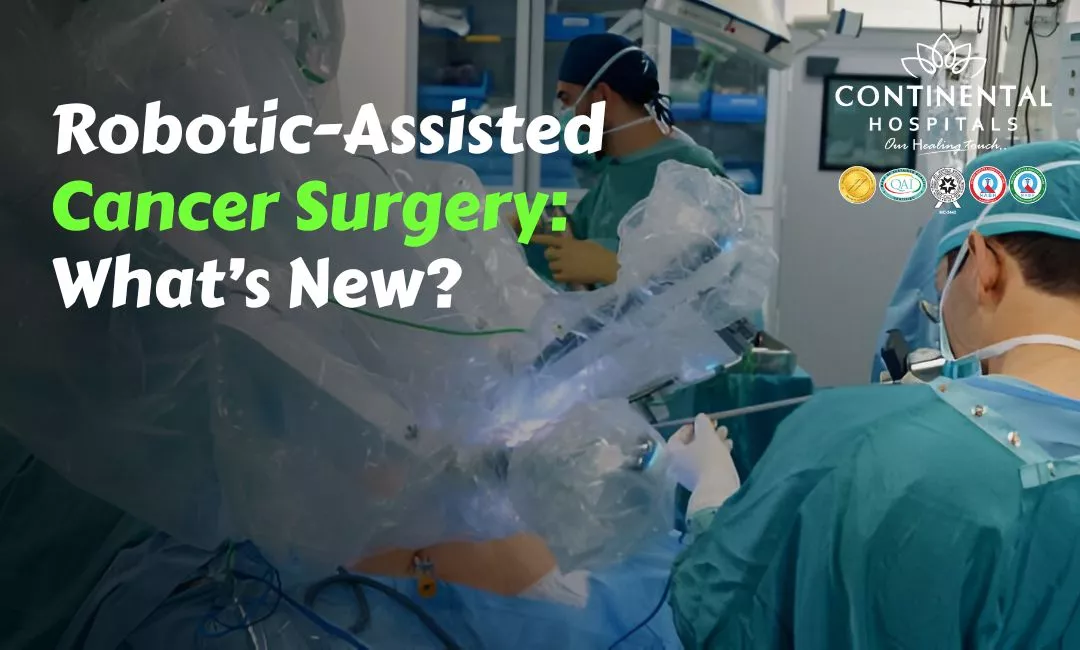
post-title

Robotic-Assisted Cancer Surgery: What’s New?

Written by - Editorial Team
Medically Reviewed by - Dr P Jagannath

In recent years, cancer surgery has undergone a significant transformation thanks to advancements in medical technology. One of the most exciting innovations in the field is robotic-assisted cancer surgery, which combines the expertise of skilled surgeons with the precision of robotic technology. At Continental Hospitals, we believe in offering our patients the best care through cutting-edge treatments like this. But what exactly is robotic-assisted surgery, and how can it benefit cancer patients? Let’s explore the key features and benefits.

What is Robotic-Assisted Cancer Surgery?

Robotic-assisted surgery uses advanced robotic systems to assist surgeons in performing complex cancer surgeries with greater precision, flexibility, and control. These robots don’t perform surgery on their own—they are tools that aid skilled surgeons in performing intricate procedures with more accuracy than traditional methods.

The robot consists of robotic arms, a camera, and specialized instruments, all controlled by the surgeon from a console in the operating room. The console allows the surgeon to view a 3D, high-definition image of the surgical site and operate with fine motor skills that are beyond the capabilities of the human hand.

While the robot is a valuable tool, it’s important to remember that the surgeon is still in control of the procedure at all times. This advanced technology simply enhances their abilities, making surgeries safer and more effective.

Our experienced Best Cancer Specialist in Hyderabad provide personalized care using advanced treatment options to help you achieve the best possible outcomes.

How Does Robotic-Assisted Cancer Surgery Work?

The process of robotic-assisted surgery begins when the surgeon makes small incisions near the tumor or affected area. The robotic arms, equipped with tiny surgical instruments, are then inserted through these incisions. The surgeon controls the robot using a console, which provides a high-definition, magnified 3D view of the surgical area.

The robotic arms can rotate and move with great precision, allowing the surgeon to navigate complex tissues and structures with minimal disruption to healthy areas. This technology is particularly useful in surgeries involving delicate organs like the prostate, lungs, and kidneys.

One of the major advantages of robotic surgery is that it allows for smaller incisions compared to traditional open surgery. As a result, patients experience less pain, reduced scarring, and a quicker recovery time.

What are the benefits of robotic-assisted cancer surgery?

Increased Precision: The robotic system allows surgeons to perform delicate surgeries with extreme precision, reducing the risk of damage to healthy tissues and organs. This is particularly important in cancer surgeries, where the goal is to remove as much of the tumor as possible while preserving as much healthy tissue as possible.

Second Opinion

Minimized Pain and Discomfort: One of the biggest advantages of robotic-assisted surgery is that it involves smaller incisions, which means less trauma to the body. As a result, patients experience less post-operative pain and discomfort compared to traditional open surgery.

Faster Recovery: Since robotic surgery is minimally invasive, recovery times are significantly shorter. Patients typically spend less time in the hospital and can return to their normal activities more quickly.

Enhanced Visualization: The high-definition, 3D visualization provided by robotic systems allows surgeons to see the surgical area more clearly. This level of detail can improve the accuracy of the surgery, leading to better outcomes for patients.

Reduced Risk of Complications: The precision and control offered by robotic systems help to minimize the risk of complications during and after surgery. This includes a lower risk of infection, blood loss, and other surgical complications.

Minimal Scarring: Robotic surgery involves small incisions, which results in minimal scarring. This not only helps with cosmetic outcomes but also reduces the risk of complications that can arise from larger incisions.

What Types of Cancer Can Be Treated with Robotic Surgery?

Robotic-assisted surgery can be used for a variety of cancer surgeries, including:

Prostate Cancer: Robotic prostatectomy is one of the most common types of robotic surgery. The robot allows surgeons to remove the prostate gland with great precision, reducing the risk of damage to surrounding tissues like nerves.

Need an Appointment?

Colorectal Cancer: Robotic surgery is often used for removing tumors in the colon or rectum. The small incisions make recovery easier, and the enhanced vision and precision reduce the likelihood of complications.

Lung Cancer: For patients with early-stage lung cancer, robotic surgery allows for the removal of tumors with minimal disruption to the surrounding tissue. This is especially important for preserving lung function after surgery.

Kidney Cancer: Robotic-assisted surgery is frequently used in the treatment of kidney cancer. The precise movements of the robotic arms help surgeons remove tumors while preserving as much of the kidney as possible.

Gynecologic Cancer: For women with uterine, ovarian, or cervical cancer, robotic surgery can offer a minimally invasive alternative to traditional open surgery, providing excellent outcomes and faster recovery.

Why Choose Continental Hospitals for Robotic-Assisted Cancer Surgery?

At Continental Hospitals, we are committed to providing our patients with the latest advancements in medical technology. Our robotic-assisted cancer surgery program is led by a team of highly skilled and experienced surgeons who are dedicated to delivering the highest standard of care.

Here’s why patients trust us for their cancer treatments:

Expert Surgeons: Our surgeons have years of experience in performing robotic-assisted surgeries, ensuring that you receive the best possible care during your treatment.

State-of-the-Art Technology: We use the latest robotic systems to ensure the precision and safety of your surgery. Our advanced equipment is designed to provide superior outcomes with faster recovery times.

Comprehensive Care: From diagnosis to post-operative care, we provide a comprehensive range of services to ensure your recovery is as smooth and effective as possible.

Patient-Centered Approach: We understand that a cancer diagnosis can be overwhelming, which is why we provide compassionate care and support throughout your treatment journey. Our goal is to help you feel comfortable and informed every step of the way.

Faster Recovery Times: Thanks to robotic-assisted surgery’s minimally invasive approach, patients often experience shorter hospital stays and quicker recoveries, so you can return to your life sooner.

Is Robotic-Assisted Surgery Right for You?

If you’ve been diagnosed with cancer and are exploring surgical treatment options, robotic-assisted surgery may be the right choice for you. Speak to one of our specialists at Continental Hospitals to find out if this cutting-edge treatment can provide you with the best possible outcomes.

Conclusion

Robotic-assisted cancer surgery has revolutionized the way we approach cancer treatment. With its many benefits—including increased precision, reduced pain, and faster recovery times—it offers a promising option for patients who require surgery. At Continental Hospitals, we are dedicated to offering the best in medical technology and patient care to help you fight cancer and live a healthier, happier life.

If you're experiencing symptoms, don't wait—contact our healthcare team at Continental Hospitals today. Visit the best oncologist in Hyderabad.


Frequently Asked Questions

Robotic assisted cancer surgery is an advanced minimally invasive surgical technique that allows surgeons to perform complex cancer procedures with greater precision and control. The surgeon operates robotic arms from a specialized console while maintaining complete control throughout the procedure. The robotic system provides a high definition three dimensional view of the surgical area and instruments that can move with greater flexibility than the human hand. This helps surgeons remove tumors more accurately while protecting nearby healthy tissues. Smaller incisions usually result in less pain, reduced blood loss, and a lower risk of infection. Many patients also experience faster recovery and shorter hospital stays. Robotic surgery is commonly used for prostate, colorectal, kidney, gynecologic, lung, and head and neck cancers. However, it is not suitable for every patient, and the decision depends on the cancer type, stage, and overall health.
Robotic assisted cancer surgery continues to evolve with significant technological improvements. Modern robotic platforms now offer enhanced three dimensional imaging, greater instrument flexibility, and improved precision during delicate procedures. Advanced imaging technologies help surgeons identify tumors and critical structures more clearly during surgery. Some systems integrate fluorescence imaging to improve tissue visualization and blood flow assessment. Artificial intelligence based software is also being explored to assist surgical planning and improve decision making. Better ergonomics help surgeons perform lengthy procedures with greater comfort and accuracy. These innovations contribute to safer surgeries, fewer complications, and improved patient outcomes. Research continues to expand robotic applications across multiple cancer specialties. Hospitals with experienced robotic surgical teams can offer these advanced treatment options to eligible patients.
Robotic surgery is used to treat several types of cancers when appropriate. Common examples include prostate cancer, kidney cancer, bladder cancer, colorectal cancer, cervical cancer, uterine cancer, ovarian cancer, lung cancer, esophageal cancer, thyroid cancer, and selected head and neck cancers. It is particularly useful for tumors located in areas that require precise surgical movements. The suitability of robotic surgery depends on factors such as tumor size, cancer stage, location, previous surgeries, and the patient's overall health. Some advanced cancers may still require open surgery or a combination of treatments. A multidisciplinary cancer care team carefully evaluates each patient before recommending robotic surgery. The goal is to achieve complete tumor removal while preserving healthy organs and improving recovery whenever possible.
Robotic assisted cancer surgery offers several important advantages over traditional open surgery for selected patients. Smaller incisions generally mean less pain after surgery and minimal scarring. Patients often experience reduced blood loss and a lower risk of infection. Hospital stays are usually shorter, allowing patients to return home sooner. Recovery is often faster, helping patients resume normal daily activities more quickly. The robotic system provides excellent visualization and precise instrument control, enabling surgeons to work in difficult to reach areas. This precision may help preserve nerves, blood vessels, and healthy tissues surrounding the tumor. Improved surgical accuracy can contribute to better functional outcomes in some procedures. However, individual results vary, and treatment decisions should always be based on medical evaluation.
Yes, robotic assisted cancer surgery is considered safe when performed by experienced surgeons in well equipped hospitals. The robotic system does not perform the operation independently. Every movement is completely controlled by the surgeon using advanced robotic instruments. Multiple safety features are built into the technology to ensure accurate and controlled movements throughout the procedure. Like all surgeries, robotic procedures carry some risks, including bleeding, infection, or anesthesia related complications. The overall safety also depends on the patient's health condition, cancer stage, and the complexity of the operation. Careful preoperative assessment helps determine whether robotic surgery is the most appropriate option. Patients should discuss the potential benefits and risks with their surgical oncologist before making treatment decisions.
Recovery after robotic cancer surgery is generally faster than recovery after traditional open surgery. Many patients are able to walk within a day after the procedure and may leave the hospital within a few days, depending on the type of surgery performed. Pain is often less severe because of the smaller incisions. Most patients gradually return to light daily activities within two to four weeks, although complete recovery varies according to the cancer type and surgical complexity. Doctors provide personalized instructions regarding wound care, diet, physical activity, and follow up appointments. Regular monitoring ensures proper healing and early identification of any complications. Following the surgeon's advice carefully helps support a smooth recovery and better long term outcomes.
Not every cancer patient is a candidate for robotic assisted surgery. The ideal candidate depends on several medical factors, including the type of cancer, tumor size, location, stage, overall health, and previous treatments or surgeries. Patients with localized cancers often benefit the most from robotic procedures. Those with extensive tumor spread or complex anatomical conditions may require different surgical approaches. Imaging studies, laboratory tests, and detailed clinical evaluations help determine suitability. A multidisciplinary team including surgical oncologists, medical oncologists, radiologists, and anesthesiologists reviews each case carefully. The treatment plan is individualized to provide the safest and most effective cancer care while considering the patient's overall treatment goals.
Choosing the right hospital is an important step in achieving successful cancer treatment. Look for a hospital with experienced robotic surgical oncologists, advanced robotic technology, comprehensive cancer care services, and a multidisciplinary treatment team. Accreditation, patient safety standards, intensive care facilities, and access to medical oncology and radiation oncology are also important considerations. Hospitals that regularly perform robotic cancer surgeries often have greater expertise in managing complex cases. Ask about the surgeon's experience, expected outcomes, possible risks, and recovery plans before making a decision. Comprehensive follow up care, rehabilitation services, and personalized treatment planning further improve the overall patient experience and long term cancer care outcomes.
Disclaimer: The information provided in this blog is intended for general knowledge and informational purposes only, and does not constitute medical advice. Always consult with a qualified healthcare professional for any medical concerns or before making any decisions about your health.

Get in Touch With Us

Whether you are from India or abroad, we are here to help you with your medical queries. Please fill out the form below and our team will connect with you shortly.

  • ✔ Quick response from our medical experts
  • ✔ Secure data handling & privacy
  • ✔ Easy upload for reports & documents
banner_image

Chat with our medical experts on WhatsApp for quick assistance and hassle-free appointment booking

Recent Posts