• Share this:
post-title

Lung Cancer Symptoms Every Smoker Should Know

Written by - Editorial Team
Medically Reviewed by - Dr Divyesh Kishen Waghray

Lung cancer is one of the most common and serious cancers in people all over the world. This disease forms when abnormal cells grow everywhere inside the lungs, disrupting normal breathing and overall lung function. Smoking is the biggest cause of lung cancer, responsible for most cases worldwide. An early diagnosis and prompt lung cancer treatment can help to improve the overall life expectancy and quality of life.

Lots of people tend to ignore the early symptoms of lung cancer because it feels like you just have a cough, chest infection, or breathing trouble. Smokers especially tend to ignore these signals because they consider this simply an effect of smoking. These symptoms can be dismissed as a disturbance and cause the disease to spread into later stages.

Recognizing the symptoms of lung cancer and warning signs early can make a big difference. Knowing when to get medical advice, making healthier choices and having health check-ups will be important for protecting and maintaining healthy lungs and reducing complications.

What Are the Common Symptoms of Lung Cancer?

The signs and symptoms of lung cancer vary depending on the size, location, and stage of the tumor. There are some symptoms that can develop gradually or might only become evident in more advanced stages of the disease.

Common lung cancer symptoms are:

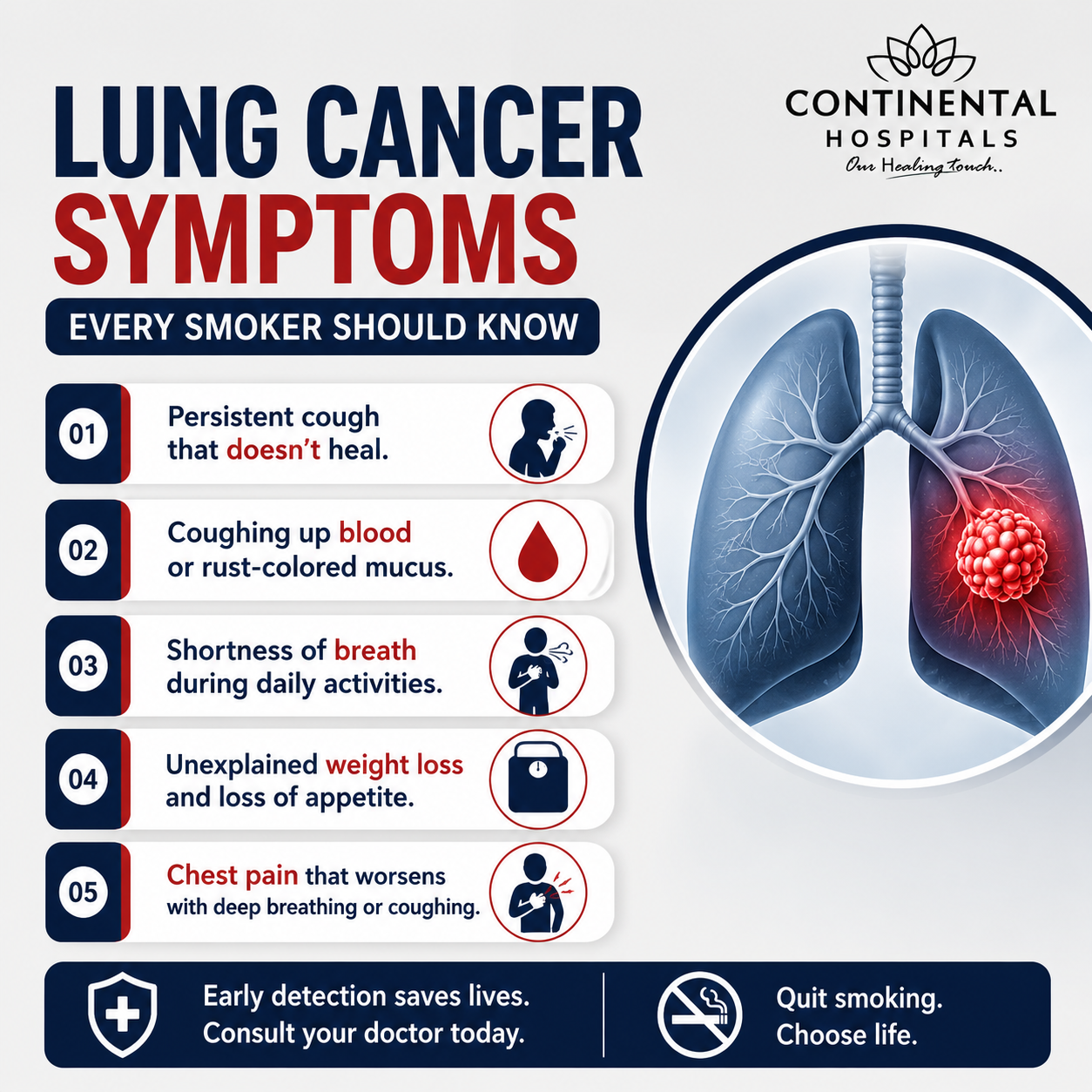
  • A cough that doesn’t go away for several weeks
  • Coughing up blood, or blood-stained mucus and phlegm
  • Chest pain that worsens with breathing or coughing
  • Feeling short of breath
  • Wheezing
  • Unexplained weight loss
  • Feeling tired or weak all the time
  • Infections in the chest area that occur frequently
  • Hoarseness of your voice
  • Loss of appetite

If you have any of these symptoms, especially if they last for a while and get worse, you should not ignore them.

For expert cancer diagnosis, advanced treatment, and compassionate care, visit the pulmonology department at Continental Hospitals. Our experienced oncologists provide personalized treatment plans with comprehensive support at every stage of care.

How Does Smoking Increase the Risk of Lung Cancer?

Smokers are the most common cause of the disease, because the chemicals in the tobacco smoke damage the lungs over time. The chemicals degrade healthy lung tissue and stimulate the unchecked growth of new cells.

There is more risk if:

Second Opinion

  • You smoke more cigarettes per day
  • You have smoked for longer periods
  • You have been exposed to secondhand smoke
  • You have smoked cigars or used a pipe

A former smoker will keep being at risk for several years after quitting smoking. Despite this, not smoking will improve your overall lung health and substantially lower your future risk for cancer.
What Other Risk Factors Can Lead to Lung Cancer?

Smoking is the major risk factor, but there are other risk factors for lung cancer.

They are:

  • Exposure to air pollution
  • A family history of lung cancer
  • Exposure to asbestos or industrial chemicals
  • Radon gas exposure
  • Past irradiation of chest
  • Chronic lung disease

Patients at high risk should therefore have regular medical check-ups and screening tests.

How Is Lung Cancer Diagnosed?

The early detection and diagnosis of lung cancer are vital for successful treatment. Doctors employ a number of tests to detect cancer and identify the stage.

The tests are:

Need an Appointment?

  • Chest X-ray
  • CT scan
  • PET scan
  • Bronchoscopy
  • Biopsy
  • Sputum cytology

Doctors may also recommend lung cancer screening for heavy smokers and high-risk patients to find abnormal appearing lesions early.

What Are the Available Lung Cancer Treatment Options?

The treatment of lung cancer depends on the type, stage, and general health of the patient. Modern advanced medical care has increased the chances of a successful treatment.

The treatment options are:

Is Surgery Used to Treat Lung Cancer?
Surgery is recommended when the cancer is detected early and has only affected the lungs.

Can radiation therapy be effective in treating lung cancer?
Radiation therapy sends high-energy rays at the tumor to kill the cancerous cells and limit tumor growth.

How Does Chemotherapy Work for Lung Cancer?
Cancer chemotherapy involves the use of medications to kill cancer cells and may be applied before or after surgery.

What Is Targeted Therapy and Immunotherapy Good For?
Targeted therapy and immunotherapy are used in the treatment of advanced lung cancer. They help to attack cancer cells more accurately and enhance the body’s immune response.

What Is the Best Way to Protect Your Lungs? 

The best way to protect your lungs and prevent respiratory diseases is to protect your lungs and prevent cancer.

Some useful lifestyle recommendations are the following:

  • Quit smoking right away
  • Do not expose yourself to secondhand smoke
  • Exercise regularly
  • Adopt a balanced diet rich in fruits and vegetables
  • Use protective equipment in polluted environments
  • Exercise 
  • Adopt regular health screenings
  • Maintain a healthy weight

Oftentimes, small lifestyle changes can greatly improve overall lung function and long-term health.

When Must You See a Doctor?

You must see a doctor if you feel a persistent cough, breathing difficulty, unexplained chest pain, or cough up blood. One can benefit from early health care by diagnosing the symptoms of lung cancer before progression.

Never miss out on persistent respiratory symptoms if you have a history of smoking. Early diagnosis and experienced care can improve treatment outcomes and survival rates.

Why Choose Continental Hospitals for Lung Cancer Treatment?

Continental Hospitals is your reliable destination for lung cancer treatment. We provide comprehensive and advanced care for lung cancer with a patient-centric approach. Our doctors are expert pulmonologists, oncologists, active thoracic surgeons, and critical care specialists who collaborate and provide state-of-the-art care and personalized treatment.

Why are Continental Hospitals preferred?

  • Doctors and doctors with extensive clinical practice
  • Highly advanced techniques for precise diagnosis and treatment
  • Comprehensive Multidisciplinary Cancer Care Approach
  • Customized treatment plan for each individual
  • JCI Accredited
  • NABH Accredited for the best safety and quality of care
  • Advanced infrastructure and cutting-edge operation theatres
  • 24x7 emergency & critical care services
  • The best care for patients

Our focus on innovation, safety, and quality forms the foundation of why we are one of the most preferred for lung cancer treatment.

Conclusion

Lung cancer is in fact a distressing condition. It is associated with many risk factors. Many times, it can develop silently, especially if you are a smoker. Early diagnosis of symptoms causes early detection and better chances of successful treatment. However, good lung health, quitting smoking, and getting screened for lung cancer regularly can help you prevent and detect early all these steps.

In case of any information or clarification that you would like to get about your condition, please consult our best pulmonologist in Hyderabad at Continental Hospitals. You can also come for diagnosis, treatment, and comprehensive care at Continental Hospitals.

Related Blog Topics:

  1. Lung Cancer Treatment: What Patients Should Expect
  2. Lung Cancer Surgery: Process, Risks, Recovery

Frequently Asked Questions

Early lung cancer symptoms can often appear mild and may be mistaken for common respiratory problems caused by smoking. Persistent cough lasting more than two weeks is one of the most common warning signs. Smokers may also experience chest pain, wheezing, shortness of breath, or repeated chest infections. Coughing up blood, even in small amounts, should never be ignored. Unexplained fatigue and sudden weight loss can also indicate underlying lung disease. Some people notice hoarseness of voice or difficulty breathing during daily activities. Symptoms may gradually worsen over time as the cancer spreads within the lungs. Many smokers delay evaluation because they believe symptoms are related only to smoking habits. Early diagnosis greatly improves lung cancer treatment outcomes and survival rates. Consulting a specialist at the first sign of symptoms is extremely important for timely care.
Smoking is the leading cause of lung cancer worldwide because tobacco smoke contains thousands of harmful chemicals. Many of these chemicals damage the cells lining the lungs and airways over time. Repeated exposure causes mutations in lung tissue that may eventually lead to cancer development. The risk increases with the number of cigarettes smoked daily and the duration of smoking history. Even passive smoking or secondhand smoke exposure can increase cancer risk significantly. Smoking weakens lung health and reduces the body’s ability to repair damaged cells effectively. Smokers are also more likely to develop chronic lung diseases that further increase complications. Quitting smoking at any stage can lower the risk of lung cancer and improve overall health. Former smokers still need regular lung screenings because cancer risk may remain elevated for years. Early detection plays a critical role in successful lung cancer treatment.
Yes, a persistent cough is one of the most common symptoms of lung cancer in smokers. A smoker’s cough that suddenly changes in intensity, frequency, or sound should be medically evaluated. Lung cancer may irritate the airways and trigger ongoing coughing episodes. Some people may develop a dry cough, while others produce mucus or blood-stained sputum. A cough that lasts longer than two or three weeks is considered abnormal. Persistent coughing may also be accompanied by chest discomfort or breathing difficulty. Many smokers ignore this symptom because chronic cough is common among tobacco users. However, worsening cough patterns can indicate serious lung problems requiring immediate attention. Diagnostic tests such as chest imaging and CT scans help identify underlying causes. Early diagnosis increases the chances of successful treatment and improved recovery outcomes.
Advanced lung cancer symptoms usually become more noticeable as the disease spreads to nearby tissues or other organs. Severe shortness of breath and persistent chest pain are common signs. Patients may experience coughing up blood frequently or recurrent lung infections. Significant weight loss without dieting can indicate cancer progression. Fatigue and weakness often worsen as the body struggles with the disease. Some people may develop bone pain, headaches, or neurological symptoms if cancer spreads beyond the lungs. Swelling in the face or neck can occur due to blocked blood vessels in the chest. Hoarseness and difficulty swallowing may also develop in advanced stages. These symptoms should never be ignored, especially in smokers or former smokers. Prompt medical evaluation can help determine the stage and guide appropriate lung cancer treatment.
Doctors use several tests to diagnose lung cancer in smokers and identify the stage of disease accurately. The evaluation usually begins with a detailed medical history and physical examination. Imaging tests such as chest X-rays and CT scans help detect abnormal growths in the lungs. PET scans may be used to determine whether cancer has spread to other organs. Sputum cytology can sometimes identify cancer cells in mucus samples. Bronchoscopy allows doctors to examine the airways using a thin flexible tube with a camera. A biopsy is often required to confirm the diagnosis and determine the cancer type. Blood tests may also be performed to assess overall health before treatment planning. Early screening is recommended for high-risk smokers to improve detection rates. Timely diagnosis significantly improves survival and treatment success.
Yes, quitting smoking can significantly reduce the risk of developing lung cancer and improve overall lung health. The body begins repairing damaged tissues soon after smoking cessation. Within a few years, the risk of cancer and heart disease gradually decreases compared to active smokers. Quitting also improves breathing, circulation, and immune system function. Even people who have smoked for decades can benefit from stopping tobacco use. Former smokers may still have some increased cancer risk, but it becomes lower over time. Smoking cessation can also improve the effectiveness of lung cancer treatment in diagnosed patients. Reduced tobacco exposure lowers inflammation and helps protect healthy lung tissue. Doctors often recommend counseling, nicotine replacement therapy, and support programs for quitting successfully. Taking steps to quit smoking is one of the best decisions for long-term health and cancer prevention.
Lung cancer treatment depends on the type, stage, and overall health condition of the patient. Surgery may be recommended if the cancer is detected early and confined to the lungs. Chemotherapy uses powerful medications to destroy cancer cells and prevent further spread. Radiation therapy targets cancerous tissues using high-energy beams. Targeted therapy is used for cancers with specific genetic mutations and offers more personalized treatment. Immunotherapy helps the immune system recognize and attack cancer cells effectively. Some patients may receive a combination of treatments for better outcomes. Advanced technologies and multidisciplinary cancer care improve survival rates and recovery chances. Lifestyle changes, nutrition support, and pulmonary rehabilitation also play important roles during treatment. Early diagnosis provides more treatment options and significantly improves prognosis.
Lung cancer screening is recommended for people who have a long history of smoking or are considered high risk. Doctors commonly advise annual low-dose CT scans for adults aged 50 to 80 with significant smoking exposure. Screening helps detect cancer at an earlier and more treatable stage before symptoms appear. Smokers who currently smoke or recently quit should discuss screening eligibility with their doctor. Early detection can improve survival rates and reduce complications from advanced disease. Screening is especially important for people with persistent cough, breathing problems, or family history of lung disease. Low-dose CT scans are quick, painless, and more effective than regular chest X-rays for detecting small tumors. Regular follow-up screenings may be necessary depending on the patient’s risk profile. Timely screening can lead to earlier lung cancer treatment and better long-term outcomes. Consulting a lung specialist helps determine the most appropriate screening schedule.
Disclaimer: The information provided in this blog is intended for general knowledge and informational purposes only, and does not constitute medical advice. Always consult with a qualified healthcare professional for any medical concerns or before making any decisions about your health.

Get in Touch With Us

Whether you are from India or abroad, we are here to help you with your medical queries. Please fill out the form below and our team will connect with you shortly.

  • ✔ Quick response from our medical experts
  • ✔ Secure data handling & privacy
  • ✔ Easy upload for reports & documents
0 / 100
Checkboxes Section


Chat with our medical experts on WhatsApp for quick assistance and hassle-free appointment booking

Recent Posts
Language Based Image
0 / 100