• Share this:
post-title

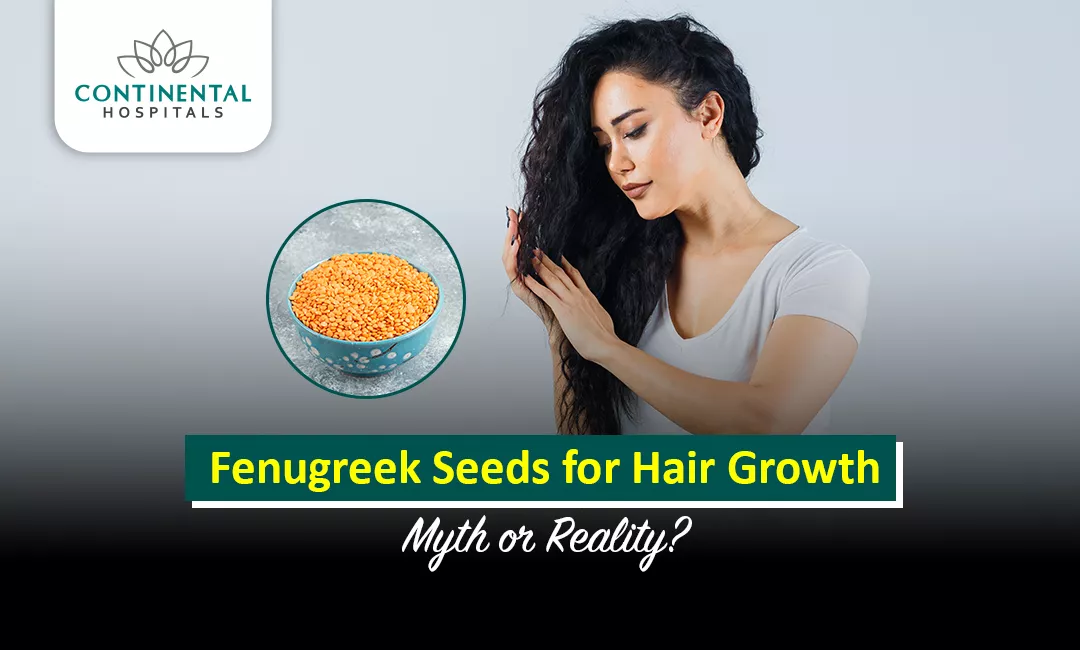
Fenugreek Seeds for Hair Growth: Myth or Reality?

Written by - Editorial Team
Medically Reviewed by - Dr Pavithra Reddy B

Are you waking up to find that your pillow is covered in strands of hair or that your shower drain has been clogged? If you happen to have thinning or thinning hair, it can be a stressful experience. Many people have shifted away from harsh chemicals in the search for stronger, thicker hair and looking toward what ingredients they have at home. Sections of hunger for healthier food have also been focused on their kitchen shelves. That can be partially for the growth of healthy eatables, but also for the belief that a small seed type ingredient can truly grow your hair stronger and thicker.  In today's modern wellness culture, one of the most popular traditional ingredients that people have gotten into is called fenugreek, methi. But is fenugreek really a miracle? And did our ancestors really discover its powers before?

By now, everybody knows how home remedies have been using this small type of seed, that comes in amber color, to cure all kinds of scalp problems. These days for social media, people abounds with different DIY hair mask, rinses, and oils for hair, that can cure all kinds of hair problems. From elders to millennials, all ages, they have convinced that their first dab or rinse using this small seed would lead to even thicker hair. However, we must be cautious in trusting their fingers thanks to the barriers of science and cultural beliefs.

At Continental Hospitals, we are trying to combine evidence-based medical science with a holistic approach to patient care. We will be exploring some of these popular natural remedies for hair growth, and whether they have lived up to everyone's expectation. Let's look into the science behind fenugreek seeds for hair growth and whether or not this is a myth.

What Can Meth Hasil Hair Loss Methi Seeds For Growth Do For The Hair?

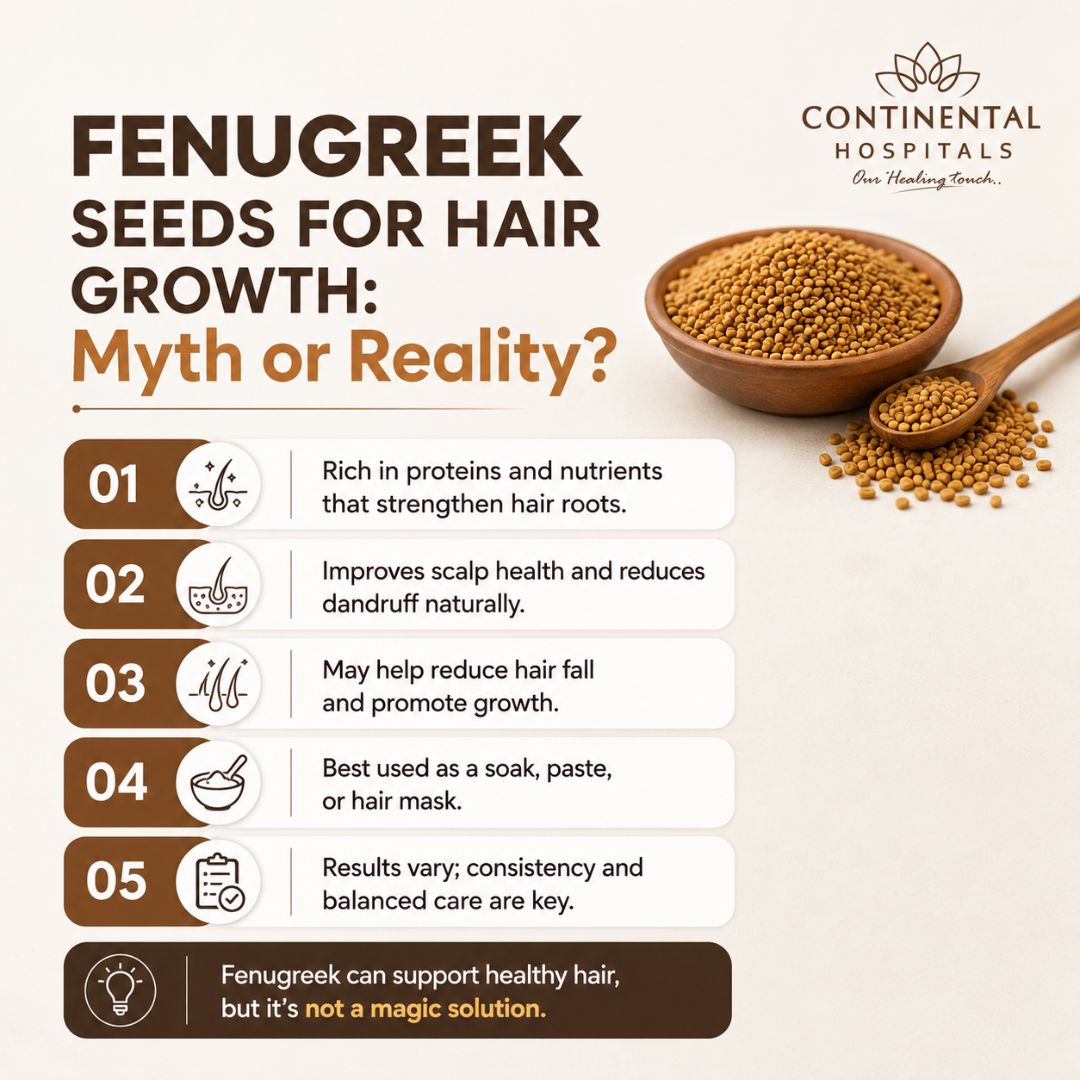
Fenugreek seeds are a natural source of protein and nicotinic acid which are the main nutrients required to repair the hair shaft. Fenugreek contains a large amount of lecithin, a natural emollient that helps to hydrate the scalp and leaves the hair feeling silky and smooth.

When you consider the benefits of fenugreek for hair, they are rich in anti-bacterial, anti-inflammatory, and antioxidant compounds that can help to relieve dandruff, and an inflamed scalp. While fenugreek won’t alter your genetic wiring and cure baldness in an instant, applying fenugreek on hair supports and nourishes the hair by reducing breakage.

Experiencing hair loss, thinning hair, or scalp concerns? Visit our Dermatology Department at Continental Hospitals for expert evaluation, advanced treatment, and personalized care.

Do Methi Seeds For Hair Growth Actually Work? 

To answer this, it is first necessary to understand why hair fall can happen in the first place. Hair loss is generally not a surface issue but indicative of underlying internal or external problems such as:

  • Nutritional Deficiencies like low iron, zinc or protein levels can cause weak hair.
  • Hormonal Imbalance such as Thyroid issues and PCOS can cause hair thinning.
  • Scalp Infections such as dandruff, fungus, or excess sebum can clog the follicles.
  • Chronic Stress can push the follicles into a resting phase prematurely which causes hair to shed.

Appling fenugreek can provide topical nutrient support and help to eliminate topical capped conditions like fungus that causes dandruff, and excess sebum. However it cannot change your genetics, or eliminate a systemic hormonal imbalance. So it is a good supportive remedy, but not a medical solution for hair growth.
Second Opinion

What Are the Dangers of Taking Only Natural Options?

Researching natural hair growth remedies alone might be safe, but it’s dangerous if you ignore the diagnosis and bother treating the problem only with natural treatments. A hair fall problem, left untreated early on, can cause permanent damage to follicles or scarring.

  • A Delay in Medical Response: Alopecia areata, for instance, demands prompt clinical attention.
  • Contact Dermatitis: Direct application of overly concentrated paste might trigger intense scalp itching or reddening in some people.
  • Covering Issues: Using kitchen remedies on a flaky scalp and missing a grave dermatological condition.

What Is the Specialist Diagnosis for Persistent Hair Fall?

When after few weeks of home remedies, there is no visible improvement, a clinical examination is essential. In a Trichologist or dermatologist’s office, a diagnosis is made to identify the cause of your hair fall.

  • Blood Test: To rule out iron, thyroid and other hormone deficiencies.
  • Pull Test: A simple, quick, observational test assessing rate of shedding and strength of roots.
  • Trichoscopy: Sophisticated digital imaging used for a magnified view or scalp and hair follicles.

When To See A Doctor For Your Thinning Hair?

When you encounter any of these red flags, it’s time to give kitchen remedies a break and book a doctor’s appointment.

  • Particular amount of hair was recently, and abruptly lost, in clumps.
  • There are patches of bald spots over your scalp.
  • Your scalp feels burning, very itchy, painful or red, with open sores.
  • Hair thinning along with weight changes, fatigue or changes in menstrual cycle.

Why choose Continental Hospitals for hair loss treatment?

When natural therapy fails to save your hair and confidence, a complete and clinical experience is required. Continental Hospitals is a leading name in providing best dermatology and trichology services.

Our department has support of expert specialists who use cutting edge technology and infrastructure for accurate diagnosis, treatment and management of complex hair conditions and disorders. We offer multidisciplinary care and offer a personalized treatment plan based on your body's unique nutritional and hormonal requirements.

Being an institution with JCI Accreditation as well as NABH accreditation, we strive to provide best global standards of clinical excellence and safety. Apart from our specialty clinics, our 24/7 emergency & critical care services are an example of our commitment to high standards of care for every one of our patients who come to us.

Conclusion

The verdict about fenugreek seeds for hair growth is somewhere between myth and facts. The fact is that fenugreek is a nutrient power house that strengthens the hair shaft, conditions the scalp and reduces hair breakage. The myth is to consider it as a miracle cure for underlying complex medical conditions. Naturally amazing products and remedies are popular in lifestyle, but should always be used as an adjunct to professional medical advice when it comes to treating persistent hair loss.

Need an Appointment?

Pass on any queries regarding hair loss to consult our best dermatologist in Hyderabad at Continental Hospitals. Visit Continental Hospitals for best diagnosis, treatment and care.

Related Blog Topics:

  1. Can Eating Amla Stop Hair Fall and Regrow Hair?
  2. How to Control Hair Fall Naturally: Best Hair Fall Control Home Remedies for Stronger Hair

Frequently Asked Questions

Fenugreek seeds are widely used as a traditional remedy for improving hair health and reducing hair fall. They contain proteins, iron, nicotinic acid, and antioxidants that may help nourish the scalp and strengthen hair strands. While some people report improved hair texture and reduced breakage after using fenugreek-based hair masks or oils, scientific evidence directly proving significant hair regrowth remains limited. Fenugreek may support a healthier scalp environment, which is important for hair growth. However, it is not a guaranteed treatment for baldness or severe hair loss conditions. Results can vary depending on the underlying cause of hair loss, overall health, and consistency of use. Fenugreek should be viewed as a supportive hair care ingredient rather than a miracle cure.
Fenugreek seeds contain several nutrients that may support healthy hair. They are rich in protein, which helps strengthen hair shafts and reduce breakage. The seeds also contain iron, which is important for healthy blood circulation to hair follicles. Nicotinic acid and lecithin found in fenugreek may help nourish the scalp and improve hair texture. Additionally, fenugreek contains antioxidants and flavonoids that may help protect hair follicles from oxidative stress. The presence of vitamins and minerals contributes to overall scalp health. These nutrients may support stronger, shinier hair when used regularly as part of a balanced hair care routine. However, nutrient content alone does not guarantee hair regrowth in individuals with medical causes of hair loss.
Fenugreek seeds may help reduce hair fall by strengthening hair strands and improving scalp health. Their protein-rich composition can help repair damaged hair and reduce breakage. The anti-inflammatory and antioxidant properties of fenugreek may also soothe scalp irritation, which can contribute to hair shedding. Many people use fenugreek paste or fenugreek-infused oil as a natural remedy for excessive hair fall. While anecdotal evidence is encouraging, scientific studies are still limited. Hair fall can occur due to factors such as stress, hormonal changes, nutritional deficiencies, or medical conditions. Therefore, fenugreek may be helpful as part of a comprehensive hair care routine but should not replace professional medical evaluation when hair loss is severe or persistent.
Fenugreek seeds can be used in several ways to support hair health. A common method is soaking the seeds overnight and grinding them into a paste, which is then applied to the scalp and hair. Some people mix the paste with yogurt, aloe vera, or coconut oil for added nourishment. Fenugreek seeds can also be infused into hair oils and used for scalp massage. Regular application may help condition the hair, reduce dryness, and improve manageability. Some individuals also consume fenugreek seeds as part of their diet, although evidence linking oral intake directly to hair growth is limited. Consistent use over several weeks is typically recommended for noticeable improvements in hair texture and scalp condition.
The time required to see noticeable results from fenugreek varies from person to person. Some individuals report improvements in hair texture, softness, and reduced hair fall within a few weeks of regular use. However, visible hair growth generally takes longer because hair grows gradually, usually about one to one-and-a-half centimeters per month. Consistent application of fenugreek-based treatments for at least two to three months may be needed before any changes become apparent. Factors such as age, genetics, diet, scalp health, and the cause of hair loss can influence outcomes. It is important to have realistic expectations and understand that fenugreek is a supportive natural remedy rather than a medically proven hair regrowth treatment.
Fenugreek is generally considered safe for topical use on the scalp and hair. However, some individuals may experience allergic reactions, scalp irritation, itching, redness, or sensitivity after application. It is advisable to perform a patch test before using fenugreek-based hair masks or oils extensively. People who are allergic to legumes such as peanuts or chickpeas may have a higher risk of sensitivity to fenugreek. If irritation develops, use should be discontinued immediately. When consumed orally, excessive intake may cause digestive discomfort in some individuals. Consulting a healthcare professional is recommended if you have concerns about allergies, underlying health conditions, or persistent scalp problems.
Fenugreek seeds may contribute to better scalp health due to their moisturizing, anti-inflammatory, and antioxidant properties. They are often used in homemade hair masks to soothe dry, itchy scalps and reduce dandruff. The natural compounds in fenugreek may help maintain scalp hydration and minimize irritation. A healthy scalp provides a favorable environment for stronger hair growth and reduced breakage. While fenugreek may help manage mild dandruff symptoms, it may not be sufficient for severe scalp conditions such as psoriasis, fungal infections, or chronic dermatitis. Individuals experiencing persistent scalp issues should seek medical advice to identify and treat the underlying cause effectively.
Fenugreek is not a scientifically proven treatment for baldness or significant thinning hair caused by genetic, hormonal, or medical factors. Although it contains nutrients that may support hair strength and scalp health, current research does not conclusively demonstrate that fenugreek can reverse pattern baldness or regenerate dormant hair follicles. It may help reduce hair breakage and improve overall hair appearance when used consistently. For conditions such as androgenetic alopecia, alopecia areata, or severe hair thinning, evidence-based treatments prescribed by a dermatologist are typically more effective. Fenugreek can be used as a complementary approach alongside a healthy diet, proper hair care, and professional medical guidance.
Disclaimer: The information provided in this blog is intended for general knowledge and informational purposes only, and does not constitute medical advice. Always consult with a qualified healthcare professional for any medical concerns or before making any decisions about your health.

Get in Touch With Us

Whether you are from India or abroad, we are here to help you with your medical queries. Please fill out the form below and our team will connect with you shortly.

  • ✔ Quick response from our medical experts
  • ✔ Secure data handling & privacy
  • ✔ Easy upload for reports & documents
0 / 100
Checkboxes Section


Chat with our medical experts on WhatsApp for quick assistance and hassle-free appointment booking

Recent Posts
Language Based Image
0 / 100