.webp)

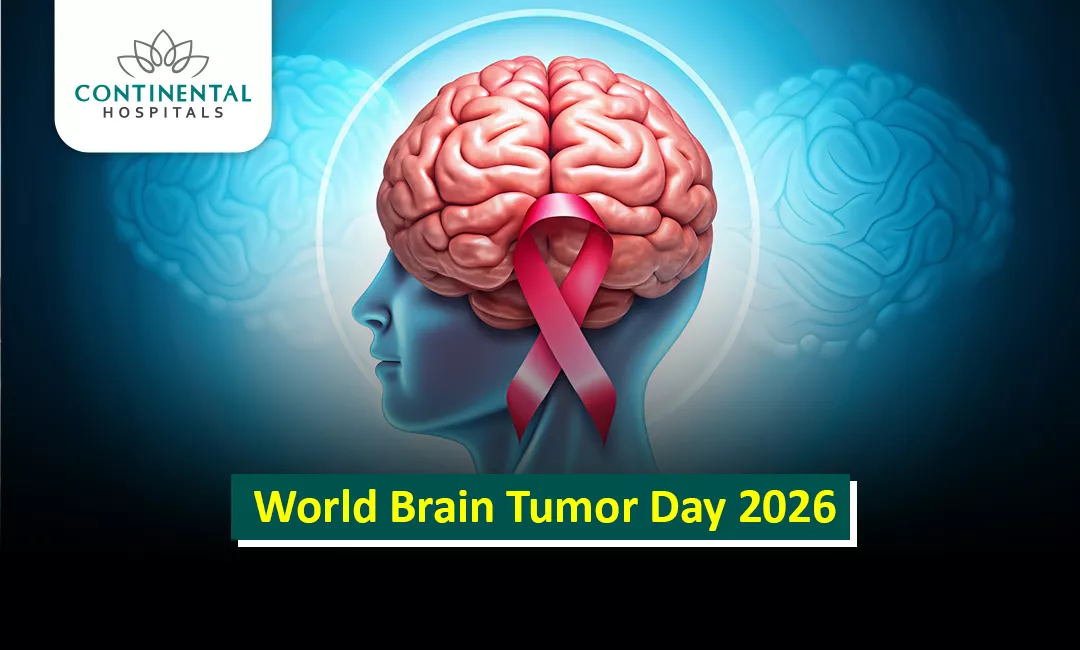
Every year on June 8, the global community unites to observe World Brain Tumor Day. This critical day serves as a powerful reminder to raise public awareness, dismantle myths, and show solidarity with millions of patients and families navigating the complex challenges of a brain tumor. Managing a neurological condition requires a deep understanding of the disease, and spreading knowledge is our first line of defense.
The official theme for World Brain Tumor Day 2026 is A Closer Look. This timely theme emphasizes the urgent need for a more attentive approach to brain health. It urges families, individuals, and medical professionals to avoid dismissing subtle changes in day-to-day behavior—such as unexpected forgetfulness, unusual mood swings, or lingering headaches—as basic everyday stress or fatigue. Taking A Closer Look means closing the diagnostic gap and ensuring people seek life-saving medical evaluations early.
At Continental Hospitals, the best hospital in Hyderabad, we believe that prioritizing brain health awareness is essential to transforming fear into proactive empowerment. By understanding the underlying mechanics of a brain tumor, patients can make rapid, well-informed choices regarding their healthcare. Let us take a closer look at the symptoms, risk factors, and advanced solutions defining brain tumor care today.
What Is a Brain Tumor?
A brain tumor is an abnormal mass or growth of cells within the brain or the central nervous system. When these cells multiply rapidly, they disrupt the normal functions of the brain, affecting how we think, move, and feel.
Brain tumors are broadly categorized into two types:
- Benign Brain Tumors: Non-cancerous, slow-growing masses that do not spread to surrounding tissues, though they can still cause serious complications depending on their physical location.
- Malignant Brain Tumors: Cancerous and aggressive growths that actively invade nearby healthy brain tissue and carry a higher risk of recurring.
Additionally, a tumor can be a primary brain tumor (originating directly in the brain) or a secondary/metastatic tumor, which spreads to the brain from cancers located in other organs like the lungs, breasts, or colon.
For expert diagnosis and advanced treatment of brain tumors and other neurological conditions, visit our neurosurgery department at Continental Hospitals.
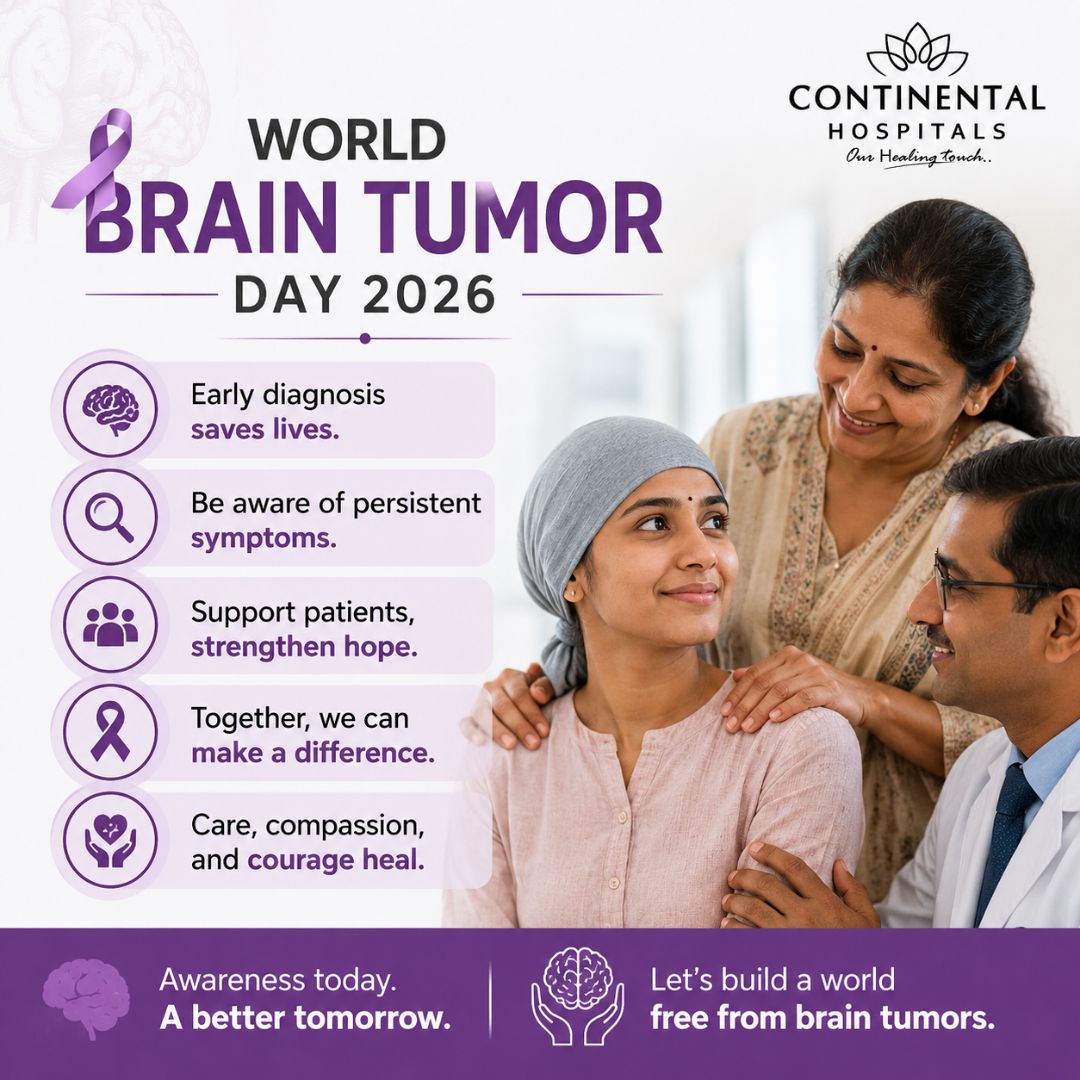
What symptoms require a closer look?
Because the early signs of a brain tumor often closely resemble minor, everyday ailments, they frequently go unnoticed until the condition has progressed. Spreading brain tumor awareness means learning to recognize these essential warning signs:

- Persistent Headaches: Headaches that return regularly, grow progressively worse over time, or feel particularly intense in the early morning.
- Unexplained Nausea and Vomiting: Sudden episodes of sickness that are often worst in the morning and completely unrelated to dietary or gastrointestinal issues.
- New-Onset Seizures: Experiencing sudden seizures or fits without any prior historical medical background.
- Cognitive and Personality Changes: Gradual, unexplained shifts in mood, sudden irritability, or severe memory lapses.
- Neurological Weakness: Numbness, loss of balance, sudden clumsiness, or weakness localized on one side of the body.
- Sensory Disruptions: Blurred vision, double vision, loss of peripheral sight, or progressive hearing difficulties.
What Causes a Brain Tumor to Develop?
Primary brain tumors begin when healthy cells experience genetic mutations within their DNA. These mutations instruct the cells to divide rapidly and live far longer than healthy cells, creating a dense mass. While the exact, definitive trigger for these mutations remains the subject of ongoing scientific research, clinical studies help us identify who might be more vulnerable.
What Are the Known Risk Factors?
While many individuals diagnosed have no clearly defined risk factors, specific elements do increase overall susceptibility:
- Exposure to Radiation: Individuals exposed to ionizing radiation—such as high-dose radiation therapies used to treat other cancers—face an elevated risk.
- Family History: In rare instances, specific genetic syndromes passed down through families (such as Neurofibromatosis) can increase the risk of developing a tumor.
- Age Dynamics: While a brain tumor can affect individuals of any age group, the overall incidence rate for aggressive types like glioblastoma increases steadily with age.
How Is an Accurate Diagnosis Made?
If a specialist suspects a neurological issue after conducting a physical and neurological exam, they will immediately recommend advanced diagnostic imaging:
- Magnetic Resonance Imaging (MRI): The gold standard for identifying structural anomalies in brain tissue, offering exceptionally clear, highly detailed cross-sectional views.
- Computerized Tomography (CT) Scan: Utilized to capture rapid images, helping doctors assess internal bleeding or structural bone issues near the mass.
- Biopsy: The surgical removal of a tiny tissue sample to determine whether the tumor is benign or malignant, which guides the entire care pathway.
What Are the Options for Brain Tumor Treatment?
Modern brain tumor treatment plans are highly specific and tailored directly to the tumor's size, grade, and precise position within the skull. Options include:
- Surgical Resection: The primary path whenever a tumor is safely accessible. Surgeons utilize image-guided technology to remove as much of the mass as possible while protecting critical brain functions.
- Radiation Therapy: High-energy beams are precisely directed at the target area to destroy remaining abnormal cells or shrink deep-seated tumors.
- Chemotherapy and Targeted Drug Therapy: Specialized medications that halt the growth of abnormal cells by attacking specific vulnerabilities within the tumor cells.
Can Brain Tumors Be Prevented?
Because most tumors lack a singular, preventable lifestyle cause, true prevention focuses heavily on proactive brain health awareness. Protecting your long-term brain health includes:
- Scheduling immediate clinical check-ups if you notice any progressive neurological shifts.
- Avoiding unnecessary or prolonged exposure to known sources of ionizing radiation.
- Maintaining healthy cardiovascular habits—such as eating a balanced diet, exercising, and avoiding smoking—to keep blood vessels serving the brain resilient.
When Should You Consult a Doctor?
You do not need to panic over a simple, passing headache. However, you should consult a specialist immediately if you experience new, progressive, or returning symptoms that impact your daily balance, speech, or memory, or if a family member notices unexpected changes in your general behavior.
Why Choose Continental Hospitals for Brain Tumor Treatment?
Continental Hospitals is a premier healthcare institution renowned for delivering world-class neurological care. We provide a safe, compassionate environment built around clinical excellence:
- Expert Specialists: Our team includes highly experienced, globally trained neurosurgeons, neurologists, and oncologists.
- Advanced Technology & State-of-the-Art Infrastructure: Equipped with leading-edge diagnostic tools and modern surgical suites for maximum precision.
- Multidisciplinary Care & Personalized Treatment: Every patient benefits from a collaborative board of experts designing individualized care plans.
- Global Quality Standards: We proudly hold prestigious JCI accreditation and NABH accreditation, reflecting our unwavering commitment to patient safety and superior healthcare standards.
- 24/7 Emergency & Critical Care Services: Round-the-clock emergency infrastructure capable of managing complex neurological crises at any hour.
- High Standards of Patient Care: Offering comprehensive post-operative rehabilitation and empathetic support from admission through recovery.
Conclusion
This World Brain Tumor Day 2026, let us embrace the A Closer Look philosophy. Prioritizing brain health awareness and understanding early warning signs can successfully eliminate dangerous diagnostic delays. Remember, an early diagnosis vastly expands your treatment options and paves the way for a safer, more predictable recovery.
For any queries related to brain tumors, consult our best neurosurgeon in Hyderabad at Continental Hospitals. Visit Continental Hospitals for expert diagnosis, advanced treatment, and comprehensive care.
Related Blog Topics: