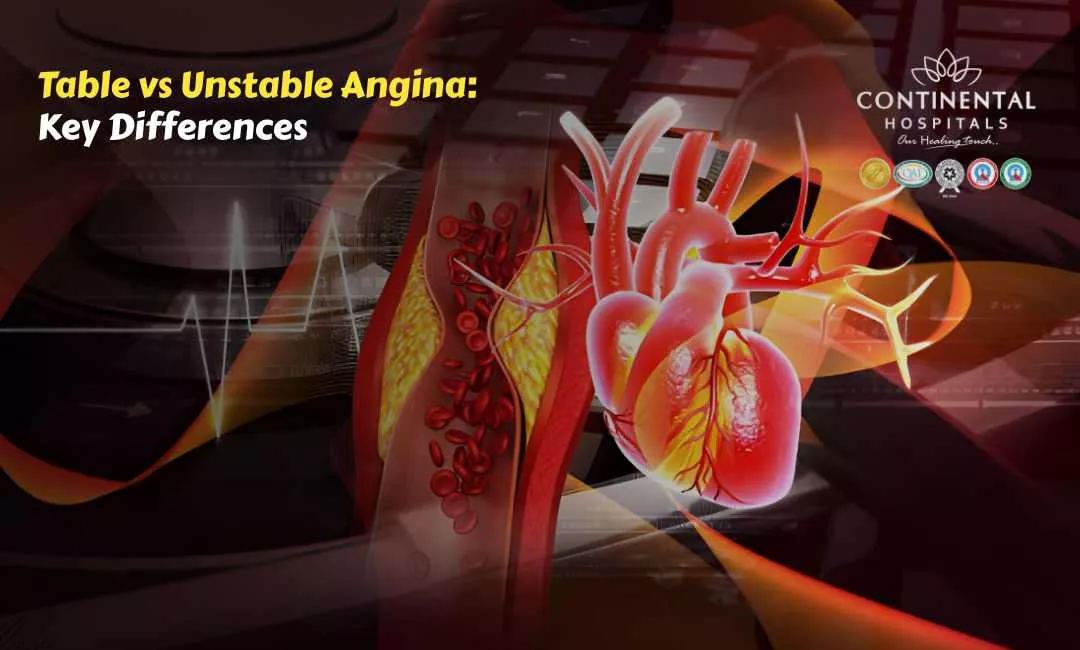
post-title

Stable vs Unstable Angina: Key Differences

Written by - Editorial Team
Medically Reviewed by - Dr Meeraji Rao Dandangi

Angina is a warning signal from your heart that it is not getting enough oxygen-rich blood. It often feels like pressure, heaviness, or squeezing pain in the chest. While angina itself is not a heart attack, it can be a strong indicator of underlying heart disease. Among the different types of angina, stable angina and unstable angina are the most commonly discussed, and understanding their differences is very important for timely diagnosis and treatment.

What is Stable Angina?

Stable angina is the most common type of angina. It typically develops when your heart works harder than usual, such as during exercise, climbing stairs, or after emotional stress.

Key features of stable angina:

  • The chest discomfort follows a predictable pattern.
  • Pain usually lasts a few minutes and goes away with rest.
  • Medication such as nitroglycerin often helps relieve the pain.
  • It is a signal that the heart arteries are narrowed but not suddenly blocked.

Stable angina is manageable, but it requires medical attention because it indicates coronary artery disease, which can worsen if left untreated.

Visit the Best Cardiology Doctors in Hyderabad at Continental Hospitals, Hyderabad, and book your appointment with the best cardiologists today to take the first step towards a healthier heart.

What is Unstable Angina?

Unstable angina is a more serious and unpredictable condition. It can happen even when you are at rest or sleeping. It is considered a medical emergency because it often means that blood flow to the heart is severely reduced and could lead to a heart attack.

Key features of unstable angina:

  • Chest pain occurs without a predictable pattern.
  • It may happen more frequently and last longer.
  • Pain may not fully improve with rest or medication.
  • Symptoms may spread to the arm, jaw, neck, or back.

Unstable angina signals a higher risk of heart attack. Immediate medical evaluation is essential.

Table Comparing Stable vs Unstable Angina

Feature Stable Angina Unstable Angina
Trigger Physical activity or emotional stress Can occur anytime, even at rest
Duration of pain Few minutes Longer, more intense
Relief Improves with rest or medication May not improve with rest or medicine
Pattern Predictable Unpredictable
Risk Lower immediate risk High risk, medical emergency
Outcome Managed with treatment and lifestyle changes Requires urgent medical attention

Which angina symptoms should you never ignore?

Both stable and unstable angina have overlapping symptoms, but unstable angina tends to be more alarming.

Second Opinion

Common symptoms include:

  • Chest pain or pressure that may feel like heaviness
  • Discomfort spreading to arms, shoulders, jaw, or back
  • Shortness of breath
  • Nausea or dizziness
  • Excessive sweating

If your chest pain becomes more frequent, lasts longer, or occurs even at rest, it is important to seek emergency medical help immediately.

What are the causes and risk factors of stable and unstable angina?

Both conditions are linked to coronary artery disease caused by plaque buildup in the arteries. When plaque narrows or suddenly blocks blood flow, angina develops.

Risk factors include:

  • High blood pressure
  • High cholesterol
  • Diabetes
  • Smoking
  • Lack of physical activity
  • Obesity
  • Family history of heart disease
  • Stress and poor lifestyle habits

Managing these risk factors with regular check-ups, healthy diet, exercise, and medical care can reduce the chance of angina progressing.

How Is Angina Diagnosed?

Doctors use various tests to diagnose angina and identify whether it is stable or unstable. These may include:

Electrocardiogram (ECG): Records electrical activity of the heart.

Need an Appointment?

Blood tests: To check heart damage markers.

Stress tests: Assess heart function during exertion.

Echocardiogram: Ultrasound imaging of the heart.

Coronary angiography: Identifies blocked or narrowed arteries.

What are the treatment options for stable and unstable angina?

Treatment differs for stable and unstable angina depending on the severity.

Stable angina treatment may include:

  • Lifestyle changes like quitting smoking, healthy eating, and exercise.
  • Medications to improve blood flow and reduce workload on the heart.
  • Procedures such as angioplasty or bypass surgery if needed.

Unstable angina treatment requires urgent care:

  • Immediate hospitalization.
  • Medications to dissolve clots or prevent new ones.
  • Coronary interventions to restore blood flow.

How can you prevent angina?

You can lower your risk of developing unstable angina by controlling the risk factors that cause stable angina.

Simple steps include:

  • Eat a balanced diet rich in fruits, vegetables, and whole grains.
  • Exercise regularly as advised by your doctor.
  • Avoid smoking and limit alcohol.
  • Manage stress effectively.
  • Keep blood pressure, cholesterol, and diabetes under control.
  • Go for regular health check-ups.

Why Choose Continental Hospitals for Heart Care?

At Continental Hospitals, Hyderabad, we understand the importance of timely diagnosis and treatment for heart conditions. Our Cardiology Department is equipped with:

  • State-of-the-art diagnostic and interventional facilities.
  • Highly experienced cardiologists and cardiac surgeons.
  • 24x7 emergency and critical care support.
  • A patient-centered approach with compassion and care.
  • Accreditation by Joint Commission International (JCI) and NABH, ensuring world-class safety and quality standards.
  • A multidisciplinary team that works together for advanced treatment outcomes.

Continental Hospitals is committed to delivering excellence in heart care, ensuring that patients receive the best treatment in a safe, reliable, and supportive environment.

Conclusion

Understanding table vs unstable angina: key differences is vital for recognizing when chest pain is a warning sign that should not be ignored. While stable angina can often be managed with medical treatment and lifestyle adjustments, unstable angina requires immediate medical intervention to prevent a heart attack.

If you suffer from chest discomfort, unexplained shortness of breath, or recurring chest pain, do not delay seeking help. Early diagnosis and treatment can save lives.

Book your appointment with the Best Cardiologist in hyderabad at Continental Hospitals, Hyderabad today and take the first step towards protecting your heart health.


Frequently Asked Questions

Stable angina is chest pain or discomfort that occurs predictably during physical activity, emotional stress, or exertion because the heart muscle temporarily receives less oxygen-rich blood. It usually lasts only a few minutes and improves with rest or prescribed medications such as nitroglycerin. Unstable angina, on the other hand, is more serious because it can occur suddenly, even while resting or sleeping. The pain is often more intense, lasts longer, and may not improve with rest or medication. Unstable angina is considered a medical emergency because it often indicates that a coronary artery has become critically narrowed or partially blocked. Without immediate medical treatment, it can progress to a heart attack. Recognizing the differences between these two conditions can help patients seek timely care and reduce the risk of life-threatening complications.
Both stable and unstable angina commonly cause chest pain, pressure, heaviness, squeezing, or tightness. The discomfort may spread to the shoulders, arms, neck, jaw, or back. Stable angina symptoms usually appear during exercise, climbing stairs, or emotional stress and disappear after resting. Unstable angina symptoms are less predictable and may occur at rest, during sleep, or with minimal physical activity. The pain may be stronger, last longer than usual, and become more frequent over time. Some people also experience shortness of breath, nausea, sweating, dizziness, or fatigue. Because unstable angina may be the first warning sign of an impending heart attack, anyone experiencing persistent or severe chest pain should seek emergency medical care immediately.
Stable angina is usually caused by coronary artery disease, where cholesterol-rich plaques gradually narrow the arteries supplying blood to the heart. During physical activity, the heart requires more oxygen, but narrowed arteries cannot deliver enough blood, resulting in chest discomfort. Unstable angina develops when a plaque inside a coronary artery suddenly ruptures, causing a blood clot that significantly reduces blood flow. This sudden blockage makes unstable angina much more dangerous than stable angina. Risk factors for both conditions include high blood pressure, diabetes, smoking, obesity, high cholesterol, lack of exercise, chronic stress, advancing age, and a family history of heart disease. Proper management of these risk factors can significantly lower the risk of angina and heart attacks.
Doctors diagnose angina by reviewing symptoms, medical history, and cardiovascular risk factors while performing a detailed physical examination. An electrocardiogram (ECG) is often the first test used to detect changes in heart rhythm or blood flow. Blood tests help rule out a heart attack by checking cardiac enzyme levels. Stress tests evaluate how the heart performs during physical activity, especially in patients with stable angina. Imaging tests such as echocardiography, CT coronary angiography, or conventional coronary angiography provide detailed views of blocked arteries. Patients with suspected unstable angina usually require immediate hospital evaluation because rapid diagnosis allows doctors to begin life-saving treatment before permanent heart damage occurs.
Treatment for stable angina focuses on improving blood flow to the heart, relieving symptoms, and preventing future cardiovascular events. Doctors commonly prescribe medications such as nitrates, beta-blockers, calcium channel blockers, antiplatelet drugs, statins, and ACE inhibitors based on the patient's condition. Lifestyle modifications play an equally important role and include quitting smoking, eating a heart-healthy diet, exercising regularly, maintaining a healthy weight, and controlling diabetes, blood pressure, and cholesterol. Some patients with significant coronary artery narrowing may benefit from angioplasty with stent placement or coronary artery bypass surgery. Regular follow-up appointments help monitor symptoms and ensure treatment remains effective over time.
Unstable angina is considered a medical emergency because it indicates that blood flow to the heart has become severely reduced and may completely stop at any time. Unlike stable angina, symptoms occur unpredictably and often do not improve with rest or nitroglycerin. This condition frequently develops just before a heart attack and requires urgent medical attention. Early treatment may include oxygen therapy, blood-thinning medications, pain relief, continuous heart monitoring, and emergency coronary angiography to identify blocked arteries. Depending on the findings, doctors may perform angioplasty with stent placement or recommend bypass surgery. Immediate treatment greatly reduces the chances of permanent heart muscle damage and improves survival.
Yes, stable angina can progress to unstable angina if coronary artery disease worsens or if a cholesterol plaque suddenly ruptures inside a coronary artery. Patients may notice that chest pain occurs more frequently, lasts longer, appears with less physical activity, or even develops while resting. These changes should never be ignored because they often signal a significant increase in the risk of heart attack. Immediate medical evaluation allows doctors to identify worsening blockages and provide timely treatment. Following prescribed medications, controlling risk factors, attending regular checkups, and adopting healthy lifestyle habits can help reduce the likelihood of stable angina progressing into unstable angina.
Emergency medical care should be sought immediately if chest pain is severe, occurs at rest, lasts longer than a few minutes, or does not improve after taking prescribed nitroglycerin. Individuals should also seek urgent help if chest discomfort is accompanied by shortness of breath, sweating, nausea, vomiting, dizziness, fainting, or pain spreading to the jaw, neck, shoulder, arm, or back. People with diabetes, older adults, and women may experience unusual symptoms such as unexplained fatigue or breathlessness instead of classic chest pain. Prompt evaluation in an emergency department can identify unstable angina or a heart attack early, allowing life-saving treatment to begin without delay and improving the chances of a full recovery.
Disclaimer: The information provided in this blog is intended for general knowledge and informational purposes only, and does not constitute medical advice. Always consult with a qualified healthcare professional for any medical concerns or before making any decisions about your health.

Get in Touch With Us

Whether you are from India or abroad, we are here to help you with your medical queries. Please fill out the form below and our team will connect with you shortly.

  • ✔ Quick response from our medical experts
  • ✔ Secure data handling & privacy
  • ✔ Easy upload for reports & documents
banner_image

Chat with our medical experts on WhatsApp for quick assistance and hassle-free appointment booking

Recent Posts