post-title

The Role of Genetic Testing in Cancer Treatment

Written by - Editorial Team
Medically Reviewed by - Dr Banda Ravi Teja

Cancer is one of the most complex diseases doctors treat today. No two cancers are exactly alike — even if two people have the same type of cancer, the way their bodies respond can be very different. That’s where genetic testing comes in. It’s changing how doctors understand, diagnose, and treat cancer.

At Continental Hospitals, we believe in combining advanced medical technology with compassionate care. In this blog, let’s explore how genetic testing works, why it matters in cancer treatment, and how it’s helping patients receive more personalized and effective care.

What is Genetic Testing?

Genetic testing is a medical test that looks for changes, also called mutations, in your DNA — the material that carries information about how your body works. Some genetic mutations are passed down from parents, while others happen during a person’s life.

In cancer care, genetic testing can be done in two main ways:

Germline Testing: Checks for inherited mutations present in every cell of the body. This helps identify if you have a higher risk of developing certain cancers.

Somatic Testing (Tumor Testing): Looks for mutations that occur in cancer cells themselves. This helps guide treatment decisions and predict how a tumor might behave.
How Does Genetic Testing Help in Cancer Treatment?

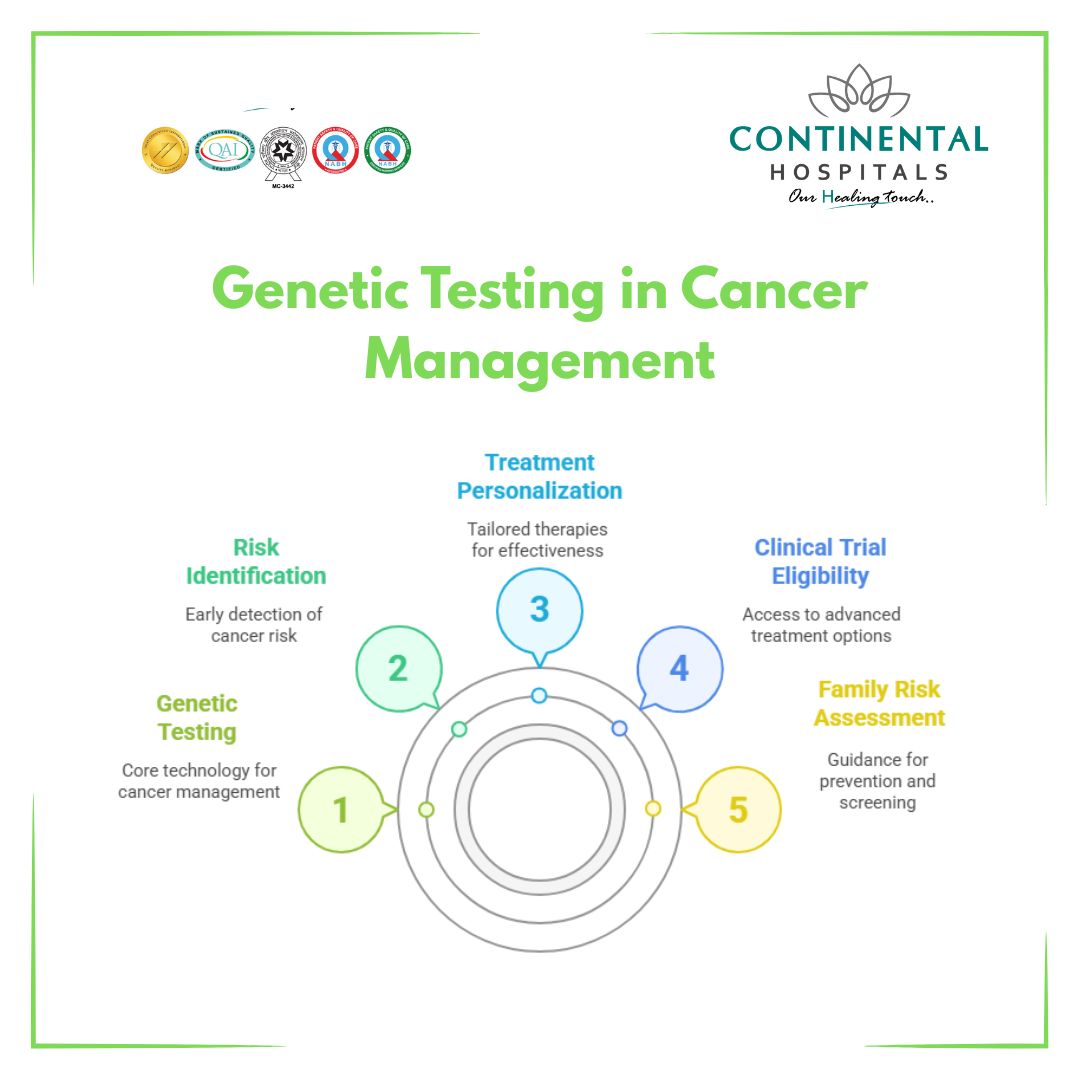
Genetic testing is like a roadmap. It shows doctors the specific mutations causing the cancer and helps them choose the most effective treatments. Here’s how it makes a difference:

1. Personalized Treatment Plans
Not all cancers respond to the same treatments. By understanding the genetic changes in your cancer, doctors can recommend medicines or therapies that directly target those mutations. This is known as targeted therapy.

Second Opinion

Example:
If a patient with breast cancer tests positive for a HER2 gene mutation, specific medicines like trastuzumab are more likely to work.

2. Predicting How Aggressive a Cancer Is
Some gene mutations can indicate whether a cancer is likely to grow quickly or spread. This helps doctors decide how intensive the treatment should be — whether a patient needs surgery, chemotherapy, radiation, or a combination.

3. Avoiding Unnecessary Treatments
If genetic testing shows that certain treatments won’t work for a patient’s specific cancer, doctors can avoid those options. This saves time, reduces side effects, and lowers healthcare costs.

4. Identifying Clinical Trial Opportunities
Many new cancer treatments are being tested in clinical trials. Genetic testing can help match patients to these trials based on their cancer’s mutations, giving them access to the latest therapies.

5. Checking Cancer Risk in Family Members
If a patient has a hereditary mutation like BRCA1 or BRCA2 (linked to breast and ovarian cancer), their family members can also get tested to understand their cancer risk. Early screening and preventive care can then be planned.

Visit our Best Cancer Specialist in Hyderabad for expert evaluation, advanced genetic testing, and personalized cancer care. Book your appointment today.

When Should You Consider Genetic Testing?

  • Your doctor may suggest genetic testing if:
  • You have a personal or family history of cancer, especially at a young age.
  • You have a rare type of cancer or multiple cancers.
  • Your cancer has returned or isn’t responding to standard treatments.
  • You’re interested in targeted therapy or clinical trials.

At Continental Hospitals, our cancer specialists carefully evaluate each patient’s case before recommending genetic testing.

Need an Appointment?

Is Genetic Testing Safe and Accurate?

Yes, genetic testing is generally safe. It usually involves a simple blood sample, saliva sample, or a small piece of tumor tissue. The results are highly accurate and help doctors plan better treatments.

It’s important to note that while genetic testing provides valuable information, it doesn’t always predict whether you will develop cancer. It only shows if you have a higher risk or if your cancer has specific mutations.

How is Genetic Testing Done at Continental Hospitals?

At Continental Hospitals, Hyderabad, we offer advanced genetic testing as part of our cancer care services. Here’s how we make it easy for patients:

Expert Consultation: Our experienced oncologists and genetic counselors will explain the need for testing and what it means for your treatment.

Simple Sample Collection: Blood, saliva, or tumor tissue is collected safely and sent to our certified labs.

Fast, Accurate Results: We use cutting-edge technology for reliable and quick reporting.

Personalized Care Plans: Based on your genetic profile, our multidisciplinary team recommends the best treatment options for you.

Why Choose Continental Hospitals for Cancer Treatment?

When it comes to cancer care, choosing the right hospital makes a big difference. Here’s why patients trust Continental Hospitals:

State-of-the-Art Technology: We use the latest diagnostic and treatment tools, including advanced genetic testing and targeted therapies.

Expert Cancer Specialists: Our team includes highly experienced oncologists, surgeons, radiation therapists, and genetic counselors.

Comprehensive Care: From diagnosis to treatment and follow-up care, everything you need is under one roof.

Patient-Centered Approach: We believe every patient deserves personalized care, empathy, and respect throughout their journey.

International Standards: Our hospital meets global standards for safety, hygiene, and clinical care.

Conclusion

Genetic testing is transforming cancer treatment by making it more precise, effective, and personalized. It helps doctors understand the root cause of cancer and choose treatments that are most likely to work for each patient.

Facing cancer? Explore the benefits of genetic testing at best oncologit in Gachibowli, Hyderabad. Book your appointment today for personalized, advanced cancer care tailored to you.

Related Blog Topics:

  1. Understanding Cancer Treatment Options for Patients
  2. Reconstructive Surgery After Cancer Treatment

Frequently Asked Questions

Genetic testing in cancer treatment is a medical test that examines a person's DNA to identify inherited or acquired genetic changes linked to cancer. These changes can help doctors understand why cancer developed and how it may behave. Some tests look for inherited mutations passed down through families, while others analyze the genetic changes present only in the tumor. The results help doctors select the most effective treatment options, including targeted therapies and immunotherapy when appropriate. Genetic testing can also predict how well certain treatments may work and whether some medications should be avoided. It provides valuable information for treatment planning, follow up care, and long term monitoring. In some cases, the results may help family members understand their own cancer risk and decide whether preventive screening or genetic counseling is needed.
Genetic testing may be recommended for people diagnosed with certain types of cancer, especially if the disease occurs at a young age or there is a strong family history of cancer. Individuals with multiple relatives affected by breast, ovarian, colorectal, pancreatic, or prostate cancer may benefit from testing. It may also be advised for patients with rare cancers or those who develop more than one primary cancer. Doctors consider factors such as age at diagnosis, family history, and tumor characteristics before recommending testing. People with known inherited cancer syndromes in the family may also need evaluation. Genetic counseling is usually performed before and after testing to explain the benefits, limitations, and possible outcomes. The decision is personalized based on each person's medical and family history.
Genetic testing identifies specific gene mutations that drive cancer growth, allowing doctors to choose treatments that directly target those changes. This approach is known as precision or personalized medicine. Instead of using a one size fits all treatment plan, doctors can recommend therapies that are more likely to be effective for a particular patient. Some targeted drugs work only when certain genetic mutations are present. Genetic testing can also help determine whether immunotherapy may be beneficial. In addition, it can identify patients who may not respond well to certain chemotherapy drugs, helping avoid unnecessary side effects. This improves treatment accuracy, enhances outcomes, and supports better decision making throughout the cancer care journey.
Genetic testing is commonly used in the management of breast cancer, ovarian cancer, colorectal cancer, lung cancer, prostate cancer, pancreatic cancer, melanoma, and certain blood cancers. In these cancers, identifying genetic mutations can influence treatment choices and provide important information about inherited cancer risk. For example, testing may reveal mutations that qualify patients for targeted therapies or clinical trials. Some cancers are routinely tested for specific biomarkers before treatment begins. The type of genetic testing depends on the cancer type, stage, and the patient's personal and family history. As research continues, genetic testing is becoming increasingly important for many additional cancer types, expanding the opportunities for personalized treatment.
Inherited genetic testing looks for gene mutations that are passed from parents to children and are present in every cell of the body. These mutations can increase the lifetime risk of developing certain cancers and may affect family members as well. Tumor genetic testing, also called somatic testing, examines genetic changes found only in cancer cells. These mutations develop during a person's lifetime and are not inherited. Inherited testing helps assess cancer risk and guide preventive strategies, while tumor testing helps identify the best treatment options for an existing cancer. In many cases, both types of testing may be recommended to provide a complete understanding of the disease and support personalized care.
Yes. When an inherited cancer related gene mutation is identified, close family members can undergo genetic testing to determine whether they carry the same mutation. If they test positive, doctors may recommend earlier and more frequent cancer screening, lifestyle modifications, preventive medications, or risk reducing surgeries depending on the condition. Early identification allows individuals to take proactive steps before cancer develops or detect it at an earlier, more treatable stage. Genetic counseling helps families understand the meaning of test results and make informed healthcare decisions. This approach supports cancer prevention and early detection while improving long term health outcomes for individuals at increased genetic risk.
Genetic testing is highly accurate when performed in accredited laboratories using validated methods. However, the interpretation of results can be complex, and not every genetic change has a clear clinical meaning. Some findings are classified as variants of uncertain significance, meaning their impact on cancer risk or treatment is not yet fully understood. Doctors combine genetic testing results with medical history, physical examination, imaging studies, pathology reports, and other laboratory findings before making treatment decisions. As scientific knowledge advances, previously uncertain results may become clearer over time. Regular follow up with healthcare providers and genetic counselors ensures that patients receive the most current recommendations based on evolving medical evidence.
After a cancer related mutation is identified, the healthcare team carefully reviews the results and discusses their implications with the patient. The findings may influence the choice of targeted therapy, immunotherapy, surgery, chemotherapy, or radiation treatment. Patients may also become eligible for clinical trials evaluating new precision medicine approaches. If the mutation is inherited, family members may be advised to undergo genetic counseling and testing. Doctors may recommend additional cancer screening or preventive measures based on the specific mutation. The care plan is tailored to the patient's diagnosis, overall health, and personal preferences. Ongoing monitoring and follow up ensure that treatment remains effective as new research and therapies become available.
Disclaimer: The information provided in this blog is intended for general knowledge and informational purposes only, and does not constitute medical advice. Always consult with a qualified healthcare professional for any medical concerns or before making any decisions about your health.

Get in Touch With Us

Whether you are from India or abroad, we are here to help you with your medical queries. Please fill out the form below and our team will connect with you shortly.

  • ✔ Quick response from our medical experts
  • ✔ Secure data handling & privacy
  • ✔ Easy upload for reports & documents
banner_image

Chat with our medical experts on WhatsApp for quick assistance and hassle-free appointment booking

Recent Posts