post-title

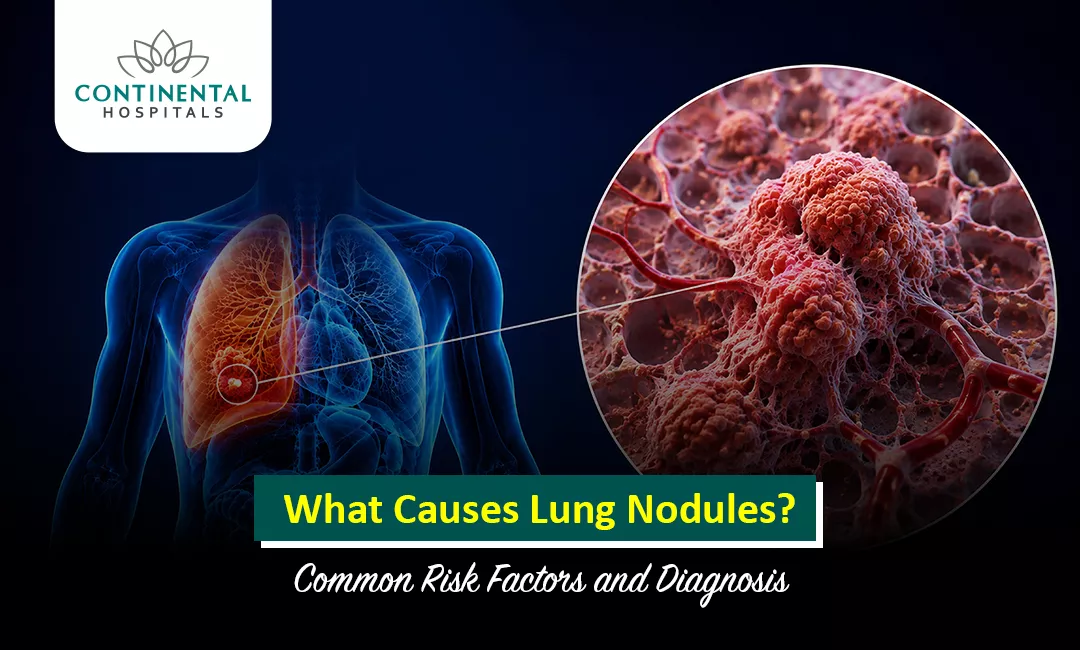
What Causes Lung Nodules? Common Risk Factors and Diagnosis

Written by - Editorial Team
Medically Reviewed by - Dr Pradeep Simha Karur

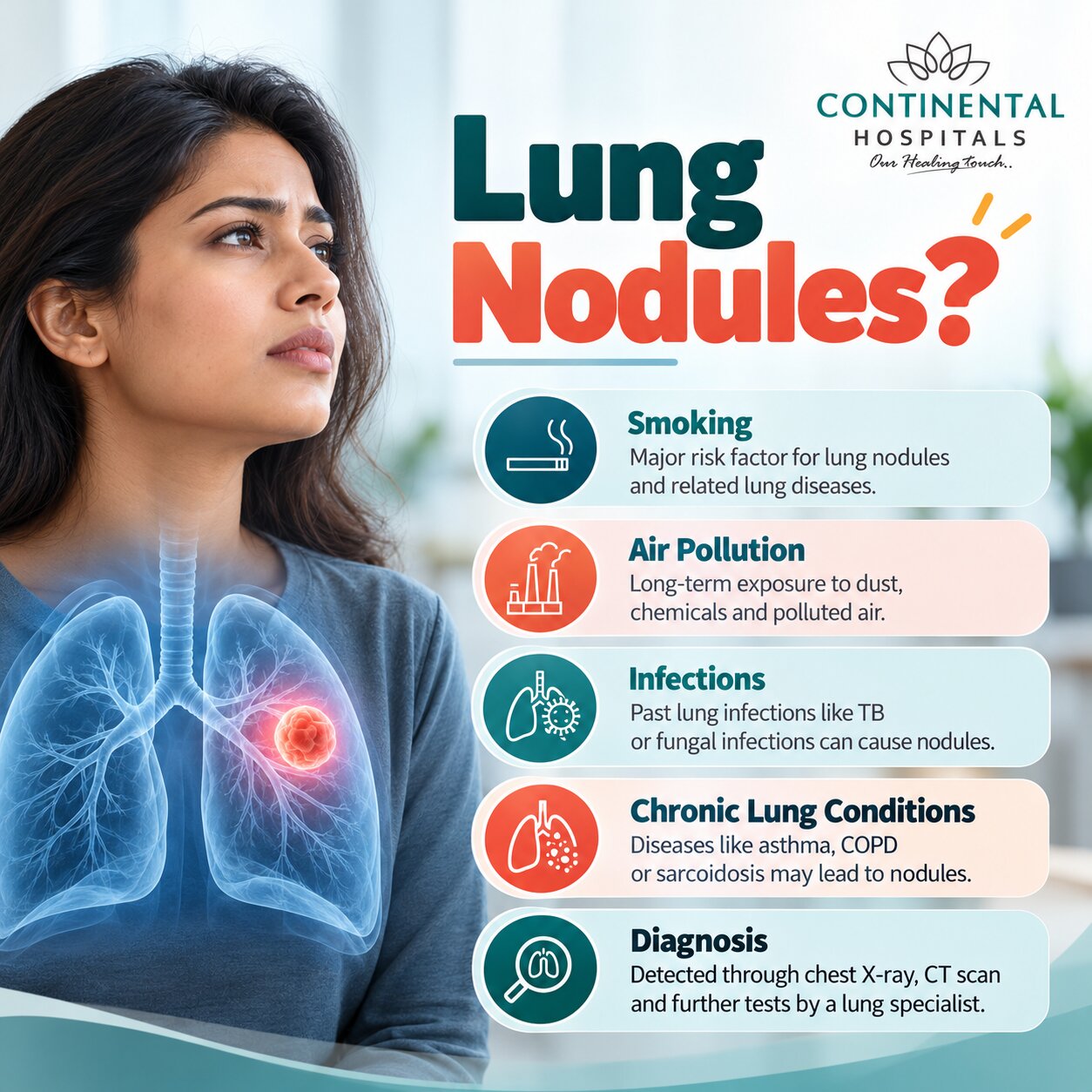
Lung nodules are small, round, or oval-shaped growths that develop in the lungs. They are also called pulmonary nodules and are often discovered during a chest X-ray or CT scan performed for another medical reason. Most lung nodules are small and do not cause noticeable health problems. However, some may require further testing to understand their cause and determine whether treatment is needed.

Finding lung nodules can be worrying, especially when you are unsure whether they are cancerous. The good news is that many lung nodules are non-cancerous and develop because of infections, inflammation, or scar tissue. Understanding the causes of pulmonary nodules, recognizing possible warning signs, and getting the right medical evaluation can help you protect your lung health.

What Causes Lung Nodules?

What causes lung nodules to develop? Several conditions can lead to the formation of these small growths. The cause depends on your medical history, exposure to certain substances, and the appearance of the nodule on imaging tests.

Common causes include:

  • Past lung infections: Infections such as tuberculosis or certain fungal infections can leave small areas of scar tissue in the lungs.
  • Inflammation: Conditions that cause inflammation in the body may lead to the formation of lung nodules.
  • Scar tissue: Previous lung injuries or infections can leave small areas of hardened tissue.
  • Benign growths: Some nodules develop from non-cancerous growths, such as hamartomas.
  • Lung cancer: In some cases, a lung nodule may represent an early stage of lung cancer, making proper evaluation important.

Not every lung nodule has an identifiable cause. Your doctor may recommend monitoring or additional tests depending on its size, appearance, and your overall health.

Visit our Pulmonology Department for comprehensive respiratory evaluation, accurate diagnosis, and personalized treatment.

What Are the Risk Factors for Lung Nodules?

Who is more likely to develop lung nodules? Although anyone can develop them, certain factors may increase the chance of finding a nodule or the possibility that it could be cancerous.

Important lung nodule risk factors include:

  • Smoking: Current or previous tobacco use increases the risk of lung cancer.
  • Older age: The likelihood of cancerous lung nodules generally increases with age.
  • Exposure to harmful substances: Long-term exposure to asbestos, radon, silica, or other harmful substances may increase lung cancer risk.
  • Previous lung infections: Certain infections can leave nodules or scars in lung tissue.
  • Family history: A family history of lung cancer may increase your risk.
  • Previous cancer: People who have had cancer may need closer evaluation of newly detected lung nodules.

Having one or more risk factors does not automatically mean a lung nodule is cancerous. A medical assessment helps determine the appropriate next steps.

Second Opinion

What Are the Symptoms of Lung Nodules?

Do lung nodules always cause symptoms? No. Most small lung nodules do not cause noticeable symptoms and are often found accidentally during imaging tests.

When symptoms occur, they may include:

  • A persistent cough.
  • Shortness of breath.
  • Chest discomfort.
  • Coughing up blood.
  • Repeated respiratory infections.

These symptoms can also occur because of other lung conditions. If you experience persistent breathing problems or cough up blood, seek medical attention promptly. Severe breathing difficulty or significant coughing up of blood requires urgent medical care.

Are Lung Nodules Cancerous?

Are lung nodules cancerous in every case? No. Many pulmonary nodules are benign, meaning they are not cancerous. However, some may be linked to lung cancer, so doctors assess them carefully.

The likelihood of cancer depends on several factors, including:

  • The size and shape of the nodule.
  • Whether its edges look smooth or irregular.
  • Whether it grows over time.
  • Your age and smoking history.
  • Your personal medical history.

A small, stable nodule may only require follow-up scans, while a growing or suspicious nodule may need further investigation. Imaging findings alone do not always provide a final diagnosis.

Need an Appointment?

How Are Lung Nodules Diagnosed?

How do doctors determine whether lung nodules are harmless or require treatment? Lung nodule diagnosis usually begins with a review of your medical history and imaging results.

Your doctor may recommend the following tests:

  • Chest X-ray: May identify a nodule, although additional imaging is often needed.
  • CT scan: Provides detailed images that help assess the nodule's size, shape, and location.
  • Follow-up imaging: Repeat CT scans may be recommended to check whether the nodule changes over time.
  • PET scan: May help assess certain suspicious nodules, although inflammation and infection can also produce abnormal results.
  • Biopsy: A small tissue sample may be collected when further testing is necessary to determine whether the nodule is cancerous.

Not everyone needs every test. Your doctor will recommend investigations based on the nodule's appearance and your individual risk factors.

How Are Lung Nodules Treated?

Does every lung nodule need treatment? No. Treatment depends on the underlying cause and the likelihood of cancer.

Common approaches include:

  • Monitoring: Small, low-risk nodules may be monitored with follow-up CT scans.
  • Treating infections: Medication may be prescribed when an active infection is identified.
  • Additional testing: Suspicious or growing nodules may require further investigation.
  • Specialist treatment: If cancer is confirmed, treatment may involve surgery, radiation therapy, medication, or a combination of approaches.

Following your doctor's recommended monitoring schedule is important, even when you feel healthy.

Why Choose Continental Hospitals for Lung Care?

Why is specialist care important when lung nodules are detected? Accurate assessment helps distinguish harmless growths from nodules that need further investigation. Continental Hospitals, Hyderabad, provides comprehensive medical care supported by experienced specialists, modern diagnostic facilities, and multidisciplinary expertise.

The hospital holds national and international healthcare accreditations, including National Accreditation Board for Hospitals and Healthcare Providers (NABH) and Joint Commission International (JCI). These accreditations reflect its commitment to established healthcare quality and patient safety standards.

With coordinated specialist care and appropriate diagnostic evaluation, patients can receive guidance on monitoring, further testing, and treatment according to their individual needs.

Conclusion

Lung nodules are common findings on chest imaging, and many are benign. However, their size, appearance, growth, and your medical history help determine whether further evaluation is necessary. Early assessment can provide clarity and help identify conditions that require treatment.

If you suffer from a persistent cough, unexplained breathing difficulties, or other ongoing lung symptoms, consult our best pulmonologist in Hyderabad at Continental Hospitals, Hyderabad. If a scan has already detected lung nodules, seek specialist advice to understand the findings and determine the right follow-up plan. Timely evaluation and regular monitoring can help you make informed decisions about your lung health.

Related Blogs:

  1. Lung Cancer Symptoms Every Smoker Should Know
  2. Why Lung Fluid Analysis Is Important for Diagnosis

Frequently Asked Questions

Lung nodules are small, round or oval growths in the lungs. They are commonly detected during chest X-rays or CT scans. Many lung nodules are caused by previous lung infections. Tuberculosis and certain fungal infections can leave small areas of scarring. Inflammation from conditions such as rheumatoid arthritis may also cause nodules. Exposure to certain environmental substances can contribute to some lung conditions. Benign growths, such as hamartomas, are another possible cause. In some cases, lung nodules may be associated with lung cancer. However, most small lung nodules are not cancerous. The risk depends on factors such as nodule size, shape and growth over time. A person's age, smoking history and medical history are also important. A doctor may recommend follow-up imaging or further tests to determine the cause.
Most lung nodules are benign and do not indicate cancer. Some nodules develop because of past infections or inflammation. Others may result from harmless tissue growths or lung scarring. However, certain lung nodules can be an early sign of lung cancer. The likelihood of cancer depends on several factors. Larger nodules generally require closer evaluation than very small ones. Irregular or spiculated edges may raise concern. Growth between scans can also be an important warning sign. Older age and a history of smoking can increase the risk. A previous cancer diagnosis may also influence the assessment. Doctors consider these factors together rather than relying on one finding. CT scans and, when appropriate, additional tests help determine whether a nodule needs further investigation.
Several factors can increase the likelihood that a lung nodule needs further evaluation. Smoking is an important risk factor for lung cancer. Exposure to secondhand smoke can also increase lung cancer risk. Older adults generally have a higher risk than younger people. A family history of lung cancer may influence an individual's risk assessment. Previous cancer can also affect how a nodule is evaluated. Exposure to asbestos, radon or other harmful substances may increase lung cancer risk. Certain infections can cause benign lung nodules. Chronic inflammatory conditions may also contribute to their development. The size and appearance of the nodule are important clinical factors. Changes in the nodule over time can provide additional information. A doctor will review these factors to decide whether monitoring or further testing is necessary.
Most lung nodules do not cause noticeable symptoms. Many are discovered accidentally during scans performed for other reasons. Small nodules usually do not interfere with normal breathing. Larger nodules may occasionally cause symptoms depending on their location. A persistent cough can occur, although it has many possible causes. Some people may experience shortness of breath. Chest discomfort may also occur in certain cases. Coughing up blood requires prompt medical assessment. Unexplained weight loss or ongoing fatigue should also be evaluated. These symptoms do not automatically mean a nodule is cancerous. Infections and other lung conditions can produce similar symptoms. Anyone experiencing severe breathing difficulty or significant coughing up of blood should seek emergency medical care.
Lung nodules are often first identified through a chest X-ray or CT scan. A CT scan provides more detailed images of the lungs. Doctors assess the nodule's size, shape, density and location. They also review previous scans to check for changes. The patient's age, smoking history and medical background help determine the level of concern. Small nodules with low-risk features may only need periodic CT scans. Larger or suspicious nodules may require additional investigations. A PET scan may be recommended in selected cases. Blood tests may help investigate certain infections or other medical conditions. A bronchoscopy may be used to collect samples from suitable locations. A needle biopsy may be considered when tissue examination is needed. The diagnostic plan depends on the nodule's features and the patient's overall health.
Yes, several infections can cause lung nodules. Tuberculosis is one possible cause, particularly in regions where it is common. Certain fungal infections can also produce nodules. Some infections leave small areas of inflammation or scarring after recovery. These changes may remain visible on imaging for a long time. Not every lung nodule indicates an active infection. Doctors consider symptoms, medical history and imaging findings together. Depending on the suspected cause, sputum tests or blood tests may be recommended. Additional investigations may be needed when the diagnosis is unclear. Antibiotics or other medicines are prescribed only when an appropriate infection is identified or strongly suspected. Benign nodules caused by old infections may not need treatment. Follow-up depends on the nodule's appearance and the patient's individual risk factors.
Not every lung nodule requires active treatment. Many benign nodules only need observation and follow-up imaging. Doctors decide the next step based on the nodule's size and appearance. The patient's age, smoking history and medical conditions also matter. Small, low-risk nodules may be monitored with scheduled CT scans. Nodules suspected to be caused by infection may require treatment for that infection. If a nodule grows or appears suspicious, additional testing may be recommended. A biopsy can help identify the nature of a concerning nodule. Surgery may be considered in selected cases when cancer is suspected or confirmed. Treatment decisions depend on the diagnosis and overall health. Patients should attend recommended follow-up appointments. They should also avoid smoking and discuss any new symptoms with their doctor.
Some lung nodules can shrink or disappear over time. This may happen when a nodule is caused by an infection or temporary inflammation. Treatment of an underlying infection may help in certain cases. Other nodules, particularly those caused by old scarring, may remain unchanged for years. Benign growths may also persist without causing symptoms. Some nodules can grow, which is why follow-up imaging is important. A decrease in size does not always establish the exact cause. Similarly, a stable nodule does not eliminate every possible concern. Doctors compare current scans with earlier images to assess changes. The recommended monitoring schedule depends on the nodule's size and characteristics. Patients should not assume a nodule has disappeared without appropriate medical review. Follow your doctor's advice about repeat imaging and additional investigations.
You should consult a doctor if a scan has identified a lung nodule. A medical evaluation can help determine whether it requires monitoring or further testing. Bring previous chest X-rays or CT scan reports to your appointment. Tell your doctor about any smoking history or previous cancer diagnosis. Mention past tuberculosis or other significant lung infections. Persistent coughing should also be medically evaluated. Seek prompt medical attention if you cough up blood. Unexplained weight loss or worsening breathlessness also requires assessment. Severe breathing difficulty or substantial coughing up of blood needs emergency care. Your doctor may recommend a CT scan or specialist consultation. Follow-up timing depends on the nodule's features and your individual risk. Early evaluation helps identify concerning changes and supports appropriate care.
Disclaimer: The information provided in this blog is intended for general knowledge and informational purposes only, and does not constitute medical advice. Always consult with a qualified healthcare professional for any medical concerns or before making any decisions about your health.

Get in Touch With Us

Whether you are from India or abroad, we are here to help you with your medical queries. Please fill out the form below and our team will connect with you shortly.

  • ✔ Quick response from our medical experts
  • ✔ Secure data handling & privacy
  • ✔ Easy upload for reports & documents
banner_image

Chat with our medical experts on WhatsApp for quick assistance and hassle-free appointment booking

Recent Posts