
post-title

What Is Aplastic Anaemia in Children? Early Signs and Treatment Options

Written by - Editorial Team
Medically Reviewed by - Dr Archana Addanki

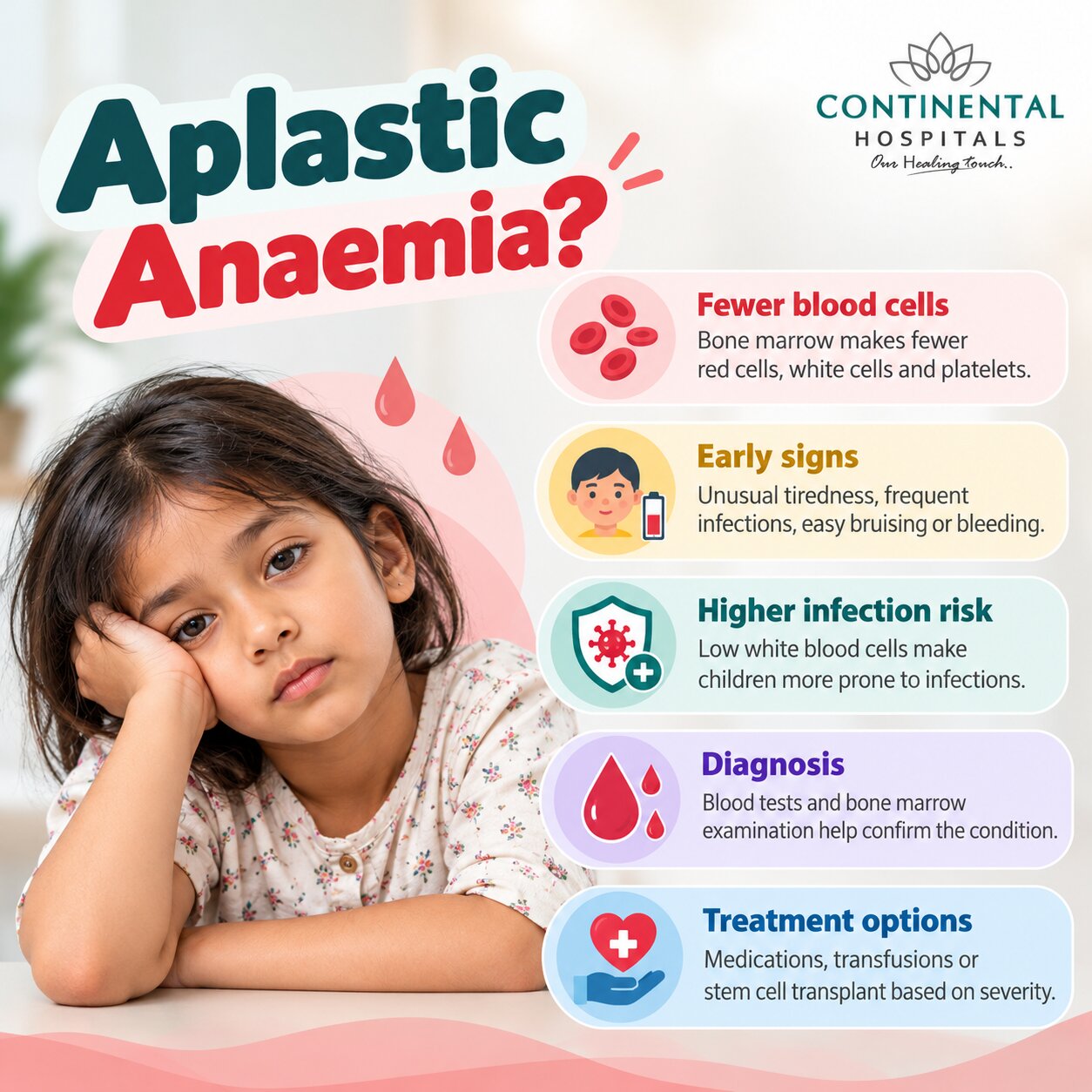
Aplastic anaemia is a rare but serious condition in which the bone marrow does not produce enough new blood cells. Bone marrow is the soft tissue inside bones that makes red blood cells, white blood cells, and platelets. When the bone marrow cannot make enough of these cells, a child may feel tired, develop frequent infections, or experience unusual bleeding.

Understanding aplastic anaemia in children is important because its early symptoms may look like common childhood illnesses. However, recognizing the warning signs and seeking medical care early can help doctors diagnose the condition and begin appropriate treatment. With timely care and regular monitoring, many children can receive treatment to manage the condition and improve their quality of life.

What Are the Early Signs of Aplastic Anaemia in Children?

What are the early signs of aplastic anaemia? The symptoms depend on which blood cells are low. Some children develop symptoms gradually, while others may become unwell more quickly.

Common aplastic anaemia symptoms in children include:

  • Constant tiredness: Low red blood cell levels can make children feel weak, sleepy, or exhausted.
  • Pale skin: A child may look unusually pale because of a shortage of red blood cells.
  • Frequent infections: Low white blood cell levels can make it harder for the body to fight infections.
  • Easy bruising: Low platelet levels can cause bruises to appear without a clear injury.
  • Frequent bleeding: A child may experience nosebleeds, bleeding gums, or bleeding that takes longer to stop.
  • Shortness of breath: Reduced red blood cells can make breathing difficult during physical activity.
  • Fever: Fever may indicate an infection, which can be serious when white blood cell levels are low.

If a child has a fever, unexplained bleeding, or unusual weakness, seek medical attention promptly. Severe bleeding or difficulty breathing requires emergency care.

Visit the Pediatrics Department at Continental Hospitals, Hyderabad, for expert pediatric care and guidance.

What Causes Aplastic Anaemia in Children?

What causes aplastic anaemia in childhood? In many cases, the condition develops when the bone marrow stops producing enough blood cells. Sometimes, the immune system mistakenly attacks the bone marrow cells responsible for blood production.

Possible aplastic anaemia causes include:

  • Immune system problems: The immune system may damage healthy bone marrow cells.
  • Inherited conditions: Certain genetic disorders can affect bone marrow function.
  • Medicines and chemicals: Some medicines or toxic chemical exposures may damage the bone marrow.
  • Radiation or chemotherapy: These treatments can affect blood cell production.
  • Viral infections: Certain infections may be associated with bone marrow problems.

In many children, doctors cannot identify a clear cause. Aplastic anaemia is not usually contagious, and children do not develop it simply because of poor eating habits.

Second Opinion

How Is Aplastic Anaemia Diagnosed in Children?

How do doctors confirm aplastic anaemia? Diagnosis usually begins with a review of the child's symptoms, medical history, and physical examination.

Doctors may recommend the following tests:

  • Complete blood count: Measures red blood cells, white blood cells, and platelets.
  • Blood smear: Examines blood cells under a microscope.
  • Bone marrow examination: A sample of bone marrow may be collected to assess blood cell production.
  • Additional tests: Depending on the findings, doctors may check for inherited conditions, infections, or other causes of bone marrow failure in children.

These tests help doctors distinguish aplastic anaemia from other conditions that can cause low blood cell counts.

What Are the Treatment Options for Aplastic Anaemia?

What is the best aplastic anaemia treatment for children? Treatment depends on the severity of the condition, the child's overall health, the underlying cause, and whether a suitable stem cell donor is available.

Treatment options may include:

  • Blood transfusions: Red blood cells or platelets may be given when needed to manage severe anaemia or bleeding.
  • Medicines: Immunosuppressive medicines may help when the immune system is damaging the bone marrow.
  • Stem cell transplantation: A transplant from a suitable donor can restore healthy blood cell production and may offer a cure for some children.
  • Infection prevention and treatment: Doctors may recommend precautions, monitoring, and prompt treatment of infections.
  • Regular monitoring: Blood tests and specialist appointments help assess the child's response to treatment.

Treatment should be planned by a specialist experienced in childhood blood disorders. Children with severe aplastic anaemia may need urgent assessment at a centre equipped to provide specialist hematology care.

Need an Appointment?

Why Choose Continental Hospitals for Children's Healthcare?

Why is specialist care important for childhood aplastic anaemia? This condition requires careful diagnosis, regular blood monitoring, and a treatment plan tailored to the child's needs. Early referral to an appropriate pediatric hematology service is important.

Continental Hospitals, Hyderabad, provides comprehensive healthcare supported by experienced medical specialists, modern diagnostic facilities, and multidisciplinary expertise. The hospital holds national and international healthcare accreditations, including National Accreditation Board for Hospitals and Healthcare Providers (NABH) and Joint Commission International (JCI), reflecting its commitment to healthcare quality and patient safety.

Families concerned about childhood aplastic anaemia can seek medical evaluation to understand the child's symptoms and determine the appropriate next steps. The treating team can guide families regarding investigations, specialist referrals, and available treatment options.

Conclusion

Aplastic anaemia is a serious condition, but appropriate treatment can help many children manage the disease, and some may achieve long-term recovery. Recognizing early signs such as constant tiredness, pale skin, frequent infections, and unexplained bleeding is important. Prompt medical evaluation can help identify bone marrow failure in children and prevent delays in care.

If your child experiences persistent weakness, unusual bruising, frequent infections, or unexplained bleeding, consult our best pediatrician in Hyderabad at Continental Hospitals, Hyderabad, for timely evaluation and guidance. If aplastic anemia is suspected, specialist assessment by a pediatric hematology team is essential to determine the most suitable treatment.

Related Blogs:

  1. Can Folic Acid Help Prevent Birth Defects and Anemia?
  2. Anaemia in Tribal India: Challenges and Government Initiatives

Frequently Asked Questions

Aplastic anaemia is a rare but serious blood disorder that affects the bone marrow. Bone marrow produces red blood cells, white blood cells, and platelets. In this condition, the bone marrow does not produce enough of these blood cells. Low red blood cell levels can cause tiredness and weakness. A shortage of white blood cells increases the risk of infections. Low platelet levels can lead to easy bruising and bleeding. Aplastic anaemia can affect children of different ages. It may develop when the immune system attacks bone marrow cells. Some cases are associated with inherited conditions, medicines, chemicals, or certain infections. In many children, the exact cause is not identified. Doctors use blood tests and sometimes a bone marrow examination to confirm the diagnosis. Early diagnosis and specialist treatment are important for managing this condition.
The early signs of aplastic anaemia can develop gradually. Persistent tiredness is a common symptom because of low red blood cell levels. Children may appear unusually pale or weak. They may feel dizzy or become breathless during physical activity. Frequent infections can occur when white blood cell levels are low. Some children may develop fever without an obvious cause. Easy bruising can occur even after minor bumps. Nosebleeds and bleeding gums may also develop. Small red or purple spots on the skin can indicate bleeding beneath the skin. Children may have reduced energy for school, sports, or play. These symptoms can occur in other medical conditions as well. A child with persistent symptoms or unusual bleeding needs prompt medical evaluation.
Aplastic anaemia develops when the bone marrow cannot produce enough blood cells. In many acquired cases, the immune system mistakenly attacks bone marrow stem cells. Some cases may develop after certain viral infections. Exposure to particular toxic chemicals can sometimes damage bone marrow function. Certain medicines may also contribute to the condition. Rarely, aplastic anaemia is associated with inherited disorders such as Fanconi anaemia. Some children develop the condition without an identifiable cause. The disorder is not usually spread from one person to another. It is also not generally caused by ordinary childhood activities. A detailed medical history can help doctors investigate possible triggers. Blood tests and bone marrow studies help establish the diagnosis. A specialist will assess the likely cause and recommend appropriate treatment.
Doctors diagnose aplastic anaemia using medical evaluation and specialised tests. They first review the child's symptoms and medical history. A physical examination may identify pallor, bruising, or signs of bleeding. A complete blood count measures red blood cells, white blood cells, and platelets. Results may show low levels across multiple blood cell types. A reticulocyte count helps assess how actively the bone marrow produces red blood cells. Doctors may recommend additional blood tests to investigate other possible causes. A bone marrow aspiration or biopsy may be needed to confirm the diagnosis. This procedure helps assess the number and appearance of blood-producing cells. Further tests may look for inherited conditions or specific infections. A paediatric haematologist interprets the findings and determines disease severity. Early diagnosis helps children receive appropriate care without unnecessary delays.
Yes, aplastic anaemia can be treated, although the approach depends on its severity and cause. Treatment aims to restore blood cell production and prevent complications. Some children require blood or platelet transfusions for supportive care. Medicines may be used to suppress an immune system response that damages the bone marrow. Immunosuppressive treatment can help selected children produce more blood cells. A haematopoietic stem cell transplant may offer a potential cure for suitable patients. Doctors consider donor availability, disease severity, and the child's overall health. Antibiotics or other medicines may be needed to treat or prevent certain infections. Children with severe disease often need care in a specialised hospital. Regular blood tests help doctors monitor treatment response. Treatment plans are personalised for each child. A paediatric haematology team can explain the benefits, risks, and expected follow-up.
Aplastic anaemia can be a serious condition because it affects the production of essential blood cells. Low red blood cell levels can cause significant tiredness and breathlessness. Low white blood cell levels can increase the risk of dangerous infections. Low platelet levels can lead to excessive bleeding. The severity varies from one child to another. Some children need urgent hospital treatment and close monitoring. Severe aplastic anaemia can become life-threatening without appropriate care. Early diagnosis helps doctors identify complications and start treatment promptly. Blood tests are important for assessing the severity of the condition. Treatment may involve transfusions, medicines, or stem cell transplantation. Regular follow-up helps monitor recovery and detect complications. Parents should seek urgent medical care if a child develops fever, uncontrolled bleeding, or breathing difficulties.
Some children with aplastic anaemia can achieve long-term recovery with appropriate treatment. Recovery depends on disease severity, the underlying cause, and the treatment response. A stem cell transplant can potentially restore normal blood cell production in suitable patients. Immunosuppressive treatment can also improve blood counts in some children. However, recovery is not guaranteed for every patient. Some children may need repeated transfusions or additional treatment. Blood counts can take time to improve after therapy begins. Regular blood tests help doctors assess progress. Follow-up is important even after blood counts return to normal. Doctors may monitor for relapse and treatment-related complications. Families should follow the recommended care plan and attend scheduled appointments. The treating specialist can explain the child's individual outlook based on test results and response to treatment.
A balanced diet can support a child's general health during aplastic anaemia treatment. However, food alone cannot cure the condition or restore bone marrow function. Children should receive adequate calories and protein for growth and recovery. Well-cooked eggs, pulses, dairy products, and thoroughly cooked meat can provide protein. Fruits and vegetables provide important vitamins and minerals when handled safely. Food should be washed, prepared, and stored hygienically. Children with low white blood cell counts may need specific food safety precautions. Avoid raw or undercooked animal products when advised by the medical team. Iron or vitamin supplements should only be given when recommended by a doctor. Not every child with aplastic anaemia has a nutritional deficiency. A paediatric dietitian can help create an appropriate meal plan. Parents should discuss dietary restrictions with the treating team, especially during intensive treatment.
Parents should seek medical advice if a child has persistent tiredness, unusual paleness, or unexplained bruising. Frequent infections may also require further investigation. Repeated nosebleeds or bleeding gums should not be ignored. Small red or purple spots on the skin can indicate low platelet levels. A doctor may recommend blood tests to identify the cause of these symptoms. Seek urgent medical care if a child with known or suspected aplastic anaemia develops a fever. Uncontrolled bleeding requires immediate medical attention. Severe breathlessness, fainting, or marked weakness also needs urgent assessment. Children already receiving treatment should follow their specialist's emergency instructions. Do not give medicines or supplements without checking with the treating doctor. Early evaluation can help prevent serious complications. A paediatric haematologist can guide diagnosis, treatment, and ongoing monitoring.
Disclaimer: The information provided in this blog is intended for general knowledge and informational purposes only, and does not constitute medical advice. Always consult with a qualified healthcare professional for any medical concerns or before making any decisions about your health.

Get in Touch With Us

Whether you are from India or abroad, we are here to help you with your medical queries. Please fill out the form below and our team will connect with you shortly.

  • ✔ Quick response from our medical experts
  • ✔ Secure data handling & privacy
  • ✔ Easy upload for reports & documents
banner_image

Chat with our medical experts on WhatsApp for quick assistance and hassle-free appointment booking

Recent Posts