post-title

What Is Deep Brain Stimulation and How Does It Work?

Written by - Editorial Team
Medically Reviewed by - Dr. Sumathi Jarugu

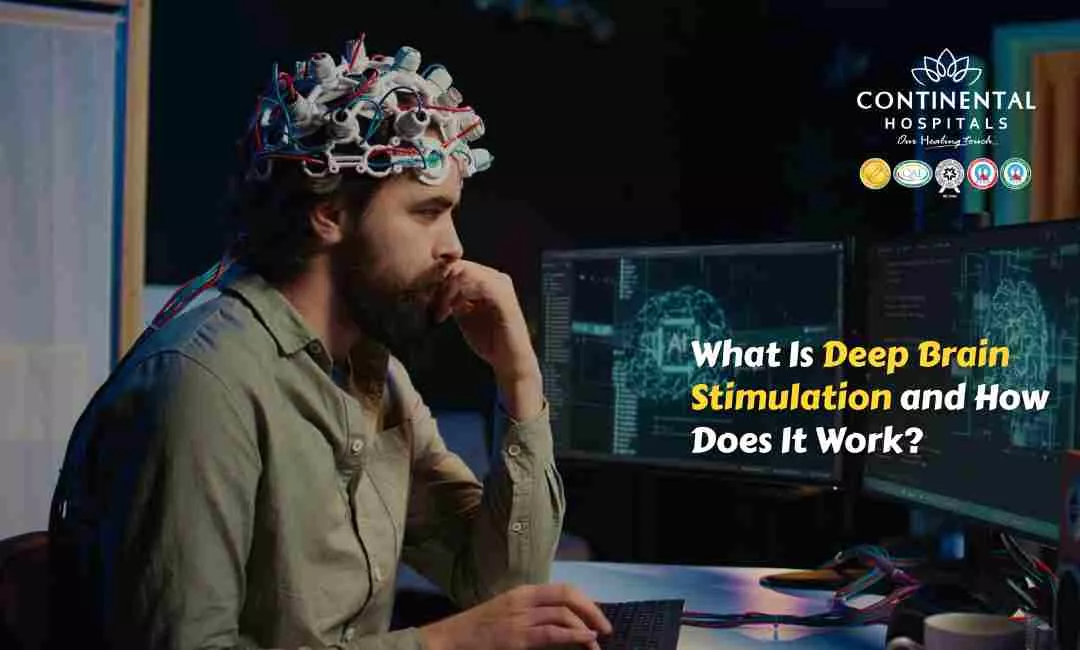
Deep Brain Stimulation (DBS) is one of the most advanced treatments available for people with movement disorders and certain neurological conditions. It offers new hope to those who struggle with symptoms that do not respond well to medications. This cutting-edge therapy uses mild electrical impulses to regulate abnormal brain activity, helping patients regain control over their movements and improve their quality of life.

What is Deep Brain Stimulation?

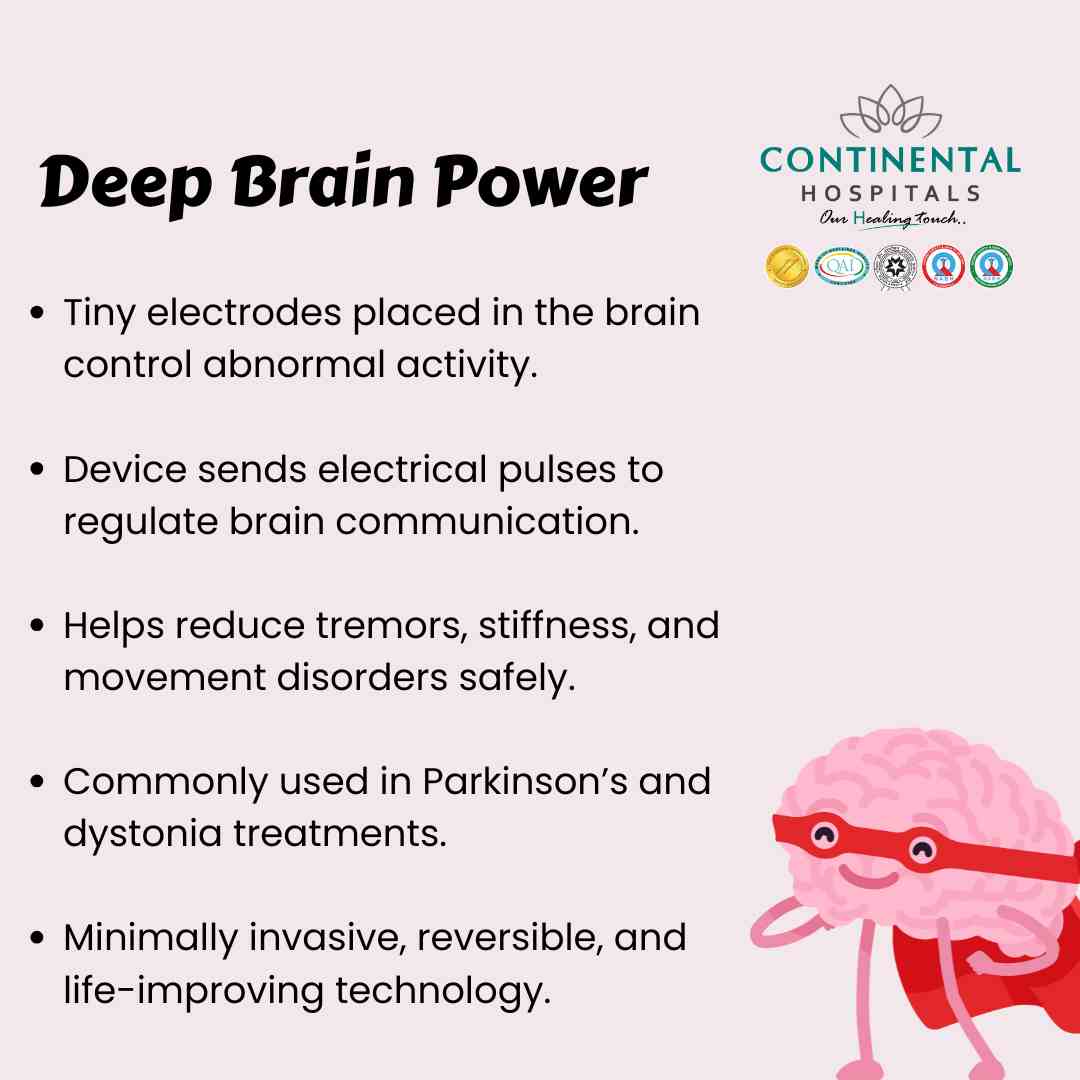
Deep Brain Stimulation involves placing very thin wires, known as electrodes, in specific areas of the brain that control movement. These electrodes are connected to a small device called a neurostimulator, which is placed under the skin near the chest or collarbone. The device sends continuous electrical signals to the brain to help correct the irregular nerve signals that cause symptoms like tremors, stiffness, or slowed movement.

The stimulation can be adjusted based on each patient’s unique needs. Unlike surgery that permanently destroys brain tissue, DBS is adjustable and reversible, making it a safer long-term treatment option for many patients.

Experiencing Parkinson's disease, tremors, or movement disorders? Visit our best neuro doctor hyderabad at Continental Hospitals, Hyderabad, for advanced diagnosis and personalized treatment from expert neurologists.
How Does Deep Brain Stimulation Work?

The brain functions through a complex network of electrical signals. In conditions like Parkinson’s disease, essential tremor, or dystonia, these signals become irregular, leading to involuntary movements or difficulty controlling body actions. Deep Brain Stimulation works by sending carefully controlled electrical impulses to targeted brain regions.

These impulses help restore normal communication between nerve cells, reducing symptoms and allowing smoother, more coordinated movement. The entire system can be fine-tuned by doctors using a wireless programmer, which means the stimulation can be increased, decreased, or even turned off whenever needed.

What conditions can be treated with Deep Brain Stimulation?

Deep Brain Stimulation is primarily used to manage symptoms of neurological disorders such as:

Parkinson’s disease: Helps reduce tremors, stiffness, and movement difficulties.

Second Opinion

Essential tremor: Effective for controlling hand tremors and improving fine motor skills.

Dystonia: Reduces abnormal muscle contractions and twisting movements.

Epilepsy: In some cases, DBS helps decrease the frequency and intensity of seizures.

Obsessive-Compulsive Disorder (OCD): Used when symptoms do not respond to other treatments.

DBS is usually recommended for patients who have tried medications but continue to experience disabling symptoms that interfere with daily life.

What Are the Steps Involved in Deep Brain Stimulation?

1. Evaluation and Planning:
Before recommending DBS, a multidisciplinary team including neurologists, neurosurgeons, and psychiatrists performs detailed assessments. Brain imaging such as MRI or CT scans help identify the exact target areas for electrode placement.

2. Surgery:
The surgery is done in two stages. In the first stage, electrodes are implanted in the brain under precise guidance. In the second stage, the neurostimulator device is placed under the skin of the chest and connected to the electrodes using thin wires tunneled under the skin.

Need an Appointment?

3. Programming and Follow-Up:
After the surgery, the device is activated and programmed to deliver electrical impulses. Follow-up visits are essential to fine-tune the settings for the best results. The patient and doctor can monitor progress and make adjustments as needed.

What are the benefits of Deep Brain Stimulation?

Deep Brain Stimulation has transformed the lives of thousands of patients worldwide. The key benefits include the following:

Improved control of symptoms: Tremors, rigidity, and involuntary movements often reduce significantly.

Reduced medication dependency: Many patients can decrease the dosage or number of medications they take.

Enhanced quality of life: Patients regain independence, confidence, and better physical function.

Adjustable and reversible treatment: Unlike permanent brain surgeries, DBS can be modified or stopped at any time.

Long-term effectiveness: Many patients experience sustained symptom relief for years.

What are the risks of deep brain stimulation?

Like any medical procedure, Deep Brain Stimulation carries certain risks. These may include infection, bleeding, or device-related issues. Some patients may experience temporary mood changes or tingling sensations. However, when performed by experienced neurosurgeons in advanced centers, the procedure is generally safe and well-tolerated. Continuous follow-up care helps minimize risks and ensures the best possible outcomes.

What Is Life Like After Deep Brain Stimulation?

Most patients notice gradual improvement over several weeks as the stimulation settings are fine-tuned. Daily activities such as writing, eating, or walking often become easier. While DBS does not cure neurological disorders, it provides significant relief from their most disabling symptoms. Patients are advised to attend regular check-ups to monitor progress and make any necessary device adjustments.

A positive mindset, physical therapy, and support from caregivers further enhance recovery and long-term success.

Why Choose Continental Hospitals for Deep Brain Stimulation?

Continental Hospitals in Hyderabad is one of India’s leading centers for advanced neurological and neurosurgical treatments. The hospital is JCI-accredited, ensuring adherence to international standards of patient safety, quality care, and clinical excellence.

Here’s why Continental Hospitals stands out for Deep Brain Stimulation:

Expert Team: The hospital has highly experienced neurosurgeons, neurologists, and rehabilitation specialists trained in DBS and complex brain surgeries.

Advanced Technology: Equipped with the latest MRI-guided surgical systems, neuronavigation, and intraoperative imaging for precision-driven outcomes.

Comprehensive Care: From diagnosis and surgery to post-operative rehabilitation, every step is guided by experts in a multidisciplinary setup.

Patient-Centric Approach: Personalized care plans ensure comfort, safety, and long-term success for every patient.

Global Accreditations: The hospital’s JCI and NABH accreditations reflect its commitment to world-class healthcare and continuous quality improvement.

At Continental Hospitals, the focus is not just on treating the disease but on helping patients reclaim a better, more independent life.

When Should You Consider Deep Brain Stimulation?

If you or your loved one is struggling with symptoms of Parkinson’s disease, essential tremor, or dystonia that do not improve with medications, Deep Brain Stimulation could be a life-changing option. Consult a qualified neurologist to determine whether you are a good candidate for this therapy.

Conclusion

Deep Brain Stimulation is a remarkable advancement in neuroscience that has transformed how doctors manage chronic movement disorders. It helps patients regain control over their bodies, reduces symptoms, and improves overall quality of life. With ongoing technological innovations and expert surgical teams, DBS continues to bring hope and stability to countless lives.

If you suffer from Parkinson’s disease, tremors, or other movement-related neurological conditions, it’s time to consult our Best Neurologist in Hyderabad at Continental Hospitals, Hyderabad.

Related Blogs:

  1. How Deep Brain Stimulation Helps in Treating Movement Disorders
  2. Best Hospitals for Deep Brain Stimulation in Hyderabad

Frequently Asked Questions

Deep Brain Stimulation (DBS) is an advanced neurosurgical treatment used to manage symptoms of movement disorders and certain neurological conditions. It involves implanting thin electrodes into specific areas of the brain responsible for controlling movement. These electrodes are connected to a small battery-powered device called a neurostimulator, usually placed beneath the skin near the chest. The device delivers controlled electrical impulses that help regulate abnormal brain signals. Unlike procedures that destroy brain tissue, DBS is reversible and adjustable, allowing doctors to customize treatment based on the patient's needs. It is commonly recommended for Parkinson's disease, essential tremor, dystonia, and selected epilepsy or obsessive-compulsive disorder cases. DBS does not cure these conditions, but it can significantly reduce symptoms, improve mobility, and enhance quality of life. Treatment is tailored individually after a comprehensive neurological evaluation.
Deep Brain Stimulation works by sending carefully controlled electrical impulses to targeted regions of the brain where abnormal nerve activity causes symptoms. The implanted electrodes communicate with a neurostimulator that generates these electrical signals. The stimulation helps normalize disrupted brain circuits involved in movement, coordination, and certain neurological functions. Although the exact mechanism is still being researched, DBS effectively modifies abnormal electrical activity rather than damaging brain tissue. Neurologists can adjust the stimulation settings externally using a specialized programming device, ensuring treatment is personalized over time. As symptoms or medication needs change, the device can be reprogrammed without additional brain surgery. This flexibility makes DBS a valuable long-term treatment option for appropriately selected patients.
A good candidate for Deep Brain Stimulation is someone with a neurological movement disorder whose symptoms are no longer adequately controlled with medications alone. Patients with Parkinson's disease experiencing severe tremors, motor fluctuations, stiffness, or involuntary movements often benefit from DBS. Individuals with essential tremor or dystonia that significantly interferes with daily activities may also qualify. Candidates should undergo detailed neurological examinations, brain imaging, and cognitive assessments before surgery. Good overall health, realistic expectations, and the ability to participate in follow-up programming sessions are important factors. DBS is not suitable for everyone, particularly individuals with severe dementia, uncontrolled psychiatric illness, or medical conditions that increase surgical risks. Final eligibility is determined by a multidisciplinary team including neurologists and neurosurgeons.
Deep Brain Stimulation is primarily used to treat Parkinson's disease, essential tremor, and dystonia when medications are no longer effective or cause significant side effects. It is also approved in selected cases for epilepsy and obsessive-compulsive disorder (OCD). Ongoing research is evaluating its effectiveness in conditions such as Tourette syndrome, chronic pain, depression, and Alzheimer's disease. The specific brain target differs depending on the condition being treated. DBS helps reduce tremors, stiffness, slowness of movement, involuntary movements, and certain neurological symptoms. While it is not a cure, it can substantially improve daily functioning and independence for appropriately selected patients. The decision to use DBS depends on the individual's diagnosis, symptom severity, and overall health.
Deep Brain Stimulation offers several important benefits for patients with movement disorders. It can significantly reduce tremors, muscle stiffness, involuntary movements, and slowness associated with Parkinson's disease and related conditions. Many patients experience improved balance, mobility, and the ability to perform everyday activities independently. DBS may reduce the need for high doses of medications, thereby minimizing medication-related side effects. Since the stimulation settings can be adjusted over time, treatment remains personalized as symptoms evolve. The procedure is reversible and does not permanently damage brain tissue. Many individuals report improved confidence, better sleep, enhanced quality of life, and greater participation in work and social activities following successful DBS treatment and ongoing follow-up care.
Like any brain surgery, Deep Brain Stimulation carries certain risks, although serious complications are relatively uncommon when performed by experienced specialists. Surgical risks include infection, bleeding in the brain, stroke, seizures, or temporary confusion. Device-related issues such as lead movement, battery failure, or hardware malfunction may occasionally occur. Some patients may experience speech changes, balance problems, tingling sensations, mood changes, or muscle contractions related to stimulation settings. Many stimulation-related side effects improve after the device is reprogrammed. Regular follow-up appointments are essential to optimize therapy and monitor the device. Your neurology and neurosurgery team will carefully explain the potential risks and benefits before recommending DBS, ensuring informed decision-making based on your specific condition.
The Deep Brain Stimulation procedure is usually performed in two stages. First, neurosurgeons implant thin electrodes into carefully selected brain regions using advanced imaging and precision-guided techniques. During some procedures, patients may remain awake so doctors can monitor responses and confirm accurate electrode placement, while others are performed under general anesthesia. In the second stage, a neurostimulator is implanted beneath the skin of the chest and connected to the brain electrodes through extension wires. After surgery, the device remains switched off until healing is complete. Several weeks later, neurologists activate and program the neurostimulator using a wireless programming device. Multiple follow-up visits help optimize settings and maximize symptom control.
Recovery after Deep Brain Stimulation surgery varies depending on the individual's health and the complexity of the procedure. Most patients remain in the hospital for a few days before returning home. Mild swelling, discomfort, or fatigue is common during the initial recovery period and usually improves within a few weeks. The neurostimulator is generally activated two to four weeks after surgery once healing is complete. Several programming sessions are required to identify the most effective stimulation settings. Medication adjustments may also be necessary during follow-up visits. Most individuals gradually resume normal daily activities under medical guidance. Continued neurological monitoring ensures the treatment remains effective and adapts to changing symptoms over time.
Disclaimer: The information provided in this blog is intended for general knowledge and informational purposes only, and does not constitute medical advice. Always consult with a qualified healthcare professional for any medical concerns or before making any decisions about your health.

Get in Touch With Us

Whether you are from India or abroad, we are here to help you with your medical queries. Please fill out the form below and our team will connect with you shortly.

  • ✔ Quick response from our medical experts
  • ✔ Secure data handling & privacy
  • ✔ Easy upload for reports & documents
banner_image

Chat with our medical experts on WhatsApp for quick assistance and hassle-free appointment booking

Recent Posts