post-title

What Is Scabies? Symptoms, Causes, Treatment and Prevention

Written by - Editorial Team
Medically Reviewed by - Dr Alekhya Ananthula

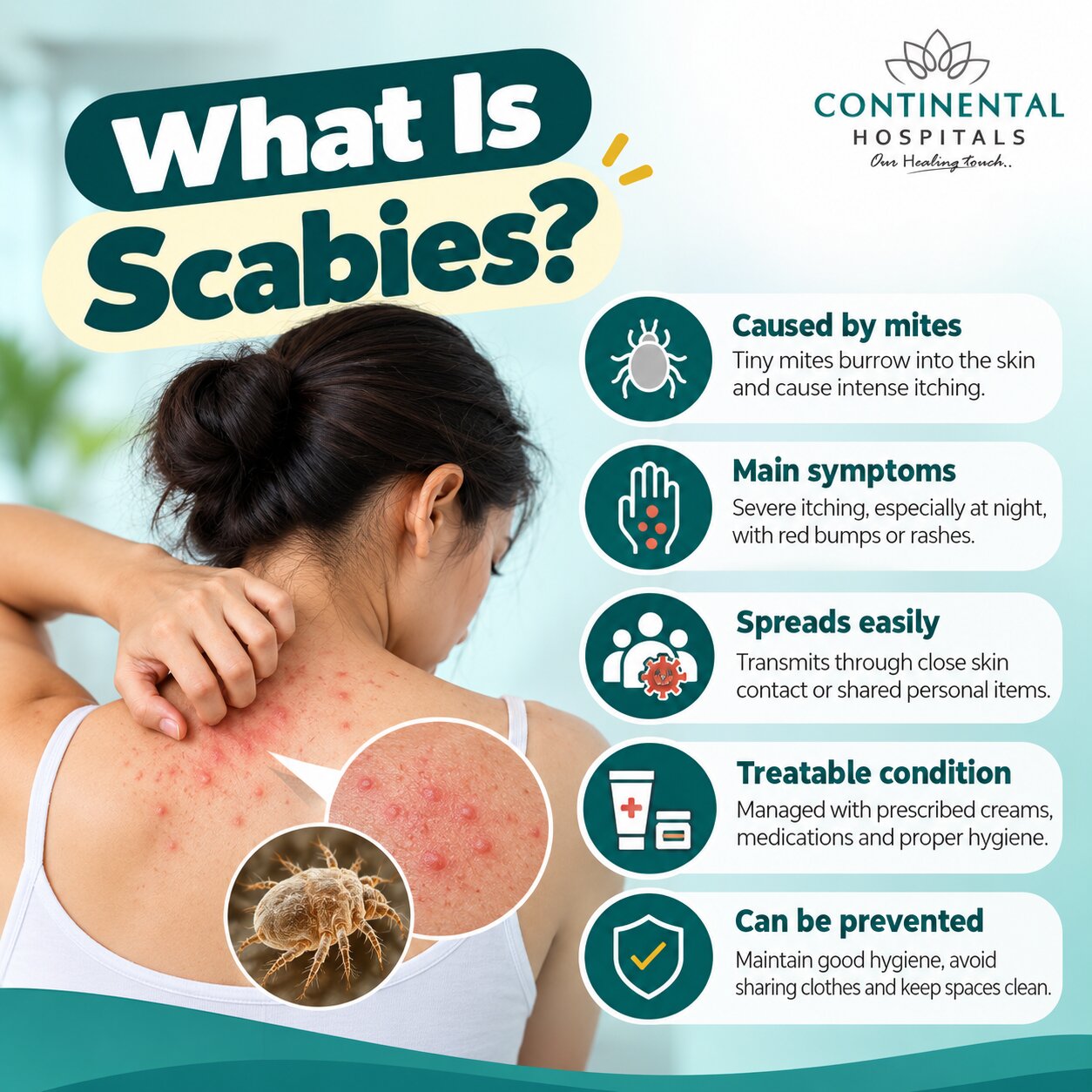
Scabies is a contagious skin condition caused by a tiny mite called Sarcoptes scabiei. These mites burrow into the upper layer of the skin, where they live and lay eggs. This causes intense itching and a skin rash that can become worse at night. Scabies can affect people of all ages and may spread easily among family members or people who live together.

Understanding what scabies is, recognizing its symptoms, and starting the right treatment can help prevent the infection from spreading. Although scabies can cause considerable discomfort, it is treatable with appropriate medicines and good hygiene practices. Early medical attention can help relieve itching, manage the scabies infection, and reduce the risk of reinfection.

What Are the Common Symptoms of Scabies?

What are the early signs of scabies? The symptoms may take several weeks to appear during a first infection. If you have had scabies before, symptoms may develop sooner after reinfection.

Common scabies symptoms include:

  • Intense itching: Itching is often severe at night and may disturb sleep.
  • Scabies rash: Small, red bumps or pimple-like spots may appear on the skin.
  • Thin burrow marks: Fine, raised, or slightly discolored lines may be visible where mites burrow under the skin.
  • Skin irritation: Repeated scratching can cause redness, sores, or crusting.
  • Common affected areas: The spaces between fingers, wrists, elbows, armpits, waist, buttocks, and genital area are frequently affected.

In infants and young children, scabies may also affect the palms, soles, scalp, and face. Symptoms can vary depending on age and the severity of the infection.

Visit the Dermatology Department at Continental Hospitals, Hyderabad, for expert skin care and personalized treatment.

What Causes Scabies and How Does It Spread?

What causes scabies? The condition develops when microscopic mites enter the outer layer of the skin. Scabies spreads mainly through prolonged, direct skin-to-skin contact with an infected person.

The infection may spread through:

  • Close physical contact with an infected person.
  • Sharing a bed with someone who has scabies.
  • Prolonged contact within a household.
  • Sharing clothing, towels, or bedding in some circumstances.

Scabies is not a sign of poor personal hygiene. Anyone can develop the condition, regardless of how often they bathe or wash their clothes. The infection can spread before symptoms become noticeable, which is why treating close contacts is important.

Second Opinion

How Is Scabies Diagnosed?

How can a doctor identify scabies? A dermatologist usually examines the rash, checks the affected areas, and asks about itching, symptom duration, and contact with anyone who may have the infection.

In some cases, the doctor may use a skin scraping or another examination method to look for mites, eggs, or mite droppings. However, these tests may not always detect the mites. A doctor can often make a diagnosis based on the symptoms and skin examination.

Early diagnosis helps ensure that the right treatment is started and reduces the risk of spreading the infection to others.

What Is the Best Treatment for Scabies?

Can scabies be treated successfully? Yes. Scabies can usually be treated with prescription medicines that kill the mites. The choice of treatment depends on the patient's age, medical history, and severity of the infection.

Common scabies treatment options include:

  • Permethrin cream: A commonly prescribed treatment applied to the skin according to medical instructions.
  • Oral ivermectin: May be recommended in selected cases by a doctor. It is not suitable for everyone, and pregnancy and other medical factors must be considered.
  • Medicines for itching: A doctor may recommend suitable treatments to relieve discomfort.
  • Treatment of close contacts: Household members and other close contacts may need treatment at the same time, even if they have no symptoms.

Itching may continue for several weeks after successful treatment because the skin can remain irritated. However, persistent or worsening itching, new burrows, or fresh rashes may indicate reinfection or treatment failure. Consult your doctor rather than repeating medicines on your own.

Need an Appointment?

How Can You Prevent Scabies?

What steps can help prevent scabies from spreading? Along with medical treatment, simple precautions can reduce the risk of reinfection.

Follow these prevention measures:

  • Wash recently used clothing, towels, and bedding in hot water and dry them using a hot cycle when suitable.
  • Keep items that cannot be washed in a sealed plastic bag for several days to a week, following medical advice.
  • Avoid prolonged skin-to-skin contact until treatment guidance indicates it is safe.
  • Do not share clothing, towels, or bedding during the infection.
  • Ensure close household contacts receive appropriate evaluation and treatment when recommended.
  • Follow the complete treatment instructions provided by your doctor.
  • Ordinary cleaning is generally sufficient for the home. Scabies does not usually require extensive fumigation or the use of insecticide sprays on furniture.

Why Choose Continental Hospitals for Scabies Treatment?

Why is professional care important for a scabies infection? Similar skin conditions, including eczema, allergic reactions, and other infections, can cause itching and rashes. A dermatologist can identify the likely cause and recommend appropriate treatment.

Continental Hospitals, Hyderabad, provides comprehensive healthcare supported by experienced specialists, modern diagnostic facilities, and multidisciplinary medical expertise. The hospital holds national and international healthcare accreditations, including the National Accreditation Board for Hospitals and Healthcare Providers (NABH) and the Joint Commission International (JCI), reflecting its commitment to established quality standards and patient safety.

As a leading hospital in Hyderabad, Continental Hospitals focuses on accurate diagnosis, individualized treatment, and patient-centered care to help manage skin conditions effectively.

Conclusion

Scabies is a contagious skin infection that can cause severe itching, a rash, and significant discomfort. Recognizing the symptoms early, completing the prescribed treatment, and treating close contacts when recommended can help prevent the infection from spreading or returning.

If you suffer from persistent itching, a suspected scabies rash, or skin irritation that becomes worse at night, consult our best dermatologist in Hyderabad at Continental Hospitals, Hyderabad, for appropriate evaluation and treatment. Early medical care can help you manage scabies symptoms and protect your skin health.


Frequently Asked Questions

Scabies is a contagious skin condition caused by a tiny mite called Sarcoptes scabiei. These mites burrow into the upper layer of the skin. Their presence causes an itchy skin reaction. Intense itching often becomes worse at night. A rash may appear as small bumps or pimple-like spots. Thin, raised lines may sometimes be visible on the skin. Common areas include the fingers, wrists, armpits, waist, and groin. Scabies can affect people of all ages. It spreads mainly through prolonged, direct skin-to-skin contact. Sharing clothing or bedding can sometimes spread the mites. Scabies is treatable with appropriate medication. A healthcare professional can confirm the diagnosis and recommend treatment.
Intense itching is one of the most common symptoms of scabies. The itching often becomes worse at night. A rash may develop as small red bumps or blisters. Thin burrow marks may appear on the skin. Commonly affected areas include the fingers and wrists. The rash may also occur around the waist, armpits, and groin. In infants, the scalp, palms, and soles may be affected. Repeated scratching can cause sores and skin infections. Symptoms may take several weeks to appear after the first infestation. People who have had scabies before may develop symptoms sooner. Some individuals may have scabies even when burrows are difficult to see. Consult a healthcare professional if you suspect an infestation.
Scabies is caused by infestation with the Sarcoptes scabiei mite. The female mite burrows into the upper layer of the skin. It lays eggs within these tiny burrows. The body's reaction to the mites and their products causes itching. Scabies spreads mainly through prolonged, direct skin-to-skin contact. Close household contact can increase the risk of transmission. Sexual contact can also spread scabies. Sharing infested clothing, towels, or bedding may occasionally transmit the mites. Brief contact, such as a quick handshake, is less likely to spread typical scabies. Scabies is not caused by poor personal hygiene. Anyone can develop the condition regardless of cleanliness. Prompt treatment helps prevent further spread to other people.
Yes, scabies is a contagious skin infestation. It spreads mainly through prolonged skin-to-skin contact. People living in the same household may pass the mites to one another. Close physical or sexual contact can also spread the infestation. Sharing infested bedding, clothing, or towels can sometimes transmit scabies. Casual contact usually carries a lower risk. Symptoms may take several weeks to develop after the first exposure. A person can spread scabies before recognising the symptoms. Close contacts may need treatment at the same time. This helps reduce the risk of reinfestation. Wash recently used clothing and bedding according to medical guidance. Seek medical advice if you develop itching or a suspicious rash after close contact.
Scabies is treated with medicines that kill the mites. Permethrin cream is a commonly prescribed treatment. A doctor may recommend oral ivermectin in selected cases. The appropriate medicine depends on age, health status, and clinical circumstances. Follow the prescribed instructions carefully. Apply topical medication to the areas directed by your healthcare professional. Some treatments need a second application after a specified interval. Household members and close contacts may require simultaneous treatment. Wash recently used clothes, towels, and bedding using hot water where suitable. Items that cannot be washed may be sealed in a plastic bag for several days. Itching can continue for a few weeks after successful treatment. Consult your doctor if new burrows appear or symptoms persist or worsen.
Yes, scabies can usually be cured with appropriate treatment. Prescription medicines are used to kill the mites. Completing treatment as directed is important. Some patients may need a repeat application or dose. Close contacts may also need treatment to prevent reinfestation. Recently used clothing and bedding should be cleaned appropriately. Itching may continue for several weeks after the mites have been eliminated. This lingering itch does not always mean treatment has failed. Avoid repeating medication without medical advice. New burrows or fresh bumps may indicate ongoing infestation. A doctor can assess persistent or worsening symptoms. Early diagnosis and correct treatment help prevent the condition from spreading.
Avoid prolonged skin-to-skin contact with someone who has untreated scabies. Seek medical advice if you have been exposed to an infestation. Household members and close contacts may need treatment together. Follow your doctor's instructions for using prescribed medication. Wash recently used clothing, towels, and bedding using hot water and dry them thoroughly when possible. Items that cannot be washed can be sealed in a plastic bag for several days. Avoid sharing clothing, towels, and bedding during treatment. Clean recently used personal items according to medical guidance. Ordinary household cleaning alone cannot eliminate mites living in the skin. Pets do not spread human scabies mites. Monitor for itching or new skin lesions after treatment. Prompt treatment of affected people helps reduce further transmission.
Consult a doctor if you have intense itching, especially at night. Seek medical advice if a persistent rash develops between your fingers or around your wrists. A healthcare professional can examine your skin for signs of scabies. Medical evaluation is important because other skin conditions can look similar. Seek care if itching continues or new lesions appear after treatment. Scratching can lead to bacterial skin infections. Increasing redness, warmth, swelling, or pus needs medical attention. Fever with a worsening skin infection requires prompt evaluation. Infants, older adults, and people with weakened immune systems may need special care. Thick, crusted skin may indicate a severe form called crusted scabies. Avoid using prescription medicines without appropriate guidance. Early diagnosis helps ensure suitable treatment and reduces the risk of spreading the infestation.
Disclaimer: The information provided in this blog is intended for general knowledge and informational purposes only, and does not constitute medical advice. Always consult with a qualified healthcare professional for any medical concerns or before making any decisions about your health.

Get in Touch With Us

Whether you are from India or abroad, we are here to help you with your medical queries. Please fill out the form below and our team will connect with you shortly.

  • ✔ Quick response from our medical experts
  • ✔ Secure data handling & privacy
  • ✔ Easy upload for reports & documents
banner_image

Chat with our medical experts on WhatsApp for quick assistance and hassle-free appointment booking

Recent Posts