
post-title

What to Expect at a Neurology Clinic in Hyderabad

Written by - Editorial Team
Medically Reviewed by - Dr M K Singh

Visiting a neurology clinic can feel intimidating, especially if it's your first time. But here's the truth: it doesn’t have to be. If you’re dealing with symptoms like persistent headaches, memory issues, numbness, or seizures, a visit to a brain and nerve specialist could bring much-needed clarity. This guide walks you through exactly what to expect at a neurology clinic in Hyderabad and why choosing Continental Hospitals can make all the difference.

What Does a Neurologist Do?

A neurologist is a doctor who specializes in treating disorders of the brain, spinal cord, and nerves. They handle a wide range of conditions, from mild headaches to complex neurological disorders. You might be referred to a neurologist if you’re showing signs of stroke, epilepsy, dementia, or other nerve-related conditions.

At a neurology clinic in Hyderabad, the goal is to understand what’s going on inside your nervous system and how to treat or manage it effectively.
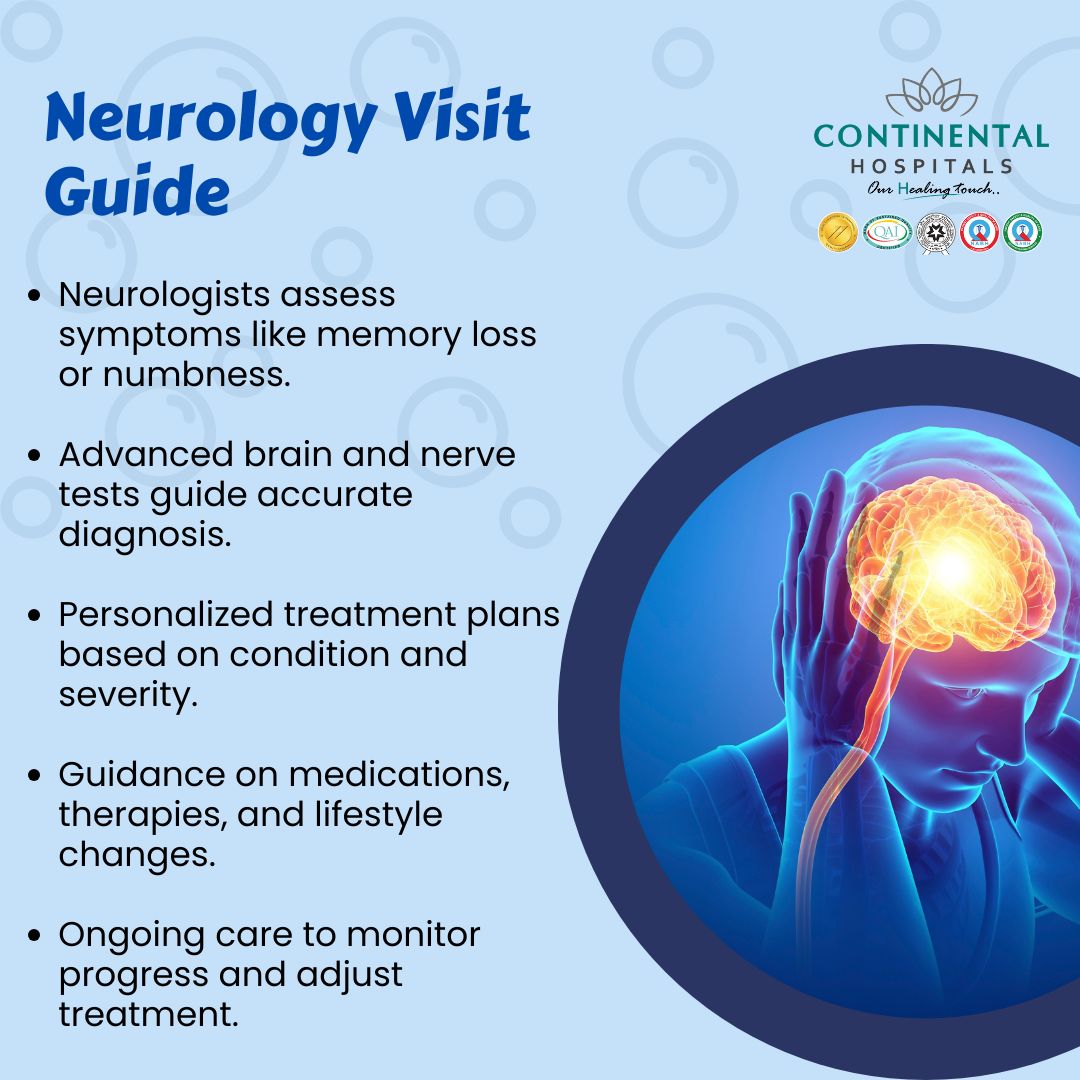
When Should You Visit a Neurology Clinic?

You don’t have to wait for something severe to book a neurology consultation. Common signs that you might benefit from seeing a neurologist include:

  • Frequent headaches or migraines that don't improve with over-the-counter medicine
  • Unexplained numbness or tingling in hands, feet, or face
  • Dizziness or problems with balance
  • Memory problems or confusion
  • Seizures or unusual movements
  • Muscle weakness or twitching
  • Difficulty speaking or understanding speech
  • Sudden changes in vision or hearing

If any of these sound familiar, it's a good idea to consult a brain and nerve specialist.

What Happens During Your First Neurology Consultation?

Your first visit is all about gathering information. Here’s a step-by-step view of what typically happens:

1. Detailed Medical History

You’ll be asked about your symptoms, when they started, how often they occur, and what makes them better or worse. The neurologist will also review your personal and family health history to look for any patterns.

2. Neurological Examination

This is a physical exam designed to assess your nervous system. It might involve testing:

Second Opinion

  • Reflexes
  • Muscle strength
  • Coordination
  • Balance
  • Eye movements
  • Mental status

3. Diagnostic Tests

Depending on your symptoms, the neurologist may order tests like:

  • MRI or CT scans to look at the brain and spinal cord
  • EEG for brain activity, especially if you have seizures
  • Nerve conduction studies for muscle and nerve function
  • Blood tests to rule out infections or vitamin deficiencies

These help the doctor get a clear picture of what’s happening and how to proceed.

What conditions are treated at a neurology clinic?

1. Epilepsy
Seizures can look very different from person to person. At a specialized epilepsy treatment center, neurologists help diagnose the type of seizure and find the right medication or treatment plan.

2. Stroke Care
Time is critical during a stroke. Neurology clinics provide both emergency and long-term stroke care. They help manage risk factors and improve recovery through rehabilitation and medication.

3. Headaches and Migraines
If headaches are interfering with your life, a headache specialist can identify the cause, whether it's migraine, tension-type, or cluster headaches. Treatment may include medication, lifestyle changes, or nerve blocks.

4. Memory Disorders
If you or a loved one is experiencing memory loss or confusion, a memory loss clinic can help diagnose conditions like Alzheimer’s, dementia, or mild cognitive impairment and guide next steps.

5. Movement Disorders
This includes conditions like Parkinson’s disease, tremors, or dystonia. A brain and nerve specialist can help manage these through medications, therapy, and sometimes advanced treatments like Deep Brain Stimulation.

Need an Appointment?

6. Neuropathy and Nerve Disorders
Nerve disorder treatment focuses on symptoms like numbness, burning pain, or weakness, often linked to diabetes, infections, or autoimmune diseases.

How to Prepare for Your Visit to a Neurology Clinic in Hyderabad?

Bring the Following:

  • A list of your symptoms and how long you’ve had them
  • All your medications and supplements
  • Medical records, especially previous scans or test results
  • Questions you want to ask

Be Honest:
Describe your symptoms clearly and honestly. Even small details might help the neurologist make an accurate diagnosis.

Who are the best neurologists at Continental Hospitals Hyderabad?

The hospital boasts a team of highly skilled neurologists with expertise across the spectrum of neurological disorders:

Dr M K Singh, Senior Consultant Neurologist, known for his extensive experience in managing complex neurological conditions.

Dr Rahul Konduri, Consultant Neurologist, with a focus on stroke care and neurocritical care.

Dr M A Mukheem Mudabbir, Consultant Neurologist, specializing in epilepsy and headache disorders.

Dr Chakradhar Reddy N, Consultant Neurologist and Parkinson’s and Movement Disorders Specialist, offering advanced treatment options for movement-related neurological diseases.

Their combined expertise ensures every patient receives personalized, up-to-date care based on the latest research and clinical guidelines.

Why Choose Continental Hospitals for Neurology in Hyderabad?

Here’s what sets Continental Hospitals apart:

1. Expert Neurologists
Our team includes some of the best neurologists in Hyderabad, trained in top institutes and experienced in handling complex brain and nerve conditions.

2. Advanced Diagnostic Tools
We use the latest technology for neurological diagnosis, including high-resolution MRI, EEG, and nerve conduction studies. You get fast, accurate results.

3. Comprehensive Care
From initial neurology consultation to follow-up care, rehabilitation, and second opinions, everything is handled under one roof. You don’t have to bounce between clinics.

4. Patient-Centered Approach
We know neurological symptoms can be scary and confusing. Our doctors take the time to listen, explain, and create treatment plans that fit your life.

5. Emergency and Stroke Care
Our rapid-response stroke unit offers 24/7 care, which is crucial when every minute counts.

What does a neurology clinic visit really mean for you?

Getting the right neurological care early on can make a big difference in how you feel and function. Whether it’s diagnosing a persistent headache, managing epilepsy, or getting answers about memory loss, visiting a neurology clinic can give you clarity and direction.

If you’ve been searching for the best neuro doctor hyderabad, or if you need expert care for stroke, seizures, or nerve disorders, Continental Hospitals is equipped to help.

Final Thoughts

You don’t need to live in confusion or discomfort. If you're facing unexplained symptoms like dizziness, numbness, or headaches, it’s time to take control. Start with a consultation, get a clear diagnosis, and move forward with a treatment plan that works.

If you’re struggling with headaches, weakness, memory issues, or unexplained symptoms, it’s time to take action.

Book a consultation with one of the Best Neurologist in Hyderabad at Continental Hospitals.

Frequently Asked Questions

Your first visit to a neurology clinic begins with a detailed discussion about your symptoms, medical history, medications, and family history of neurological disorders. The neurologist will ask when your symptoms started, how often they occur, and whether they are getting worse. You may be asked about headaches, dizziness, seizures, numbness, weakness, memory problems, balance issues, or sleep disturbances. A comprehensive neurological examination is then performed to assess your reflexes, muscle strength, coordination, sensation, vision, speech, and cognitive function. Based on the findings, the doctor may recommend additional investigations such as MRI, CT scan, EEG, EMG, nerve conduction studies, or blood tests. The neurologist will explain the possible causes of your symptoms and discuss the next steps. You will also receive guidance regarding treatment options, lifestyle modifications, medications, and follow-up care. The consultation is designed to identify the underlying neurological condition accurately and create a personalized treatment plan.
You should consider visiting a neurologist if you experience persistent headaches, frequent migraines, seizures, dizziness, fainting spells, numbness, tingling sensations, muscle weakness, tremors, balance problems, memory loss, confusion, difficulty speaking, or changes in vision. Chronic neck or back pain associated with nerve compression also requires neurological evaluation. Sudden weakness on one side of the body, facial drooping, or difficulty speaking may indicate a stroke and require immediate emergency care. People with Parkinson's disease, epilepsy, multiple sclerosis, neuropathy, dementia, or unexplained nerve-related symptoms should seek specialist consultation. Early diagnosis helps prevent complications and allows timely treatment. A neurologist can determine the exact cause of your symptoms through clinical evaluation and advanced diagnostic tests. Prompt medical attention often improves long-term neurological outcomes and quality of life.
Neurology clinics diagnose and treat a wide range of disorders affecting the brain, spinal cord, nerves, and muscles. Common conditions include migraine, chronic headaches, epilepsy, stroke, Parkinson's disease, Alzheimer's disease, dementia, multiple sclerosis, peripheral neuropathy, nerve compression syndromes, movement disorders, vertigo, sleep disorders, facial nerve disorders, and neuromuscular diseases. Neurologists also manage conditions such as myasthenia gravis, motor neuron disease, essential tremor, spinal disorders, and nerve injuries. Patients with unexplained weakness, balance problems, memory issues, or chronic neurological symptoms receive comprehensive evaluation and treatment. Depending on the diagnosis, treatment may involve medications, rehabilitation, lifestyle changes, minimally invasive procedures, or referrals for neurosurgical care when necessary. Long-term follow-up helps monitor disease progression and optimize treatment outcomes.
The neurologist may recommend diagnostic tests based on your symptoms and examination findings. Common investigations include MRI scans to evaluate the brain and spine, CT scans for emergency neurological conditions, EEG to detect seizure activity, EMG and nerve conduction studies to assess muscle and nerve function, and blood tests to identify infections, vitamin deficiencies, autoimmune disorders, or metabolic problems. In certain situations, lumbar puncture may be advised to examine cerebrospinal fluid. Sleep studies may be recommended for sleep-related neurological disorders. Cognitive assessments are performed for memory-related conditions. Not every patient requires all these investigations, and the neurologist will explain why a particular test is necessary. These tests help confirm the diagnosis, rule out serious conditions, and guide the most appropriate treatment plan.
Preparing for your neurology appointment helps your doctor understand your condition more accurately. Carry previous medical records, imaging reports, blood test results, prescriptions, and discharge summaries if available. Make a list of your current medications, including supplements and allergies. Note the frequency, duration, and severity of your symptoms and any factors that trigger or relieve them. If you experience seizures, headaches, or dizziness, maintaining a symptom diary can be extremely useful. Bring details of your family history if neurological disorders run in your family. It is also helpful to write down questions you wish to ask during the consultation. Arrive early to complete registration formalities and provide accurate health information. Good preparation enables the neurologist to make faster and more informed clinical decisions.
Yes, many neurological disorders can be effectively managed without surgery. Treatment depends on the specific diagnosis and may include medications, physical therapy, occupational therapy, speech therapy, lifestyle modifications, nutritional guidance, and rehabilitation programs. Conditions such as migraine, epilepsy, Parkinson's disease, neuropathy, multiple sclerosis, and certain movement disorders often respond well to medical management. Early diagnosis allows neurologists to control symptoms, reduce complications, and improve quality of life. Regular follow-up appointments help monitor treatment effectiveness and adjust medications when necessary. Surgery is generally considered only when conservative treatments are unsuccessful or when structural abnormalities such as brain tumors, severe spinal compression, or certain forms of epilepsy require surgical intervention. Your neurologist will recommend the safest and most effective treatment based on your condition.
A neurology consultation generally takes between 30 and 60 minutes, depending on the complexity of your symptoms and medical history. Initial consultations often require more time because the neurologist performs a detailed neurological examination and carefully reviews previous investigations. Patients with multiple symptoms, chronic neurological disorders, or complicated medical histories may require longer consultations. During the visit, the doctor explains the possible diagnosis, discusses recommended investigations, answers questions, and outlines a treatment strategy. Follow-up appointments are usually shorter but remain equally important for monitoring progress, reviewing test results, adjusting medications, and evaluating recovery. Adequate consultation time ensures accurate diagnosis, better patient understanding, and effective long-term neurological care.
Continental Hospitals offers comprehensive neurological care supported by experienced neurologists, advanced diagnostic technology, and multidisciplinary treatment approaches. Patients benefit from accurate diagnosis using modern imaging facilities, EEG, EMG, nerve conduction studies, and other specialized neurological investigations. The hospital provides personalized treatment plans for conditions including stroke, epilepsy, Parkinson's disease, dementia, headaches, neuropathy, multiple sclerosis, and movement disorders. A collaborative team of neurologists, neurosurgeons, rehabilitation specialists, physiotherapists, and critical care experts ensures coordinated patient care. Emergency stroke services, advanced intensive care support, and rehabilitation programs contribute to better recovery outcomes. The focus on evidence-based medicine, patient safety, compassionate care, and state-of-the-art infrastructure makes Continental Hospitals a trusted destination for neurological care in Hyderabad.
Disclaimer: The information provided in this blog is intended for general knowledge and informational purposes only, and does not constitute medical advice. Always consult with a qualified healthcare professional for any medical concerns or before making any decisions about your health.

Get in Touch With Us

Whether you are from India or abroad, we are here to help you with your medical queries. Please fill out the form below and our team will connect with you shortly.

  • ✔ Quick response from our medical experts
  • ✔ Secure data handling & privacy
  • ✔ Easy upload for reports & documents
banner_image

Chat with our medical experts on WhatsApp for quick assistance and hassle-free appointment booking

Recent Posts