.webp)

Type 2 diabetes and dengue are two major health concerns that can become especially dangerous when they occur together. While dengue is a viral infection spread through mosquito bites, type 2 diabetes affects the body's ability to control blood sugar levels. When a person with diabetes gets dengue, the infection may become more severe because the body's immune system and healing process are already affected.
People often assume that dengue causes only fever and body pain. However, type 2 diabetes and dengue together can increase the risk of complications such as severe bleeding, dehydration, organ damage, and longer recovery. Understanding this connection can help people seek timely medical care and reduce the chances of life-threatening complications.
What Is Type 2 Diabetes and Dengue?
Type 2 diabetes is a long-term condition in which the body cannot use insulin properly, leading to high blood sugar levels. Over time, uncontrolled diabetes weakens immunity, damages blood vessels, and affects several organs.
Dengue is a mosquito-borne viral infection that causes high fever, headache, body pain, nausea, skin rash, and low platelet count. While many people recover with supportive treatment, some develop severe dengue, which can cause internal bleeding, shock, and organ failure.
When type 2 diabetes and dengue occur together, the body finds it harder to fight infection, making the illness more serious.
Visit the Internal Medicine Department at Continental Hospitals, Hyderabad, to consult experienced specialists for accurate diagnosis, personalized treatment, and better health outcomes.
Why Are People with Type 2 Diabetes More Vulnerable to Severe Dengue?
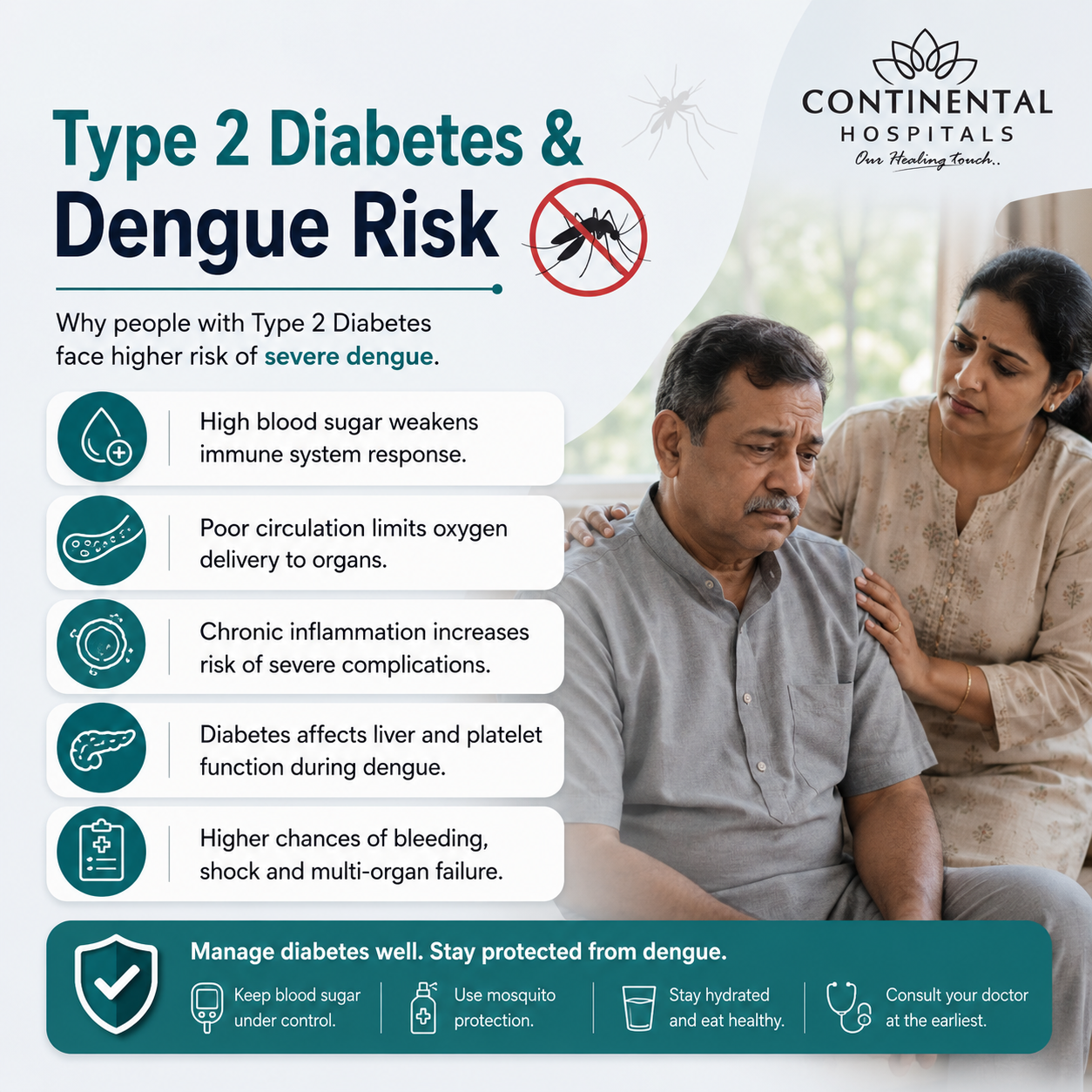
People with type 2 diabetes and dengue face greater health risks because diabetes affects several body systems.
Some of the main reasons include:
- High blood sugar weakens the immune system.
- Blood vessels become more fragile.
- Healing and recovery become slower.
- Inflammation in the body increases.
- Existing heart or kidney disease can worsen during dengue.
- Blood sugar levels become difficult to control during infection.
These factors make dengue in people with diabetes more challenging than in individuals without diabetes.

How Does Diabetes Affect the Immune System?
The immune system protects the body from viruses and bacteria. High blood sugar reduces the ability of white blood cells to fight infections effectively.
As a result:
- Viruses multiply more easily.
- Recovery takes longer.
- The body struggles to control inflammation.
- Secondary infections become more common.
This is one of the biggest reasons why type 2 diabetes and dengue can lead to serious complications.
What Makes Severe Dengue More Dangerous for People with Diabetes?
Severe dengue can cause blood vessels to leak fluid into surrounding tissues. This leads to dehydration, low blood pressure, and poor blood flow to vital organs.
For people with diabetes, these complications become even more serious because:
- Kidneys may already be under stress.
- Heart disease is more common.
- Blood circulation may already be affected.
- Existing nerve damage can delay recovery.
Early medical attention is essential to reduce the dengue risk in people living with diabetes.
What Are the Warning Signs of Severe Dengue?
Seek immediate medical care if any of these symptoms appear:
- Severe stomach pain
- Continuous vomiting
- Difficulty breathing
- Bleeding from gums or nose
- Blood in vomit or stools
- Extreme weakness
- Cold or clammy skin
- Restlessness or confusion
- Reduced urine output
These symptoms may indicate severe dengue and require urgent hospital treatment.
How Can Blood Sugar Change During Dengue?
Fever, dehydration, stress, and reduced food intake can cause sudden changes in blood sugar levels.
People with type 2 diabetes and dengue may experience the following:
- High blood sugar due to infection.
- Low blood sugar because of poor appetite.
- Difficulty adjusting diabetes medicines.
- Increased need for frequent glucose monitoring.
Doctors may temporarily modify diabetes treatment until the dengue infection improves.
How Is Dengue in People with Diabetes Managed?
Treatment focuses on careful monitoring and supportive care.
Doctors usually recommend:
- Adequate fluid replacement.
- Regular blood sugar monitoring.
- Platelet count monitoring.
- Liver and kidney function tests.
- Safe fever management.
- Hospital admission if warning signs develop.
Close medical supervision helps reduce complications associated with dengue in people with diabetes.
How Can People with Type 2 Diabetes Reduce Dengue Risk?
Prevention is the best protection.
Follow these simple steps:
- Remove stagnant water around your home.
- Use mosquito repellents regularly.
- Wear full-sleeved clothing.
- Install mosquito screens on windows.
- Sleep under mosquito nets if needed.
- Keep blood sugar under good control.
- Attend regular diabetes checkups.
- Stay hydrated during hot weather.
Managing diabetes well can significantly reduce the dengue risk during mosquito season.
Who Is More Likely to Develop Severe Dengue?
The following groups require extra attention:
- People with uncontrolled type 2 diabetes.
- Older adults.
- Individuals with kidney disease.
- People with heart disease.
- Those with obesity.
- Patients with weakened immunity.
- Individuals with multiple chronic illnesses.
These individuals should never ignore early dengue symptoms.
When Should You Visit a Hospital?
Visit a hospital immediately if you have diabetes and develop:
- High fever lasting more than two days.
- Severe body pain.
- Persistent vomiting.
- Severe weakness.
- Bleeding symptoms.
- Difficulty drinking fluids.
- Dizziness or fainting.
- Sudden fall in blood pressure.
Early diagnosis and treatment can prevent severe dengue and improve recovery.
Important Points to Remember
- Type 2 diabetes and dengue together increase the risk of complications.
- High blood sugar weakens the immune system.
- Diabetes can make dengue recovery slower.
- Severe dengue may cause bleeding, dehydration, and organ damage.
- Blood sugar requires close monitoring during dengue infection.
- Early hospital care improves treatment outcomes.
- Preventing mosquito bites remains the best protection.
- Good diabetes control lowers overall dengue risk.
Why Choose Continental Hospitals for Dengue and Diabetes Care?
Continental Hospitals, Hyderabad, provides comprehensive care for patients with type 2 diabetes and dengue through a multidisciplinary team of experienced physicians, endocrinologists, infectious disease specialists, critical care experts, and emergency medicine specialists. The hospital offers advanced diagnostic facilities, intensive monitoring, modern critical care services, and personalized treatment plans for patients with mild to severe dengue.
Continental Hospitals is internationally recognized with JCI accreditation and NABH accreditation, reflecting its commitment to patient safety, clinical excellence, quality healthcare, and global treatment standards. With state-of-the-art medical technology, experienced specialists, and round-the-clock emergency services, patients receive timely diagnoses and evidence-based care for better recovery outcomes.
Conclusion
Type 2 diabetes and dengue can become a dangerous combination if not managed early. Diabetes weakens the body's natural defenses, making it easier for dengue infection to become severe. Recognizing warning signs, maintaining good blood sugar control, staying hydrated, and seeking prompt medical attention can significantly reduce complications. Prevention remains the most effective strategy against dengue, especially for people living with diabetes.
If you have type 2 diabetes and develop symptoms such as fever, severe body pain, vomiting, bleeding, or weakness, do not delay medical care. Early evaluation by the best internal medicine specialist in Hyderabad at Continental Hospitals, Hyderabad, can help ensure timely diagnosis, appropriate treatment, and a safer recovery.
Related Blogs: