post-title

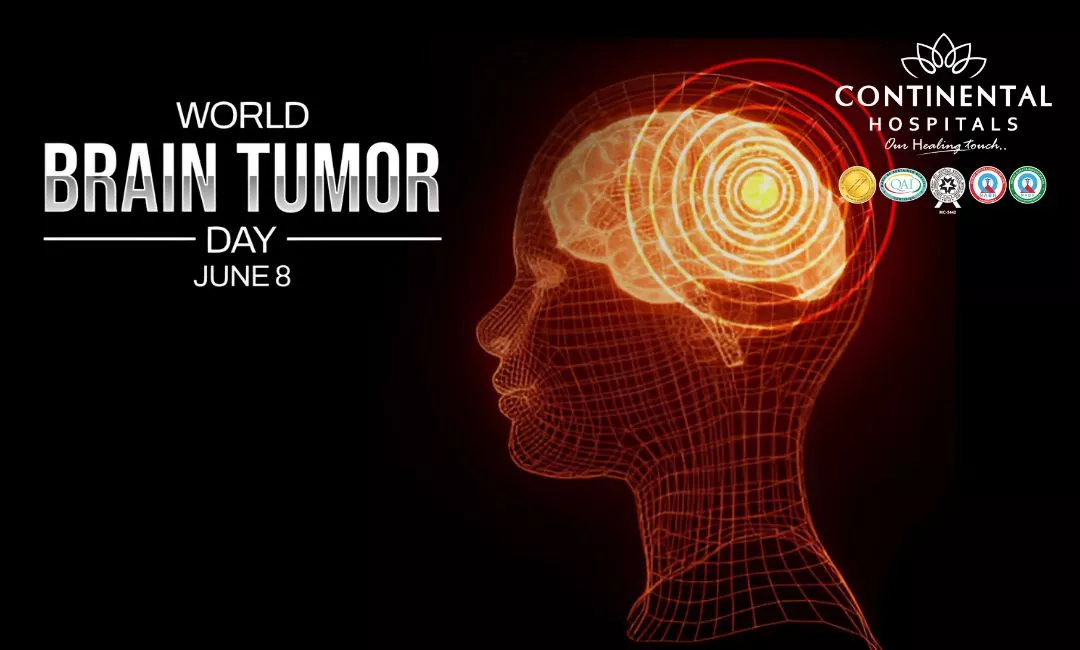
World Brain Tumor Day-2025

Written by - Editorial Team
Medically Reviewed by - Dr K V Shivanand Reddy

Every year, July 8 is observed as World Brain Tumor Day — a day dedicated to raising awareness about brain tumors, their impact, and the need for better diagnosis, treatment, and support for patients worldwide. Brain tumors, though less common than many other cancers, can have serious effects on patients and their families. This day highlights the importance of education, early detection, and ongoing research to improve outcomes for those affected.

In this blog, we will explore the history of World Brain Tumor Day, why awareness matters, and how Continental Hospitals is committed to providing expert care and support for brain tumor patients.

What is the history of World Brain Tumor Day?

World Brain Tumor Day was first observed in 2000 and was established by the German Brain Tumor Association. The goal was to bring together patients, families, medical professionals, and researchers to increase awareness about brain tumors and their challenges.

Brain tumors can affect people of all ages and backgrounds, making this awareness day vital for communities worldwide. Since its inception, World Brain Tumor Day has grown into a global movement involving health organizations, hospitals, and advocacy groups who organize events, educational campaigns, and support activities.

The day also serves as a reminder to governments and healthcare systems to invest more resources in brain tumor research and improve access to quality care.

Visit our best neuro doctor hyderabad at Continental Hospitals for expert neurological evaluation and treatment.
What Is a Brain Tumor?

A brain tumor is an abnormal growth of cells within the brain or surrounding tissues. Brain tumors can be benign (non-cancerous) or malignant (cancerous). Regardless of type, their presence can affect brain function because they may press on important areas controlling movement, speech, vision, or memory.

Brain tumors are categorized as:

Second Opinion

Primary tumors: Originating in the brain.

Secondary (metastatic) tumors: Spread from cancer elsewhere in the body.

The symptoms and severity depend on the tumor’s size, location, and type. Common signs include headaches, seizures, vision problems, balance issues, and personality changes.

Why is brain tumor awareness important?

Brain tumors are complex and challenging to diagnose. Early symptoms are often vague or mistaken for other conditions, leading to delays in diagnosis. Raising awareness helps people recognize warning signs and seek medical advice sooner.

Awareness also combats stigma and fear associated with brain tumors and neurological diseases. It encourages patients to share their experiences and find support networks.

For medical professionals and researchers, World Brain Tumor Day highlights the ongoing need for:

  • Advancements in imaging and diagnostic techniques.
  • Development of new and more effective treatments.
  • Support systems to improve quality of life for patients and caregivers.

What are the latest advances in brain tumor diagnosis and treatment?

In recent years, progress in medical science has improved the detection and treatment of brain tumors. Some key advances include:

Need an Appointment?

Improved MRI and CT scans: These imaging tools allow doctors to locate tumors precisely.

Surgical techniques: Minimally invasive surgeries reduce risks and speed up recovery.

Radiation therapy: Modern radiation targets tumors more accurately while sparing healthy tissue.

Targeted therapies and immunotherapy: These treatments work by attacking tumor cells specifically, with fewer side effects.

Personalized treatment plans: Based on the tumor’s genetic makeup and patient health.

Despite these advances, brain tumors remain challenging to treat, which is why ongoing research and patient care are crucial.

How Do Continental Hospitals Treat Brain Tumors?

At Continental Hospitals, we understand how frightening a brain tumor diagnosis can be. Our comprehensive approach combines advanced technology, expert medical teams, and compassionate care to provide the best possible outcomes for our patients.

Here is why you should choose Continental Hospitals if you or your loved one is facing a brain tumor diagnosis:

Experienced Neurosurgeons and Specialists: Our team includes highly trained neurosurgeons, neurologists, and oncologists with years of experience treating brain tumors of all types.

State-of-the-art Facilities: We use the latest imaging technology such as high-resolution MRI and CT scans for precise diagnosis and treatment planning.

Advanced Surgical Options: Our minimally invasive and microsurgical techniques reduce complications and promote quicker recovery.

Multidisciplinary Care: We provide personalized treatment plans developed by a team of experts, including surgeons, radiation oncologists, and medical oncologists.

Comprehensive Support Services: From diagnosis through recovery, patients have access to counseling, rehabilitation, and nutritional support to improve quality of life.

Research and Innovation: Continental Hospitals actively participates in clinical trials and research projects to bring the latest treatments to our patients.

We are committed to guiding patients and families every step of the way with clear communication, education, and emotional support.

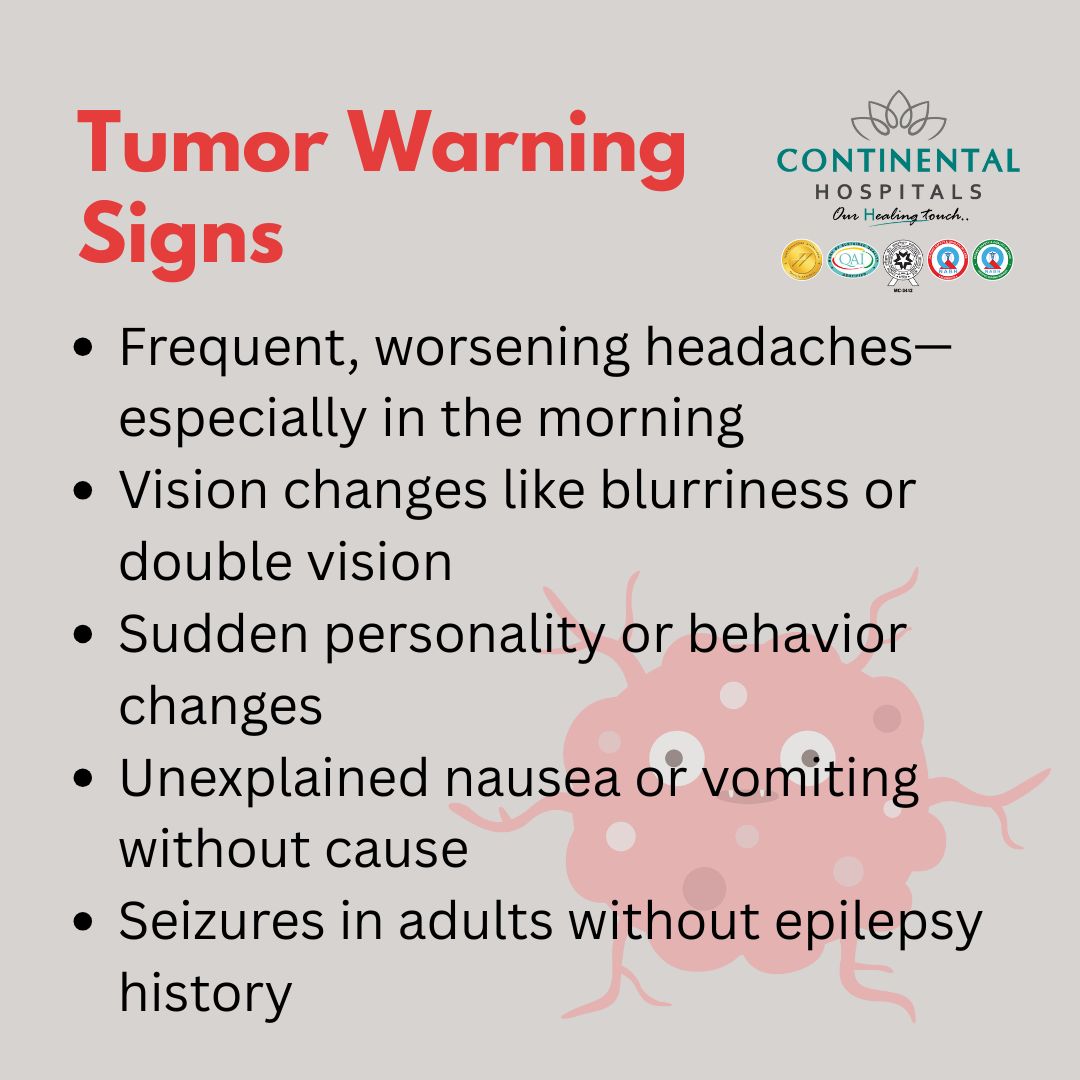
What Are the Symptoms of a Brain Tumor and When Should You See a Doctor?

Because early detection can improve treatment success, it’s important to know when to seek medical help. If you experience any of the following symptoms persistently, consult a doctor:

  • Frequent or severe headaches, especially if worse in the morning.
  • Seizures or convulsions without a previous history.
  • Unexplained nausea or vomiting.
  • Vision changes such as blurred or double vision.
  • Difficulty with balance or coordination.
  • Weakness or numbness in limbs.
  • Changes in personality, memory, or speech.

These symptoms do not always mean you have a brain tumor, but they require evaluation by a healthcare professional.

Conclusion

World Brain Tumor Day is a powerful reminder of the challenges brain tumor patients face and the progress still needed in research and treatment. It is a call for awareness, early diagnosis, and compassionate care.

Concerned about brain tumor symptoms or diagnosis? Consult our Best Neurologist in Hyderabad at Continental Hospitals today.

Related Blogs:

  1. When to Consult a Specialist for Brain Tumor Treatment
  2. What to Expect During Brain Tumor Surgery

Frequently Asked Questions

World Brain Tumor Day is observed every year on June 8 to raise awareness about brain tumors, encourage early diagnosis, and support patients, survivors, and caregivers. The day highlights the importance of recognizing warning signs that should never be ignored. It also educates people about advances in diagnosis, treatment, rehabilitation, and supportive care. Brain tumors can affect individuals of any age, including children and older adults. Early medical evaluation can improve treatment planning and outcomes in many cases. The observance promotes public education, research, and access to quality healthcare. It also reminds communities to support people living with brain tumors and their families throughout their treatment journey. Healthcare organizations use this day to spread awareness about symptoms, risk factors, and available treatment options. Timely consultation with specialists remains one of the most important messages of World Brain Tumor Day.
The symptoms of a brain tumor vary depending on its size, location, and growth rate. Common early signs include persistent headaches that gradually worsen, seizures without a previous history, blurred or double vision, frequent nausea, unexplained vomiting, dizziness, and difficulty maintaining balance. Some people may notice weakness or numbness in an arm or leg, memory problems, personality changes, speech difficulties, or confusion. Hearing problems and changes in coordination may also occur. These symptoms do not always indicate a brain tumor because many other medical conditions can cause similar complaints. However, persistent or worsening neurological symptoms should always be evaluated by a qualified neurologist or neurosurgeon. Early diagnosis allows timely treatment and better management of the condition.
The exact cause of most brain tumors remains unknown. Brain tumors develop when abnormal cells grow uncontrollably within the brain or nearby tissues. Certain inherited genetic syndromes may increase the risk, although they account for only a small percentage of cases. Previous exposure to high-dose radiation therapy involving the head may also increase the likelihood of developing some brain tumors. Most people diagnosed with brain tumors have no identifiable risk factors. Brain tumors can occur in children as well as adults and affect both men and women. Lifestyle factors alone do not directly cause most brain tumors. Ongoing research continues to explore genetic and environmental influences. Regular medical evaluation is important if persistent neurological symptoms develop, regardless of individual risk factors.
Diagnosing a brain tumor usually begins with a detailed medical history and neurological examination. Doctors evaluate symptoms, muscle strength, coordination, reflexes, vision, hearing, and cognitive function. Imaging studies such as MRI are commonly used because they provide detailed images of the brain and help identify abnormal growths. CT scans may also be recommended in certain situations. Advanced imaging techniques can provide additional information about tumor characteristics and surrounding brain tissue. If necessary, a biopsy may be performed to determine the exact type and grade of the tumor. Laboratory analysis of the tissue helps guide treatment decisions. Early and accurate diagnosis allows specialists to develop a personalized treatment plan that offers the best possible outcome for the patient.
Brain tumor treatment depends on the tumor type, size, location, grade, and the patient's overall health. Surgery is often the first treatment whenever it is safe to remove the tumor. Radiation therapy may be recommended after surgery or when surgery is not possible. Chemotherapy, targeted therapy, and immunotherapy may also be used for certain tumor types. Some patients benefit from advanced techniques such as stereotactic radiosurgery or precision radiation therapy. Rehabilitation services including physiotherapy, speech therapy, and occupational therapy may improve recovery and quality of life. Supportive medications help manage symptoms such as seizures, swelling, or headaches. Treatment is usually planned by a multidisciplinary team to provide comprehensive and individualized care.
There is currently no guaranteed way to prevent most brain tumors because their exact causes are not fully understood. Since many brain tumors occur without known risk factors, prevention is often not possible. However, maintaining overall health through a balanced diet, regular exercise, adequate sleep, and avoiding tobacco supports general well-being. Limiting unnecessary exposure to ionizing radiation is also advisable whenever medically appropriate. People with inherited genetic conditions associated with brain tumors should discuss appropriate monitoring with their healthcare provider. Recognizing persistent neurological symptoms and seeking prompt medical evaluation remain the most effective strategies for early detection. Routine health checkups and awareness of warning signs can help ensure timely diagnosis and treatment when needed.
No, not all brain tumors are cancerous. Brain tumors are generally classified as benign or malignant based on their behavior and microscopic appearance. Benign tumors do not spread to other parts of the body but can still cause serious health problems because they may press on important areas of the brain. Malignant brain tumors tend to grow more aggressively and may invade nearby brain tissue. Both benign and malignant tumors require careful evaluation and appropriate treatment. The impact of a brain tumor depends not only on whether it is cancerous but also on its size, location, and rate of growth. Accurate diagnosis through imaging and tissue analysis helps determine the most suitable treatment approach for each patient.
You should consult a neurologist if you experience persistent headaches that are unusual, worsening, or associated with vomiting, seizures, vision changes, weakness, numbness, difficulty speaking, confusion, memory loss, or balance problems. Symptoms that continue despite routine treatment should never be ignored. Sudden neurological symptoms require immediate medical attention because they may indicate a medical emergency. Early evaluation helps identify the underlying cause, whether it is a brain tumor or another neurological condition. Prompt diagnosis allows timely treatment and may improve recovery and quality of life. A neurologist may recommend further testing such as MRI or CT scans based on the clinical findings. Seeking expert medical care early provides the best opportunity for accurate diagnosis and appropriate treatment.
Disclaimer: The information provided in this blog is intended for general knowledge and informational purposes only, and does not constitute medical advice. Always consult with a qualified healthcare professional for any medical concerns or before making any decisions about your health.

Get in Touch With Us

Whether you are from India or abroad, we are here to help you with your medical queries. Please fill out the form below and our team will connect with you shortly.

  • ✔ Quick response from our medical experts
  • ✔ Secure data handling & privacy
  • ✔ Easy upload for reports & documents
banner_image

Chat with our medical experts on WhatsApp for quick assistance and hassle-free appointment booking

Recent Posts