post-title

10 Signs Of Poor Gut Health You Shouldn't Ignore

Written by - Editorial Team
Medically Reviewed by - Dr Guru N Reddy

Our gut, also known as the digestive system, is a crucial part of our overall health. It's responsible for breaking down food, absorbing nutrients, and managing waste. When our gut isn't functioning properly, it can affect many aspects of our well-being. Here’s a guide to recognizing signs of poor gut health and understanding what you can do about it.

What is Gut Health?

Gut health refers to the balance and function of your digestive system. It involves various organs, including the stomach, intestines, and colon, and is essential for absorbing nutrients, producing vitamins, and maintaining a strong immune system. A healthy gut ensures that your body functions efficiently and that you feel your best.

Visit our gastroenterology specialists in Hyderabad at Continental Hospitals for advanced diagnosis, personalized treatment, and compassionate care.

What are the signs of poor gut health?

1. Frequent Digestive Issues
If you find yourself frequently experiencing bloating, gas, or heartburn, it could be a sign of poor gut health. These symptoms often occur when your digestive system is struggling to break down food properly or when there’s an imbalance of gut bacteria. Persistent digestive discomfort might indicate conditions such as irritable bowel syndrome (IBS) or food intolerances.

2. Unpredictable Bowel Movements
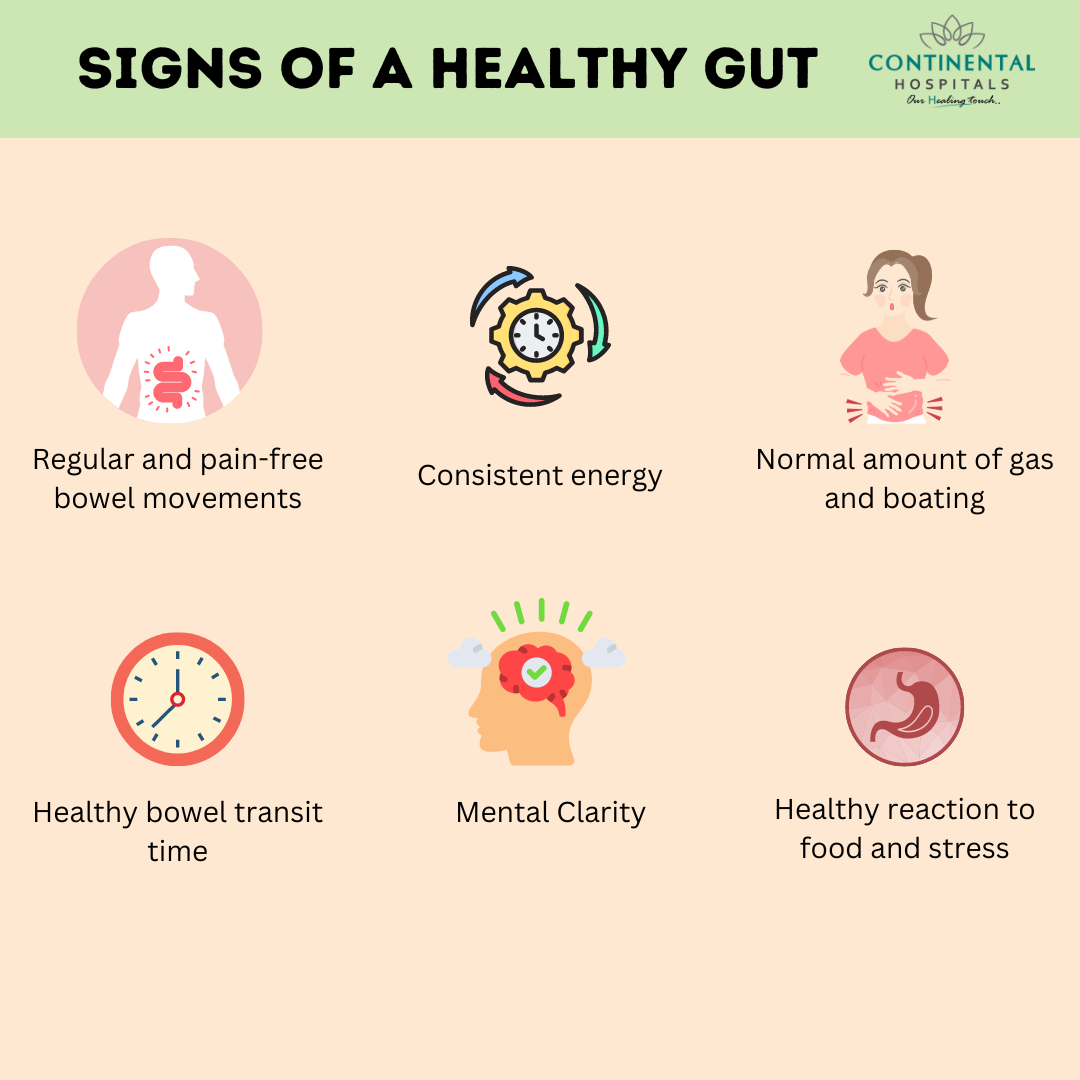
Changes in your bowel habits, such as diarrhea, constipation, or alternating between the two, can be signs of poor gut health. A healthy gut typically leads to regular, comfortable bowel movements.

3. Unexplained Weight Changes
Unexpected weight loss or gain can be linked to poor gut health. Your gut plays a role in nutrient absorption and metabolism. When it’s not functioning properly, it can affect how your body processes and stores energy, leading to weight changes.

4. Persistent Fatigue
Feeling tired all the time, even after a good night's sleep, might be related to gut health. A compromised gut can affect nutrient absorption, leading to deficiencies in essential vitamins and minerals that contribute to energy levels.

5. Frequent Food Cravings
Cravings for sugary or unhealthy foods can sometimes indicate an imbalance in your gut bacteria. Good gut health supports a balanced appetite and reduces unhealthy cravings.

6. Skin Issues
Skin conditions like eczema, acne, or rashes can sometimes be linked to gut health. An unhealthy gut can cause inflammation and immune responses that manifest on your skin. Improving gut health may help alleviate these skin issues.

Second Opinion

7. Mood Swings and Anxiety
Your gut and brain are closely connected through the gut-brain axis. Poor gut health can influence your mood and mental health, potentially leading to anxiety, depression, or mood swings.

8. Persistent Bad Breath
Persistent bad breath, or halitosis, that doesn’t go away with regular brushing and flossing might be related to gut health. Conditions like poor digestion or an imbalance of gut bacteria can contribute to bad breath. It’s often a sign that there may be an issue with the way your digestive system is processing food.

9. Frequent Infections or Illness
An unhealthy gut can weaken your immune system, making you more susceptible to infections and illnesses. Since a significant part of the immune system is housed in the gut, keeping it healthy is crucial for overall immunity.

10.Food Sensitivities and Allergies
Developing new food sensitivities or allergies can be a sign of an underlying gut issue. An imbalance of gut bacteria or damage to the gut lining can lead to increased food sensitivities. If you’re noticing that you’re reacting to foods that never bothered you before, it could be worth investigating your gut health.
How Can You Improve Your Gut Health?

If you're experiencing any of these signs, it’s essential to take action to improve your gut health. Here are some steps you can take:

  • Eat a Balanced Diet: Incorporate plenty of fiber-rich foods, fruits, vegetables, and fermented foods like yogurt and sauerkraut. These foods promote a healthy gut microbiome.
  • Stay Hydrated: Drinking enough water helps digestion and prevents constipation.
  • Reduce Stress: High stress levels can negatively impact gut health. Practices like yoga, meditation, and regular exercise can help manage stress.
  • Limit Processed Foods: Cut back on sugary and processed foods that can disrupt gut bacteria.
  • Consider Probiotics: Probiotic supplements can help restore balance to your gut microbiome.
  • Get Enough Sleep: Quality sleep supports overall health, including gut health.

What Are the Treatment Options for Poor Gut Health at Continental Hospitals?


If you’re experiencing any of these signs, it's important to seek professional advice. Continental Hospitals offers comprehensive treatments to address gut health issues:

Need an Appointment?

  • Diagnostic Services: Advanced testing to identify gut health problems, including endoscopy and colonoscopy.
  • Nutritional Counseling: Personalized dietary plans to manage food sensitivities and promote gut health.
  • Medical Treatments: Medications and therapies to treat underlying conditions affecting your gut.
  • Holistic Approaches: Integrative treatments including stress management techniques to improve overall gut health.

Our team of specialists at Continental Hospitals is dedicated to providing expert care and personalized solutions to help you achieve optimal gut health.

Conclusion

Your gut health is crucial for overall well-being, and recognizing the signs of poor gut health is the first step towards improving it. From digestive issues to mood swings, these symptoms should not be ignored. If you're experiencing any of these signs, don't hesitate to seek professional help.

For personalized care and effective treatment for gut health issues, consult our best gastroenterologist in hyderabad Continental Hospitals today.

Related Blogs:

  1. Balancing Act: How Diet Impacts Your Gut Microbiome
  2. How Diet Affects Gut Health: Tips for a Healthy Gut

Frequently Asked Questions

Poor gut health often develops gradually and may first appear as everyday digestive discomfort. Common signs include frequent bloating, excessive gas, constipation, diarrhea, acid reflux, stomach pain, and irregular bowel movements. Some people also experience fatigue, food intolerances, skin problems, or unexplained weight changes due to an unhealthy digestive system. Since the gut plays an important role in immunity and nutrient absorption, poor gut health can affect your overall well-being. If these symptoms continue for several weeks or become severe, it is important to consult a gastroenterologist for proper evaluation and treatment.
Yes. Persistent bloating and excessive gas are among the most common indicators of poor gut health. These symptoms can occur when harmful bacteria outnumber beneficial bacteria, digestion slows down, or certain foods are not properly broken down. Conditions such as irritable bowel syndrome, food intolerances, small intestinal bacterial overgrowth, or chronic constipation may also contribute to ongoing bloating. While occasional bloating is normal, symptoms that occur frequently or interfere with daily activities should be assessed by a digestive health specialist to identify the underlying cause.
A large portion of the body's immune system is closely connected to the digestive tract. Healthy gut bacteria help maintain the intestinal barrier, support immune cells, and reduce harmful inflammation. When the balance of gut bacteria is disrupted, immunity may weaken, making the body more susceptible to infections and prolonged illness. Chronic digestive inflammation may also affect immune function over time. Maintaining a balanced diet, staying hydrated, managing stress, and seeking medical advice for persistent digestive symptoms can help improve both gut and immune health.
Yes. There is growing evidence that gut health and skin health are closely connected through the gut-skin axis. An unhealthy digestive system may contribute to inflammation that can worsen conditions such as acne, eczema, rosacea, or unexplained skin irritation in some individuals. Poor nutrient absorption caused by digestive problems may also affect skin appearance and healing. Although skin issues can have many causes, persistent skin changes along with digestive symptoms should be evaluated by a healthcare professional to determine whether gut health is playing a role.
Poor gut health can reduce the body's ability to digest certain foods efficiently. Changes in the gut microbiome, inflammation of the intestinal lining, or enzyme deficiencies may increase sensitivity to foods such as dairy, gluten, spicy meals, or high-fiber foods. This can result in bloating, abdominal discomfort, diarrhea, or nausea after eating. While food intolerance is different from a food allergy, recurring symptoms should not be ignored. A gastroenterologist can help determine the cause and recommend appropriate dietary changes and treatment.
Yes. Poor gut health may contribute to ongoing tiredness by affecting nutrient absorption, increasing inflammation, and disrupting the balance of beneficial gut bacteria. When essential nutrients such as iron, vitamin B12, or other vitamins are not absorbed properly, energy production may decrease. Digestive disorders can also interfere with sleep quality and overall wellness. Although fatigue has many possible causes, persistent low energy combined with digestive symptoms should be medically evaluated to identify any underlying gastrointestinal condition.
You should consult a gastroenterologist if digestive symptoms persist for more than a few weeks, become more severe, or begin affecting your daily life. Warning signs include ongoing abdominal pain, frequent diarrhea or constipation, blood in the stool, unexplained weight loss, difficulty swallowing, severe bloating, persistent vomiting, or recurring acid reflux. Early diagnosis helps identify conditions such as irritable bowel syndrome, inflammatory bowel disease, ulcers, infections, or colorectal disorders before complications develop.
Improving gut health starts with healthy daily habits. Eat a balanced diet rich in fruits, vegetables, whole grains, legumes, and fermented foods while limiting processed foods and excess sugar. Drink enough water, exercise regularly, manage stress, and get adequate sleep to support healthy digestion. Avoid unnecessary antibiotic use unless prescribed by your doctor. If digestive symptoms continue despite lifestyle changes, consult a gastroenterologist for a thorough evaluation, personalized dietary advice, and treatment based on the underlying cause.
Disclaimer: The information provided in this blog is intended for general knowledge and informational purposes only, and does not constitute medical advice. Always consult with a qualified healthcare professional for any medical concerns or before making any decisions about your health.

Get in Touch With Us

Whether you are from India or abroad, we are here to help you with your medical queries. Please fill out the form below and our team will connect with you shortly.

  • ✔ Quick response from our medical experts
  • ✔ Secure data handling & privacy
  • ✔ Easy upload for reports & documents
0 / 100
Checkboxes Section


banner_image

Chat with our medical experts on WhatsApp for quick assistance and hassle-free appointment booking

Recent Posts
Language Based Image
0 / 100