.webp)


Multivitamin tablets are among the most commonly used vitamin supplements worldwide. Many people take them daily, believing they improve energy, strengthen immunity, and fill nutritional gaps. But are multivitamin tablets really necessary for everyone? Can they replace a healthy diet? These are important questions because taking supplements without understanding your body's needs may not always provide the expected benefits.
Good health starts with balanced nutrition, but certain people may still develop vitamin deficiency due to age, illness, pregnancy, dietary restrictions, or lifestyle factors. In such cases, daily multivitamins may support overall health when recommended by a doctor. Understanding the benefits, risks, and the right way to use multivitamins can help you make informed decisions for long-term wellness.
What Are Multivitamin Tablets?
Multivitamin tablets are dietary supplements that contain a combination of vitamins and minerals essential for normal body functions. Different products contain different nutrients, but they commonly include:
- Vitamin A
- Vitamin B Complex
- Vitamin C
- Vitamin D
- Vitamin E
- Vitamin K
- Calcium
- Magnesium
- Zinc
- Iron
- Selenium
These nutrients help the body perform many important functions, including maintaining bones, muscles, nerves, blood cells, skin, eyesight, and immune health.
Visit the Nutrition Department at Continental Hospitals for personalized nutrition guidance from our expert nutritionists.
Why Do People Take Multivitamin Tablets?
People take multivitamin tablets for different reasons, including:
- To prevent Vitamin Deficiency
- To support Immune Health
- To improve overall Nutrition
- To maintain healthy bones and muscles
- To support brain function
- To increase energy when nutritional deficiencies exist
- To promote healthy skin, hair, and nails
- To support healthy aging
However, taking multivitamins does not automatically mean better health if your body already receives adequate nutrients through a balanced, healthy diet.
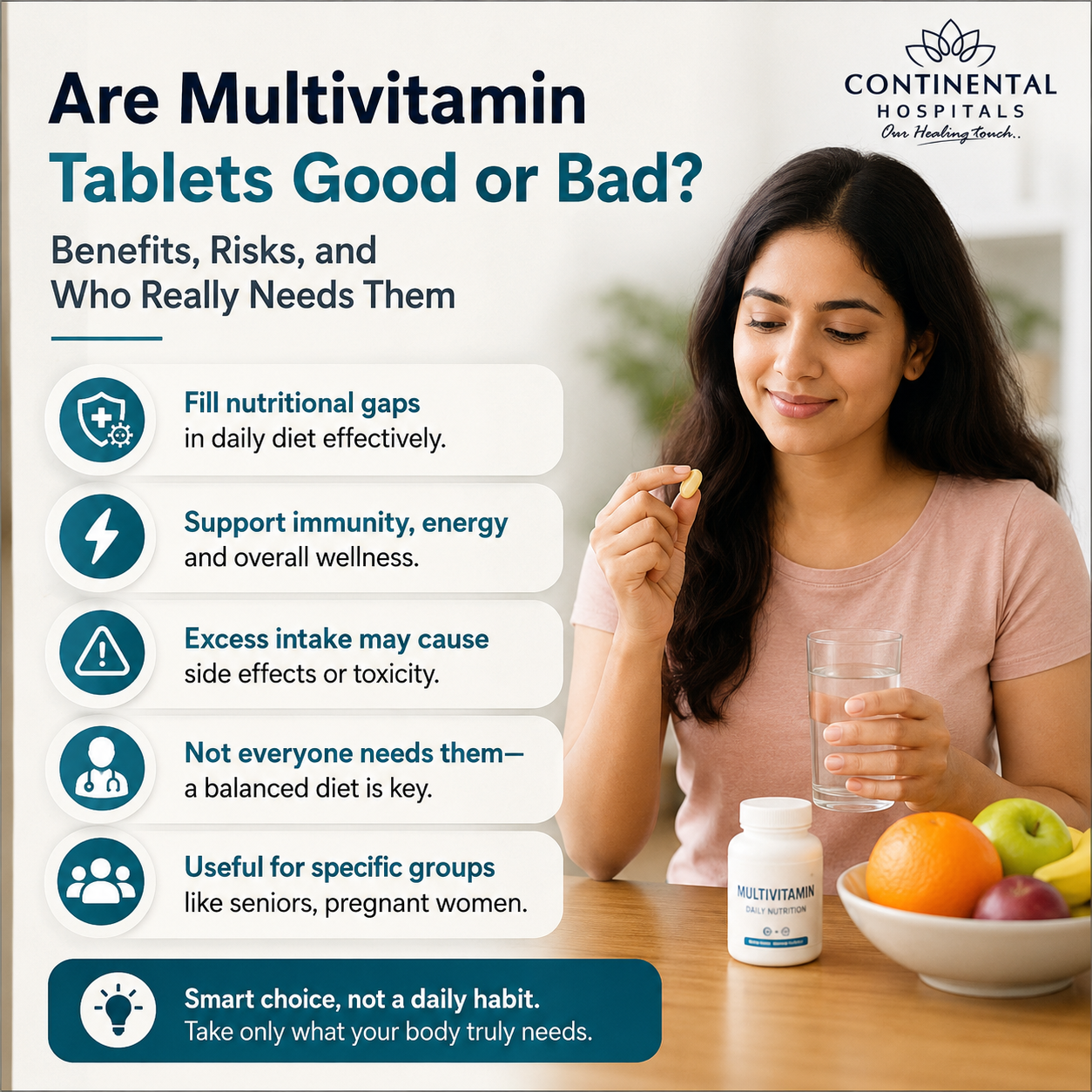
Who Really Needs Multivitamin Tablets?
Not everyone requires daily multivitamins. However, doctors may recommend them for certain individuals.

People who may benefit include:
- Pregnant women requiring folic acid and iron
- Older adults with reduced nutrient absorption
- People following vegetarian or vegan diets
- Individuals with digestive disorders affecting nutrient absorption
- Patients recovering from surgery or chronic illness
- People with diagnosed vitamin deficiencies
- Individuals with poor dietary intake
- People advised by their physician after blood tests
Your doctor can determine whether vitamin supplements are necessary based on your health condition and nutritional status.
What Are the Benefits of Multivitamin Tablets?
When taken correctly and under medical guidance, multivitamin tablets may provide several health benefits.
Help prevent vitamin deficiency
They provide essential nutrients when daily food intake is insufficient.
Support Immune Health
Vitamins C, D, and zinc play an important role in maintaining a healthy immune system.
Improve overall nutrition
People who struggle to eat balanced meals may receive additional nutritional support.
Support healthy bones
Vitamin D and calcium contribute to stronger bones and reduce the risk of deficiency-related bone problems.
Promote healthy brain function
B vitamins help maintain normal nerve function and support brain health.
Support healthy skin and hair
Several vitamins contribute to maintaining healthy skin, nails, and hair when nutritional deficiencies are present.
Assist recovery
People recovering from illness or surgery may benefit from additional nutritional support as advised by their doctor.
Are Multivitamin Tablets Always Good?
The answer is no.
While multivitamin tablets can be helpful, they should not be viewed as a replacement for healthy eating. A balanced healthy diet provides fiber, antioxidants, healthy fats, and plant nutrients that supplements cannot fully replace.
Many healthy adults who eat a nutritious diet may not need routine daily multivitamins unless advised by their healthcare provider.
Can Taking Too Many Multivitamins Be Harmful?
Yes. Excessive intake of vitamin supplements may cause health problems.
Possible risks include the following:
- Too much vitamin A may affect the liver.
- Excess iron may cause stomach problems.
- Very high vitamin D levels may increase calcium in the blood.
- High doses of certain vitamins can interact with medications.
- Taking multiple supplements together may result in nutrient overdose.
This is why self-medication should be avoided.
Can Multivitamin Tablets Replace Healthy Food?
No.
A balanced, healthy diet remains the best source of essential nutrients because it provides the following:
- Natural vitamins
- Minerals
- Fiber
- Protein
- Healthy fats
- Plant-based antioxidants
Multivitamin tablets should only complement healthy eating, not replace it.
How Can You Know If You Have a Vitamin Deficiency?
Some common symptoms include:
- Constant tiredness
- Frequent infections
- Hair fall
- Weak muscles
- Pale skin
- Poor wound healing
- Bone pain
- Tingling in hands or feet
These symptoms can have many causes. Proper medical evaluation and blood tests are important before starting vitamin supplements.
How Should Multivitamin Tablets Be Taken?
Follow these simple guidelines:
- Take them only as advised by your doctor.
- Follow the recommended dosage.
- Avoid taking multiple supplements without medical advice.
- Inform your doctor about all medicines you use.
- Continue eating a balanced healthy diet.
- Attend regular health checkups if using supplements long-term.
What Questions Should You Ask Before Taking Multivitamin Tablets?
Before starting multivitamin tablets, ask yourself:
- Do I have a diagnosed vitamin deficiency?
- Am I eating a balanced, healthy diet?
- Do I have any medical condition affecting nutrition?
- Am I pregnant or planning pregnancy?
- Am I taking medicines that may interact with supplements?
- Has my doctor recommended vitamin supplements based on blood tests?
These questions help ensure safe and effective supplement use.
Why Choose Continental Hospitals for Clinical Nutrition and Preventive Healthcare?
Continental Hospitals is recognized as one of the best hospitals in Hyderabad, delivering patient-centered care through experienced specialists and advanced medical technology. The hospital is accredited by JCI, NABH, and NABL, reflecting its commitment to international standards of quality, patient safety, and clinical excellence.
Our experts in clinical nutrition, internal medicine, preventive healthcare, and other specialties work together to identify nutritional deficiencies, evaluate overall health, and recommend personalized treatment plans. Instead of relying on guesswork, patients receive evidence-based guidance supported by comprehensive diagnostic services and multidisciplinary care.
Whether you need nutritional assessment, preventive health screening, or management of vitamin deficiency, our team focuses on helping you achieve better health through the right combination of medical care, nutrition, and lifestyle guidance.
When Should You Consult a Doctor?
Consult an internal medicine specialist or clinical nutrition expert if you:
- Feel tired despite adequate rest
- Experience frequent infections
- Have persistent hair fall
- Notice unexplained weight changes
- Have digestive disorders
- Suspect Vitamin Deficiency
- Are pregnant or planning pregnancy
- Have chronic medical conditions
- Want to start Daily Multivitamins safely
Early medical advice helps identify the real cause of symptoms and prevents unnecessary supplement use.
Conclusion
Multivitamin tablets can play an important role in supporting health when there is a genuine nutritional need. However, they are not a substitute for a balanced Healthy Diet or professional medical advice. While some people benefit from daily multivitamins, others may not require them at all. The safest approach is to understand your nutritional needs through proper medical evaluation and laboratory testing before starting any vitamin supplements.
If you experience symptoms of vitamin deficiency, have concerns about your nutrition, or want expert guidance on clinical nutrition and preventive healthcare, consult the specialists at Continental Hospitals. Our best nutritionist in Hyderabad provides personalized care to help you maintain long-term health with the right nutritional approach.