.webp)


Tingling hands are a common problem for many people. Some feel a mild pins and needles sensation, while others experience numbness, weakness or discomfort that affects daily activities. Although occasional tingling may simply be due to sleeping in an awkward position, frequent or persistent tingling can be an early sign of nerve damage. Understanding the causes, symptoms and when to seek medical help can prevent long term complications. This blog explains everything you need to know in a clear and patient friendly manner.
What Does Tingling in the Hands Mean?
Tingling happens when the nerves in the hand or arm are irritated, compressed or not getting enough blood supply. Nerves act as electrical cables that carry signals to and from the brain. When these signals are disrupted, you may feel pins and needles, burning, numbness or weakness.
In many cases tingling is temporary and improves on its own. However, continuous tingling or tingling that spreads up the arm may be a warning sign of nerve damage that needs proper evaluation.
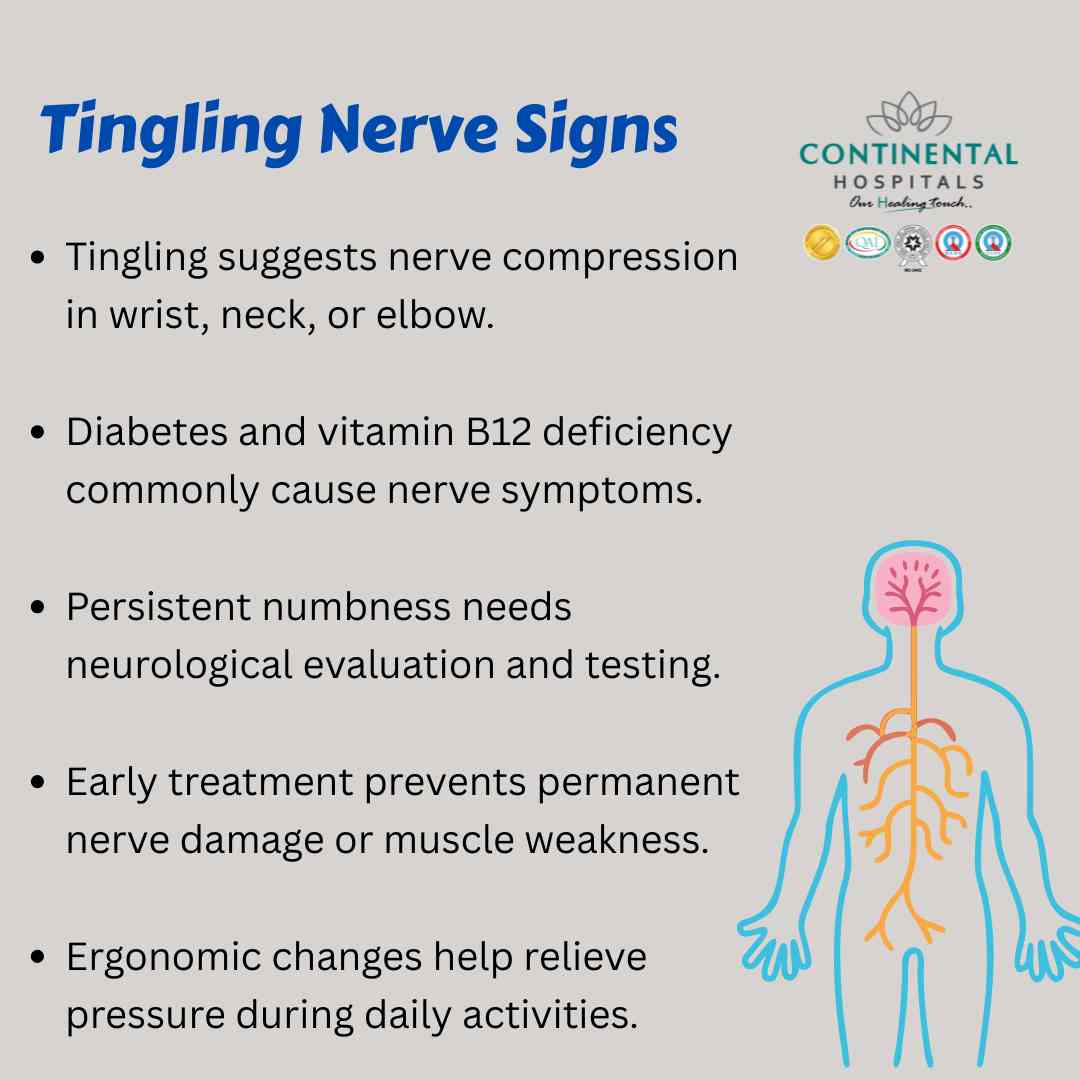
Common Causes of Tingling Hands
1. Carpal Tunnel Syndrome
This is one of the most frequent causes. The median nerve gets compressed at the wrist which leads to tingling, numbness and hand weakness. Symptoms often worsen at night or while typing or holding objects.
2. Vitamin Deficiencies
Lack of vitamins that support nerve health such as B vitamins can lead to nerve irritation and tingling sensations.
3. Diabetes
High blood sugar can damage nerves slowly over time. Tingling in the hands and feet is often an early symptom of diabetic neuropathy.
4. Cervical Spine Issues
Conditions such as cervical spondylosis or a slipped disc in the neck can put pressure on nerves that travel down the arm.
5. Poor Blood Circulation
Reduced blood flow can cause temporary tingling. This may happen if you sit in one position for too long.

6. Thyroid Disorders
An underactive thyroid can affect nerve function and lead to tingling sensations.
7. Autoimmune Conditions
Diseases such as rheumatoid arthritis or lupus can inflame nerves and result in tingling and numbness.
8. Nerve Injuries
Injuries from accidents, repetitive strain or sports activities can damage nerves and cause persistent tingling.
9. Side Effects of Medications
Certain medicines can affect nerve health, leading to unusual sensations.
Symptoms That Suggest Nerve Damage
If tingling hands are due to nerve damage, you may also experience the following signs
- Persistent numbness that does not go away
- Weak grip strength
- Dropping objects frequently
- Pain radiating from the neck to the hand
- Burning or electric shock-like sensations
- Loss of coordination in fingers
- Symptoms worsening at night or early morning
If these symptoms are present, it is important to consult a specialist without delay.
How Doctors Diagnose the Cause?
To understand the underlying reason for tingling, a doctor may perform the following assessments
- Detailed physical examination
- Nerve conduction studies to check nerve signals
- Electromyography to assess muscle and nerve function
- Blood tests for vitamin levels, thyroid function and diabetes
- Imaging tests such as X ray or MRI to check for spinal or nerve compression
A clear and early diagnosis helps prevent long term nerve damage.
Treatment Options for Tingling Hands
Treatment depends on the cause of the problem. Doctors focus on relieving symptoms and protecting the nerves from further damage.
Common treatment approaches include
- Medication to reduce nerve inflammation or pain
- Vitamin supplements when deficiencies are identified
- Wrist splints for carpal tunnel syndrome
- Physiotherapy and strengthening exercises
- Ergonomic corrections for work related strain
- Managing underlying conditions such as diabetes or thyroid disorders
- Minimally invasive procedures when nerve compression is severe
- Surgical decompression when conservative treatments fail
Early intervention often leads to faster recovery and better nerve function.
Simple Ways to Prevent Tingling Hands
You can reduce the risk of nerve irritation with a few lifestyle measures
- Maintain a healthy posture while sitting or working
- Take regular breaks from typing or repetitive hand movements
- Keep blood sugar levels under control if you have diabetes
- Eat a balanced diet rich in essential vitamins
- Use supportive pillows to reduce pressure on the neck
- Avoid smoking as it affects circulation
These small habits help protect your nerves and improve overall hand function.
When Should You See a Doctor
Seek medical help as soon as possible if you notice the following
- Tingling persists for many days
- Tingling spreads to the arm or shoulder
- You have difficulty holding or gripping objects
- There is sudden weakness or numbness
- You have diabetes with worsening symptoms
- Pain increases even with rest
Ignoring these signs may lead to permanent nerve damage. Early care ensures better treatment outcomes.
Why Choose Continental Hospitals?
Continental Hospitals in Hyderabad is recognised as one of the best hospital in Hyderabad for advanced neurological and orthopedic care. Patients receive comprehensive evaluation, accurate diagnosis and personalised treatment plans for nerve related conditions.
The hospital is accredited by national and international bodies that ensure patient safety, quality standards and clinical excellence. Experienced neurologists, neurosurgeons, orthopedic specialists and physiotherapists work together to provide multidisciplinary care under one roof. Advanced diagnostic facilities, modern treatment technologies and evidence based protocols help deliver superior clinical outcomes. Patient comfort, ethical care and continuous monitoring ensure a smooth recovery journey.
Conclusion
Tingling hands may seem like a small issue in the beginning but it can be an early sign of nerve damage. Understanding the causes and symptoms helps you take timely action. With proper diagnosis and treatment, nerve related problems can be managed effectively and long term complications can be prevented.
If you suffer from persistent tingling, numbness or weakness in your hands, consult our best neurologist or orthopedic specialist at Continental Hospitals for expert evaluation and treatment. The right care at the right time can protect your nerve health and improve your quality of life.