.webp)


Urinary leakage in women is a common but often unspoken health concern. Many women silently adjust their lifestyle, avoid social outings, or reduce physical activity due to fear of accidental urine leakage. The good news is that urinary incontinence is treatable. With the right medical guidance, most women can regain bladder control and confidence.
At Continental Hospitals, recognized as one of the best hospitals in Hyderabad, women receive comprehensive, compassionate, and advanced care for urinary leakage and related pelvic health conditions.
What Is Urinary Leakage in Women?
Urinary leakage, also called urinary incontinence, is the involuntary loss of urine. It can affect women of all ages but is more common after childbirth, menopause, or with certain medical conditions.
You may notice leakage when you cough, laugh, sneeze, exercise, or feel a sudden urge to urinate. Many women think this is a normal part of aging. It is not. Proper diagnosis and treatment can significantly improve quality of life.
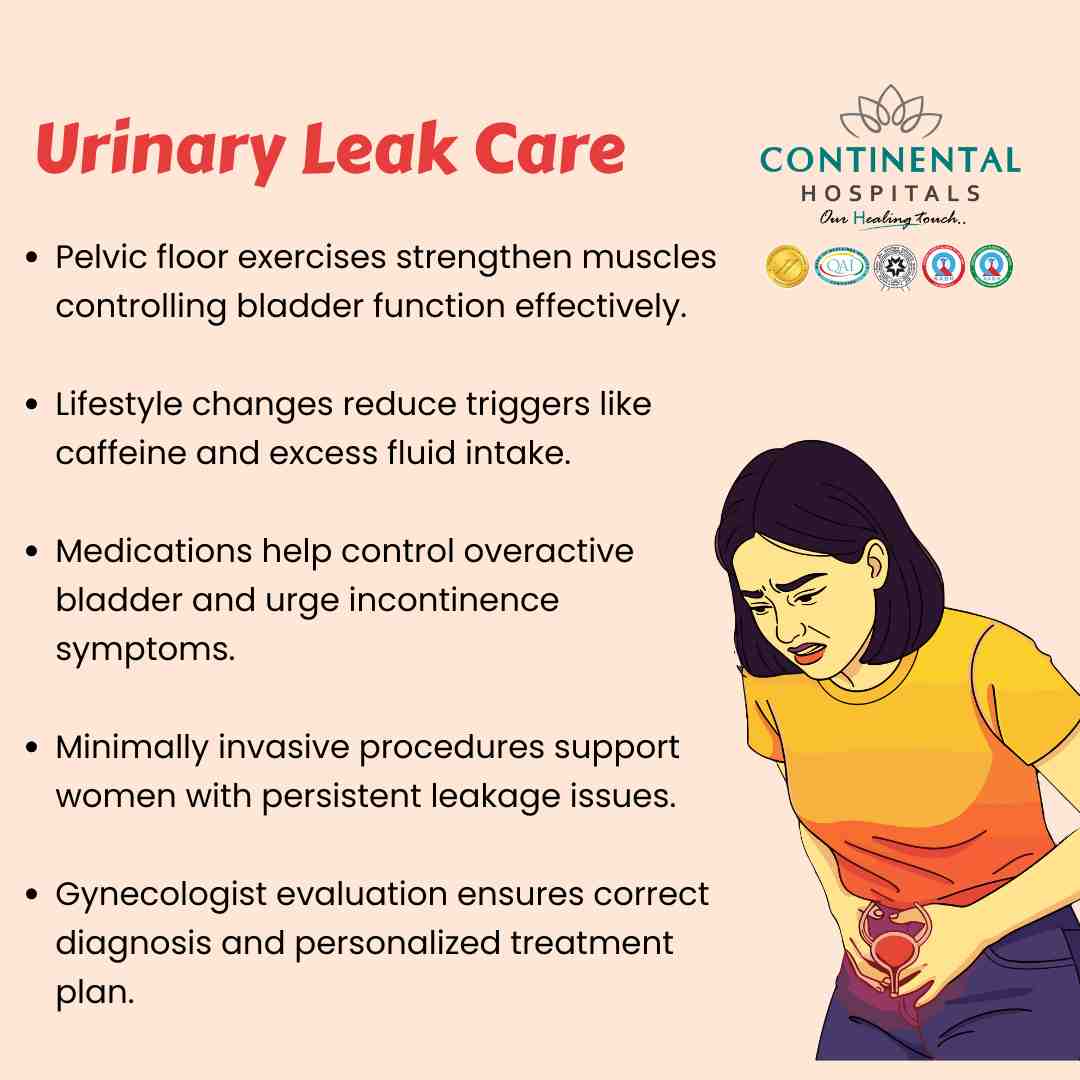
Common Types of Urinary Leakage
Understanding the type of urinary leakage helps doctors choose the best treatment.
Stress urinary incontinence
Leakage occurs during activities that put pressure on the bladder such as coughing, lifting, or exercising.
Urge urinary incontinence
A sudden, strong urge to urinate followed by leakage. This is often linked to overactive bladder.
Mixed incontinence
A combination of stress and urge incontinence.

Overflow incontinence
Continuous or frequent dribbling due to incomplete bladder emptying.
Functional incontinence
Leakage due to physical or neurological conditions that make it hard to reach the toilet in time.
Why Urinary Leakage Happens in Women?
Several factors can weaken bladder control:
- Pregnancy and vaginal delivery
- Menopause and hormonal changes
- Weak pelvic floor muscles
- Obesity and chronic cough
- Urinary tract infections
- Diabetes and neurological disorders
- Pelvic surgeries
- Aging related muscle weakness
Identifying the root cause is essential for effective treatment.
When Should You See a Doctor?
Ask yourself these questions.
- Do you leak urine more than occasionally?
- Does urinary leakage affect your daily activities or sleep?
- Do you avoid exercise or social events because of bladder issues?
- Have you noticed a sudden change in bladder habits?
If you answered yes, it is time to consult a specialist. Early treatment prevents worsening symptoms and complications like skin infections and emotional distress.
Best Treatments for Urinary Leakage in Women
Treatment depends on the type, severity, and underlying cause. Doctors often recommend a step by step approach.
1. Lifestyle and Behavioral Changes
These simple changes can make a big difference.
- Reducing caffeine and carbonated drinks
- Managing fluid intake
- Maintaining a healthy weight
- Treating chronic constipation
- Quitting smoking to reduce coughing
Bladder training is also effective. It helps increase the time between urination and improves bladder control gradually.
2. Pelvic Floor Muscle Exercises
Pelvic floor exercises strengthen the muscles that support the bladder, uterus, and bowel.
Benefits include
- Better bladder control
- Reduced leakage episodes
- Improved pelvic strength after childbirth
When guided by trained physiotherapists, results are more consistent and long lasting.
3. Medications for Urinary Leakage
Medications may be prescribed for urge urinary incontinence and overactive bladder.
They help by
- Relaxing the bladder muscles
- Reducing sudden urges
- Improving bladder capacity
Doctors carefully select medicines based on age, medical history, and symptom severity.
4. Medical Devices and Supportive Therapies
Some women benefit from temporary or long term supportive options.
- Vaginal pessaries to support pelvic organs
- Absorbent products for short term management
- Electrical stimulation therapy to strengthen pelvic muscles
These options are often combined with exercises and lifestyle changes.
5. Advanced Non Surgical Treatments
When conservative treatments do not provide enough relief, advanced therapies may be recommended.
- Bladder injections to calm overactive muscles
- Nerve stimulation therapies to improve bladder signals
- Ultrasound guided pelvic treatments
These treatments are minimally invasive and performed under expert supervision.
6. Surgical Treatments for Urinary Leakage
Surgery is considered only when other treatments fail and symptoms are severe.
Common surgical options include
- Sling procedures for stress incontinence
- Pelvic floor repair surgeries
- Bladder support surgeries
At Continental Hospitals, surgeries are performed using advanced techniques to ensure faster recovery and better outcomes.
Benefits of Treating Urinary Leakage Early
Early diagnosis and treatment offer several advantages.
- Improved confidence and mental well being
- Better sleep quality
- Freedom to exercise and socialize
- Reduced risk of infections and skin problems
- Improved overall quality of life
Urinary leakage should never be ignored or accepted as normal.
Why Choose Continental Hospitals?
Continental Hospitals is widely regarded as one of the best hospitals in Hyderabad for women’s health and urology care.
Key reasons to choose Continental Hospitals.
- Expert urologists and urogynecologists with extensive experience
- Multidisciplinary care involving gynecology, physiotherapy, and rehabilitation
- Advanced diagnostic and treatment facilities
- Personalized treatment plans for every woman
- Internationally recognized accreditations ensuring patient safety and quality care
- State of the art infrastructure and patient centered approach
The hospital follows global clinical protocols and maintains the highest standards of infection control and patient care.
Living Confidently With the Right Care
Urinary leakage can affect emotional health, relationships, and self esteem. With proper medical care, most women experience significant improvement or complete relief. The first step is seeking help without hesitation.
Doctors at Continental Hospitals focus not only on treating symptoms but also on restoring confidence and comfort in everyday life.
Conclusion
Urinary leakage in women is common, treatable, and manageable with the right medical approach. From lifestyle changes and pelvic floor exercises to advanced medical and surgical treatments, there are effective solutions for every stage and severity.
If you or a loved one is experiencing urinary leakage, do not delay care. Early intervention leads to better outcomes and a healthier, more active life.
If you suffer from urinary leakage, consult our best gynecologist at Continental Hospitals, Hyderabad. Our specialists will evaluate your condition thoroughly and recommend the most effective and personalized treatment plan. Book an appointment today at one of the best hospitals in Hyderabad and take the first step toward regaining bladder control and confidence.