.webp)

A bitter taste in the mouth and bad breath are common problems that many people experience at some point. While they may seem like separate issues, they are often closely connected. A persistent bad taste in mouth combined with unpleasant breath can affect confidence, social interactions, and overall well being. The good news is that understanding the causes helps you find the right solution.
What Is Bad Breath?
Bad breath, also known as halitosis, refers to unpleasant odors coming from the mouth. Bad breath odors can range from mild to strong and may be noticed by others before the person experiencing it.
Bad breath can be occasional, such as after eating certain foods, or chronic bad breath that persists despite good oral hygiene.
Persistent bad breath or bitter taste? visit our Gastroenterology speciality at Continental Hospitals, Hyderabad.
What Is a Bitter Taste in Mouth?
A bitter taste in mouth is an unpleasant flavor that lingers even after brushing or eating. Some people describe it as metallic or sour. A bad taste in mouth may appear temporarily or stay for long periods.
Many people ask, is bitter taste in mouth serious? Sometimes it is harmless, but when it is persistent, it may point to an underlying health issue.
Are Bitter Taste in Mouth and Bad Breath Connected?
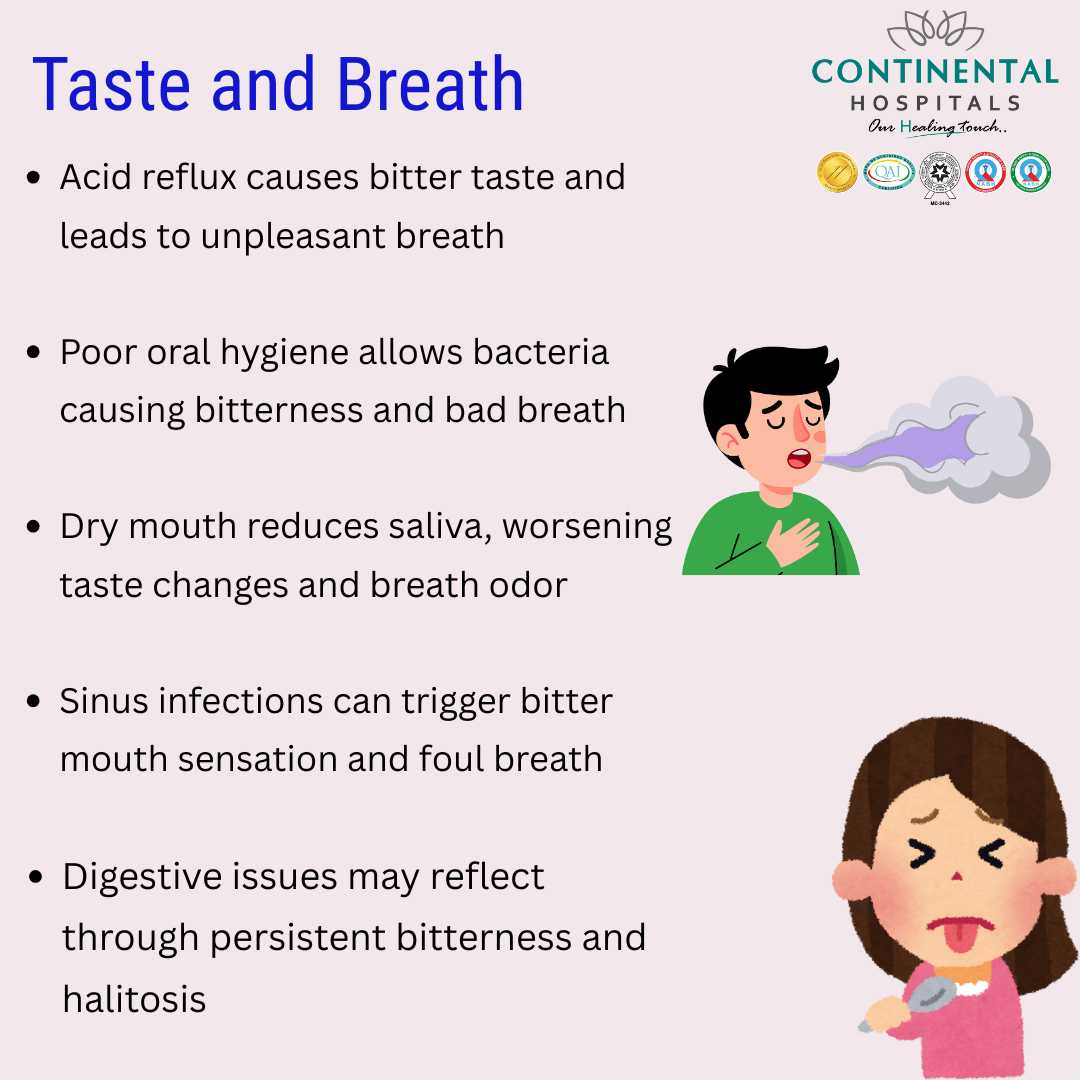
Yes, bitter taste in mouth and bad breath are often connected. Both issues usually originate from the mouth, digestive system, or respiratory tract. When bacteria build up in the mouth or when stomach acids rise into the throat, they can cause both a bitter taste and distinctive breath odor.
Treating only one symptom may not solve the problem completely. Addressing the root cause is essential for lasting relief.

Common Bad Breath Causes
Understanding bad breath causes helps in choosing the right treatment.
Common causes of bad breath include
- Poor oral hygiene leading to bacterial buildup
- Gum disease and tooth decay
- Dry mouth due to reduced saliva
- Certain foods and beverages
- Smoking and tobacco use
- Infections of the throat or sinuses
- Digestive issues such as acid reflux
Chronic bad breath often requires medical or dental evaluation.
Bitter Taste in Mouth Causes
Bitter taste in mouth causes may overlap with bad breath causes.
Common reasons include
- Acid reflux or gastroesophageal reflux
- Oral infections or gum disease
- Dry mouth
- Certain medications
- Sinus infections
- Liver or digestive disorders
When bitter taste in mouth reasons are not addressed, symptoms may persist or worsen.
Symptoms That Often Appear Together
People with both conditions may notice
- Persistent bad breath despite brushing
- Bitter taste in mouth after waking up
- Bad taste in mouth throughout the day
- Dry mouth and sticky saliva
- Coated tongue
- Distinctive breath odor
These signs suggest the need for proper evaluation.
Bad Breath Treatment Options
Bad breath treatment depends on identifying the underlying cause.
Common treatment approaches include
- Professional dental cleaning
- Treating gum disease or cavities
- Managing acid reflux
- Treating sinus or throat infections
- Improving hydration and saliva flow
There is no single bad breath cure for everyone. Personalized care works best.
Bitter Taste in Mouth Treatment
Bitter taste in mouth treatment focuses on correcting the root cause.
Doctors may recommend
- Medicines to control acid reflux
- Treatment for oral or sinus infections
- Adjusting medications that affect taste
- Managing digestive or liver conditions
- Ignoring symptoms may delay recovery.
Home Remedies for Bad Breath and Bitter Taste
Some home remedies for bad breath and bitter taste may offer temporary relief.
Helpful tips include
- Brushing and flossing twice daily
- Cleaning the tongue regularly
- Drinking plenty of water
- Avoiding tobacco and strong smelling foods
- Rinsing with salt water
A bitter taste in mouth home remedy can help briefly, but medical care is needed for persistent problems.
Bad Breath Solutions That Last
Long term bad breath solutions require consistent care and professional guidance.
Effective steps include
- Maintaining proper oral hygiene
- Treating underlying medical conditions
- Regular dental checkups
- Following medical advice for digestive health
These steps help reduce chronic bad breath and improve mouth freshness.
Bitter Taste in Mouth Solution What Works Best?
A lasting bitter taste in mouth solution involves identifying whether the cause is oral, digestive, or systemic.
If symptoms continue for weeks, worsen, or are accompanied by pain, fever, or swallowing difficulty, medical attention is essential.
When Should You See a Doctor?
You should consult a doctor if
- Bad breath does not improve with oral care
- Bitter taste in mouth lasts for several weeks
- You experience burning sensation or chest discomfort
- There is unexplained weight loss or fatigue
- Home remedies fail to provide relief
Early care helps prevent complications.
Why Choose Continental Hospitals?
Continental Hospitals is known as the best hospital in Hyderabad for comprehensive care related to oral, digestive, and internal health conditions.
Reasons to choose Continental Hospitals include
- Experienced dentists, ENT specialists, and internal medicine doctors
- Advanced diagnostic facilities for accurate evaluation
- Internationally recognized accreditations and quality standards
- Evidence based treatment and patient focused care
- Multidisciplinary approach for complex symptoms
The hospital follows strict clinical protocols to ensure safe and reliable care.
Conclusion
So, are bitter taste in mouth and bad breath connected? In many cases, yes. Both symptoms often share common causes related to oral health, digestion, or infections. While occasional symptoms may be harmless, persistent issues should not be ignored.
Proper diagnosis, timely treatment, and consistent care can restore oral freshness and comfort.
If you suffer from persistent bad breath, bitter taste in mouth, or an unpleasant taste that does not go away, consult our best Gastroenterologist at Continental Hospitals. As the best hospital in Hyderabad, Continental Hospitals offers expert diagnosis, advanced treatment, and compassionate care to help you regain confidence and oral comfort safely.