.webp)


Eggs are one of the most common foods on Indian plates. They are affordable, easy to cook, and packed with nutrients. At the same time, many people search online asking a serious question: Can eating eggs lead to cancer? This concern often comes along with digestive complaints like upper stomach pain after eating, indigestion after eating, or acidity stomach pain.
Why Are Eggs Often Linked to Cancer Concerns?
Eggs contain cholesterol, fats, and proteins. Over the years, some observational studies suggested a possible link between high egg intake and certain cancers. These reports created confusion and fear.
However, it is important to understand one key fact:
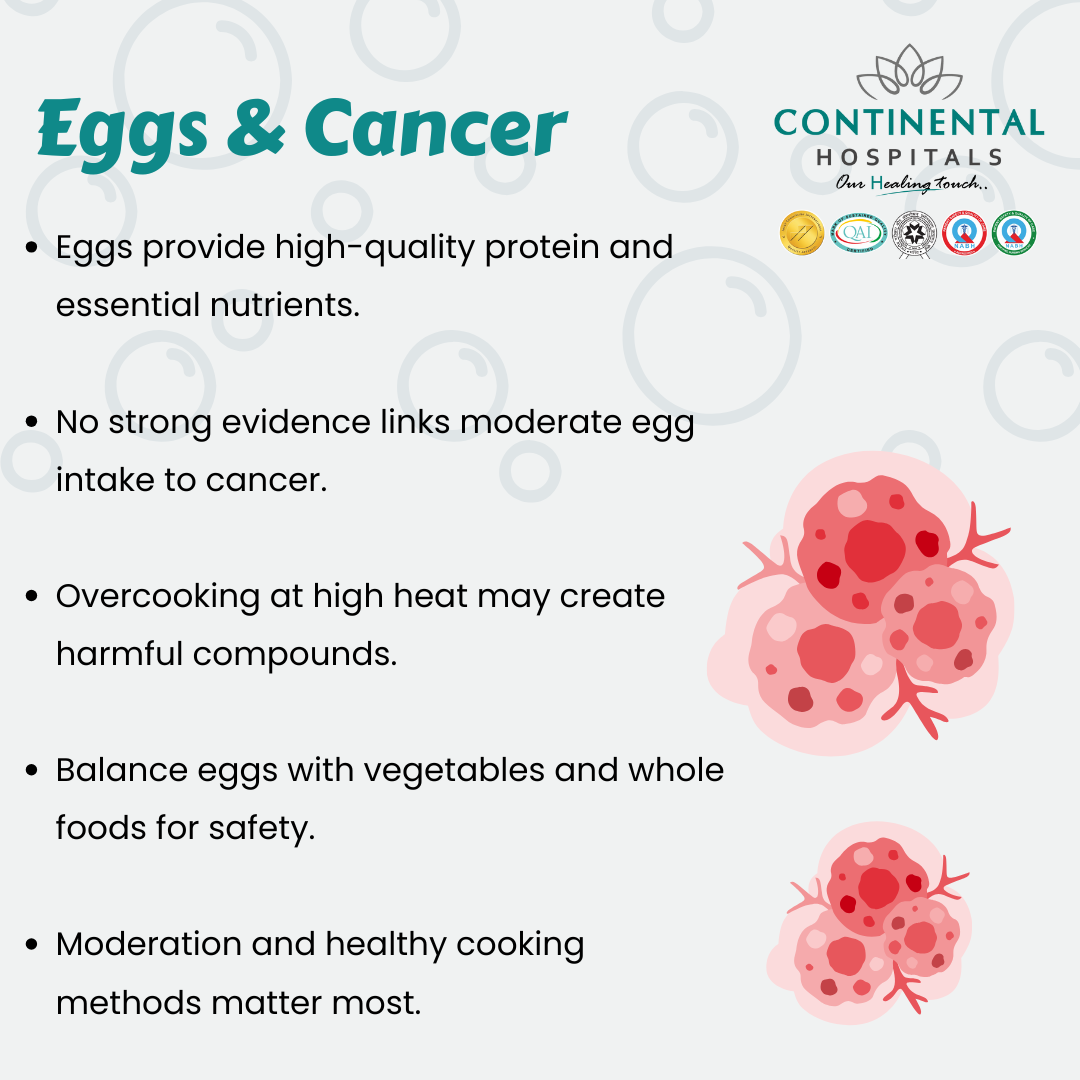
Eating eggs alone does not cause cancer.
Cancer is a complex disease influenced by multiple factors such as:
- Overall diet pattern
- Genetics
- Lifestyle habits
- Smoking and alcohol use
- Obesity and inactivity
- Chronic inflammation
No single food directly causes cancer when eaten in moderation.
Persistent stomach pain after meals? Visit our best Gastroenterology Department at Continental Hospitals.
What Does Scientific Research Say?
Large-scale research shows mixed results, but most experts agree on these points:
- Eggs are nutrient-dense, providing protein, vitamins, and antioxidants
- There is no strong evidence that moderate egg consumption increases cancer risk in healthy individuals
- Problems may arise when eggs are eaten as part of an unhealthy diet high in fried foods, processed meats, and excess oil
In simple terms, it is not the egg, but the overall eating pattern that matters.

Eggs and Digestive Problems After Eating
Many people blame eggs for discomfort like stomach pain after meals or epigastric pain causes, but digestion varies from person to person.
Eggs may cause discomfort in people with:
- Sensitive stomach lining
- Acid reflux or gastritis symptoms
- Gallbladder problems
- Food intolerance
This does not mean eggs are harmful, but your digestive system may need evaluation.
Common Digestive Symptoms People Experience
If you notice discomfort after meals, including eggs, your body may be signaling an underlying digestive issue.
Common symptoms include:
- Upper stomach pain after eating
- Acidity stomach pain
- Indigestion after eating
- Bloating or nausea
- Burning sensation in the chest or stomach
- Gallbladder pain after food
Ignoring these symptoms can allow minor issues to become chronic problems.
Can Eggs Worsen Gastritis or Acidity?
Eggs are generally not acidic, but the way they are prepared matters.
Fried eggs with excess oil, butter, or spices may:
- Irritate the stomach lining
- Trigger gastritis symptoms
- Increase acid reflux
Boiled or lightly cooked eggs are usually easier to digest and less likely to cause digestive problems after eating.
Eggs, Cholesterol, and Cancer Risk
Earlier beliefs linked egg cholesterol directly to cancer risk. Modern research shows this is oversimplified.
Key points to remember:
- Dietary cholesterol does not equal blood cholesterol in most people
- The liver adjusts cholesterol production based on intake
- Balanced meals reduce any potential risk
For most individuals, moderate egg consumption is safe.
When Stomach Pain After Meals Is a Warning Sign?
Occasional discomfort is common, but repeated pain is not normal.
You should see a doctor if you experience:
- Persistent stomach pain after meals
- Severe epigastric pain causes unknown
- Vomiting or unexplained weight loss
- Blood in stools
- Ongoing acidity stomach pain
- Pain spreading to the back or shoulder
These symptoms may point to gastritis, ulcers, gallbladder disease, or other digestive conditions that need medical care.
Abdominal Pain Remedies That Actually Help
While medical evaluation is important, some simple steps support digestive health:
- Eat smaller, balanced meals
- Avoid deep-fried and heavily spiced foods
- Do not lie down immediately after eating
- Stay hydrated
- Manage stress levels
- Maintain a healthy weight
These steps can reduce indigestion after eating and improve overall gut function.
Eggs as Part of a Cancer-Preventive Diet
Eggs can safely be included in a healthy diet when paired with:
- Plenty of vegetables and fruits
- Whole grains
- Healthy fats
- Adequate fiber
Such a diet reduces inflammation and supports digestive and immune health, lowering overall cancer risk.
Myths vs Facts About Eggs and Cancer
Myth: Eggs directly cause cancer
Fact: No single food causes cancer
Myth: People with stomach pain must avoid eggs forever
Fact: The cause of pain matters more than the food itself
Myth: Eggs increase acidity in everyone
Fact: Tolerance varies from person to person
Understanding facts helps prevent unnecessary food fear.
When to See a Doctor for Digestive Problems
Consult a specialist if you have:
- Recurrent upper stomach pain after eating
- Long-term indigestion after eating
- Gallbladder pain after food
- Worsening acidity stomach pain
- Family history of digestive cancers
Early diagnosis leads to better outcomes and peace of mind.
Why Choose Continental Hospitals?
Continental Hospitals is recognized as the best hospital in Hyderabad for comprehensive digestive and cancer care.
What sets Continental Hospitals apart:
- Internationally accredited healthcare standards
- Advanced diagnostic facilities
- Multidisciplinary team of gastroenterologists and oncologists
- Evidence-based treatment protocols
- Patient-focused care and safety
Our specialists focus on identifying the real cause of symptoms, not just treating discomfort.
Conclusion
So, can eating eggs lead to cancer?
For most people, the answer is no. Eggs are safe and nutritious when consumed in moderation as part of a balanced diet. Digestive symptoms like epigastric pain causes or indigestion after eating are more often linked to underlying health conditions rather than eggs themselves.
If you are experiencing persistent stomach pain after meals, upper stomach pain after eating, or ongoing digestive discomfort, do not ignore it. Consult our best Gastroenterologist at Continental Hospitals for accurate diagnosis and personalized treatment.