post-title

Can Red Wine Help Brain Tumour Patients? Facts Explained

Written by - Editorial Team
Medically Reviewed by - Dr Chakradhar Reddy N

Brain tumours are one of the most serious health challenges today. Patients and their families often look for ways to support brain health alongside medical treatment. One question that comes up frequently is whether red wine can help brain tumour patients.

What is a brain tumour?

A brain tumour is an abnormal growth of cells in the brain. Tumours can be benign, meaning non-cancerous, or malignant, meaning cancerous. The symptoms may include headaches, vision problems, seizures, memory loss, or changes in personality. Treating brain tumours often requires a combination of surgery, chemotherapy, and radiotherapy. Lifestyle factors such as diet, exercise, and mental health support can also play a role in overall well-being.

Visit our best neuro doctor hyderabad at Continental Hospitals for expert care and advanced, compassionate treatment for brain health and tumors.

Can red wine help brain health?

Red wine contains a natural compound called resveratrol. Resveratrol is known for its antioxidant properties. Antioxidants help protect cells from damage caused by free radicals. Some laboratory studies suggest that resveratrol may have protective effects on brain cells. This has led to questions about whether red wine could help in conditions such as brain tumours or neurodegenerative diseases.
Does red wine help treat brain tumours?

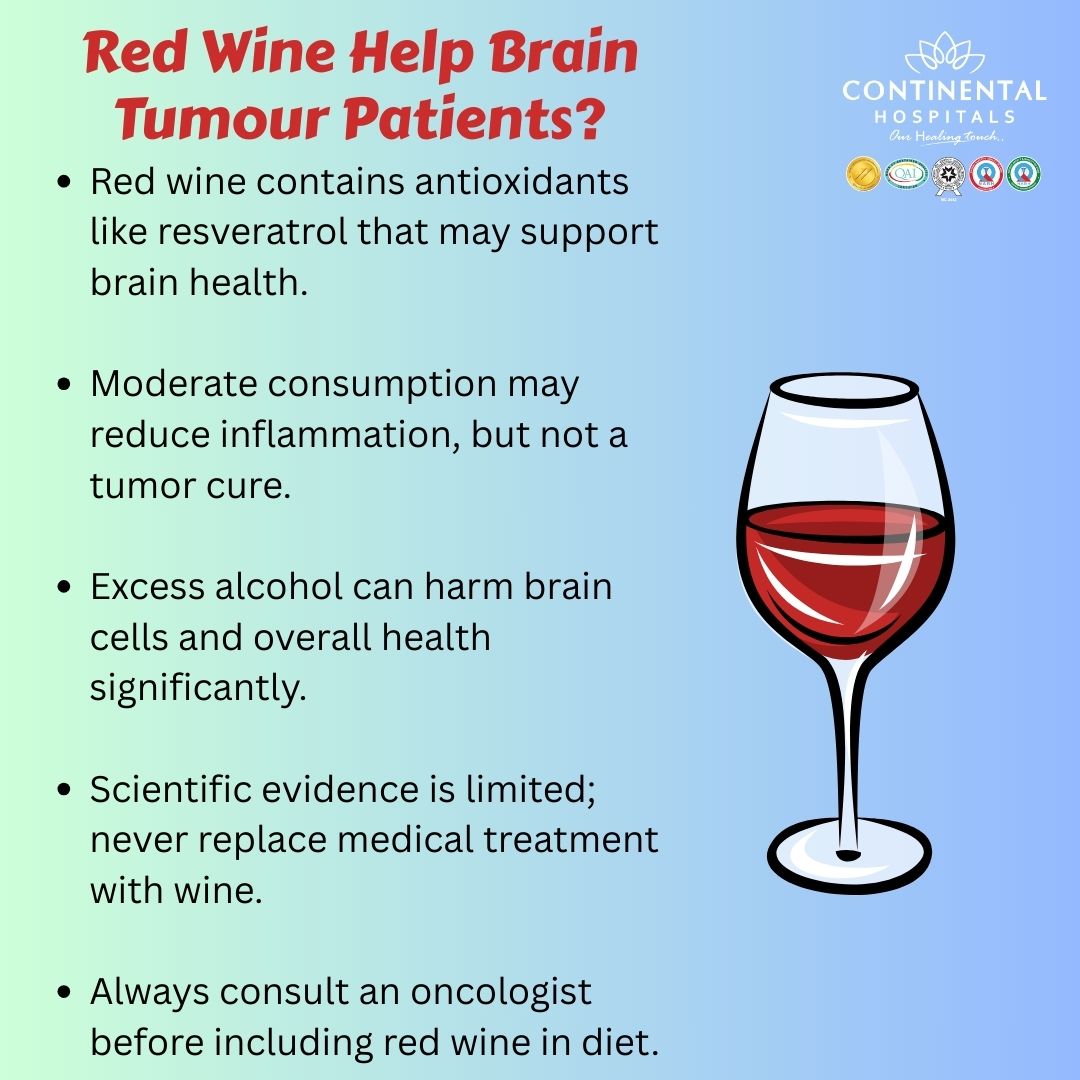
While red wine has some compounds that may support general brain health, it is important to understand that there is no scientific evidence that red wine can cure or directly treat brain tumours.

Some points to consider are:

  • Laboratory studies show resveratrol can slow the growth of certain cancer cells in test tubes.
  • Drinking alcohol, including red wine, in large amounts can be harmful and may even increase the risk of some cancers.
  • Moderate consumption of red wine is sometimes linked with cardiovascular and brain health benefits, but these studies focus on prevention rather than treatment of brain tumours.

Can red wine benefit the brain?

Red wine may support brain health in the following ways:

  • Contains antioxidants that protect brain cells from damage.
  • May improve blood flow in the brain, which supports cognitive functions.
  • Could reduce inflammation, which is associated with neurodegenerative diseases.
  • Might support memory and learning in moderate amounts, according to some studies.
  • Can contribute to heart health, which indirectly benefits brain function.

It is important to emphasize that these benefits are general and not specific to patients with brain tumours. Patients should always consult their doctor before including red wine in their diet, especially if they are undergoing treatment.

Second Opinion

Can Red Wine Cure Brain Tumours?

No, red wine cannot cure brain tumours. Brain tumour treatment requires professional medical care, including surgery, chemotherapy, or radiotherapy. Red wine or any other food or drink cannot replace these treatments. Relying on unproven remedies can be dangerous and may interfere with effective therapy.

What are the safest dietary guidelines for brain health?

For patients with brain tumours, maintaining overall health is crucial. Here are some recommended tips:

  • Follow a balanced diet rich in fruits, vegetables, and whole grains.
  • Stay hydrated and avoid excessive alcohol consumption.
  • Engage in light physical activity, as approved by your doctor.
  • Prioritize adequate sleep and stress management.
  • Attend regular medical check-ups and follow the prescribed treatment plan.

Why Choose Continental Hospitals for Brain Tumour Care?

Continental Hospitals is recognized as one of the best hospitals in Hyderabad. The hospital is known for its advanced medical care, state-of-the-art technology, and experienced specialists. Patients benefit from:

  • Accredited facilities that meet international healthcare standards.
  • A multidisciplinary team of neurologists, oncologists, and surgeons.
  • Personalized treatment plans designed for each patient’s needs.
  • Comprehensive support including diet, rehabilitation, and mental health care.
  • Continuous follow-up care and patient education programs.

At Continental Hospitals, patients receive world-class care with compassion and expertise. The hospital ensures that every patient has access to advanced diagnostics and cutting-edge treatment options for brain tumours.

Can Red Wine Help Brain Tumour Patients?

  • Red wine may support brain health in general but does not treat or cure brain tumours.
  • The active compound, resveratrol, is beneficial in lab studies but cannot replace medical treatment.
  • Excessive alcohol can be harmful, especially for patients undergoing therapy.
  • Consult your doctor before making any changes to diet or alcohol consumption.
  • Focus on overall health and lifestyle changes alongside professional treatment.

Conclusion

Red wine has received attention for its potential brain health benefits, mainly due to antioxidants like resveratrol. However, it is not a treatment for brain tumours. Patients should rely on professional medical care for effective treatment and use dietary measures only as complementary support. Maintaining a healthy lifestyle, following prescribed treatments, and consulting specialists can make a real difference in patient outcomes.

If you or a loved one is dealing with a brain tumour, it is important to seek expert care from specialists who understand the condition in depth. Continental Hospitals offers advanced treatment, multidisciplinary support, and personalized care plans for brain tumour patients. The hospital’s accredited facilities and experienced team ensure patients receive the best possible care for brain health and overall recovery.

If you suffer from a brain tumour or want to understand the best ways to support your brain health, contact our Best Neurologist in Hyderabad at Continental Hospitals. Our team is dedicated to providing advanced, evidence-based care with compassion and precision.

Need an Appointment?

Related Blog Topics:

  1. The Role of Genetics in Brain Tumor Development
  2. Latest Advances in Brain Tumor Treatments
  3. What to Expect During Brain Tumor Surgery

Frequently Asked Questions

No, red wine cannot treat or cure brain tumours. Some laboratory studies have examined a natural compound called resveratrol, which is found in grape skins and small amounts in red wine, for its possible anti-cancer properties. However, these studies were conducted mainly in cells or animals and do not prove that drinking red wine benefits people with brain tumours. The amount of resveratrol present in red wine is far too low to provide the effects seen in research. Alcohol itself may also interfere with medications and recovery during cancer treatment. Brain tumour treatment should always be based on proven medical approaches such as surgery, radiation therapy, chemotherapy, targeted therapy, or immunotherapy when appropriate. Patients should never replace medical treatment with alcohol or home remedies. Always consult your neuro-oncologist before making dietary or lifestyle changes.
Resveratrol is a naturally occurring antioxidant found in grape skins, blueberries, peanuts, and red wine. Researchers have studied it because it may help reduce inflammation, protect healthy cells, and influence the growth of certain cancer cells under laboratory conditions. Some experimental studies suggest that resveratrol may slow tumour cell growth or increase the sensitivity of cancer cells to treatment. However, these findings have not been consistently confirmed in human clinical trials involving brain tumour patients. Scientists are still investigating how resveratrol works, what dose may be effective, and whether it can safely reach brain tissue. Drinking red wine is not considered a reliable or effective way to obtain therapeutic levels of resveratrol. More clinical research is needed before any recommendations can be made.
Brain tumour patients should consult their treating doctor before consuming red wine or any alcoholic beverage. Alcohol can interact with medications commonly used during treatment, including anti-seizure medicines, pain relievers, steroids, and chemotherapy drugs. It may also worsen fatigue, dizziness, dehydration, poor sleep, and balance problems that many patients already experience. Drinking alcohol during treatment could reduce overall well-being and increase the risk of side effects. Some patients may have liver function concerns or nutritional deficiencies that make alcohol even less suitable. For these reasons, healthcare providers often recommend limiting or avoiding alcohol during active treatment. The safest approach is to follow your doctor's personalized medical advice.
Antioxidants help protect cells from damage caused by unstable molecules called free radicals. While red wine contains antioxidants such as resveratrol and polyphenols, there is no scientific evidence that drinking red wine prevents brain cancer or protects people from developing brain tumours. The relationship between antioxidants and cancer prevention is complex and continues to be studied. Experts recommend obtaining antioxidants primarily from fruits, vegetables, whole grains, nuts, and legumes instead of alcoholic beverages. These foods provide many beneficial nutrients without the health risks associated with alcohol consumption. A balanced diet supports overall health and recovery but should not be viewed as a cure or guaranteed preventive measure against brain tumours.
Treatment for brain tumours depends on the tumour type, size, location, grade, and the patient's overall health. Surgery is often the first treatment whenever the tumour can be safely removed. Radiation therapy may be used after surgery or as the main treatment for certain tumours. Chemotherapy, targeted therapy, immunotherapy, and tumour treating fields may also be recommended depending on the diagnosis. Rehabilitation therapies, including physiotherapy, speech therapy, and occupational therapy, can help improve quality of life. Regular imaging scans and follow-up appointments are important for monitoring treatment response. Every patient requires an individualized treatment plan prepared by an experienced multidisciplinary neuro-oncology team.
Yes. Resveratrol is naturally found in red and purple grapes, blueberries, cranberries, peanuts, pistachios, and some berries. Eating these foods provides beneficial vitamins, minerals, fibre, and antioxidants without exposing the body to alcohol. Many researchers believe that obtaining nutrients through a healthy, balanced diet is safer than relying on alcoholic beverages. Although resveratrol supplements are also available, their effectiveness and safety for brain tumour patients have not been fully established. Supplements may also interact with medications or affect certain treatments. Patients should always discuss any supplements with their healthcare provider before starting them. A nutritious diet remains an important part of supportive cancer care.
Healthy lifestyle habits can support overall recovery and improve quality of life during and after brain tumour treatment. Eating a balanced diet rich in fruits, vegetables, lean proteins, and whole grains helps meet nutritional needs. Staying physically active according to medical advice can improve strength, mobility, and mood. Good sleep, stress management, hydration, and avoiding tobacco are also important. Patients should attend all follow-up appointments and take medications exactly as prescribed. Emotional support through counselling, family involvement, or support groups can also be beneficial. Although lifestyle changes cannot cure brain tumours, they can help patients better tolerate treatment and maintain overall health.
Anyone diagnosed with a brain tumour should remain under the care of a neurologist, neurosurgeon, or neuro-oncologist throughout treatment and follow-up. Immediate medical attention is needed if symptoms such as severe headaches, repeated vomiting, seizures, confusion, vision changes, weakness, speech difficulties, or sudden personality changes develop or worsen. These symptoms may indicate tumour progression or treatment-related complications requiring urgent evaluation. Regular follow-up visits allow doctors to monitor recovery, review MRI findings, adjust medications, and manage side effects. Early medical intervention often improves treatment outcomes and quality of life. Patients should never rely on unverified internet claims or alternative remedies instead of evidence-based medical care.
Disclaimer: The information provided in this blog is intended for general knowledge and informational purposes only, and does not constitute medical advice. Always consult with a qualified healthcare professional for any medical concerns or before making any decisions about your health.

Get in Touch With Us

Whether you are from India or abroad, we are here to help you with your medical queries. Please fill out the form below and our team will connect with you shortly.

  • ✔ Quick response from our medical experts
  • ✔ Secure data handling & privacy
  • ✔ Easy upload for reports & documents
banner_image

Chat with our medical experts on WhatsApp for quick assistance and hassle-free appointment booking

Recent Posts