.webp)


Alzheimer's disease is one of the fastest-growing health concerns across the world. It affects memory, thinking, behavior, and the ability to perform everyday activities. As people live longer, more families are looking for ways to protect brain health and reduce the risk of memory loss. While there is still no complete cure for Alzheimer's disease, researchers are exploring new ways to delay or prevent it.
One surprising area of research is the TB vaccine. Originally developed to protect against tuberculosis, the TB vaccine has been used safely for many decades. Scientists are now studying whether this well-known vaccine could also help protect the brain by reducing inflammation and improving the body's immune response. Although research is still ongoing, early findings have generated significant interest among neurologists and researchers worldwide.
What Is the TB Vaccine?
The TB vaccine, also known as the Bacillus Calmette-Guérin (BCG) vaccine, is primarily used to prevent severe forms of tuberculosis. It has been part of vaccination programs in many countries for decades.
Researchers have discovered that the TB vaccine does more than protect against tuberculosis. It may also strengthen the immune system in ways that could benefit other health conditions, including certain infections, cancers, autoimmune disorders, and now potentially Alzheimer's disease.
Visit the best neuro doctor hyderabad at Continental Hospitals for expert evaluation and advanced neurological care.
Why Are Researchers Linking the TB Vaccine to Alzheimer's Disease?
Scientists believe chronic inflammation inside the brain plays an important role in the development of Alzheimer's disease. This ongoing inflammation may damage brain cells over time, leading to memory loss and cognitive decline.
The TB vaccine is known to influence how the immune system responds to inflammation. Some researchers believe this improved immune response could help reduce harmful inflammation in the brain and support long-term cognitive health.
While these findings are promising, experts emphasize that more clinical studies are needed before the TB vaccine can be recommended specifically for Alzheimer's prevention.
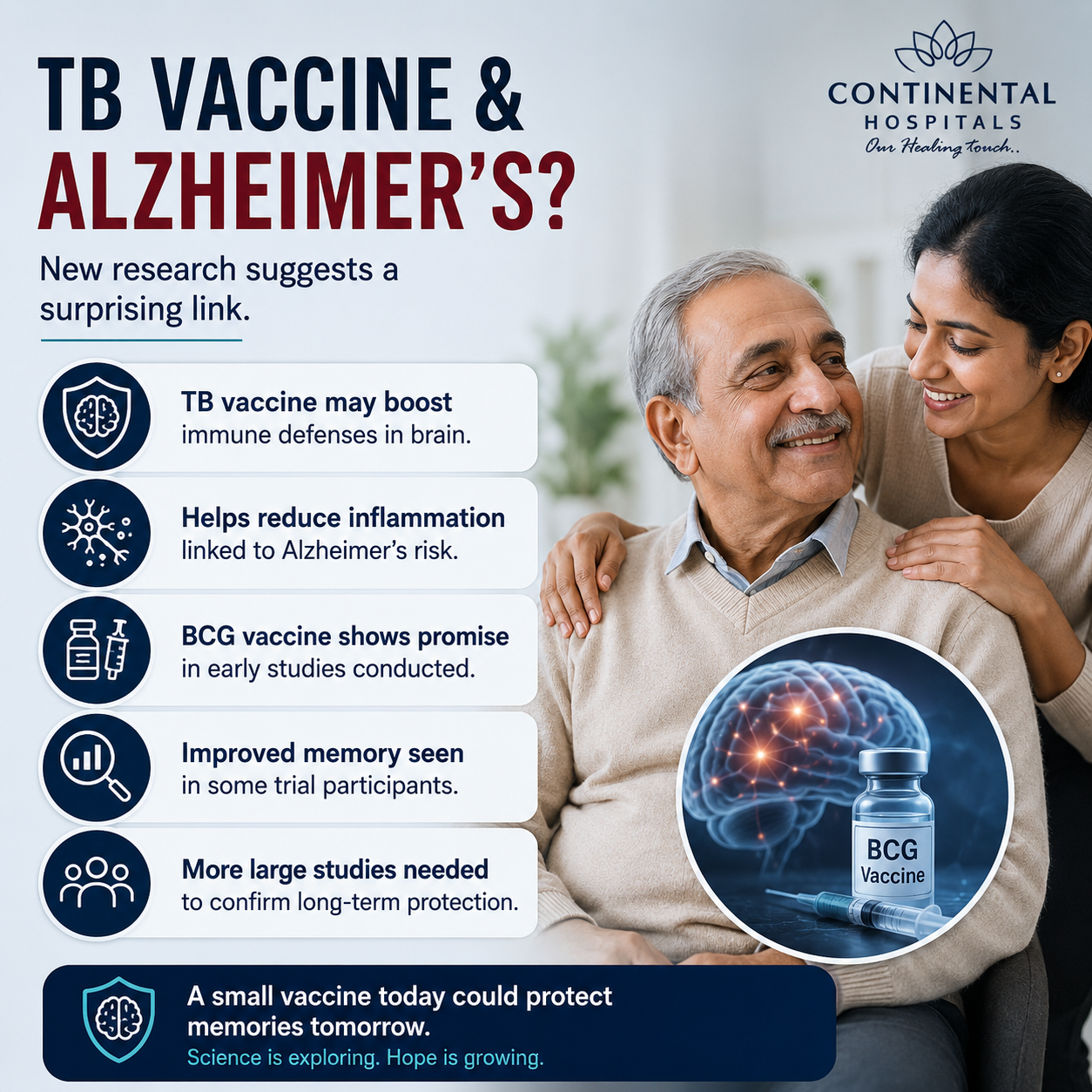

How Could the TB Vaccine Protect Brain Health?
Several possible mechanisms are being studied.
Better Immune System Regulation
The TB vaccine may train the immune system to respond more effectively to harmful inflammation without causing unnecessary damage to healthy tissues.
Reduced Neuroinflammation
Persistent inflammation in the brain is linked to Alzheimer's disease. Researchers are investigating whether the TB vaccine helps reduce this inflammation and protect brain cells.
Improved Brain Cell Protection
Some studies suggest the vaccine may support natural repair mechanisms that help brain cells survive longer and function more effectively.
Healthier Cognitive Function
A stronger and more balanced immune response may contribute to healthier cognitive function and slower progression of age-related memory decline.
What Does Current Research Say?
Although research is still in the early stages, several observational studies have reported encouraging findings.
Some studies have found that individuals who received the TB vaccine appeared to have a lower risk of developing Alzheimer's disease and other forms of dementia later in life.
Researchers are also conducting clinical trials to understand:
- Whether the TB Vaccine truly reduces Alzheimer's risk
- Which age groups may benefit the most
- How long any protective effect may last
- Whether booster doses are necessary
- Which patients are most likely to benefit
These studies will help determine whether the vaccine can become part of future brain health strategies.
Can the TB Vaccine Prevent Alzheimer's Disease?
At present, the answer is no.
There is currently no scientific evidence proving that the TB vaccine can prevent Alzheimer's disease. The available research is promising but not yet strong enough to recommend vaccination solely for Alzheimer's prevention.
People should continue following proven strategies for maintaining brain health while researchers continue investigating the role of the TB Vaccine.
What Are the Best Ways to Support Brain Health?
You can lower your risk of cognitive decline by adopting healthy lifestyle habits.
Stay Physically Active
Regular exercise improves blood flow to the brain and supports healthy brain function.
Eat a Balanced Diet
Choose fruits, vegetables, whole grains, healthy fats, lean proteins, and foods rich in antioxidants.
Keep Your Mind Active
Reading, learning new skills, solving puzzles, and social interaction help stimulate brain activity.
Control Medical Conditions
Proper management of diabetes, high blood pressure, high cholesterol, and obesity helps reduce the risk of dementia.
Get Quality Sleep
Good sleep allows the brain to clear waste products and supports healthy memory function.
Avoid Smoking and Excess Alcohol
These habits can increase the risk of cognitive decline over time.
Who Is at Higher Risk of Alzheimer's Disease?
Several factors increase the likelihood of developing Alzheimer's disease.
- Increasing age
- Family history of dementia
- Diabetes
- High blood pressure
- High cholesterol
- Obesity
- Smoking
- Physical inactivity
- Poor sleep quality
- Chronic inflammation
People with these risk factors should discuss preventive strategies with a neurologist.
Important Facts About the TB Vaccine and Alzheimer's
The TB vaccine is currently approved to protect against tuberculosis.
Research suggests it may influence immune system function.
Scientists are studying its possible role in reducing neuroinflammation.
Early research has shown encouraging results but is not yet conclusive.
More clinical trials are needed before routine use for Alzheimer's prevention.
Healthy lifestyle choices remain the best proven way to support cognitive health.
Why Choose Continental Hospitals for Brain Health?
Continental Hospitals is recognized as one of the best hospitals in Hyderabad for advanced neurological care. Our Department of Neurology provides comprehensive evaluation, diagnosis, treatment, and long-term management of memory disorders, Alzheimer's disease, dementia, stroke, Parkinson's disease, epilepsy, and other neurological conditions.
Our hospital is accredited by JCI, NABH, and QAI, reflecting our commitment to international standards of patient safety, clinical excellence, and quality healthcare. With experienced neurologists, advanced diagnostic technology, multidisciplinary care, and personalized treatment plans, we help patients achieve better neurological outcomes while focusing on compassionate care.
When Should You Consult a Neurologist?
- Do you or a loved one experience frequent forgetfulness?
- Have you noticed difficulty remembering recent events or conversations?
- Is confusion affecting daily activities?
- Are personality or behavior changes becoming more noticeable?
- Do you have a family history of Alzheimer's disease or dementia?
If your answer is yes to any of these questions, consult a neurologist, as early evaluation can help identify the cause and provide timely treatment.
If you are experiencing memory loss, cognitive decline, confusion, or symptoms of Alzheimer's disease, consult the Department of Neurology at Continental Hospitals. Our experienced neurology specialists provide comprehensive brain health assessments, advanced diagnostic services, and personalized treatment plans to help protect your cognitive health and improve your quality of life.
Conclusion
The growing interest in the TB vaccine has opened an exciting new area of Alzheimer's research. Scientists are exploring whether this long-established vaccine can help reduce brain inflammation and support healthier cognitive function. While current evidence is encouraging, the TB vaccine should not yet be considered a proven method for preventing Alzheimer's disease. More clinical research is needed before it becomes part of routine preventive care.
Until then, maintaining a healthy lifestyle, managing chronic medical conditions, staying mentally active, and seeking early neurological evaluation remain the most effective ways to support lifelong brain health. If you notice persistent memory changes or cognitive concerns, consult our best neurologist in Hyderabad at Continental Hospitals for timely diagnosis and comprehensive care.
Related Blogs: