.webp)

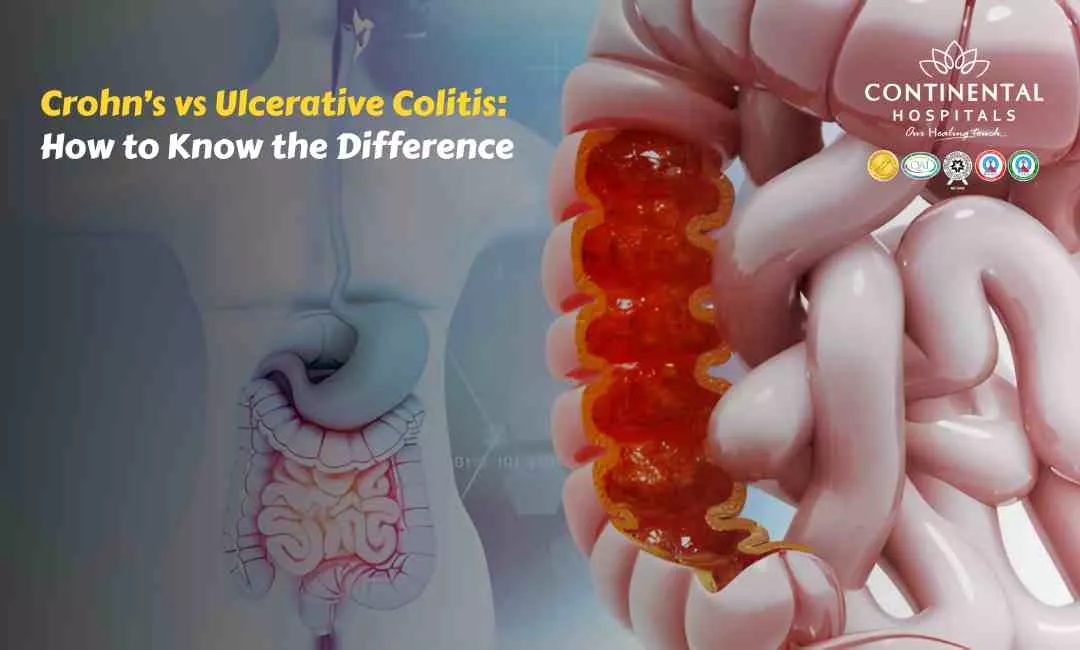
Inflammatory bowel disease is becoming increasingly common, and two conditions that often confuse people are Crohn’s disease and Ulcerative Colitis. Both conditions affect the digestive system and cause chronic inflammation, but they are not the same. Understanding the difference is important because the right diagnosis leads to the right treatment and better long-term health. This blog explains how these conditions differ, how they are diagnosed, symptoms to look for, and when to seek medical care. The content is written in a clear, simple, and engaging style to help patients and families easily understand the topic.
What is Crohn’s Disease?
Crohn’s disease is a type of inflammatory bowel disease that can affect any part of the digestive tract. In most patients, the inflammation appears in the small intestine, large intestine, or both. The inflammation may spread deep into the layers of the bowel, which can lead to complications over time.
Key features of Crohn’s disease
Here are some important characteristics:
- It can affect any section from the mouth to the anus.
- Inflammation can appear in patches where some areas look healthy next to inflamed areas.
- It can involve deeper layers of the bowel wall.
- It may lead to complications like fistulas, strictures, and malabsorption.
What is Ulcerative Colitis?
Ulcerative Colitis affects only the large intestine. The inflammation starts in the rectum and may spread upward to involve the entire colon. Unlike Crohn’s disease, Ulcerative Colitis affects only the inner lining of the bowel.
Key features of Ulcerative Colitis
Here are the major characteristics:
- It affects only the colon and rectum.
- Inflammation is continuous and not patchy.
- Only the inner lining of the bowel gets inflamed.
- It can cause ulcers and increase the risk of colon-related complications.
Crohn’s vs Ulcerative Colitis
Although both conditions belong to the inflammatory bowel disease group, there are clear differences.

How they differ
Location of inflammation
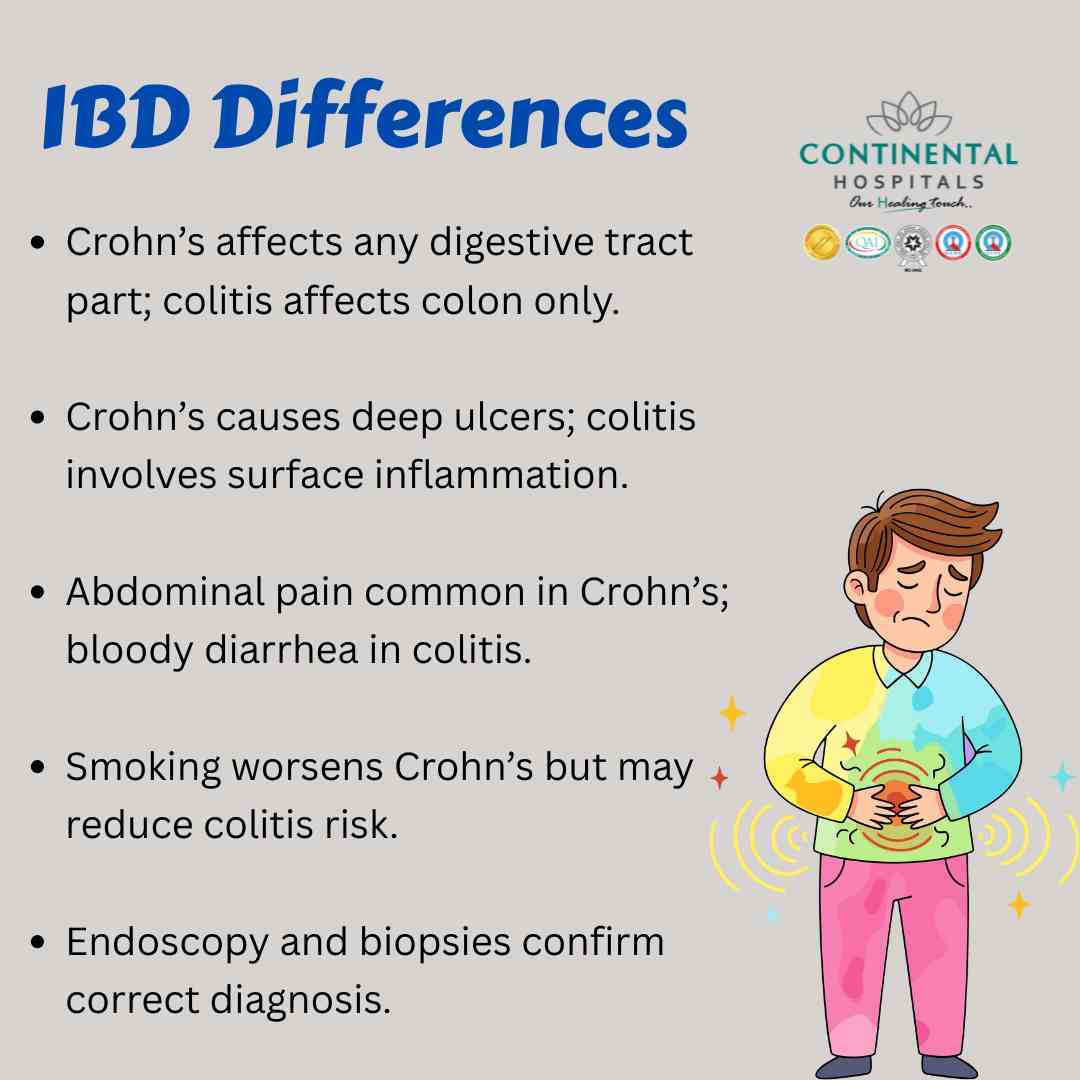
Crohn’s can appear anywhere in the gastrointestinal tract while Ulcerative Colitis is limited to the colon.
Pattern of inflammation
Crohn’s has patchy involvement and can affect deeper layers. Ulcerative Colitis affects only the inner lining in a continuous pattern.
Symptoms
Crohn’s may cause abdominal pain, weight loss, fatigue, and severe diarrhea.
Ulcerative Colitis often leads to bloody stools, loose motions, and an urgent need to pass stools.
Complications
Crohn’s disease can cause fistulas, nutritional deficiencies, and strictures.
Ulcerative Colitis may increase the risk of colon cancer and severe rectal bleeding.
Diagnostic findings
Colonoscopy results show distinct differences in the location and depth of inflammation.
Symptoms of Inflammatory Bowel Disease
Both conditions share some symptoms. Recognizing early signs helps you seek timely medical care.
Common symptoms include:
- Persistent diarrhea
- Blood in stools
- Cramping abdominal pain
- Fatigue
- Urgent bowel movements
- Unintended weight loss
- Reduced appetite
If these symptoms last more than a few days, medical evaluation becomes essential.
How Doctors Diagnose Crohn’s and Ulcerative Colitis?
Doctors use a combination of tests to identify which condition is present. Early and accurate diagnosis helps prevent complications.
Some key diagnostic methods include:
- Blood tests to check for inflammation
- Stool tests to rule out infections
- Colonoscopy to directly observe bowel inflammation
- Biopsy to study tissue samples
- CT scan or MRI to detect deeper changes in the intestines
Treatment Options
Treatment depends on the severity of symptoms and the diagnosis. Doctors aim to reduce inflammation, control symptoms, and prevent flare-ups.
Treatment may include:
- Medications that reduce inflammation
- Immune-modulating medicines
- Nutritional guidance
- Treatment for complications
- Surgery when medicines are not sufficient
Our gastroenterologist will create a personalised plan based on your condition and response to treatment.
Lifestyle and Diet Support
Patients often feel better when they have clarity on what steps they can take daily. Diet and lifestyle changes do not cure inflammatory bowel disease but they help reduce flare-ups.
Helpful tips include:
- Eating small and frequent meals
- Staying hydrated
- Avoiding foods that trigger symptoms
- Managing stress
- Regular follow-up with your gastroenterologist
Why Choose Continental Hospitals in Hyderabad?
Continental Hospitals is recognised as one of the best hospitals in Hyderabad for the diagnosis and treatment of digestive and bowel disorders. Patients choose Continental Hospitals for several reasons:
- Experienced gastroenterologists who specialise in inflammatory bowel diseases
- Advanced diagnostic technology that helps in early and accurate detection
- Minimally invasive endoscopy and colonoscopy facilities
- Personalised treatment plans designed for long term relief
- Strong support from dietitians and clinical nutrition experts
- Multidisciplinary care for complex Crohn’s or Ulcerative Colitis cases
- JCI accreditation which reflects adherence to the highest international standards of safety and quality
Patients receive compassionate care, clear guidance, and continuous support during treatment and follow up.
Conclusion
Crohn’s disease and Ulcerative Colitis share similarities but are very different in how they affect the digestive system. Knowing the difference helps patients understand their symptoms better and seek timely care. With expert diagnosis, personalised treatment, and supportive care, patients can lead a stable and comfortable life.
If you suffer from symptoms of Crohn’s disease or Ulcerative Colitis, you should consult our best gastroenterologist at Continental Hospitals. Early medical support helps protect your digestive health and prevents complications.